
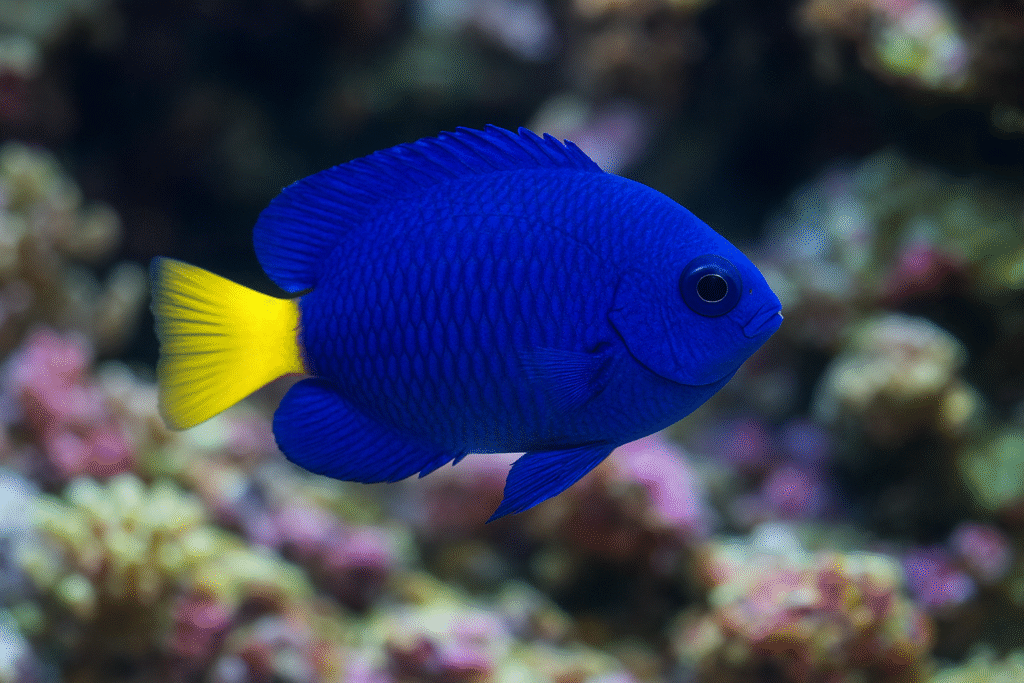
Yellowtail Damselfish care is one of those topics that pulls people into the saltwater hobby and keeps them hooked. These fish are bold, bright, and full of personality. They often become the first saltwater fish someone owns, and for many reef keepers, they are the fish that taught them confidence and patience.
Short answer: Yellowtail Damselfish are hardy saltwater fish that thrive in stable reef tanks with good structure, smart feeding, and thoughtful tank mate choices.
I still remember adding my first Yellowtail Damselfish. Within minutes, it explored every corner of the tank like it owned the place. That fearless attitude is part of what makes them so appealing. They are not passive background fish. They interact with their environment and make the tank feel alive.
This guide is built on real experience and practical insight. I will walk you through tank setup, diet, size, behavior, and long-term care so you can keep your Yellowtail Damselfish healthy and confident for years.
What Is a Yellowtail Damselfish
The Yellowtail Damselfish is a small marine fish known for its deep blue body and bright yellow tail. It is sometimes called the Yellowtail Blue Damselfish and is a favorite among reef keepers.
Short answer: Yellowtail Damselfish are small, colorful reef fish with bold personalities and strong survival instincts.
They come from shallow coral reefs where they dart between rocks and coral heads. In captivity, they bring that same energy into your tank. Their compact size makes them suitable for smaller aquariums, but their personality demands respect.
There are a few types of Yellowtail Damselfish sold in the hobby. Most people are referring to the classic bright blue body with a yellow tail, which is the most common and widely available.
Yellowtail Damselfish Size and Max Size
Yellowtail Damselfish size is one of the reasons they are so popular.
Short answer: Most Yellowtail Damselfish reach a maximum size of about 3 inches.
They grow quickly during the first year, then slow down. Even at full size, they stay compact and agile. This makes them ideal for reef tanks where space is limited but personality is welcome.
Do not let their small size fool you. They use space efficiently and will claim territory if given the chance. Planning tank layout with this in mind makes a big difference.
Yellowtail Damselfish Life Span
Yellowtail Damselfish life span is often underestimated.
Short answer: With proper care, Yellowtail Damselfish can live 5 to 10 years.
Stable water parameters and low stress are key factors. Fish that feel secure tend to live longer. Aggression, overcrowding, and poor diet shorten life span quickly.
I have personally kept a Yellowtail Damselfish for nearly nine years. The secret was consistency. Same feeding routine, steady water changes, and minimal tank drama.
Yellowtail Damselfish Tank Setup Basics
Yellowtail Damselfish tank setup does not need to be complicated, but it must be intentional.
Short answer: A reef tank with live rock, hiding spots, and stable water conditions is ideal.
A tank size of at least 20 gallons works for one fish. Larger tanks reduce aggression and make tank mate selection easier. Bigger tanks also offer more swimming room and territory options.
Live rock is essential. It creates natural boundaries and gives the fish places to retreat. Arrange rocks with gaps and caves rather than stacking them tightly.
Water Conditions for Yellowtail Damselfish Care
Water quality forms the backbone of Yellowtail Damselfish care.
Short answer: Stable saltwater conditions matter more than chasing perfect numbers.
Maintain steady temperature, salinity, and pH. Sudden swings cause stress even in hardy fish. Consistency keeps behavior calm and immune systems strong.
Routine water changes help keep nutrients in check. Small, regular changes are better than large, irregular ones.
Lighting and Water Flow Preferences
Yellowtail Damselfish adapt well to many lighting setups.
Short answer: Moderate reef lighting and varied water flow work best.
They enjoy swimming into gentle currents and retreating into calm zones. Random flow patterns feel natural and reduce stress.
Lighting should support coral growth first. The fish will adjust as long as there are shaded areas among the rocks.
Yellowtail Damselfish Diet and Feeding Habits
Yellowtail Damselfish diet is simple but benefits from variety.
Short answer: They thrive on a mix of pellets, frozen foods, and occasional algae-based options.
High-quality marine pellets make an excellent staple. Choose small pellets designed for reef fish. Frozen foods add protein and enrichment.
Feeding a variety keeps colors vibrant and energy levels high.
Food Options to Consider
These products are commonly used by reef keepers and work well for Yellowtail Damselfish:
-
Marine pellets for saltwater fish
-
Frozen mysis shrimp cubes
-
Frozen brine shrimp
-
Algae-based marine flakes or pellets
Rotating these foods mimics natural feeding patterns and reduces picky behavior.
Feeding Schedule and Portion Control
Short answer: Feed small amounts once or twice daily.
Yellowtail Damselfish are eager eaters. They will beg even when full. Overfeeding leads to water quality issues.
I prefer feeding lightly in the morning and slightly more in the evening. This keeps them active without polluting the tank.
Yellowtail Damselfish Tank Mates
Yellowtail Damselfish tank mates require careful selection.
Short answer: They do best with confident, semi-aggressive fish in larger tanks.
Good tank mates include clownfish, certain wrasses, gobies, and tangs in appropriate tank sizes. Avoid extremely timid species.
Tank size plays a major role. More space equals less aggression.
Managing Aggression and Territory
Aggression is part of Yellowtail Damselfish care.
Short answer: Territory management reduces aggression.
Adding the Yellowtail Damselfish last helps. Rearranging rockwork before introduction also resets territories.
Provide multiple hiding spots so other fish can avoid conflict.
Are Yellowtail Damselfish Reef Safe
Short answer: Yes, they are reef safe with corals.
They do not nip at coral tissue and generally ignore invertebrates. Their movement adds life without causing damage.
Secure coral frags well. Curious swimming can knock loose pieces over.
Breeding Behavior in Home Aquariums
Yellowtail Damselfish may breed in captivity.
Short answer: Spawning can occur, but raising fry is difficult.
Males guard eggs laid on rock surfaces. During this time, aggression increases.
Most hobbyists enjoy observing breeding behavior without attempting to raise the young.
Common Health Issues and Prevention
Yellowtail Damselfish are hardy, but issues still happen.
Short answer: Most problems come from stress or poor water quality.
Watch for faded colors, torn fins, or hiding behavior. Early intervention prevents escalation.
Quarantine new fish when possible to protect your display tank.
Mistakes to Avoid with Yellowtail Damselfish Care
Short answer: Avoid small tanks, poor planning, and incompatible tank mates.
Underestimating their personality leads to problems. Give them space and structure.
Patience and observation are your best tools.
Personal Experience and Real-World Advice
Yellowtail Damselfish taught me confidence as a reef keeper. They push boundaries but reward good planning.
Short answer: When respected, they become bold, beautiful centerpieces.
They are not just beginner fish. They are long-term companions when cared for properly.
Summary and Quick Reference Card
Species: Yellowtail Damselfish
Adult Size: Up to 3 inches
Life Span: 5–10 years
Tank Size: 20 gallons minimum
Temperament: Semi-aggressive
Diet: Pellets, frozen foods, algae-based foods
Reef Safe: Yes
Best For: Reef tanks with confident tank mates
Frequently Asked Questions About Yellowtail Damselfish Care
How big do Yellowtail Damselfish get
They usually grow to about 2.5 to 3 inches.
Are Yellowtail Damselfish good for beginners
Yes, they are hardy and forgiving, but aggression must be managed.
Can I keep more than one Yellowtail Damselfish
Only in larger tanks with careful planning and plenty of rockwork.
Do Yellowtail Damselfish eat algae
They may graze lightly but should not be relied on for algae control.
How often should I feed Yellowtail Damselfish
Once or twice a day in small portions works best.