
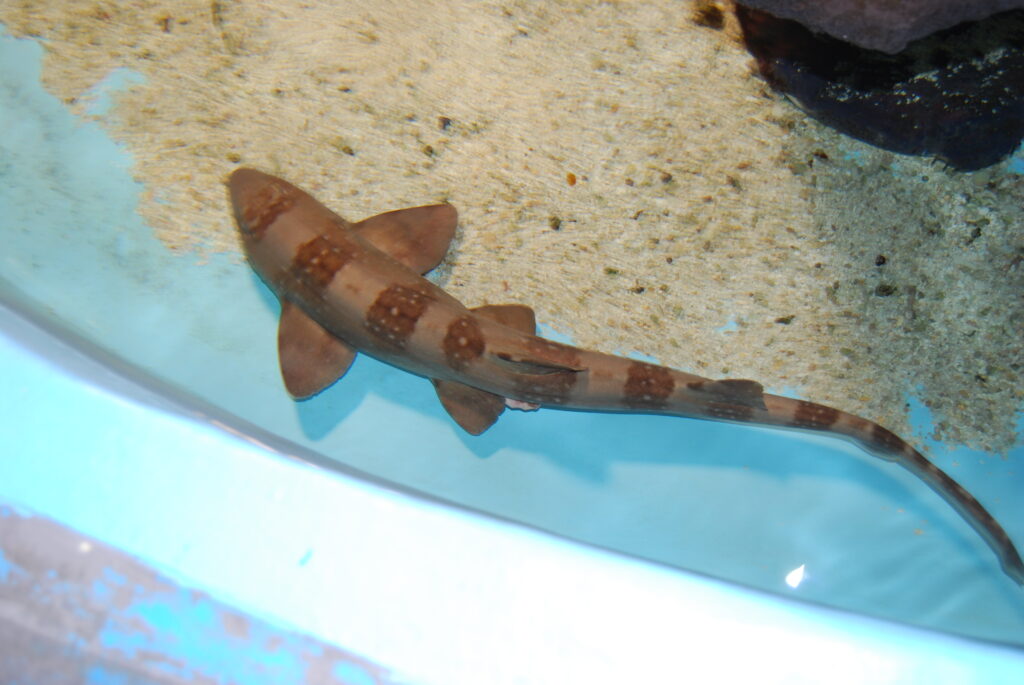
Bamboo sharks are among the few sharks that can be kept in a home aquarium, but they are not small-tank pets. A pup sold at 6-8 inches grows to 3 feet or more and lives 10 years or longer, so a realistic setup starts at about 180 gallons for the long term, with a footprint of at least 6 feet by 2 feet. They are hardy and calm for sharks, but they need a lot of space, big water volume and a diet of meaty seafood.
Overview and Appearance
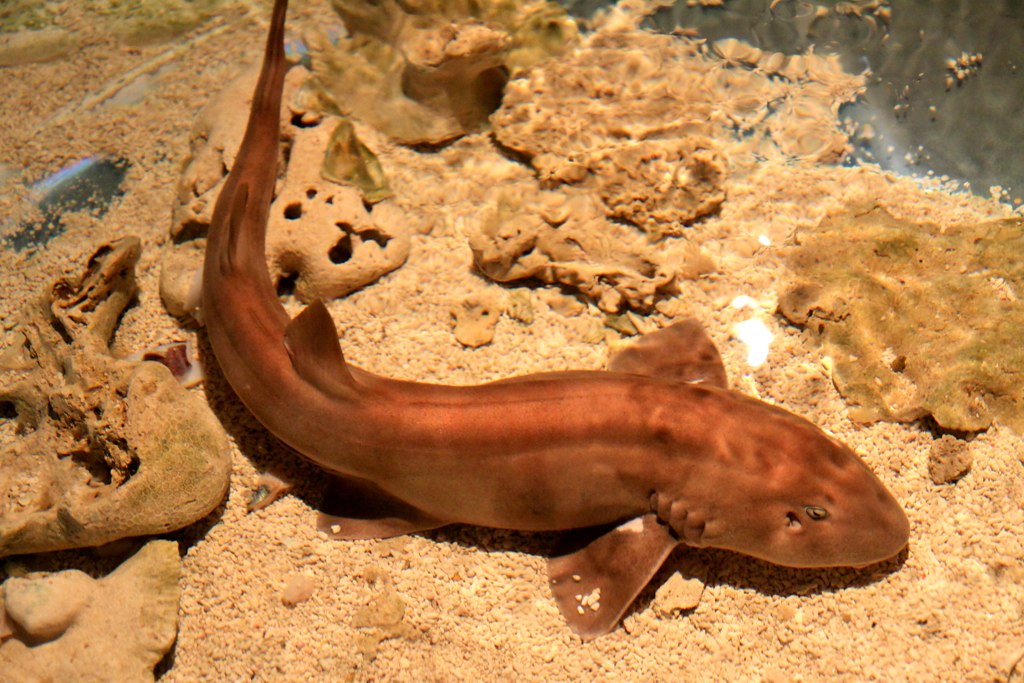
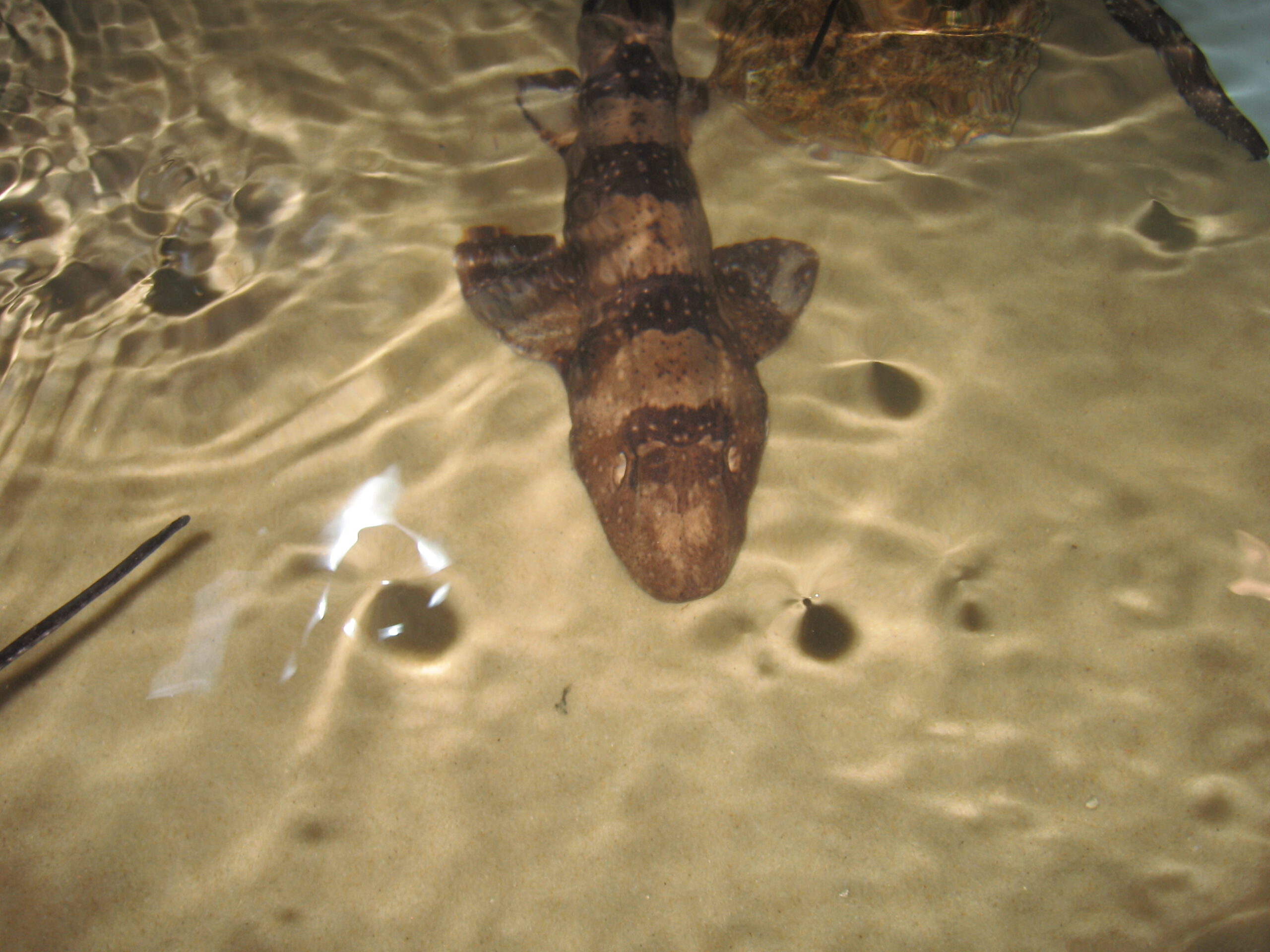
The two species most seen in the hobby are the whitespotted bamboo shark (Chiloscyllium plagiosum) and the brownbanded bamboo shark (Chiloscyllium punctatum). Both are slender bottom-dwelling sharks from the Indo-Pacific, with a long tail, two dorsal fins and a flat head with small barbels near the nose. Juveniles are strongly banded. Adults of the brownbanded species fade to a plain tan-brown.
Size and Lifespan
- Whitespotted: about 3 feet
- Brownbanded: up to 3-4 feet
- Lifespan: commonly 10-15 years in good care
Tank Size and Setup
- Minimum for adult: 180 gallons, with 6 feet of length. Bigger is better, and 300 gallons is better still.
- Juveniles can start in a 125-gallon tank but should not be kept in anything smaller.
- Substrate: Fine sand, never sharp gravel, as they rest on the bottom.
- Aquascape: Open swimming space plus caves and overhangs. Leave room for turning, since they are long and need to bend.
- Rockwork: Stable, secured and smooth. Sharks can rub on and dislodge rocks.
- Lid: Keep the tank tightly covered. They can climb and wriggle out at the water line.
- Heater safety: Shield heaters with guards or place them in a sump. Sharks can burn themselves on exposed heaters. See this heater guard option or choose a titanium heater.
- Filtration: Strong filtration and a protein skimmer, as sharks are messy eaters.
Just a heads up: some of the links in this post are affiliate links, which means I may earn a small commission if you buy through them. But no worries, it is at no extra cost to you. Also, as an Amazon Associate I earn from qualifying purchases.
Cycle the tank fully before purchase. Our how to cycle a fish tank guide and saltwater aquarium setup guide cover the basics.
Water Parameters
- Temperature: 72-78°F
- Salinity: 1.020-1.025 specific gravity (some keepers keep sharks at the lower end)
- pH: 8.1-8.4
- Ammonia and nitrite: 0
- Nitrate: As low as possible, ideally under 20 ppm
Sharks are sensitive to poor water and to copper. Never use copper medications in a shark tank. Test often with a saltwater test kit.
Diet
Bamboo sharks are carnivores that eat fish, shrimp, squid, clams and mussels. Offer thawed seafood, soaked in vitamins if desired.
- Juveniles: Feed small portions 3-5 times a week
- Adults: Feed every other day or a few times a week, in moderation
- Avoid: Freshwater feeder fish and mammal meat. Overfeeding is the most common cause of poor water and health problems.
Use a feeding stick or feeding tongs to avoid bites. Some new sharks refuse food at first. Smelly seafood like squid or clam often triggers feeding.
Temperament and Tank Mates
Bamboo sharks are generally peaceful and nocturnal. They hunt at night by smell.
Good tank mates: Large, robust fish that are too big to eat, such as larger tangs, groupers, other sharks of similar size, and big angelfish. Check the shark's adult size first.
Bad tank mates: Anything that fits in the mouth, such as small fish, shrimp, crabs, snails and small gobies. They are not reef safe. Corals are fine, but invertebrates will be eaten.
Aggressive fish: Avoid fin nippers, triggerfish or eels that may harass them.
Compare with other predatory options like the lionfish or snowflake eel when planning a predator tank.
Breeding
Bamboo sharks lay eggs in leathery cases. They are among the most commonly captive-bred sharks, and eggs hatch in about 3-5 months at warm temperatures. Breeding a pair in a home tank is possible but needs a large tank and a plan for the pups, because they quickly grow out of home tanks.
Common Health Issues
- Refusing food: Common after shipping. Try different seafood.
- Skin damage: Often from sharp decor or rubbing.
- Parasites and bacterial infection: Poor water makes both worse. Quarantine new sharks and watch carefully.
- Goiter: Shown by swelling in the throat area. It may be linked to a lack of iodine in a closed system, so use iodine-supplemented foods and consult an aquatic vet.
- Stress from lighting changes: Gradual, dim lighting suits them.
Because copper is dangerous to sharks, ich and other parasites are handled differently than in many fish. See our marine ich guide and ask an experienced marine vet before dosing anything.
Buying and Acclimation Tips
Choose a captive-bred pup that is already eating frozen seafood in the store. Ask how often it feeds and see it eat before buying. Acclimate slowly by drip over an hour or more, using water from the shark's current system, and never expose it to air, since it can damage the skin and gills. Keep lighting dim for the first week. Many bamboo sharks hide for a few days before they start moving at night, which is normal.
Also plan the costs: seafood, electricity for a large heater and pumps, a big skimmer, and the tank itself. The upfront tank and equipment cost is the biggest hurdle, and the sooner you buy the full-size system, the less you will spend replacing smaller ones. If you cannot house a shark for 10 years, consider smaller predators or peaceful fish instead.
Difficulty Level
Intermediate to advanced. The shark is hardy, but the space, water volume and food costs are the real barrier. Many bamboo sharks end up in tanks that are far too small. Only buy one if you can house it as an adult. Check local laws too, since some areas restrict sharks.
From Aquagram
Explore AquagramTest Account
Hello aquarists!
Dan GL
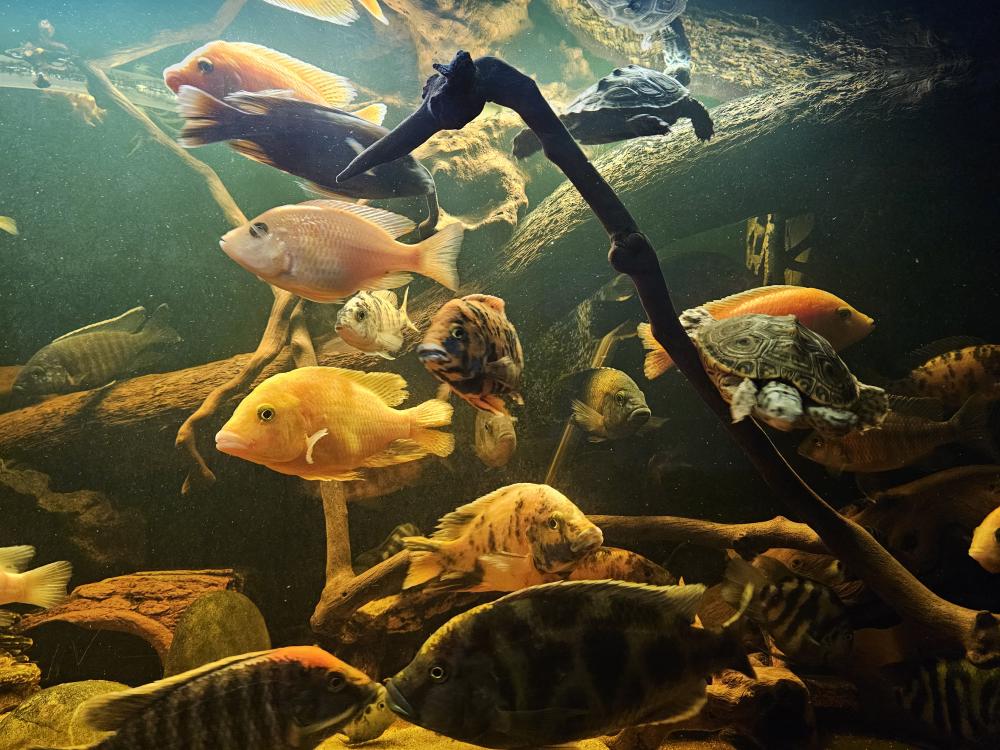
A view of my 125 gallon aquarium. Lots of fish and a few Northern Diamondback Terrapins too! 😁
SwitchTank
Incredible!
Bamboo Shark Care FAQ
What size tank does a bamboo shark need?
At least 180 gallons for an adult, with a length of 6 feet. Juveniles need at least 125 gallons.
How big do bamboo sharks get?
Usually around 3 feet, with some brownbanded sharks reaching 3-4 feet.
What do bamboo sharks eat?
Meaty seafood such as shrimp, squid, clams and fish.
Can bamboo sharks live with other fish?
Yes, with large, peaceful fish. Small fish and invertebrates will be eaten.
Are bamboo sharks dangerous?
They are not a threat to people, but they can bite if handled or if fed carelessly.
How long do bamboo sharks live?
10-15 years or more in good conditions.
Are bamboo sharks reef safe?
They will not harm corals, but they eat many invertebrates, so they are not ideal for most reef tanks.
Final Thoughts
A bamboo shark can be one of the most rewarding animals in a large saltwater system, but only if you plan for the adult from day one. Build the big tank first, then buy the shark.
Disclaimer: This article is general information, not veterinary advice. For serious or persistent problems, consult an aquatic veterinarian.