
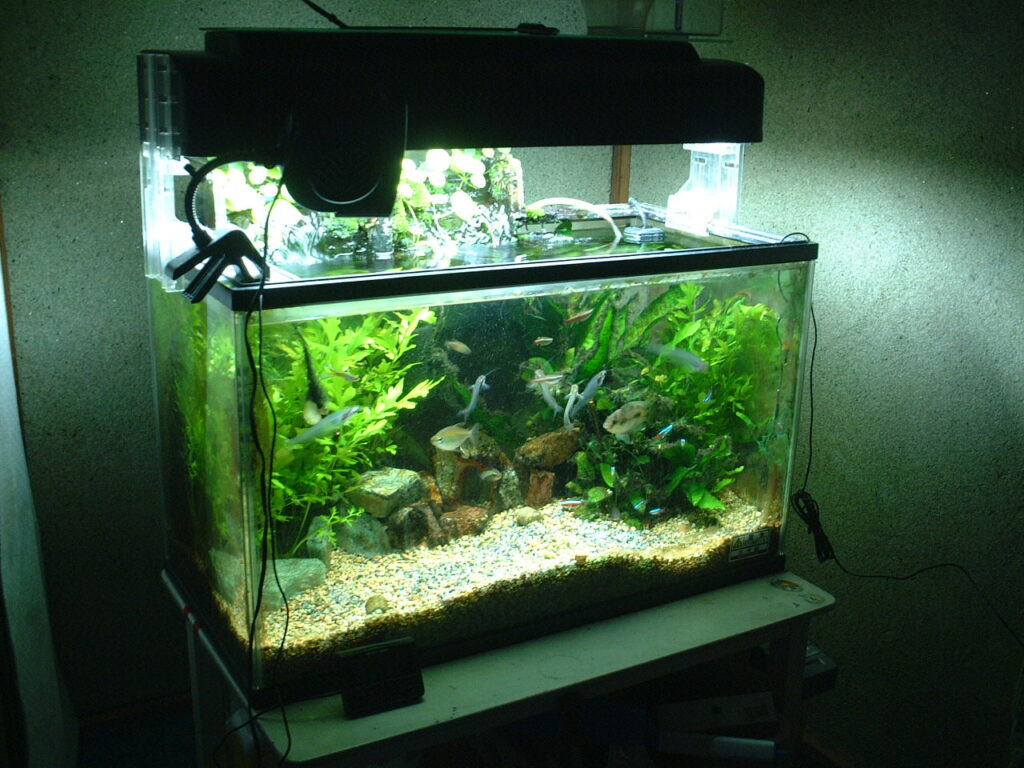
If your fish tank smells bad, the usual culprit is waste breaking down where oxygen can't reach it: a dead animal or rotting food somewhere hidden, a clogged filter, or a stinky pocket in the substrate. Find the source by smelling the filter, the substrate and the tap water separately, then clean it up with a partial water change instead of tearing the tank apart. A healthy, cycled tank should smell like damp earth or nothing at all.
This guide covers every common version of the problem, including "fish tank smells bad but water is clear," "fish tank smells bad and is cloudy," and "fish tank smells bad after water change."
Quick Answer: What Does Your Smell Mean?
- Rotten eggs or sulfur: trapped waste in the substrate or filter (hydrogen sulfide), or sulfur in your tap water.
- Sewage, sour or garbage smell: something dead or rotting, an overfed tank, or a filter full of old waste.
- Musty, earthy, "pond" smell: often normal, but a strong muddy smell can mean cyanobacteria (blue-green slime algae).
- Chemical or swimming-pool smell: chlorine or chloramine, or a cleaning product that got into the water.
- Fishy smell: usually decaying food or fish waste; a healthy tank is not strongly fishy.
Most Common Causes (Ordered by Likelihood)
- Overfeeding and uneaten food. Food that falls into the gravel or behind decor rots quickly.
- A dirty or clogged filter. Filters trap waste. If the media hasn't been rinsed in months, it can turn sour.
- A dead fish, snail or shrimp. Small animals hide and decay fast, often in plants, caves or the filter intake.
- Anaerobic pockets in the substrate. Deep sand or tightly packed gravel that is never disturbed can develop black, rotten-egg-smelling spots.
- Decaying plant matter. Melting plants and dead leaves feed bacteria.
- Overstocking or an uncycled tank. More waste than your bacteria can process. See how to cycle a fish tank.
- Low water flow or stagnant dead spots. Waste settles where nothing moves it.
- Smelly tap water. Some water supplies, especially hot water from a tank heater, smell of sulfur.
- Cyanobacteria (blue-green slime). It can produce a strong earthy or muddy odor. See our guide to red slime algae, which is usually the same issue.
How to Diagnose Which Cause You Have
Do these checks in order. Each takes only a minute or two.
- Smell the tap water. Run cold water into a clean glass and smell it. If it smells of sulfur or chemicals before it ever touches the tank, that's your source.
- Count your livestock. Look for missing fish, snails or shrimp. Check inside caves, behind decor and around the filter intake.
- Smell the filter. Open it up. A sour or rotten smell means it needs cleaning.
- Look at the substrate. Black patches, trapped bubbles or a rotten-egg smell when you push a finger or siphon into the gravel point to anaerobic pockets.
- Check the surface and glass. Slimy dark green, blue-green or red film points to cyanobacteria.
- Test the water. Use a liquid aquarium test kit for ammonia, nitrite and nitrate. Ammonia or nitrite above 0 ppm means waste is outpacing your filter. Read ammonia in a fish tank if you see readings.
Just a heads up: some of the links in this post are affiliate links, which means I may earn a small commission if you buy through them. But no worries, it is at no extra cost to you. Also, as an Amazon Associate I earn from qualifying purchases.
Step-by-Step Fixes
Step 1: Remove the source
Take out any dead animal, rotting plant leaves and visible uneaten food right away. This alone often ends the smell within a day.
Step 2: Do a partial water change
Change about 25-50% of the water using a water conditioner and match the temperature. Skip a 100% change: it removes your bacteria and stresses fish.
Step 3: Clean the filter the right way
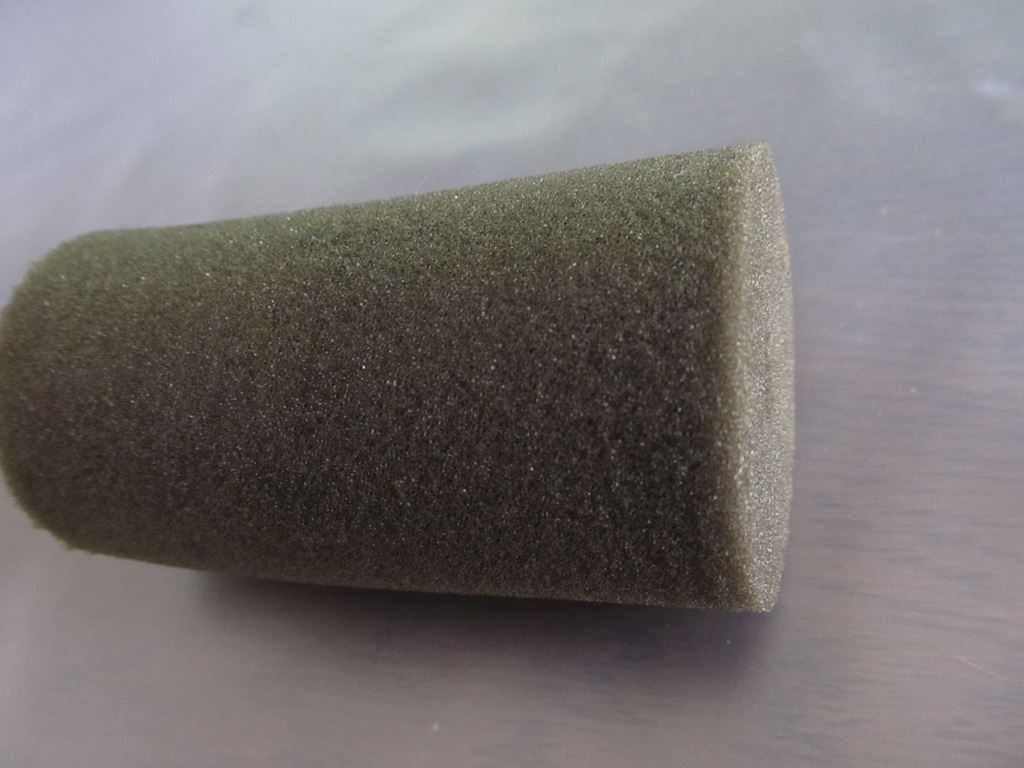
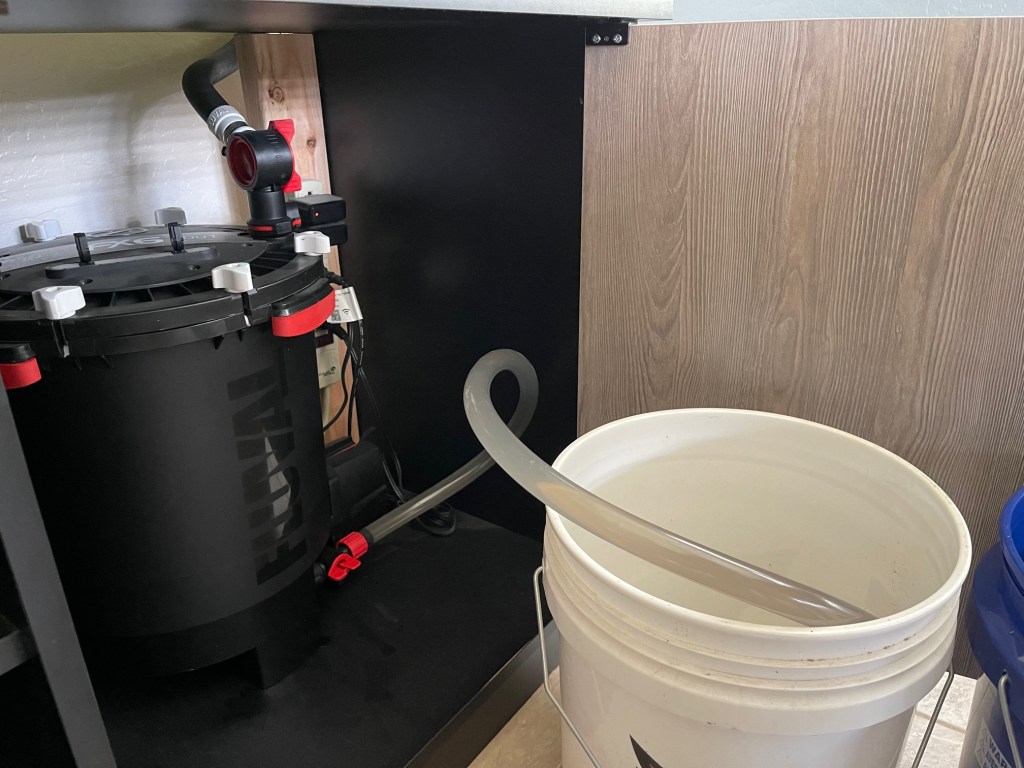
Rinse sponges and media in a bucket of old tank water, never tap water or soap, because chlorine kills beneficial bacteria. Remove clogged pre-filter debris and replace only the parts that are falling apart. Clean part of the media at a time if the filter holds your only bacteria.
Step 4: Vacuum the substrate in sections
Use a gravel vacuum over about one-third of the gravel each water change. For a deep sand bed with black, smelly spots, disturb only a small area at a time. Hydrogen sulfide trapped in a large pocket can be released all at once and harm fish, so work gradually and increase aeration.
Step 5: Boost circulation and oxygen
Add an air stone or point the filter output so it moves water across the bottom. Flow prevents stagnant spots where waste breaks down without oxygen.
Step 6: Fix feeding
Feed only what your fish finish in about a minute or two, once or twice a day. Net out leftovers.
Step 7: Deal with tap water smells
If the tap water smells of sulfur, let a friend or water utility help you check. Never use hot tap water for aquariums. A carbon filter bag can help with some odors, but it won't fix the underlying cause in the tank.
Why Does My Fish Tank Smell Bad After a Water Change?
A smell right after a water change usually means the cleaning stirred up waste that was sitting in the substrate or filter, or that the new water itself smells (sulfur, chloramine or a dirty bucket). Smell the tap water first. If it's fine, give the tank a day, run extra aeration and vacuum less aggressively next time.
Why Does My Fish Tank Smell Bad but the Water Is Clear?
Clear water doesn't mean clean water. Dissolved waste, an old filter or hidden substrate pockets can smell while the water still looks fine. Check the filter and substrate first, then test for ammonia and nitrite.
Why Does My Fish Tank Smell Bad and Look Cloudy?
Cloudy water plus a bad smell often means a bacterial bloom feeding on excess waste, or a dead animal. Follow the removal and water-change steps above and see our full guide to cloudy aquarium water.
When It's Serious
Act quickly if the smell comes with any of these:
- Fish gasping at the surface or lying on the bottom
- Ammonia or nitrite readings above 0 ppm
- Multiple fish sick or dead
- A very strong rotten-egg smell after disturbing the sand
Do a large (50%) water change, add aeration, stop feeding for a day and test again. Gasping fish may need the steps in our fish gasping at the surface guide. If fish keep dying, bring a water sample to a local fish store or consult an aquatic veterinarian.
How to Prevent Aquarium Smells
- Feed lightly and remove leftovers.
- Do a weekly 20-30% water change with gravel vacuuming.
- Rinse filter media in tank water about monthly, or when flow drops.
- Don't overstock, and let the tank cycle before adding fish.
- Trim dead plant leaves regularly.
- Keep the lid and surrounding area clean, since dust and old food collect there.
- Count your fish and snails during maintenance so a hidden death doesn't go unnoticed.
From Aquagram
Explore AquagramTest Account
Hello aquarists!
Dan GL
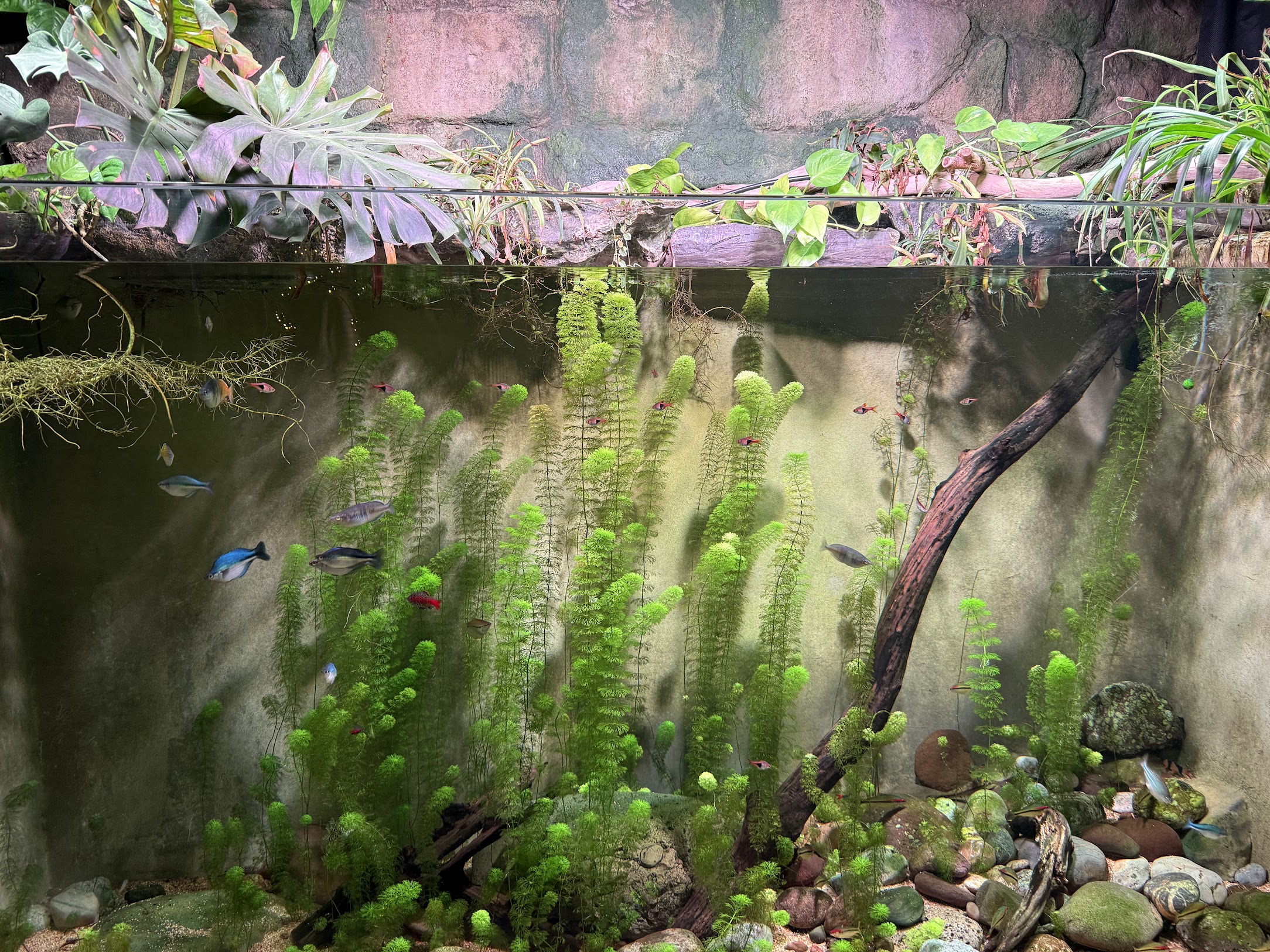
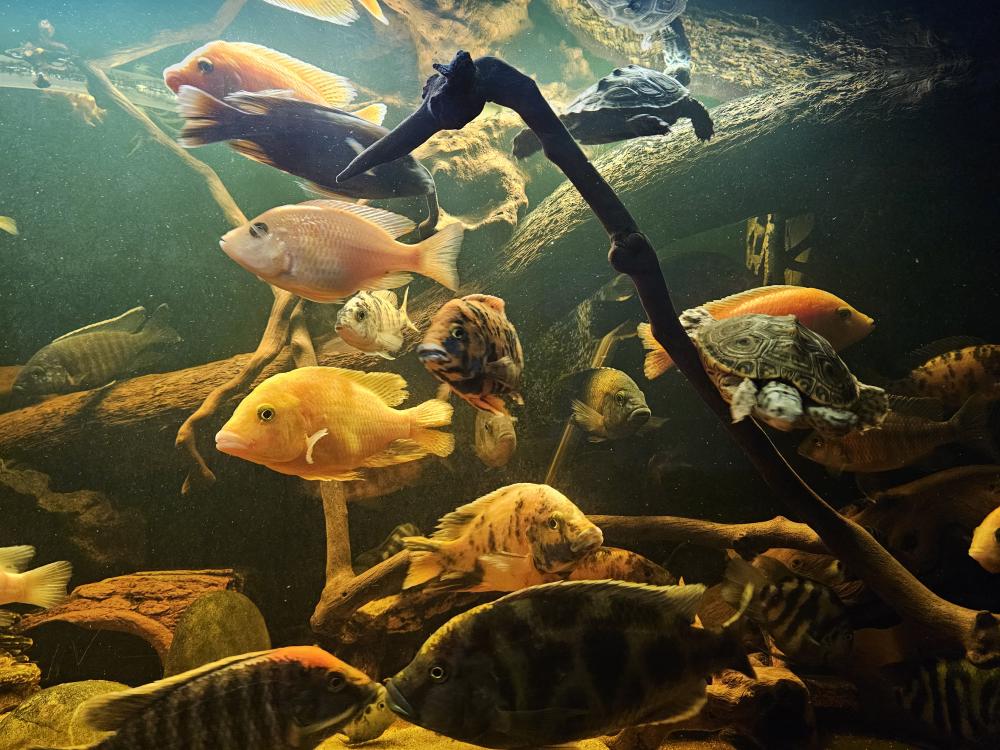
A view of my 125 gallon aquarium. Lots of fish and a few Northern Diamondback Terrapins too! 😁
SwitchTank
Incredible!

Fish Tank Smell FAQ
Why does my fish tank smell like rotten eggs?
Usually hydrogen sulfide from anaerobic pockets in the substrate or a filter full of old waste. It can also come from sulfur in tap or well water.
Why does my fish tank smell like sewage?
A sewage or garbage smell suggests something dead or rotting, an overfed tank or a very dirty filter. Look for a hidden dead animal first.
Why does my aquarium smell musty or like mud?
A mild earthy smell is normal for a planted or mature tank. A strong muddy smell can indicate cyanobacteria, which should be siphoned out and the nutrients and light reduced.
Is a smelly fish tank dangerous to fish?
It can be. The smell itself is a symptom of decaying waste, which uses up oxygen and can cause ammonia spikes. Hydrogen sulfide is toxic to fish.
Is a smelly fish tank dangerous to people?
Normal tank odors are unpleasant, not dangerous. If you're sensitive or the smell is strong, ventilate the room and clean the tank.
How do I get rid of the smell in my fish tank quickly?
Remove dead or rotting material, change 25-50% of the water and clean the filter media in old tank water. Most mild odors improve within a day or two.
Can I use air fresheners or odor sprays near my tank?
Avoid aerosol sprays and candles near an aquarium, since fumes can dissolve into the water. Fix the source instead.
How often should I clean my tank to prevent smells?
A weekly partial water change with gravel vacuuming, plus monthly filter rinses, works for most freshwater tanks.
Does a new fish tank smell bad?
New tanks can smell of plastic or cleaning chemicals. Rinse new equipment in plain water only. A rotten smell in a new tank usually means uneaten food or an uncycled tank.
Sources and Fact Check
Reviewed 2026-11-20. Google search was blocked during research, and veterinary and university sources were not reachable, so this guide relies on a general aquarium-care reference and on chemistry references. Treat the fixes as hobby practice, not veterinary advice.
- Aquarium Co-Op, How to clean a fish tank: supports vacuuming part of the substrate, rinsing filter media in old tank water (not soap), dechlorinating, and keeping nitrates below 40 ppm.
- Wikipedia, Hydrogen sulfide: rotten-egg odor of the gas.
- Wikipedia, Geosmin: earthy or musty odor linked to cyanobacteria in freshwater.
Photo credits: "Aquarium 60cm" by 16toki (public domain) via Wikimedia Commons; "A freshwater aquarium containing plants and small fish" by Netha Hussain (CC0) via Wikimedia Commons; filter photos from the SwitchTank media library.
Disclaimer: This article is general information, not veterinary advice. For serious or persistent problems, consult an aquatic veterinarian.