
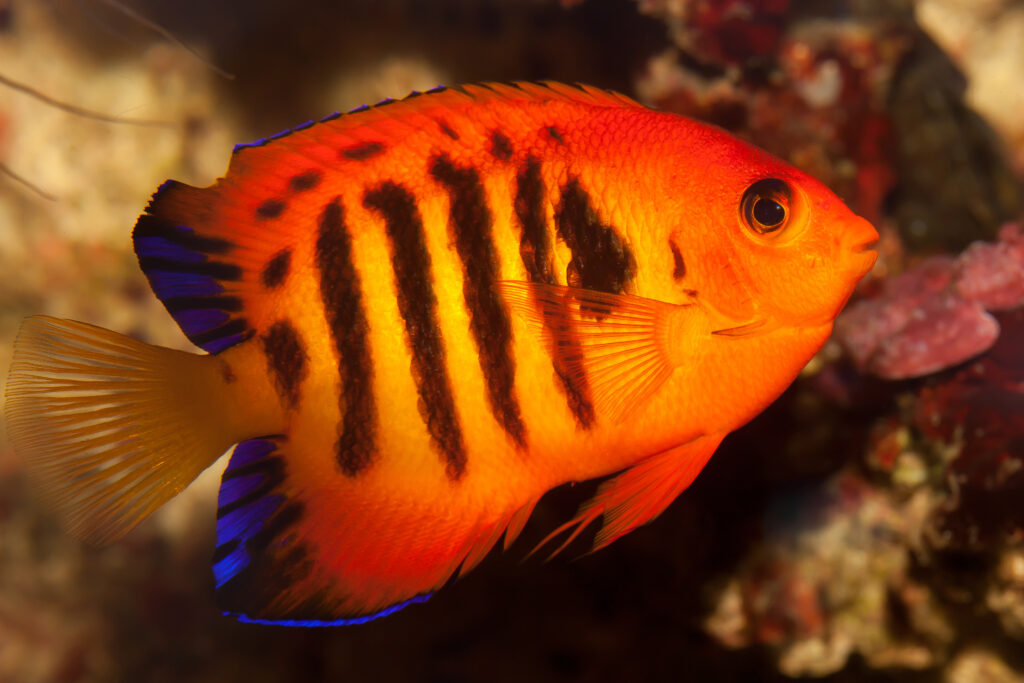
The flame angelfish (Centropyge loricula) is one of the most popular dwarf angelfish in marine aquariums, and one of the most photographed. Its blazing orange-red body with vertical dark bars on the sides and electric-blue edging on the fins makes it a centerpiece fish. It stays small, but it is not a beginner's fish: it is shy, needs a mature tank with plenty of live rock, and has a reputation for sometimes nipping at corals and clams. This guide covers what to expect.
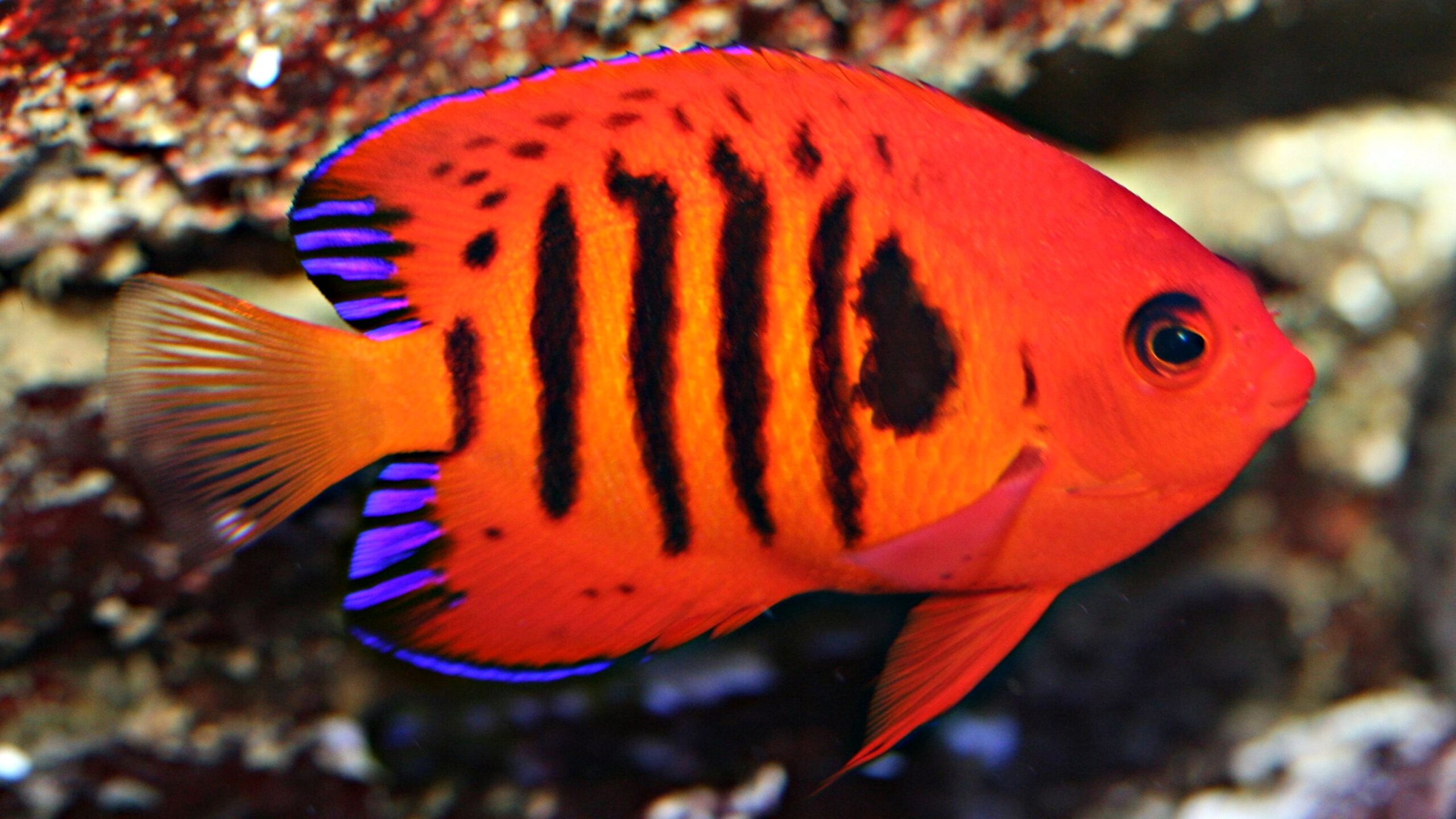
Overview and Appearance
Flame angelfish come from the tropical Pacific, including Hawaii and the central Pacific islands. FishBase describes them as reef-associated, found from shallow water to about 60 m, and secretive, usually staying close to shelter. In the wild they feed mainly on algae and small crustaceans and live in small harems. The species is assessed as Least Concern by the IUCN and is frequently exported for the aquarium trade, and it has been reared in captivity, though captive-bred fish are not always easy to find.
Males are generally larger and more intensely colored than females.
Size and Lifespan
FishBase lists a maximum of about 15 cm (6 in), although most aquarium fish are smaller. Wikipedia reports a lifespan of roughly 5 to 7 years or more in good conditions. Some keepers report fish dying with no obvious cause as they age.
Tank Size and Setup
Choose a tank of at least 70 gallons (about 265 L). Hobbyists commonly recommend 55 gallons as a bare minimum for a single fish, but dwarf angels are active, territorial grazers and do better with more room. This is a hobby guideline rather than a published standard, so more space is safer.
- Use plenty of live rock with caves and crevices. The flame angelfish is shy and spends much of its time near cover.
- Add it to a mature tank (several months old) with established algae growth, so it has something to graze.
- Keep a tight lid. Dwarf angels can jump.
- Quarantine every new fish. See quarantine tank setup.
If you are new to marine tanks, read how to set up a saltwater aquarium first, and use a marine test kit from day one.
Just a heads up: some of the links in this post are affiliate links, which means I may earn a small commission if you buy through them. But no worries, it is at no extra cost to you. Also, as an Amazon Associate I earn from qualifying purchases.
Water Parameters
Typical reef and fish-only targets work well:
- Temperature: 24-26 C (75-79 F)
- Salinity: 1.023-1.025 specific gravity
- pH: 8.1-8.4
- Ammonia and nitrite: 0
- Nitrate: as low as practical, ideally under 10-20 ppm
Stable numbers matter more than perfect numbers. A good refractometer beats a floating hydrometer for accuracy.
Diet
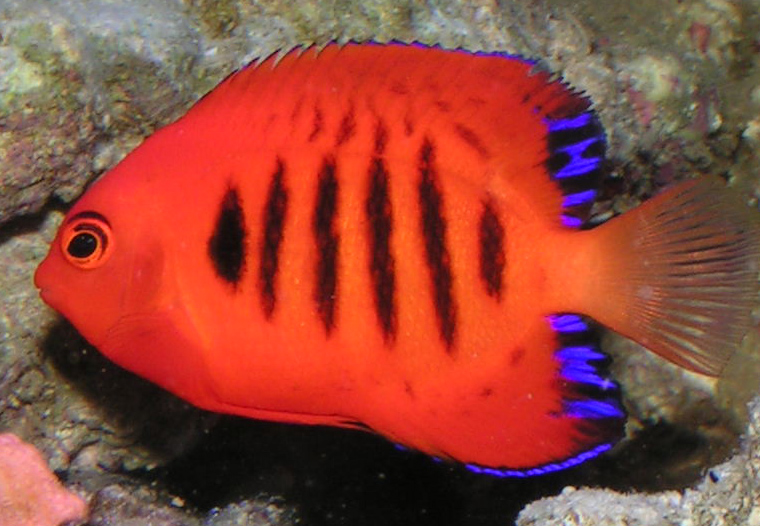
Wild flame angelfish eat algae and small crustaceans, so offer a varied diet:
- Dried seaweed (nori) on a clip
- Spirulina-based flakes or pellets
- Mysis shrimp and enriched brine shrimp
- Marine pellets and frozen angelfish or herbivore blends
Feed small amounts two or three times a day. A newly introduced fish that will not eat is a very common problem; see fish not eating for a diagnosis checklist. Shop for frozen mysis shrimp and marine algae sheets.
Temperament and Tank Mates
Flame angelfish are shy when first introduced, which is why they should be added to an established tank with hiding places, usually after more timid species are settled. Within their own kind they are territorial: keep one per tank unless the tank is very large and you are experienced with dwarf angel groups. They can be aggressive toward similar-looking angelfish. Our coral beauty angelfish guide is a useful comparison.
Good tank mates include peaceful gobies, clownfish, wrasses and dottybacks of compatible size. Add the flame angelfish before more aggressive fish.
Reef safety: keepers often describe dwarf angels as "reef safe with caution." Many flame angelfish ignore corals, but some nip at large-polyp stony corals, soft corals, zoanthids and clam mantles, and individual behavior varies. Do not assume it is safe: watch carefully after introduction and be ready to remove the fish.
Acclimation and the First Weeks
The first two weeks decide most outcomes. Quarantine the fish for several weeks in a bare tank with a few PVC pipes or ceramic caves, and drip-acclimate it to your salinity. Keep the lights dim and offer small amounts of food, such as mysis or nori on a clip, a few times a day. Many dwarf angels start grazing within a day or two, but a fish that hides and refuses everything for several days deserves a closer look at water quality, salinity and any bullying. Our general checklist in fish not eating applies to marine fish as well, with the extra step of checking salinity and temperature stability.
When you move it to the display tank, turn the lights down, rearrange nothing and add the fish last to avoid territory disputes with fish that are already settled, then watch for a few days. If you keep other dwarf angels, introduce them at the same time or add the flame angelfish last, and have a plan to separate them with a divider or removal.
Algae, Grazing and Tank Maintenance
Because it grazes, the flame angelfish benefits from a tank with live rock covered in natural algae and film. Do not scrub every rock clean. Do keep nitrates in check with regular water changes, a good skimmer and a modest feeding schedule. A reliable protein skimmer and consistent salt mixing and top-off habits protect every animal in the tank. Weekly testing for salinity, temperature and nitrate catches small drifts before they become problems.
Breeding
Flame angelfish form harems in the wild, and captive breeding has occurred, but it is rare in home aquariums and requires a large tank and a stable pair. Most hobbyists will not breed them.
Common Health Issues
- Marine ich (Cryptocaryon): white spots and scratching; quarantine and prompt treatment are the best defense.
- Poor appetite and stress after shipping.
- Bacterial infections and fin damage from bullying or poor water.
- Parasites and sudden death in older fish.
If your fish stops eating, hides constantly or breathes fast, test water first and seek an aquatic veterinarian when possible. A quarantine setup saves tanks.
Difficulty Level
Moderate. It is hardier than many angelfish and much easier than larger species, but it needs a mature reef-like tank, patient feeding, and careful monitoring around corals. Not recommended for a brand-new tank.
FAQ
Are flame angelfish reef safe?
Often, but not guaranteed. Some nip at corals and clam mantles; watch closely.
How big do flame angelfish get?
Up to about 15 cm (6 in), usually less in aquariums.
How big a tank does a flame angelfish need?
At least 70 gallons is a safer hobby minimum; 55 gallons is the commonly cited bare minimum.
Are flame angelfish aggressive?
They are territorial toward their own species and similar angels, but usually peaceful with unrelated fish.
What do flame angelfish eat?
Algae, nori, spirulina, mysis and marine pellets.
How long do flame angelfish live?
Around 5-7 years or more.
Sources and Fact Check
Reviewed 2026-11-14. Tank size, parameters, feeding schedule and reef-safety notes are hobby guidelines and are labeled as such.
- FishBase, Centropyge loricula: 15 cm maximum, reef-associated to 60 m, secretive, algae feeder, harems, captive-reared, frequently traded.
- Wikipedia, Flame angelfish: Least Concern, 5-7+ year lifespan, shy when introduced, accepted foods, sexual differences, range.
Image credits: Andreas Marz (CC BY 2.0) for the first two photos; third photo public domain, via Wikimedia Commons.