
If your fish is swimming sideways, floating upside down, stuck at the surface or struggling to stay upright, it almost certainly has a swim bladder problem. Swim bladder “disease” is not one illness but a symptom, and the most common causes are constipation or overfeeding, poor water quality, cold water, and (in fancy goldfish and bettas) body shape. Fasting for 2-3 days, perfect water and a slightly warmer tank fix most mild cases.
This guide covers every common phrasing of the problem, from “my betta can’t stay upright” to “my goldfish is floating sideways but still alive”, and shows you how to work out which cause you are dealing with.
What Is the Swim Bladder and What Goes Wrong?
The swim bladder is a gas-filled organ that lets a fish control its buoyancy. When it is squeezed, inflamed, infected or filled incorrectly, the fish loses balance. Depending on the cause you may see:
- Floating at the surface, or head-down with the tail up
- Swimming sideways or tilted, or rolling over
- Sinking and lying on the bottom (see our guide to fish lying on the bottom of the tank)
- Swimming in circles or struggling to stay upright
- A swollen or curved belly
Most Common Causes (Ordered by Likelihood)
- Constipation and overfeeding. By far the most common cause. A packed gut presses on the swim bladder. Dry flakes and pellets that swell, plus too much food, are classic triggers.
- Gulping air or dry food at the surface. Fish that rush to the surface and swallow air with floating food can trap it.
- Poor water quality. Ammonia, nitrite and high nitrate stress fish and cause inflammation. See high ammonia in a fish tank.
- Temperature too low. Cold water slows digestion. Tropical fish and bettas in unheated tanks are frequent victims.
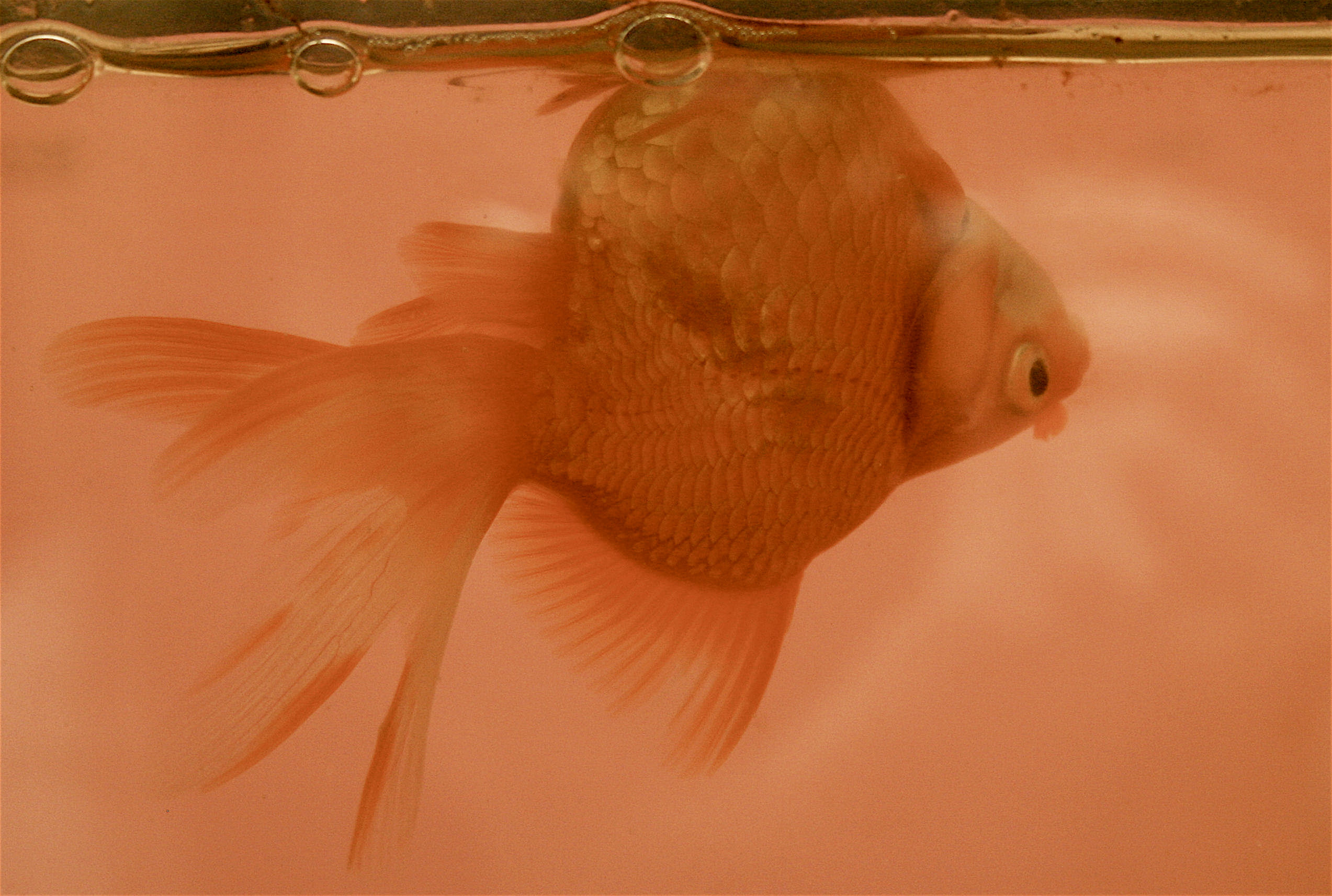
- Body shape. Fancy goldfish (orandas, ryukins, pearlscales) and balloon-type fish have compressed bodies, so organs squeeze the bladder. This is often a lifelong tendency.
- Bacterial or parasitic infection. Less common, but possible, especially with swelling, pinecone scales or other symptoms. See dropsy in fish and our guide to bacterial infections.
- Injury or genetics. A knock, a fight, a stressful transport, or a birth defect. These cases may not improve.
- Sudden temperature or water changes. Often the “after water change” cases people report.
How to Diagnose Which Cause You Have
Work through these questions in order:
- Test the water first. Check ammonia, nitrite, nitrate and pH with a liquid test kit. Any ammonia or nitrite is an emergency to fix before anything else.
- Check the temperature. Most tropical fish and bettas want about 76-80°F. Goldfish are fine cooler but dislike swings.
- Look at the belly. A swollen belly after big meals points to constipation. A very round, rough-scaled body with pinecone scales points to something more serious.
- Ask what changed. New food, a heavy feeding day, a missed heater, or a big water change usually tells you the story.
- Look at the poop. Little or stringy, pale poop suggests digestive trouble. See white stringy poop in fish.
- Check other symptoms. Clamped fins, no appetite, white spots or ulcers suggest infection or parasites rather than a simple digestive issue. See our clamped fins guide.
Just a heads up: some of the links in this post are affiliate links, which means I may earn a small commission if you buy through them. But no worries, it is at no extra cost to you. Also, as an Amazon Associate I earn from qualifying purchases.
Step-by-Step Fixes
Step 1: Fix the water
Do a 25-50% water change using water treated with a water conditioner, matched to tank temperature. Repeat if ammonia or nitrite is above 0 ppm.
Step 2: Warm the tank (tropical fish)
Raise the temperature gradually to the upper end of the species’ comfortable range, around 78-80°F for a betta or most tropicals. A reliable aquarium heater helps digestion. Do not heat goldfish into tropical temperatures.
Step 3: Fast the fish for 2-3 days
Stop feeding. This lets the gut clear. Most mild constipation cases improve in this window.
Step 4: Feed a gut-clearing food
After fasting, offer a small amount of deshelled, skinned, mashed peas (a pinch, not a meal) once a day for a day or two. Then return to a sensible diet with soaked or sinking food.
Step 5: Change how you feed
- Soak dry pellets and flakes for a minute before feeding, especially for goldfish and bettas
- Feed small portions the fish finishes in about 30 seconds to a minute
- Choose sinking or soaked food for fancy goldfish, which tend to gulp air from the surface
- Add variety: frozen or gel foods, not just dry. A balanced quality betta or goldfish food goes a long way
Step 6: Consider a hospital tank
A bare, shallow hospital tank with low water level lets a weak fish reach the surface without fighting the current. See our quarantine tank setup guide.
Step 7: Epsom salt (only if needed)
Epsom salt (magnesium sulfate, not regular aquarium salt) is often used to reduce swelling and relax the fish. Hobbyists commonly use about 1 tablespoon per 5 gallons in a separate hospital tank for a few days. Never use it with invertebrates, and treat it as a short-term tool. If unsure about doses, ask an aquatic vet. For aquarium salt, read our aquarium salt guide.
Step 8: Treat infection only if there are signs
If the fish also has swelling, pinecone scales, ulcers or no improvement after a week of good care, bacterial infection may be involved. Review our top aquarium medications and consider a broad-spectrum antibiotic only if the symptoms match. If you can reach an aquatic vet, this is a good time.
When It Is Serious
- No improvement after 7-10 days of good care
- The fish cannot eat, or is stuck on its side or upside down constantly
- The belly is severely swollen, with pinecone scales or red streaks
- Several fish in the tank have problems, suggesting water quality or disease
- Ulcers, bleeding or rapid decline
Some fish, especially heavily bred fancy goldfish, develop chronic buoyancy problems. They can still live a comfortable life with adjusted feeding, a lower water level and soaked foods, but there is no quick cure.
If a fish is clearly suffering with no chance of recovery, humane euthanasia is kinder. An aquatic vet or experienced fishkeeper can guide you.
How to Prevent Swim Bladder Problems
- Feed small amounts and soak dry food
- Use a varied diet with some greens and frozen foods
- Keep water parameters stable: 0 ammonia, 0 nitrite, nitrate below 20 ppm
- Use a heater for tropical fish and avoid big temperature swings
- Choose appropriate tank sizes. For goldfish see our goldfish care guide, and for bettas our betta care guide
- Avoid fish with extreme, compressed body shapes if you want low-maintenance care
Swim Bladder Problems FAQ
Why is my fish swimming sideways?
Most often constipation, overfeeding or poor water. Test the water, fast for 2-3 days and warm the tank slightly if it is tropical.
Why is my fish floating upside down but still alive?
It still has a functioning body but a buoyancy problem. Treat the likely causes: water quality, digestion and temperature. It can recover if the cause is mild.
Why can’t my betta stay upright?
Bettas often develop swim bladder problems from cold water, overfeeding and dry pellets that swell. See our betta care guide for feeding and temperature.
Why is my goldfish floating sideways?
Fancy goldfish are prone to constipation and gulp air. Fast, feed soaked or sinking food and keep the water clean.
Is swim bladder disease contagious?
The condition itself is not contagious, but infections or water problems that cause it can affect others.
Does swim bladder go away on its own?
Mild cases often improve within a few days when the cause is fixed. Chronic cases may persist.
How long does swim bladder disease last?
Mild cases: 2-7 days. Stubborn cases can take weeks, and some never fully resolve.
Can I use Epsom salt for swim bladder?
It is commonly used in a hospital tank, but it is not a cure. Fix the underlying cause first, and do not use it with invertebrates or live plants.
Why is my fish swimming sideways after a water change?
Temperature or pH shock, or chlorine left in the water, can disrupt balance. Always match temperature and use conditioner.
Can a fish recover from swim bladder disease?
Yes, many do, especially when it is caused by diet or water quality. Fish with infections or structural problems have a lower chance.
Final Thoughts
A fish that cannot swim properly looks alarming, but in most cases the fix is simple: clean water, a short fast, gentle feeding and the right temperature. Act early, avoid medicating blindly, and call an aquatic vet if the fish is declining.
Photo credits: Goldfish with swim bladder disease by Humanfeather / Michelle Jo, CC BY 3.0; The fish tank as environment for freshwater goldfish and Exotic goldfish diversity by AJ Gray, CC0, via Wikimedia Commons.
Disclaimer: This article is general information, not veterinary advice. For serious or persistent problems, consult an aquatic veterinarian.