
As an Amazon Associate I earn from qualifying purchases. This post contains affiliate links, which means I may earn a small commission at no extra cost to you.
Amano shrimp are the algae-eating workhorses of the planted-tank world. They are larger than cherry shrimp, tougher than many dwarf shrimp, and they will clean hair algae that most other animals ignore. They are also surprisingly misunderstood: many keepers expect to breed them like cherry shrimp, then wonder why they never see babies.
This amano shrimp care guide covers tank size, setup, water, diet, tank mates, lifespan, breeding and the problems that most often cause losses.
Amano Shrimp Overview and Appearance
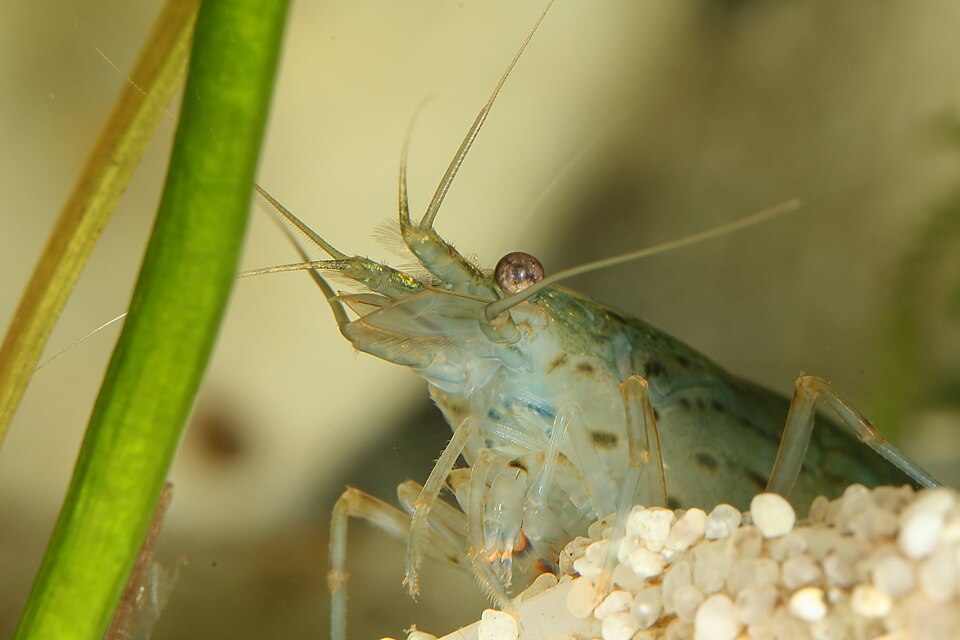
Photo: Richard Bartz, Munich Makro Freak (CC BY-SA 2.5), via Wikimedia Commons.
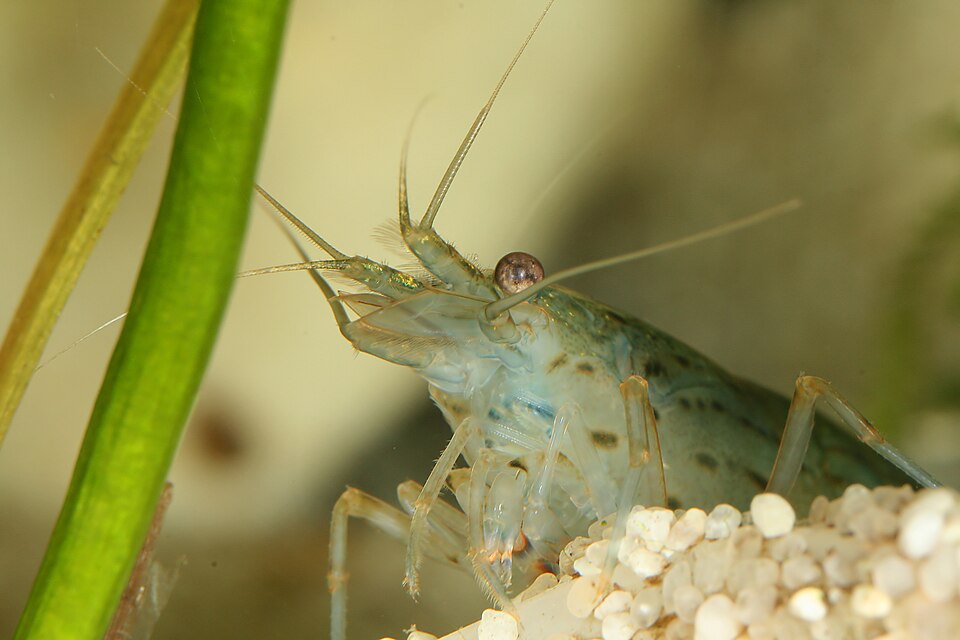
The amano shrimp (Caridina multidentata, formerly Caridina japonica) is named after the aquascaper Takashi Amano, who popularized it for planted tanks. It comes from streams in Japan and Taiwan. The body is translucent gray-green with a pale line along the back and rows of reddish-brown dots along the side. Females show larger, more broken dots, while males have smaller, rounder ones.
Size and Lifespan
Females reach about 2 inches (5 cm) and males are a bit smaller at about 1.5 inches. The amano shrimp lifespan is about 2 to 3 years in a well-kept tank, longer than most dwarf shrimp.
Amano Shrimp Tank Size and Setup
The amano shrimp minimum tank size is about 10 gallons for a small group, although some keepers use 5 gallons for a few shrimp. A larger tank is more stable and gives them room to graze. How many amano shrimp should you keep? A good rule is 1 shrimp per 2 to 3 gallons, with at least 3 to 5 in a group.
Setup basics:
- A cycled tank. Shrimp are sensitive to ammonia and nitrite. See our guide to how to cycle a fish tank.
- Live plants and moss. They provide food (biofilm), hiding places and a safe spot after molting.
- Hiding places. Use driftwood, rocks and small caves.
- A lid. Amanos are strong climbers and will leave the tank through gaps.
- A sponge filter or covered intake. A sponge filter is gentle and shrimp-safe, and it grows biofilm for grazing.
- Slow acclimation. Drip-acclimate new shrimp over an hour or two.
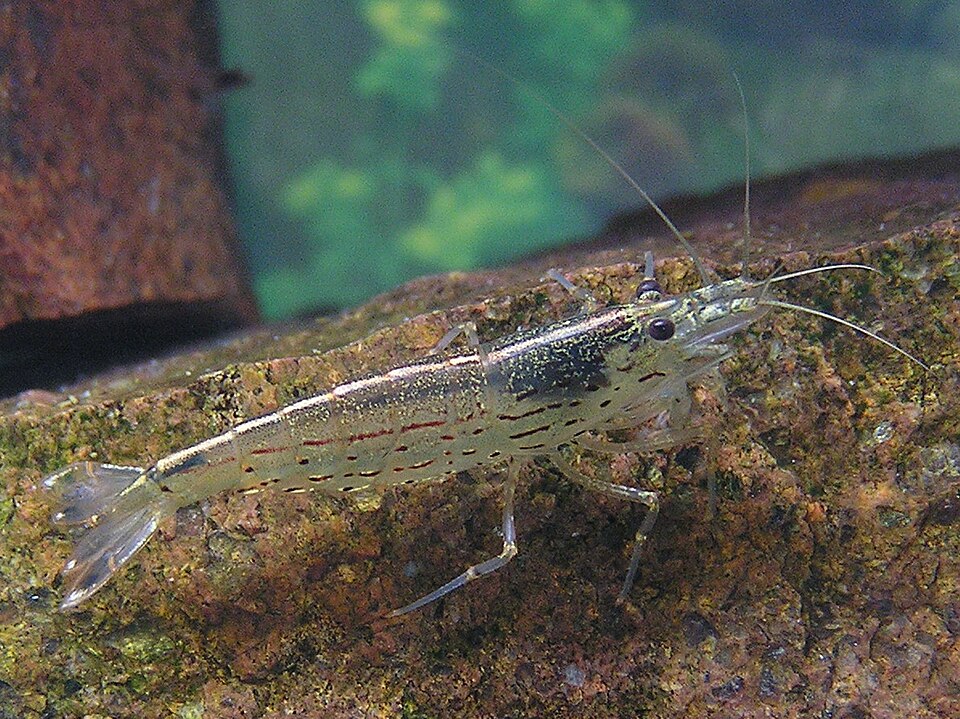
Photo: MdE (CC BY-SA 3.0 de), via Wikimedia Commons.
Water Parameters
- Temperature: 70-78°F (21-26°C)
- pH: 6.5-7.5
- Hardness: moderately soft to medium (GH 6-10)
- Ammonia and nitrite: 0 ppm
- Nitrate: below 20 ppm
- Copper: 0 ppm
Copper is deadly to shrimp. Many fish medications and some plant fertilizers contain it, so check labels. Test your water with a liquid test kit, and use a quality water conditioner for every water change. Keep water changes small, 10 to 20 percent, since shrimp dislike sudden parameter shifts. Molting happens regularly, and a sudden large water change can trigger a failed molt.
What Do Amano Shrimp Eat?
Amano shrimp are famous for eating algae, especially hair algae and thread algae. They also graze on biofilm, leftover food and decaying plant matter. Do they eat all algae? No. They do not eat every kind (for example, they usually ignore black beard algae), and they won’t clean a tank that is out of balance.
To keep them healthy, feed:
- Algae wafers or shrimp pellets a few times per week
- Blanched vegetables such as zucchini or spinach
- Dried leaves, like Indian almond leaves, to grow biofilm
- Occasional protein, such as frozen foods, in small amounts
Do not overfeed. Leftover food fouls the water and shrimp are sensitive to ammonia.
Temperament and Amano Shrimp Tank Mates
Amano shrimp are peaceful and active. They often shoal and are bold in daylight, especially with other shrimp around. They are larger than cherry shrimp and can sometimes steal food, but they do not hunt other shrimp. If you are wondering whether amano shrimp eat fish or neocaridina, they are scavengers: they will pick at a dead fish or a dying one, but healthy fish and shrimp are not at risk.
Good tank mates include:
- Small, peaceful fish such as chili rasboras and celestial pearl danios
- Small tetras such as neon tetras
- Corydoras. See our panda corydoras care guide
- Snails and other peaceful shrimp
- Otocinclus and similar algae eaters
Avoid large or predatory fish, including cichlids, goldfish, large barbs, loaches that hunt shrimp, and most pufferfish. A betta may live with shrimp, but it depends on the fish. Large amanos are safer with bettas than tiny cherry shrimp, but never assume.
Breeding Amano Shrimp
This is where amano shrimp differ from cherry shrimp. Females carry eggs under the tail, called berried shrimp, and the eggs hatch into tiny larvae. In nature, these larvae are swept downstream to brackish water, where they develop. In a freshwater tank, they die within days.
To raise them you need a separate brackish larval setup: a small tank with salinity of about 1.015 to 1.020, gentle air, and tiny green-water foods such as phytoplankton. After weeks, the postlarvae settle and must be slowly acclimated back to fresh water. It is a demanding project, so most keepers simply enjoy their amanos and do not expect a colony. Because of this, the shrimp sold in stores are almost always wild-caught or commercially raised.
Common Health Issues
- Failed molts. Poor water or sudden changes can leave a shrimp stuck in its old shell. Keep parameters steady and make small changes.
- Copper and chemical poisoning. Keep medications, paint, sprays and copper away.
- Ammonia or nitrite spikes. New tanks are the main cause of early losses.
- Parasites and ciliates. Quarantine new shrimp where you can. See our guide on setting up a quarantine tank.
- Escape. Dry shrimp on the floor are common when the tank has no lid.
Many fish treatments harm invertebrates. Treat sick fish in a separate tank and read the label. Our top 5 aquarium medications guide covers common options and cautions.
How Hard Is Amano Shrimp Care?
Difficulty: easy to moderate. They are one of the hardier dwarf-type shrimp, but they still need a cycled tank, stable parameters and no copper. Starting with healthy specimens and acclimating slowly make the biggest difference.
Photo: Brkoslav Severní (CC0), via Wikimedia Commons.
Amano Shrimp FAQ
How many amano shrimp should I keep?
About one per 2 to 3 gallons, with a group of at least 3 to 5.
What size tank do amano shrimp need?
10 gallons is a good minimum for a small group.
Do amano shrimp eat hair algae?
Yes, they are among the best hair-algae eaters, though they will not eat every type of algae.
Do amano shrimp eat plants?
No, healthy plants are safe. They may eat dying leaves.
Can amano shrimp live with a betta?
Sometimes, in a planted tank of 10 gallons or more, but results vary.
Will amano shrimp breed in my tank?
Females may carry eggs, but the larvae need brackish water to survive, so freshwater tanks do not produce babies.
How long do amano shrimp live?
About 2 to 3 years.
Final Thoughts
Amano shrimp are a practical, attractive addition to any planted tank. Give them a cycled tank, stable water, no copper and some hiding places, and they will clean algae and entertain you for years.
Do you keep amanos? Share your experience in the comments.
Disclaimer: This article is general information, not veterinary advice. For serious or persistent problems, consult an aquatic veterinarian.