
As an Amazon Associate I earn from qualifying purchases. This post contains affiliate links, which means I may earn a small commission at no extra cost to you.
Few freshwater fish look as odd as the kuhli loach. It is long, thin and striped like a tiny eel, and it spends most of the day out of sight. Many new owners buy one, never see it again, and wonder whether it is alive. Others lose their loaches to escape through filter intakes or to unsuitable water.
This kuhli loach care guide explains tank size, substrate, group size, feeding, tank mates, lifespan and the problems to watch for, with an honest rating of how hard they really are.
Kuhli Loach Overview and Appearance
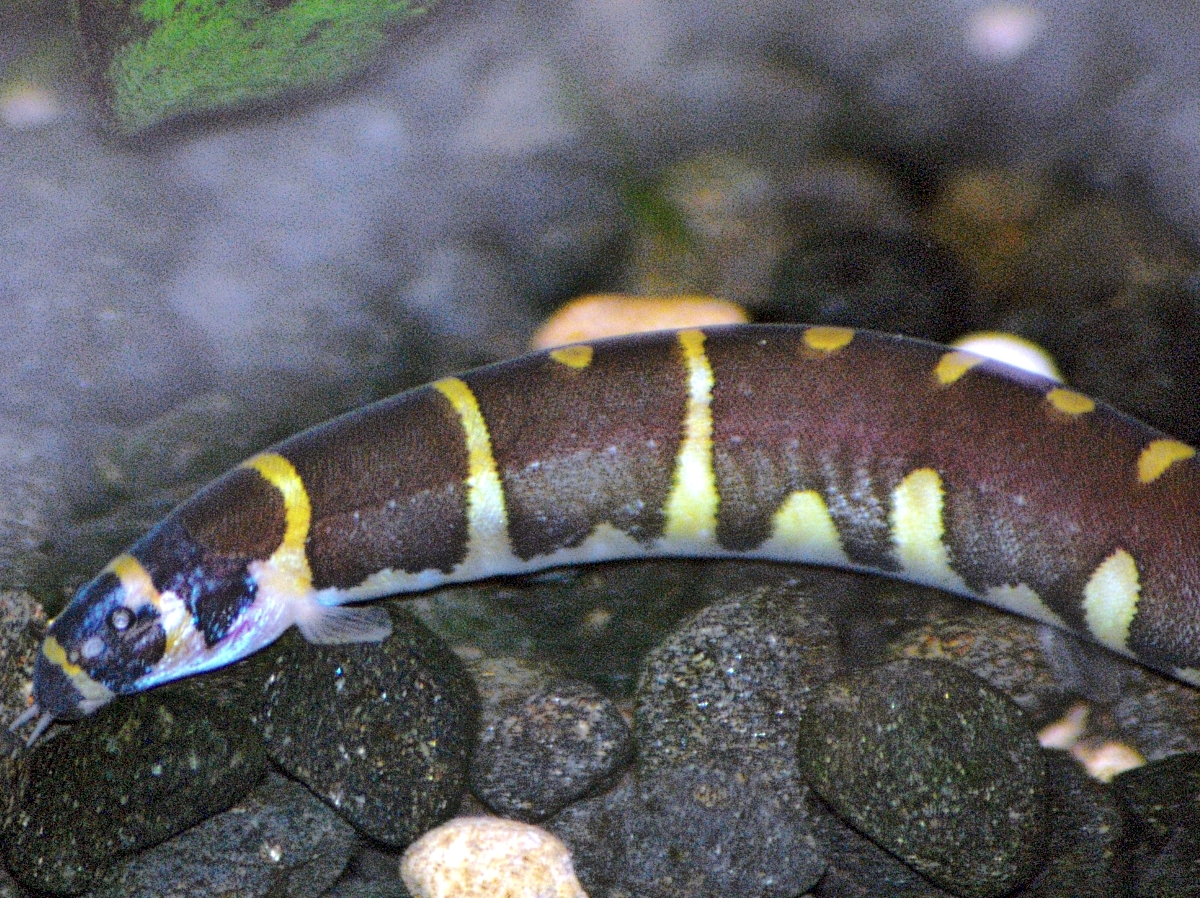
Photo: Wikimedia Commons (CC BY-SA 3.0).
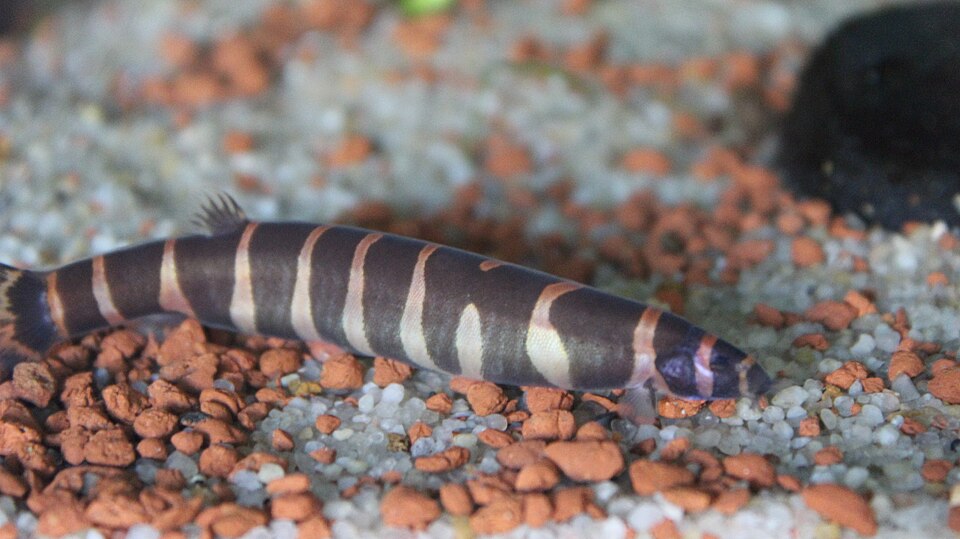
The kuhli loach (Pangio kuhlii), also called the coolie loach, is a small, eel-like loach from the slow, shaded streams of Southeast Asia. The body is pinkish-yellow with 10 to 15 dark brown bands, and there are tiny barbels around the mouth. The skin is thin and almost scaleless in appearance, which matters when choosing medications later.
Several similar species are sold as kuhli loaches, including black kuhli loaches (Pangio oblonga). Their care is the same.
Size and Lifespan
Adults reach about 3 to 4 inches (8 to 10 cm). The kuhli loach lifespan is 10 years or more in good conditions, so this is a long commitment for such a small fish.
Kuhli Loach Tank Size and Setup
The kuhli loach minimum tank size is 20 gallons (long) for a group, and bigger is better. A 10 gallon tank is sometimes quoted for a few fish, but a longer tank gives them more floor space and room for plants.
Because kuhlis are natural burrowers, the substrate matters more than almost anything else:
- Fine sand or very smooth, small gravel. Sharp gravel can scratch their delicate skin. Fine sand lets them dig safely, and a sand substrate for aquariums is a good choice.
- Plenty of hiding places. Use driftwood, leaf litter, rock caves and dense plants.
- A tightly fitting lid. Kuhlis can squeeze through very small gaps and have been found far from the tank.
- A covered filter intake. Use a sponge pre-filter or filter intake guard so they are not sucked in.
- Dim lighting or floating plants. They are shy and are most active when it is shady.
Keep the tank cycled before they arrive. Our guide to how to cycle a fish tank explains how.
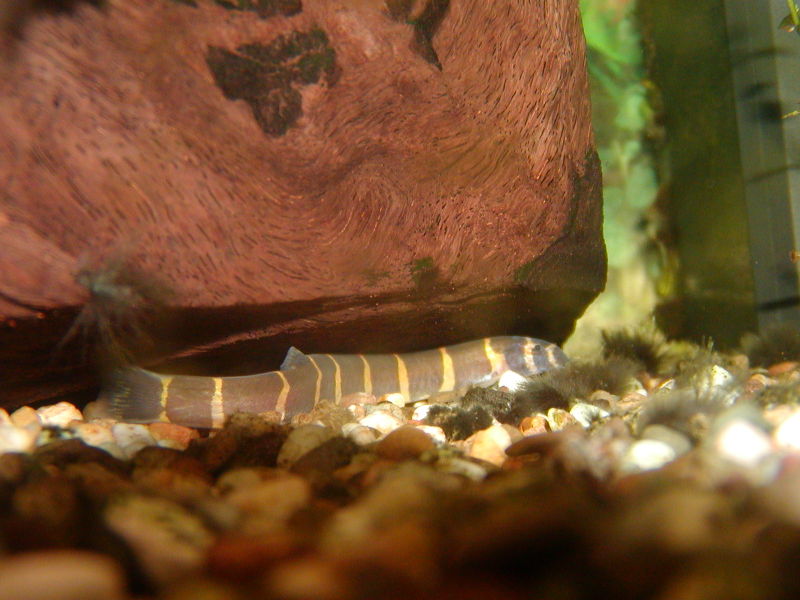
Photo: Louie (CC BY-SA 3.0), via Wikimedia Commons.
Water Parameters
- Temperature: 75-86°F (24-30°C)
- pH: 5.5-7.0
- Hardness: soft to moderately soft (2-10 dGH)
- Ammonia and nitrite: 0 ppm
- Nitrate: below 20 ppm
Kuhlis are sensitive to dirty water and sudden changes. Test regularly with a liquid test kit, and use a heater to keep the temperature steady.
What Do Kuhli Loaches Eat?
Kuhli loaches are bottom-feeding omnivores that scavenge small invertebrates and detritus. They do best on:
- Sinking pellets or wafers
- Frozen or live bloodworms, daphnia and brine shrimp
- Blanched vegetables as a small treat
- Occasional micro worms and tubifex-type foods from a reputable source
Because they are shy and nocturnal, they often miss food in a busy community tank. Drop sinking food in at dusk after the lights are dim, and watch to make sure they actually eat. A good sinking loach food makes it easier. They may eat small snail eggs and tiny snails, but they are not reliable pest control.
Temperament and Kuhli Loach Tank Mates
Kuhli loaches are peaceful and social. Keep at least 5 or 6, ideally more. In a small group they come out more, feel safer and act naturally. A single kuhli is usually a hidden, stressed kuhli.
Good tank mates are small, calm fish that will not outcompete them for food:
- Small tetras such as neon tetras and cardinal tetras
- Rasboras, including harlequin rasboras
- Small corydoras. See our corydoras care guide
- Guppies and other peaceful livebearers
- Peaceful dwarf gouramis
Can kuhli loaches live with a betta? Often yes, in a planted tank of 20 gallons or larger. Most bettas ignore bottom-dwellers, but a very aggressive male can harass them.
Can kuhli loaches live with shrimp? Adult shrimp are usually safe, but a hungry kuhli may eat baby shrimp.
Avoid large or aggressive fish, such as big cichlids and tiger barbs, which will outcompete or hurt them.
Breeding Kuhli Loaches
Kuhli loaches are rarely bred in home tanks. Females swell with eggs, which may be visible through the thin body, but spawning in captivity is unpredictable. In the wild they spawn after seasonal rains. Breeders use soft, slightly acidic water, floating plants and mild temperature changes to trigger spawning. Eggs are scattered among floating plants and the fry are very small. Most hobbyists never see this, and most kuhlis sold are wild-caught or farmed in Asia.
Common Health Issues
- Ich (white spot). Kuhlis are scaleless-looking and sensitive to medication. Use half doses of many treatments or a gentle approach such as higher temperature and clean water. See our guide to white spots on fish.
- Bacterial infections. Dirty water and sharp substrate cause skin injuries. Read our guide to bacterial infections.
- Starvation. Shy fish may not get enough food in a busy tank.
- Escape and injury. Gaps, open filters and pumps cause many losses.
- Poor water quality. Always add new fish to a cycled tank and quarantine newcomers in a separate tank.
Scaleless fish can react badly to medications. Check labels and read our top 5 aquarium medications before dosing. If in doubt, treat in a separate tank and ask an experienced keeper or an aquatic vet.
How Hard Is Kuhli Loach Care?
Difficulty: easy to moderate. They are not demanding in diet, but they require a soft sand bottom, a secure lid, a group, clean water and careful use of medications. Most failures come from buying a single fish, using sharp gravel, or running an open filter.
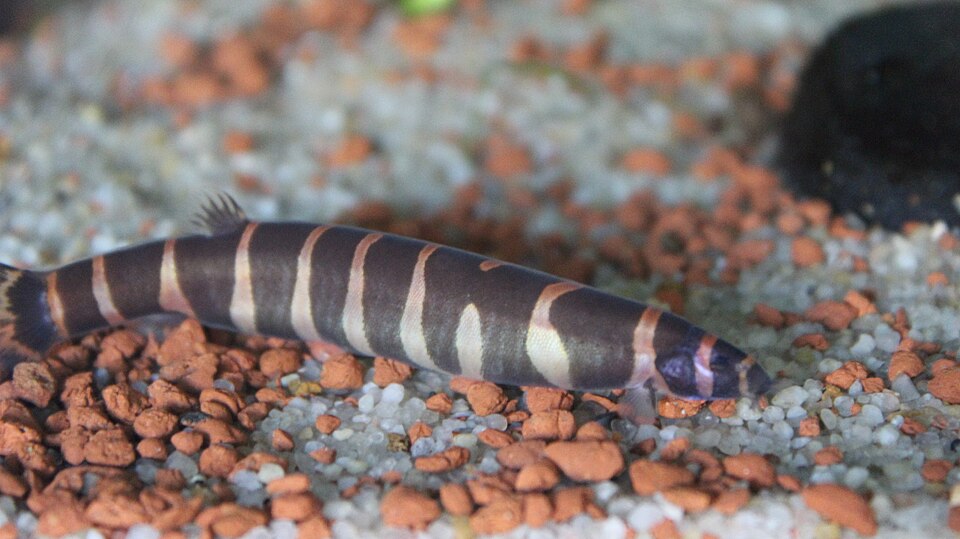
Photo: Iidkk (CC BY-SA 4.0), via Wikimedia Commons.
Kuhli Loach FAQ
How many kuhli loaches should I keep?
At least 5 or 6. More is better if the tank is big enough.
What size tank do kuhli loaches need?
A 20 gallon long is a sensible minimum for a group.
Why do I never see my kuhli loach?
They are shy, nocturnal burrowers. Provide hiding places, dim light and a group to bring them out.
Do kuhli loaches need sand?
They do best on sand or smooth fine gravel. Sharp gravel can injure them.
Are kuhli loaches good tank mates for betta fish?
Often yes, in a planted tank of 20 gallons or more.
Can kuhli loaches live alone?
They can survive alone, but they are much happier and more visible in a group.
How long do kuhli loaches live?
Often 10 years or more.
Final Thoughts
Kuhli loaches are charming, quirky fish that reward patience. Give them sand, cover, a lid and company, and you will see them wiggle out in the evening for years to come.
Do you keep kuhlis? Tell us how many you have in the comments.
Disclaimer: This article is general information, not veterinary advice. For serious or persistent problems, consult an aquatic veterinarian.