
As an Amazon Associate I earn from qualifying purchases. This post contains affiliate links, which means I may earn a small commission at no extra cost to you.
Few saltwater fish turn heads like the purple tang. The deep violet body, fine blue lines and bright yellow tail make it a centerpiece fish for a large reef or fish-only tank. It is also a fish that many keepers buy too early. It needs a big tank, a lot of swimming room, a mature algae-rich system and a careful quarantine.
This purple tang care guide covers size, tank requirements, feeding, aggression, tank mates, lifespan and the health problems that most often hit tangs.
Purple Tang Overview and Appearance
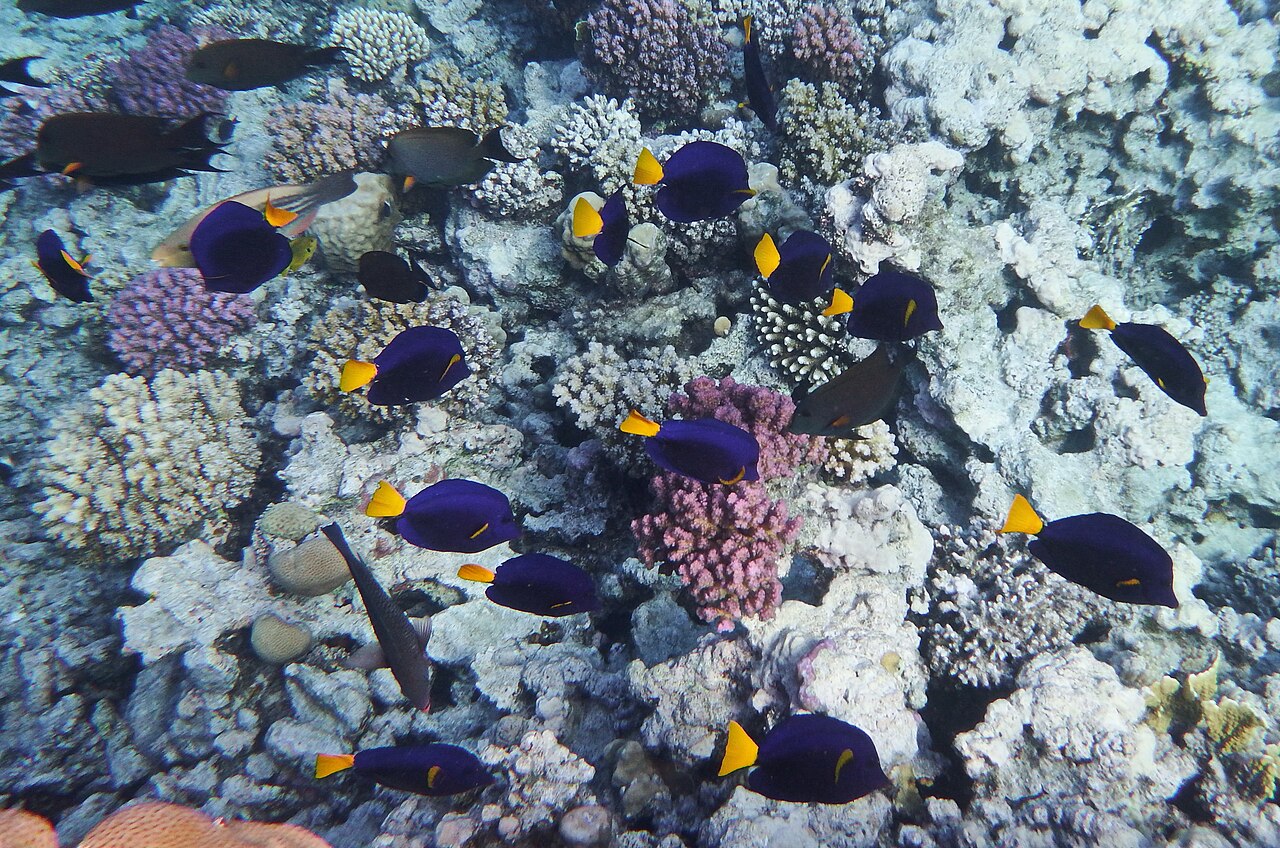
Photo: Kora27 (CC BY-SA 4.0), via Wikimedia Commons.
The purple tang (Zebrasoma xanthurum), also called the yellowtail tang or yellowtail surgeonfish, comes from the Red Sea and the Arabian Sea region. It is a member of the surgeonfish family, named for the sharp, scalpel-like spine on each side of the tail base. Handle the fish and net with care, as the spines can cut.
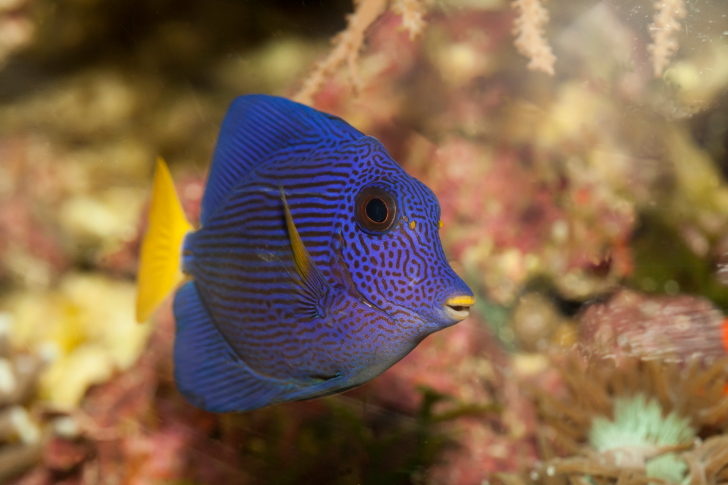
The body is deep blue to purple with fine dark spots on the head and lines along the body, and the tail is bright yellow. Color is best when the fish is well fed and not stressed. Stressed or new fish can look pale.
Size and Lifespan
Purple tangs reach about 8 inches (20 cm) in the aquarium. Shops often sell them at 2-3 inches, so a small fish in a small display will outgrow it quickly. With good care, the purple tang lifespan is 10 years or more, so this is a long-term commitment.
Purple Tang Tank Size and Setup
The purple tang minimum tank size is 100 gallons, and 125 gallons or larger with a length of 6 feet is much better. Tangs are constant grazers and swimmers, and cramped tanks lead to stress, aggression and disease.
Setup basics:
- Lots of open swimming space with live rock arranged to leave open water.
- Caves and crevices where the tang can sleep and retreat.
- Strong flow and high oxygen levels. Tangs come from well-oxygenated reef flats with lots of water movement. A wavemaker or powerhead helps.
- Mature, algae-covered rock. A new tank with no algae is a poor home for a tang. Wait at least several months after the cycle.
- A tight lid. Tangs can jump when startled.
Our guide on how to set up a saltwater aquarium covers the system itself, and the cycling guide explains the nitrogen cycle you must finish first.
Water Parameters
- Temperature: 75-82°F (24-28°C)
- Salinity: specific gravity 1.023-1.026
- pH: 8.1-8.4
- Ammonia and nitrite: 0 ppm
- Nitrate: below 20 ppm, lower is better
Stability matters more than chasing exact numbers. Measure salinity with a refractometer, mix water with a quality reef salt, and test regularly with a saltwater test kit.
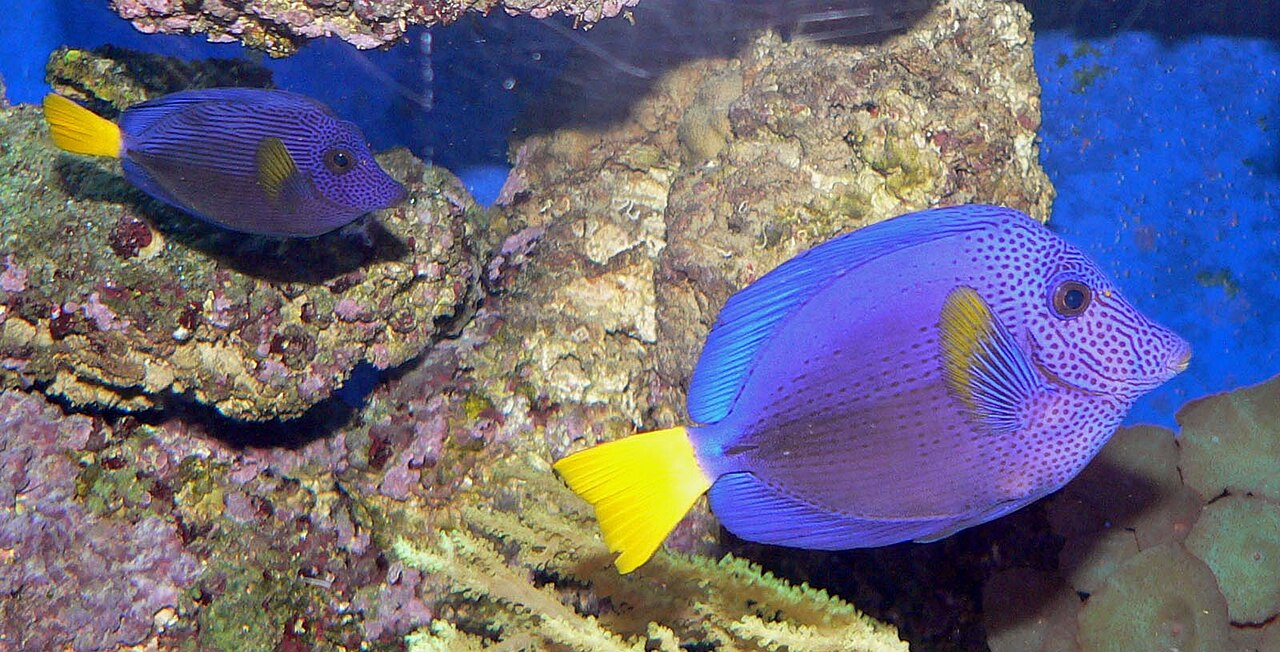
Photo: Stan Shebs (CC BY-SA 3.0), via Wikimedia Commons.
What Do Purple Tangs Eat?
The purple tang diet is mostly herbivore. In the wild they graze on algae all day, so feeding must be frequent.
- Dried seaweed (nori) on a clip, offered daily. Choose red, green or mixed marine algae sheets.
- Marine herbivore pellets or flakes from a quality brand.
- Occasional meaty foods like mysis or brine shrimp enriched with vitamins.
- Natural grazing on film algae and hair algae in the tank.
Feed small amounts two to three times a day. A tang that stops eating is a red flag. Does a purple tang eat coral? Usually not, though some will nip at certain soft corals or clams. Most are considered reef-safe with caution.
Temperament and Tank Mates
Are purple tangs aggressive? Yes, especially toward other tangs of similar shape. They hold a territory and chase fish, and they can be bullies in a tank that is too small. Compare this with the yellow tang, which is also territorial, and the blue tang, which has its own needs.
Tips for tank mates:
- Add the purple tang last or among the last fish, so it does not claim the whole tank.
- Avoid mixing with other Zebrasoma tangs, such as yellow tangs, in smaller tanks.
- If you want more than one tang, use a very large tank (180 gallons or more), add them at the same time, and choose different shapes and species.
- Good tank mates include clownfish like those in our clownfish care guide, royal grammas, dottybacks and most peaceful fish that are not too tiny.
Breeding
Purple tangs have not been bred in home aquariums, and captive-bred specimens are not commercially available. Fish for sale are wild-caught, so buy from a source you trust and pick a healthy, fat, active fish that is eating.
Common Health Issues
Tangs have a reputation for being prone to marine ich (Cryptocaryon irritans, white spots), as well as skin parasites such as flukes, and head and lateral line erosion linked to poor diet or water quality.
- Marine ich. White specks on the fins and body, flashing against rock and fast breathing. Our guide to white spots on fish explains the basics.
- Head and lateral line erosion (HLLE). Pitting on the head, often linked to diet and water quality. Fresh seaweed and clean water help.
- Stress and starvation. A thin fish that hides and refuses food needs attention.
The best protection is a quarantine period of 4-6 weeks before the fish enters your display. See setting up a quarantine tank. Many medications for marine fish contain copper, which will kill invertebrates, so treat only in a separate tank. Our top 5 aquarium medications article gives an overview.
How Hard Are Purple Tangs to Keep?
Honestly, moderate to difficult, not a beginner fish. The fish itself is hardy once established, but the size of the tank, the algae-rich diet, the aggression and the ich risk are all challenges. Experienced keepers with a mature 125-gallon or larger system, a quarantine tank and patience can keep one for a decade.
Purple Tang FAQ
What size tank does a purple tang need?
At least 100 gallons, and 125 or more is better.
How big do purple tangs get?
About 8 inches.
How long do purple tangs live?
10 years or more with good care.
Can I keep a purple tang with a yellow tang?
Only in a very large tank, with careful introduction. In most home tanks, they will fight.
Is a purple tang reef safe?
Generally yes for stony corals, but watch for nipping at some soft corals and clams.
Will a purple tang eat hair algae?
It will graze on some types of algae, but it is not a substitute for fixing the cause of an algae problem.
Final Thoughts
The purple tang is one of the most beautiful reef fish available, but it rewards preparation. Start with a big, mature tank, quarantine the fish, feed plenty of seaweed, and add it last. Do that and you can enjoy this fish for years.
Disclaimer: This article is general information, not veterinary advice. For serious or persistent problems, consult an experienced aquatic professional.
Image credits: featured photo by Josuevg (CC BY-SA 4.0); inline photos by Kora27 (CC BY-SA 4.0) and Stan Shebs (CC BY-SA 3.0), via Wikimedia Commons.