
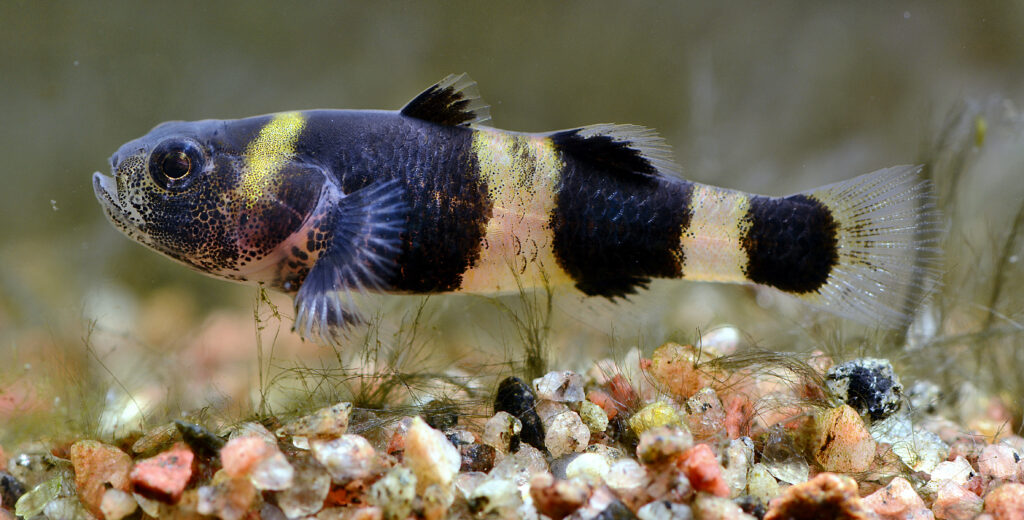
Bumblebee gobies (Brachygobius species) are tiny, black-and-yellow striped fish that perch on rocks and driftwood like miniature bumblebees. They are charming, hardy once settled, and perfect for small tanks, but they have two quirks that catch beginners out: they need brackish water to thrive, and many only eat live or frozen foods. Here is how to get bumblebee goby care right.
Overview and Appearance
Bumblebee gobies come from the coastal rivers, estuaries and mangrove areas of Southeast Asia. Several similar species are sold under the same name, including Brachygobius doriae, B. xanthozonus and B. nunus. All have a dark body with bold yellow or cream bands, a flat head and large eyes. They sit on surfaces and make short darting swims rather than swimming constantly.
Size and Lifespan
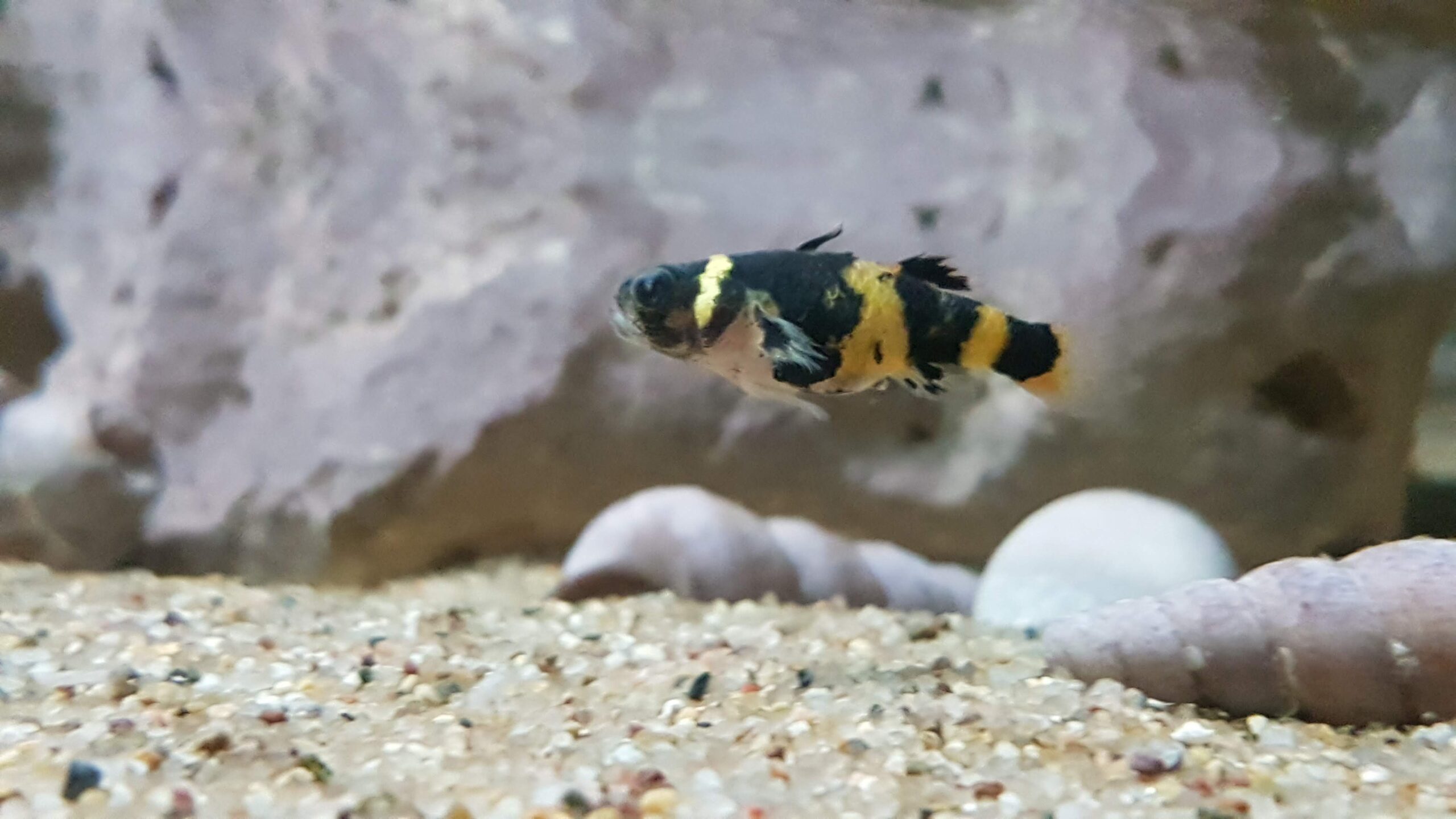
Bumblebee gobies reach only about 1.5 inches (3-4 cm). With good care they live 3-4 years, though many sold fish die in months from poor conditions or starvation.
Tank Size and Setup
A 10-gallon tank suits a small group of 4-6 gobies. They are not active swimmers, so floor space and hiding places matter more than height.
- Caves and hides: Use small ceramic caves, short lengths of PVC, coconut shells and rock stacks. Each goby wants its own cave.
- Substrate: Fine sand or smooth gravel.
- Driftwood and rock: They perch on surfaces and survey their territory from them.
- Plants: Hardy plants such as Java fern and anubias tolerate slightly brackish water.
- Lid: Keep the tank covered. These small fish can jump.
- Filter: A gentle sponge filter is perfect. Strong flow stresses them.
Just a heads up: some of the links in this post are affiliate links, which means I may earn a small commission if you buy through them. But no worries, it is at no extra cost to you. Also, as an Amazon Associate I earn from qualifying purchases.
Read how to cycle a fish tank before adding any fish.
Water Parameters
- Salinity: Slightly brackish, about 1.005-1.010 specific gravity, is the standard recommendation.
- Temperature: 72-82°F (22-28°C)
- pH: 7.5-8.4
- Hardness: Moderately hard
- Ammonia and nitrite: 0 ppm
- Nitrate: Under 20 ppm
Mix marine salt (not table salt or freshwater aquarium salt) with dechlorinated water before adding it to the tank, and measure with a refractometer or hydrometer. Some people keep them in freshwater for a while, but long-term health and lifespan are generally better in brackish water. Our aquarium salt guide explains why aquarium salt is not the same thing.
Diet
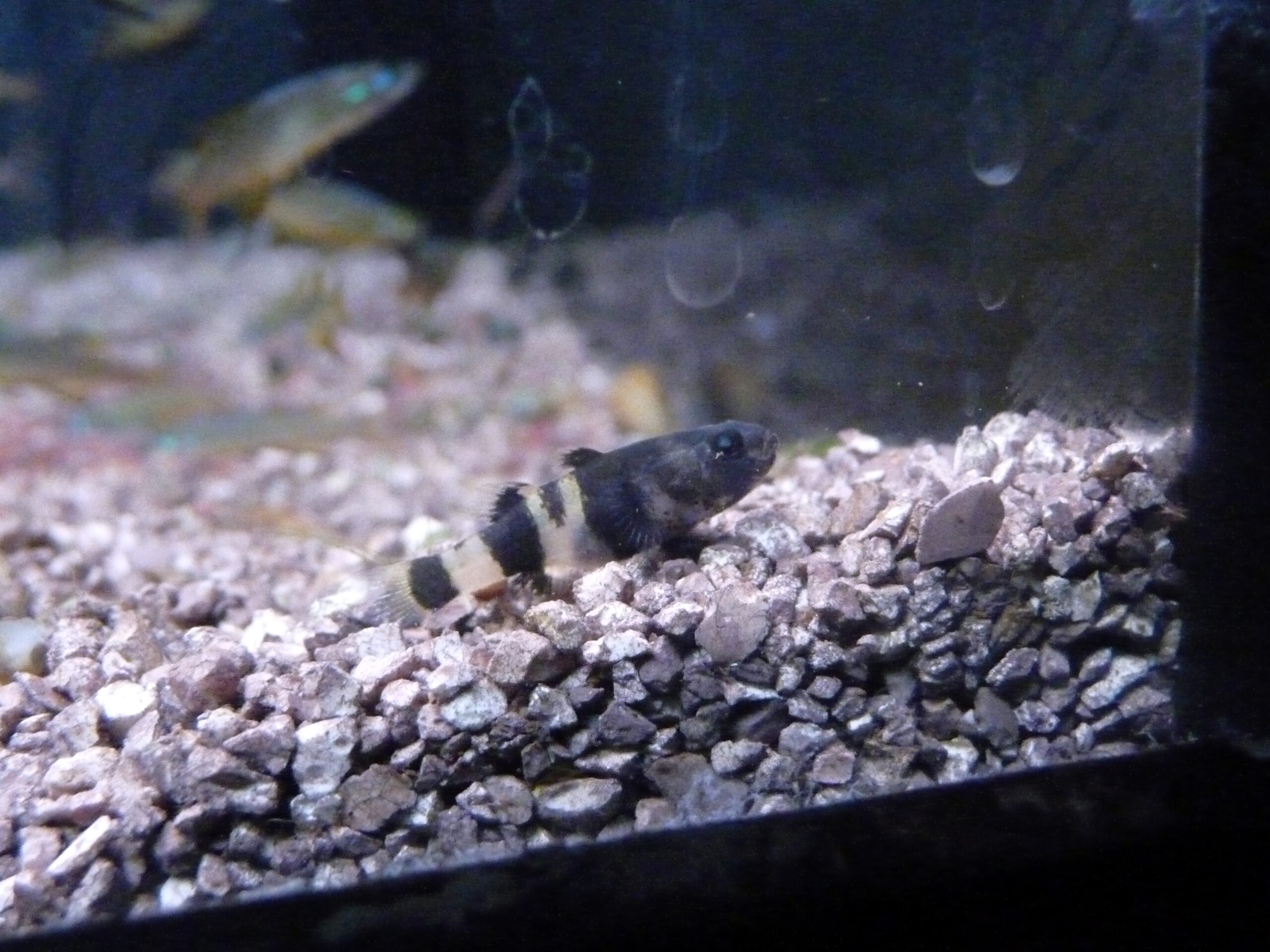
This is where most bumblebee gobies fail. Many refuse flakes and pellets and slowly starve while appearing to eat. Offer:
- Live or frozen foods: Baby brine shrimp, daphnia, small bloodworms, mosquito larvae and cyclops.
- Frozen foods thawed and dropped near them with a pipette or turkey baster.
- Microworms and other small live foods.
Feed small portions twice daily and watch that each fish eats. A goby with a hollow, pinched belly is not getting enough. Bumblebee gobies are slow, sedentary feeders, so avoid boisterous tank mates that steal the food.
Temperament and Tank Mates
Bumblebee gobies are peaceful but territorial with one another. They squabble over caves, and the dispute is mostly posturing. Keep them in a group with at least as many caves as fish.
- Good tank mates: Other small peaceful brackish species such as small livebearers adapted to brackish water, Malaysian trumpet snails and nerites. See our nerite snail guide.
- Avoid: Any fish that grows large enough to eat them, fin nippers, and fast, aggressive feeders.
- Species tank: A species-only tank is the best way to make sure they all get fed.
Breeding
Bumblebee gobies spawn in captivity, and it is one of the best parts of keeping them.
- Provide enclosed caves with a small opening, such as a short length of PVC or a film canister.
- A male claims a cave and courts females with display and sound.
- The female lays a clutch of small eggs on the cave ceiling.
- The male guards and fans the eggs for several days.
- The fry hatch very small and need tiny foods, such as rotifers and infusoria, before baby brine shrimp.
Raising the fry is the hard part. Keep the water stable and provide an established tank with natural microfauna.
Buying Tips and Acclimation
Bumblebee gobies are often sold as “freshwater fish” in store tanks, which is a big reason so many fail. Before you buy:
- Ask what salinity the fish are kept in and match it, or acclimate gradually over several hours.
- Look for fish with rounded bellies, clear eyes and an active, perched posture.
- Ask whether they are eating frozen foods, and watch them take food if you can.
- Avoid a store tank with dead or thin gobies.
- Buy a group of 4-6 at once rather than one at a time, so territorial squabbles settle together.
Use drip acclimation over an hour or more, because a sudden salinity change is stressful for such small fish.
Common Health Issues
- Starvation: The most common killer. Always confirm they accept food.
- Ich (white spot): Treat promptly. Brackish water at the right salinity can be a hurdle for the parasite, but not a cure. See white spots on fish.
- Bacterial infection and fin damage: Usually follows poor water quality. See fin rot.
- Stress from freshwater: Gobies kept long-term in freshwater often decline.
- Hiding all the time: Normal for new fish, but constant hiding can be a sign of stress. See fish hiding all the time.
Quarantine newcomers in a quarantine tank. For persistent problems, consult an aquatic veterinarian.
Difficulty Level
Intermediate. The fish themselves are hardy, but the brackish water and live-food requirement make them unsuitable for a complete beginner. Buy fish that are already eating frozen foods, and prepare the tank before you buy.
Bumblebee Goby FAQ
Do bumblebee gobies need brackish water?
For best health, yes. Slightly brackish water of about 1.005-1.010 is recommended.
How big do bumblebee gobies get?
About 1.5 inches (3-4 cm).
What do bumblebee gobies eat?
Live and frozen foods such as baby brine shrimp, daphnia and small bloodworms. Many refuse dry food.
How many bumblebee gobies can I keep together?
A group of 4-6 in a 10-gallon tank with several caves.
How long do bumblebee gobies live?
About 3-4 years with good care.
Can bumblebee gobies live in freshwater?
They may survive for a while, but they tend to do poorly and die earlier. Brackish is much better.
Are bumblebee gobies hard to keep?
They are moderate. The challenge is feeding and water salinity, not aggression.
Can bumblebee gobies live with other fish?
Only small, peaceful, brackish-tolerant fish. A species tank is best.
Final Thoughts
Bumblebee gobies reward the effort. Set up a small brackish tank, provide plenty of caves, feed live and frozen foods, and you will have a lively, characterful group that breeds in captivity. Skip those steps and these tiny fish will fade fast.
Photo credits: Brachygobius doriae in aquarium by Sven Kullander, CC BY-SA 4.0; Bumblebee goby (Brachygobius doriae) by JSutton93, CC BY-SA 4.0; Brachygobius by Citron, CC BY-SA 3.0, via Wikimedia Commons.
Disclaimer: This article is general information, not veterinary advice. For serious or persistent problems, consult an aquatic veterinarian.