
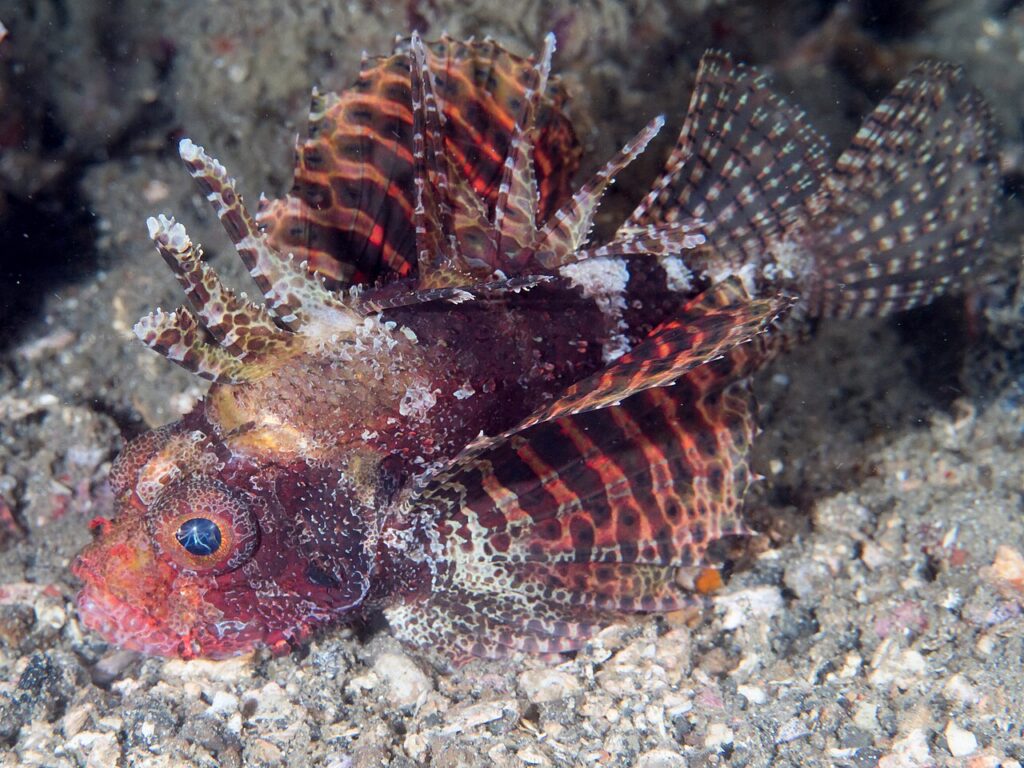
Dwarf lionfish are the manageable end of the lionfish family: they stay under about 7 inches, hover instead of patrolling, and are more at home in a 30-55 gallon tank than their giant cousins are. They are still venomous, still predators, and still a poor match for a tank of small fish or shrimp. This guide covers what a dwarf lionfish needs and who should skip it.
The name covers several related species, mostly in the genus Dendrochirus (now also listed as Neochirus). The fish most often sold as the dwarf, fuzzy or shortfin lionfish is Dendrochirus brachypterus. For the larger species, see our lionfish care guide.
Overview and Appearance
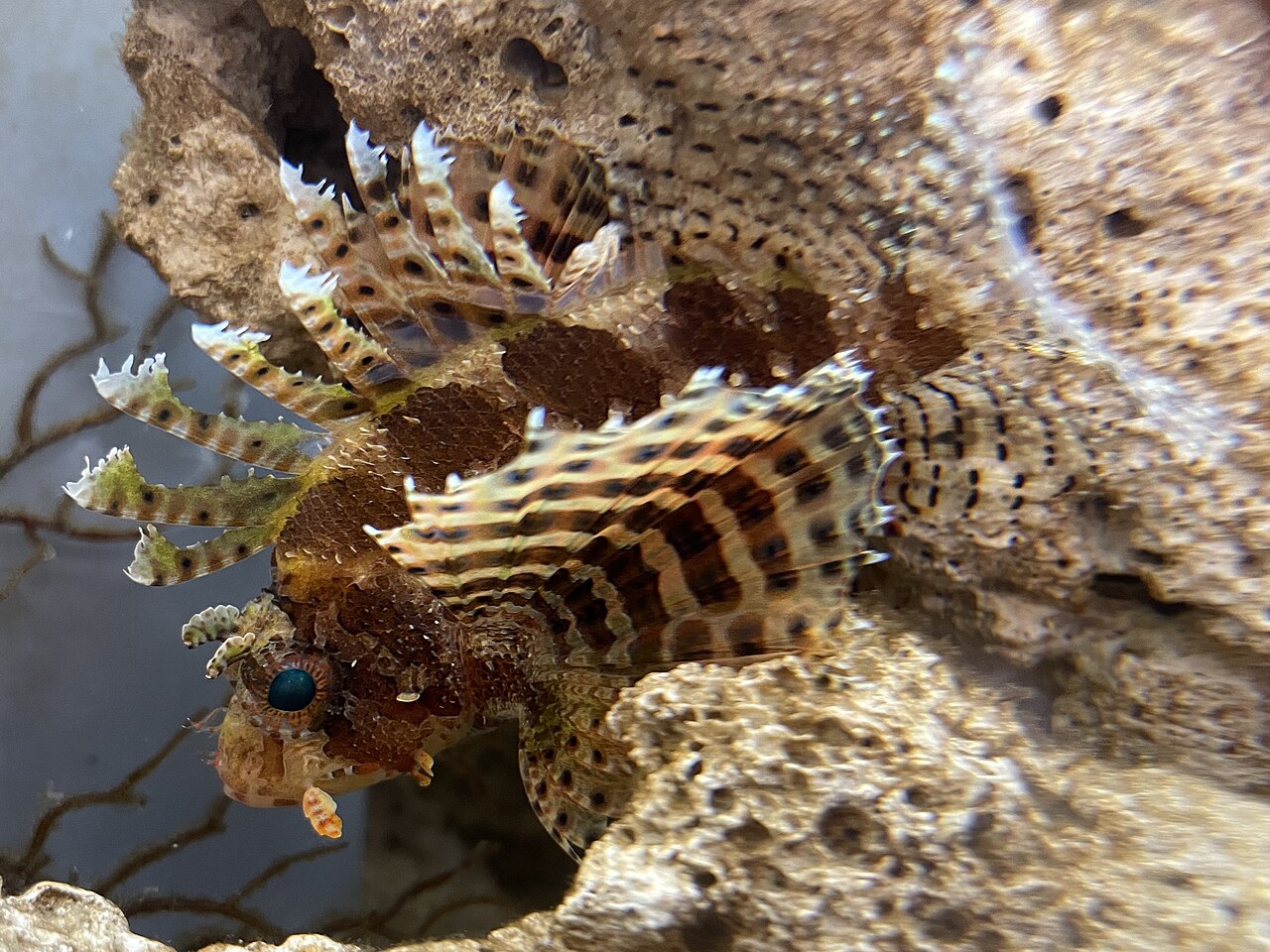
Dwarf lionfish have broad, fan-like pectoral fins, banded red-brown bodies and feathery tentacles above the eyes. They are ambush predators that sit on rock or sand and wait for prey. FishBase and Wikipedia both note that the dorsal spines are venomous and that the fish is sold in the aquarium trade.
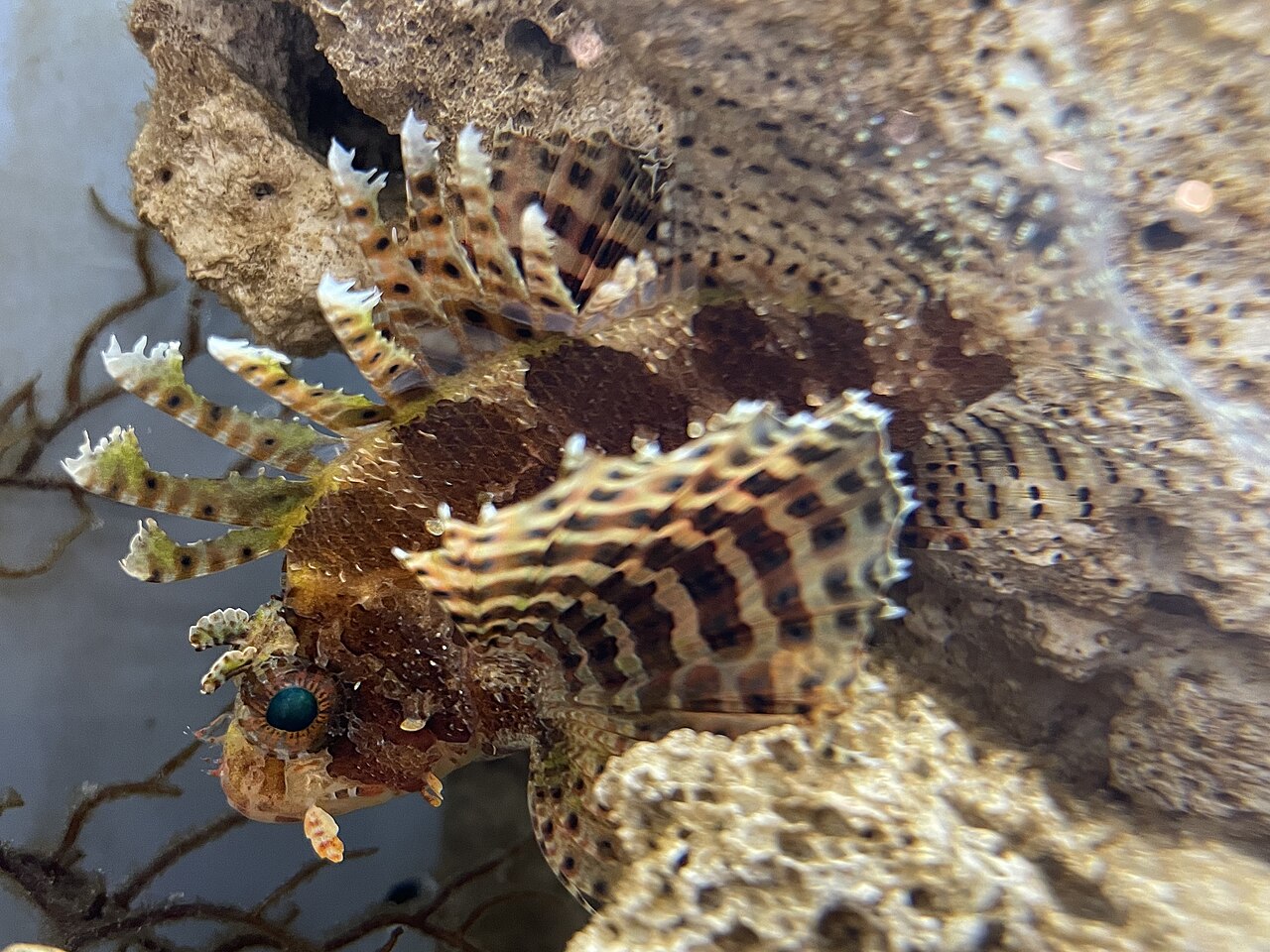
Photos by Totti and Rickard Zerpe on Wikimedia Commons (CC BY-SA 4.0 and CC BY 2.0).
Size and Lifespan
FishBase lists a maximum total length of 17 cm (about 6.7 inches) for D. brachypterus. Other Dendrochirus species vary: the zebra turkeyfish reaches about 25 cm standard length, so confirm which species you are buying. No reliable controlled lifespan data exists for captive dwarf lionfish. Hobbyists commonly report several years to a decade with good care, but treat that as anecdotal.
Tank Size and Setup
A single dwarf lionfish is usually kept in a 30-55 gallon tank. Treat 30 gallons as a minimum for the smaller species, and go bigger if you want more tank mates or one of the larger Dendrochirus.
- Lid: Use a secure lid, a sensible precaution for any marine tank.
- Rockwork: Provide caves and ledges. In the wild, adults are often found on sponges and juveniles gather near reef outcrops.
- Substrate: Sand or fine gravel is fine.
- Flow and filtration: Moderate flow and strong filtration. Lionfish eat meaty food and produce a lot of waste, so a good protein skimmer is worth having.
- Careful with equipment: Heaters and intakes should be placed where you can service them without reaching across the fish. If you are new to marine tanks, read our saltwater aquarium setup guide first.
Just a heads up: some of the links in this post are affiliate links, which means I may earn a small commission if you buy through them. But no worries, it is at no extra cost to you. Also, as an Amazon Associate I earn from qualifying purchases.
Water Parameters
Dwarf lionfish are tropical Indo-Pacific reef fish found in water from India eastward to Tonga, according to FishBase. Common hobby targets are:
- Temperature: 75-80°F
- Specific gravity: about 1.023-1.025
- pH: 8.1-8.4
- Ammonia and nitrite: 0 ppm, nitrate kept low
Use a refractometer for salinity, and test regularly. These numbers are hobby guidelines, not research thresholds.
Diet and Feeding
In the wild, FishBase says dwarf lionfish feed on small crustaceans. In a home aquarium they usually accept meaty frozen foods such as mysis, krill, chopped shrimp and small pieces of fish. Wild-caught fish may only take live food at first, so ask the seller what the fish is already eating, and plan to wean it onto frozen food using tongs or a feeding stick. Avoid relying on feeder fish, which can carry parasites and are not nutritionally ideal.
Adults are generally fed a few times a week rather than daily. Feed smaller portions and watch for a swollen belly or leftover food.
Venom: Handle with Respect
The dorsal spines are venomous. A sting is painful and can cause serious reactions in some people. Take these precautions:
- Never put your hands in the tank without knowing where the fish is.
- Wear long aquarium gloves for maintenance if you are nervous.
- Know the nearest emergency room before you buy one. If you are stung, seek medical attention promptly; do not rely on home remedies.
Temperament and Tank Mates
Dwarf lionfish eat anything that fits in their mouths, including small fish and shrimp. That rules out:
- Neon gobies, small damsels, cardinalfish and other small fish
- Cleaner shrimp, such as in our cleaner shrimp guide, pistol shrimp and most small crustaceans
- Very timid or slow-moving fish that will be harassed
Possible tank mates are fish too large to swallow and calm enough not to nip or harass: larger tangs, some angelfish, larger wrasses and some eels. Check each species for compatibility, because a fast, aggressive fish can stress a slow-moving lionfish. Corals are not eaten, so a dwarf lionfish is generally considered reef-compatible, though it will eat the small shrimp and crabs a reef tank usually includes. See emerald crab care for a sample of how risky crab and shrimp choices can be.
Breeding
Breeding in home aquariums is uncommon. Captive-bred dwarf lionfish are rarely available, so most fish in the trade are wild-caught. If you buy one, ask where it came from and whether it is eating prepared food.
Common Health Issues
- Marine ich and other parasites. Lionfish are susceptible like most marine fish. A quarantine tank is the best prevention.
- Not eating after import. Wild-caught fish may refuse food. Patience and live or fresh foods can help at first. See our guide to fish not eating.
- Water-quality problems. Heavy feeders produce plenty of ammonia and nitrate. Keep up with water changes.
- Sting injuries to you, not the fish. Treat these as a medical issue.
Bring in an aquatic or marine vet for persistent problems.
Honest Difficulty Level
Moderate. Dwarf lionfish are tougher and easier to house than many reef fish, but they are not beginner fish. They need a mature saltwater tank, a seller who can confirm feeding, tank mates that cannot be eaten, and a keeper who accepts the venom risk. They also grow into mouthfuls: fish and shrimp you add later may vanish.
Dwarf Lionfish FAQ
How big do dwarf lionfish get?
About 6-7 inches for the commonly sold D. brachypterus (FishBase: 17 cm TL). Some related species get larger.
What size tank does a dwarf lionfish need?
A 30-gallon tank is a common minimum for one fish, and 55 gallons gives more room for rockwork and tank mates.
Are dwarf lionfish reef safe?
They do not eat corals, but they eat shrimp, crabs and small fish, so they are safe for corals but not for small invertebrates.
Are dwarf lionfish poisonous?
Technically venomous. Their dorsal spines can sting, and you should never handle them barehanded.
What do dwarf lionfish eat?
Small crustaceans in the wild. At home, frozen mysis, krill and chopped seafood, after weaning from live food where needed.
Can you keep two dwarf lionfish together?
Some keepers succeed in large tanks, but fights and bullying are common, so most hobbyists keep one.
Final Thoughts
A dwarf lionfish is a spectacular, intelligent fish that rewards a careful keeper, but only in the right tank. Plan the tank mates before you buy, respect the spines, and get the feeding sorted at the store.
Disclaimer: This article is general information, not veterinary or medical advice. For serious or persistent problems, consult an aquatic veterinarian or a physician.
Sources and Fact Check
Reviewed 2026-11-15. Pages actually read:
- FishBase: Dendrochirus (Neochirus) brachypterus: maximum length 17 cm TL, venomous, feeds on small crustaceans, Indo-West Pacific range, depth range.
- FishBase: Dendrochirus zebra: 25 cm SL, venomous, aquarium trade.
- Wikipedia: Dendrochirus brachypterus and Dendrochirus: habitat, sponges and juvenile groups, venomous spines.
Tank size, water parameters, feeding frequency and tank mate advice are common hobby guidelines and not tested thresholds. No search engine summary was available at review time, so none of the claims rely on one.