
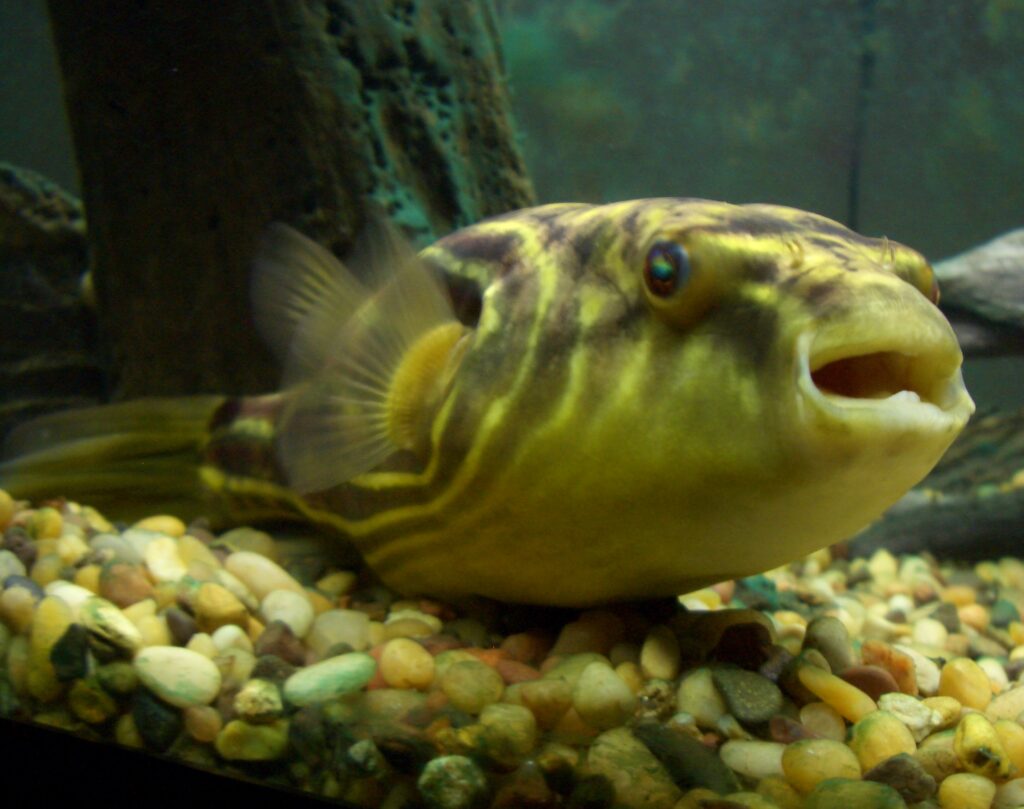
The fahaka puffer (Tetraodon lineatus, also called the Nile puffer) is a large, intelligent, striped freshwater pufferfish from Africa. It is entertaining, learns to recognize its keeper and can grow to well over a foot long. It is also very aggressive, needs a huge tank, eats a demanding diet and is a poor choice for beginners. SeriouslyFish rates it “Difficult,” and that is fair.
Overview and Appearance
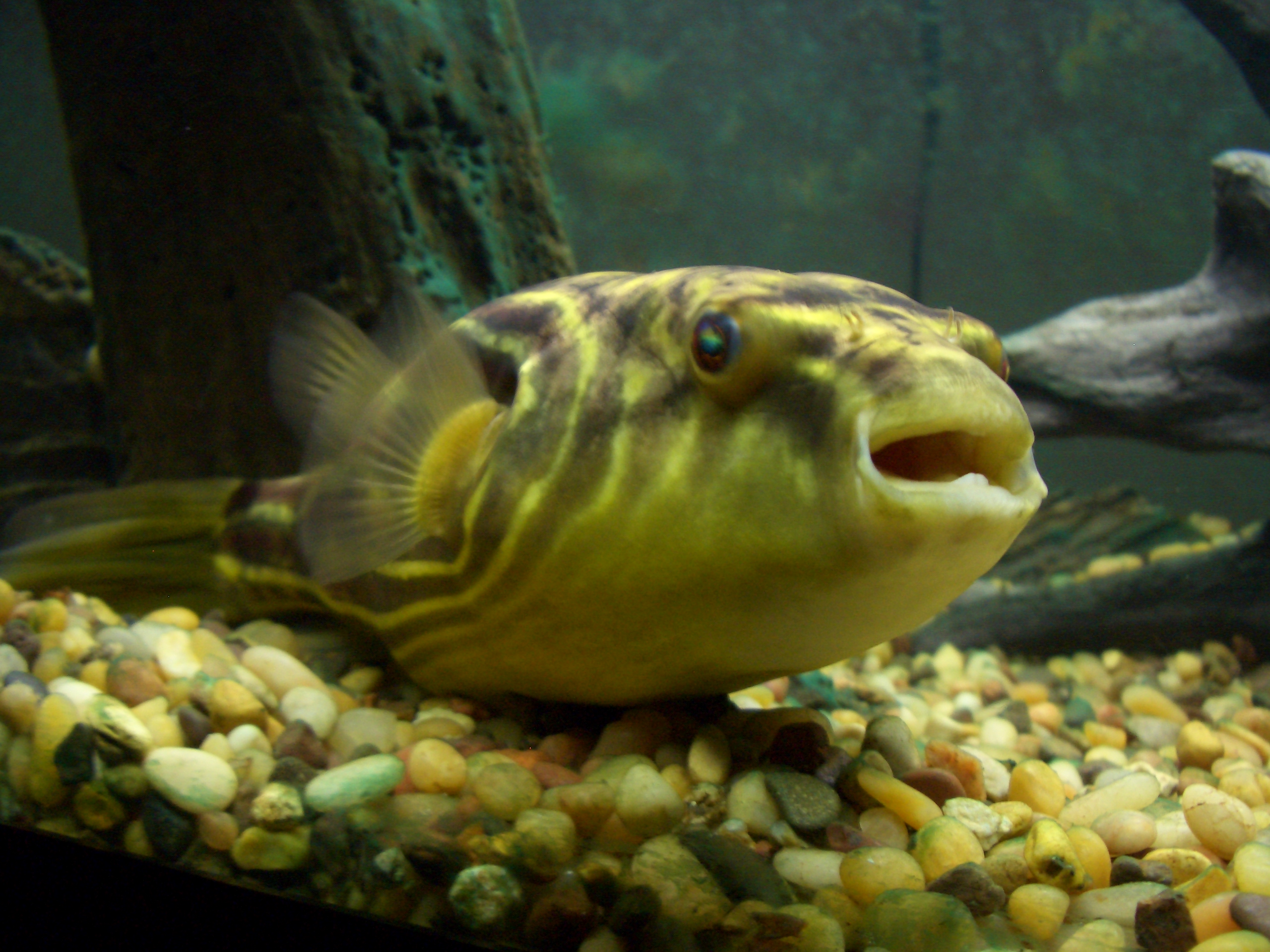
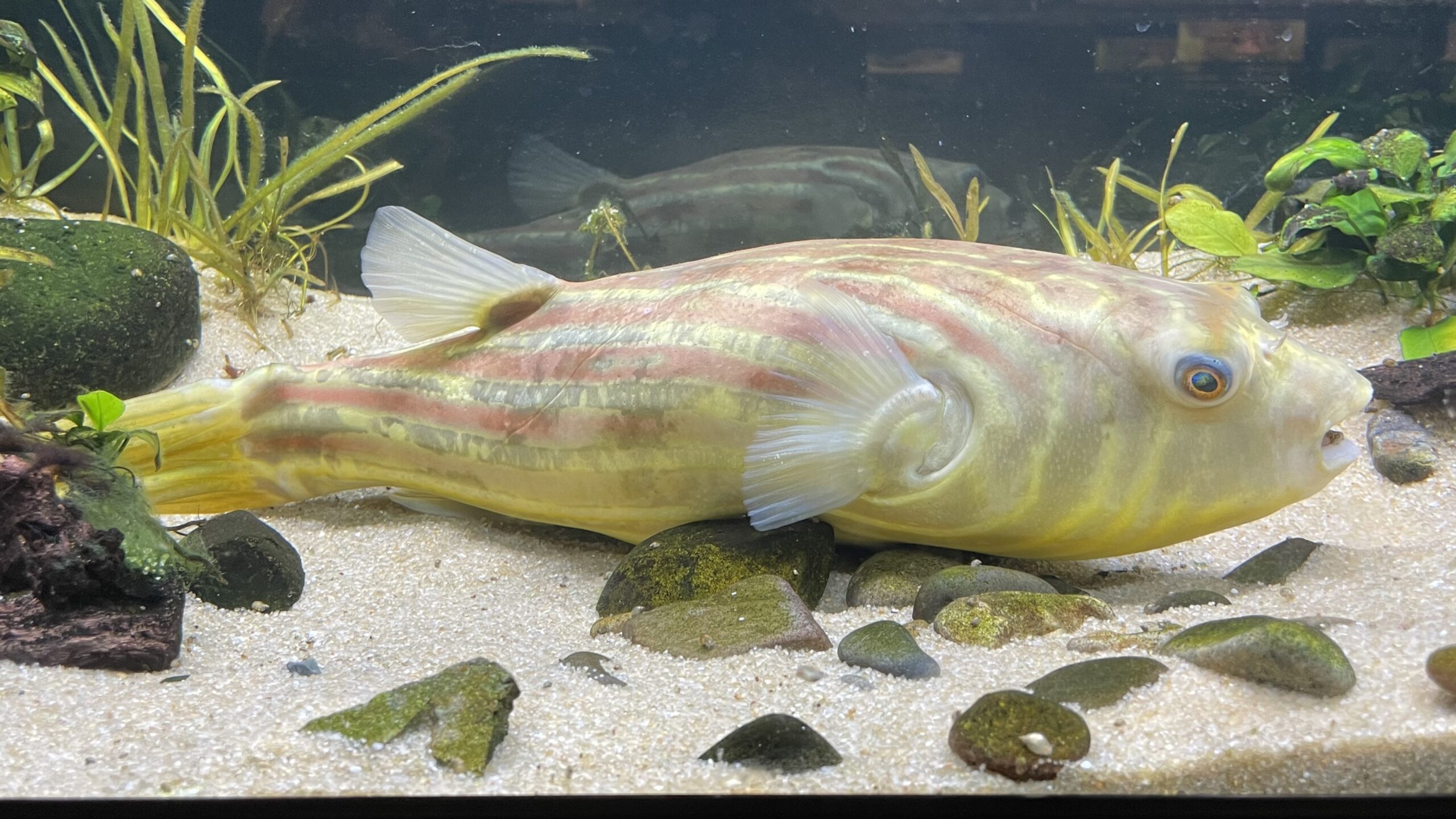
Adults have a pale belly with bold stripes along the body, while juveniles show spot-like patterns (ocelli). The species ranges across the Nile basin, Lake Chad, and west African rivers such as the Senegal, Gambia and Volta, plus Lake Turkana, in freshwater and sometimes brackish conditions. Like other puffers it can inflate using a ventral pocket; never deliberately provoke a puffer to inflate, and never let it gulp air out of water. Females look rounder when carrying eggs.
Size and Lifespan
Maximum length is about 43 cm (17 in). FishBase lists a maximum reported age of 5 years and weight up to about 1 kg. Fish in captivity may differ, so do not rely on claims of much longer lifespans.
Tank Size and Setup
SeriouslyFish suggests a tank of 120 x 60 x 60 cm (about 450 L or 120 gallons) as adequate for a single specimen, so treat that as the minimum for an adult and plan for bigger. Juveniles can start in smaller tanks but grow quickly.
- Sandy substrate, smooth rocks and driftwood, with open swimming space.
- Plants will be nibbled; use tough ones or none.
- Oversized filtration: puffers are messy. See our guide to high ammonia in a fish tank.
- Use a secure lid and a strong canister filter.
Just a heads up: some of the links in this post are affiliate links, which means I may earn a small commission if you buy through them. But no worries, it is at no extra cost to you. Also, as an Amazon Associate I earn from qualifying purchases.
Water Parameters
- Temperature: 24-26 C (75-79 F)
- pH: 6.5-7.5
- Hardness: 5-15 dGH
- Ammonia and nitrite: 0; keep nitrate low with frequent water changes.
No salt is required for this species. A reliable test kit and a good heater are essential.
Diet
The fahaka is a molluscivore. SeriouslyFish says it needs snails and unshelled shellfish such as crab legs and mussels to wear down its continuously growing teeth. Offer:
- Snails (the main staple)
- Crab legs, mussels, clams and shrimp in shell
- Occasional frozen foods
Overgrown teeth are a real health problem and may need a vet to trim. Do not feed only soft foods. Shop for frozen mussels and shellfish. If your puffer refuses food, see fish not eating.
Temperament and Tank Mates
Very aggressive. SeriouslyFish recommends keeping it alone. Do not mix it with other puffers or any fish it can nip. Compare smaller species in pea puffer care and green spotted puffer care, or the giant mbu puffer.
Handling warning: puffers contain tetrodotoxin and can bite. Use care when cleaning the tank.
Buying, Acclimation and Early Care
Check what you are buying. Fahakas are sold small and look manageable in a store tank, but the fish grows fast and the adult needs the tank described above. Many are wild-caught, which is why quarantine matters: stress, parasites and refusal to eat are common after shipping. Keep a juvenile in a modest bare or lightly decorated tank at first, test the water often, and offer live or frozen snails and small shellfish to build the feeding habit. Get the large tank ready before the fish outgrows the small one, not after.
Day-to-Day Care and Maintenance
Puffers eat heavily and produce a lot of waste, so plan on frequent partial water changes, regular gravel or sand vacuuming and oversized filtration. Rinse filter media in tank water, not tap water, and test ammonia and nitrite weekly. Keep the lid closed and use a fitted cover, because large fish can jump or splash. A fahaka that is bored may nip at the glass or decor; rocks, driftwood and changes to feeding methods, such as hiding snails in the substrate, give it something to do.
Also keep in mind that this fish is a long-term commitment of space, money and time. Many keepers eventually need a public aquarium or an experienced hobbyist to take a fish that outgrows their setup, and rehoming a large aggressive puffer is not easy. Decide whether you can host it for its full lifespan before buying.
Breeding
Breeding has been reported in very large tanks but is difficult and rare. Fish mature at about 12 months. Most keepers will not breed them.
Common Health Issues
Because the fish eats hard-shelled food and grows quickly, most problems come from husbandry. Watch for these signs and act early:
- Overgrown teeth, which can stop the fish eating properly.
- Poor water quality and ammonia stress.
- Parasites and bacterial problems in wild-caught fish.
- Refusing food after transport.
Quarantine new fish, and consult an aquatic vet.
Difficulty Level
Difficult. Large tank, high filtration, specialized diet, and no tank mates.
Feeding Routine and Tooth Care
Young fahakas eat daily; adults are often fed every other day, and overfeeding fatty foods leads to a dirty tank and an overweight fish. Rotate snails, shell-on shrimp, mussels and crab legs rather than relying on one item. Watch the beak: if it looks overgrown, crooked or the fish struggles to bite, contact an aquatic or exotic vet, because trimming is a job for an experienced person. Never feed only soft, meaty foods, and remove uneaten shell fragments that foul the water.
Is a Fahaka Puffer Right for You?
Ask yourself honestly: do you have room for a 120-gallon-plus tank, the budget for a large canister filter and heater, and a reliable supply of snails and shellfish? Are you comfortable with a single-fish tank? Can you commit to regular maintenance for years? If so, the fahaka is a rewarding, interactive fish with real personality. If not, consider a smaller species like the pea puffer or figure-8 puffer, which have their own needs but fit smaller setups. Our guide to cycling a fish tank is the first step for any of them.
FAQ
How big does a fahaka puffer get?
About 43 cm (17 in).
What size tank does a fahaka puffer need?
About 120 gallons (450 L) for one adult, per SeriouslyFish.
Can fahaka puffers live with other fish?
Generally no; keep alone.
What do fahaka puffers eat?
Snails, shellfish, crab legs and mussels to keep teeth worn.
How long do fahaka puffers live?
FishBase lists a maximum reported age of 5 years.
Do fahaka puffers need salt?
No, per SeriouslyFish.
Why won’t my fahaka puffer eat?
Stress after shipping, poor water quality, or a food it does not recognize are the usual causes. Try live snails, test the water and read fish not eating.
Is a fahaka puffer dangerous?
It can bite hard, and puffers contain tetrodotoxin, so never eat or handle them carelessly.
Sources and Fact Check
Reviewed 2026-11-14.
- SeriouslyFish, Tetraodon lineatus: size, parameters, tank, diet, aggression, breeding, toxin warning.
- FishBase, Tetraodon lineatus: size, range, maximum age, weight, appearance.
Image credits: Earedien (public domain) and Totti (CC BY-SA 4.0), via Wikimedia Commons.