
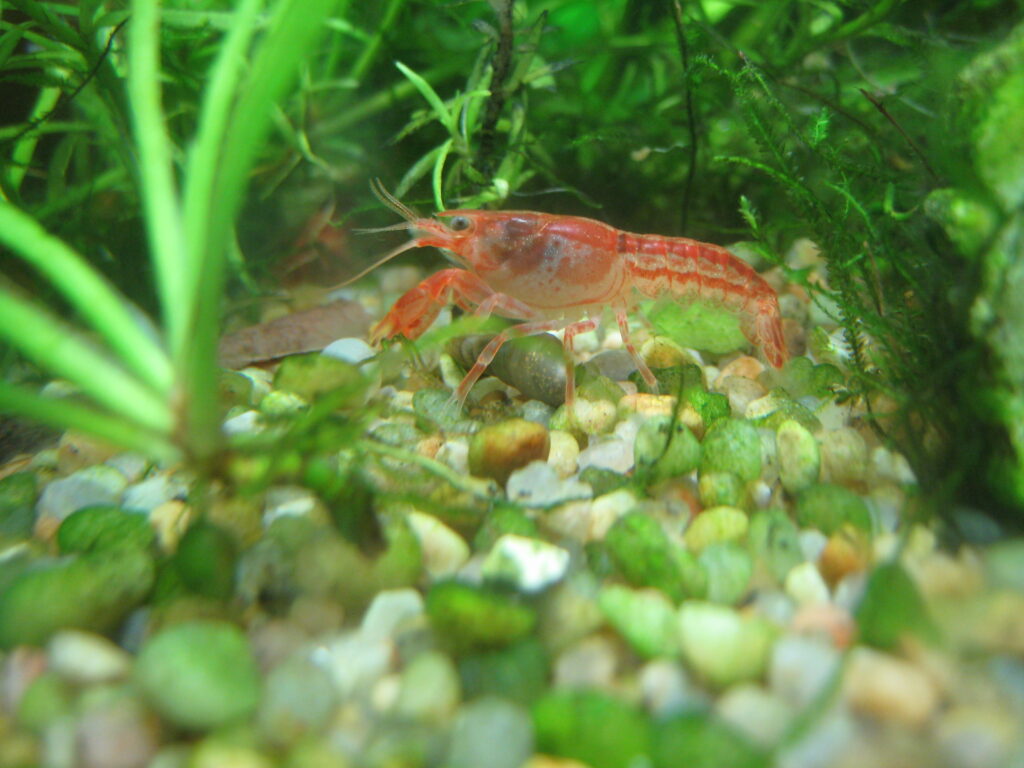
The Mexican dwarf crayfish (Cambarellus patzcuarensis, also called the dwarf orange crayfish or Mexican dwarf lobster) is one of the best crayfish for a home aquarium. They stay about 1.5-2 inches, live 1-3 years, and can live in a 10-gallon tank, with 10-20 gallons better for a small group. They are peaceful for crayfish, but they are still predators, so they are not guaranteed safe with shrimp.
Overview and Appearance
These small crayfish come from Lake Patzcuaro region in Mexico. Wild colors are tan or brown, but the orange variety is the most popular in the hobby. Blue, white and other color morphs exist. They are active during the evening and spend their days hiding or walking along plants and wood.
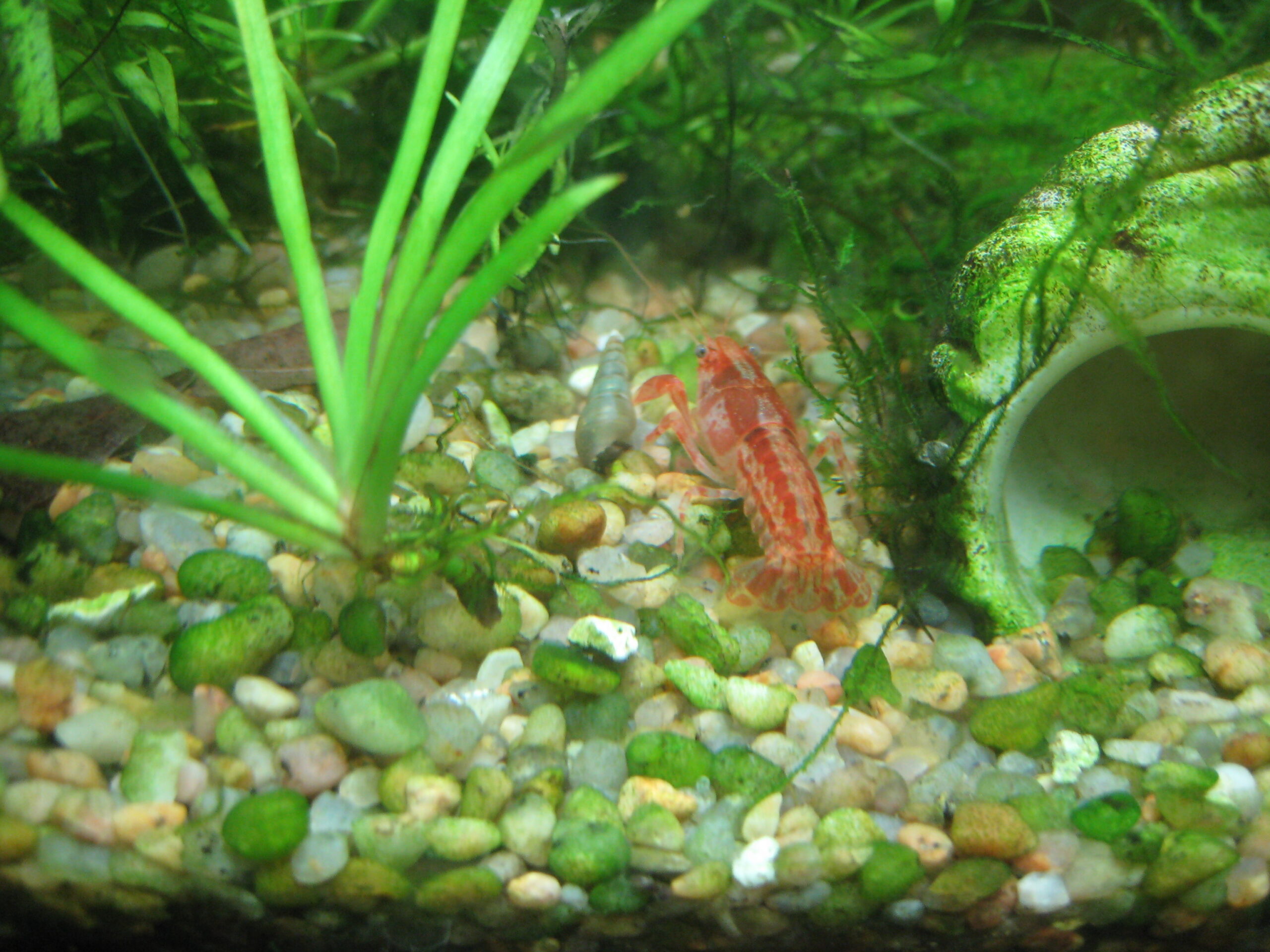
Size and Lifespan
- Size: up to about 2 inches including claws
- Lifespan: 1-3 years, with many living about 2 years
Tank Size and Setup
- Minimum tank: 10 gallons for one or a pair. Add 5 gallons per extra crayfish.
- Substrate: Sand or fine gravel
- Hides: Provide one hide per crayfish: small caves, pipes, shrimp tubes, or wood
- Plants: Java moss, Anubias, hornwort and floaters. They may nibble but rarely destroy plants.
- Lid: Use a tight lid. Crayfish escape through small gaps and filter intake tubes.
- Filter: Use a sponge filter or cover the intake with a prefilter sponge to protect babies and small shrimp.
Just a heads up: some of the links in this post are affiliate links, which means I may earn a small commission if you buy through them. But no worries, it is at no extra cost to you. Also, as an Amazon Associate I earn from qualifying purchases.
Cycle the tank first. See our how to cycle a fish tank guide.
Water Parameters
- Temperature: 65-78°F (cooler water extends life)
- pH: 7.0-8.0
- Hardness: moderate (GH 8-15 helps molting)
- Ammonia and nitrite: 0
- Nitrate: under 20 ppm
Hard water is important because crayfish need calcium for their shells. Soft water often leads to failed molts, as described in our shrimp molting problems guide. Do not use copper-based medications, which kill all invertebrates. Always use a water conditioner with tap water.
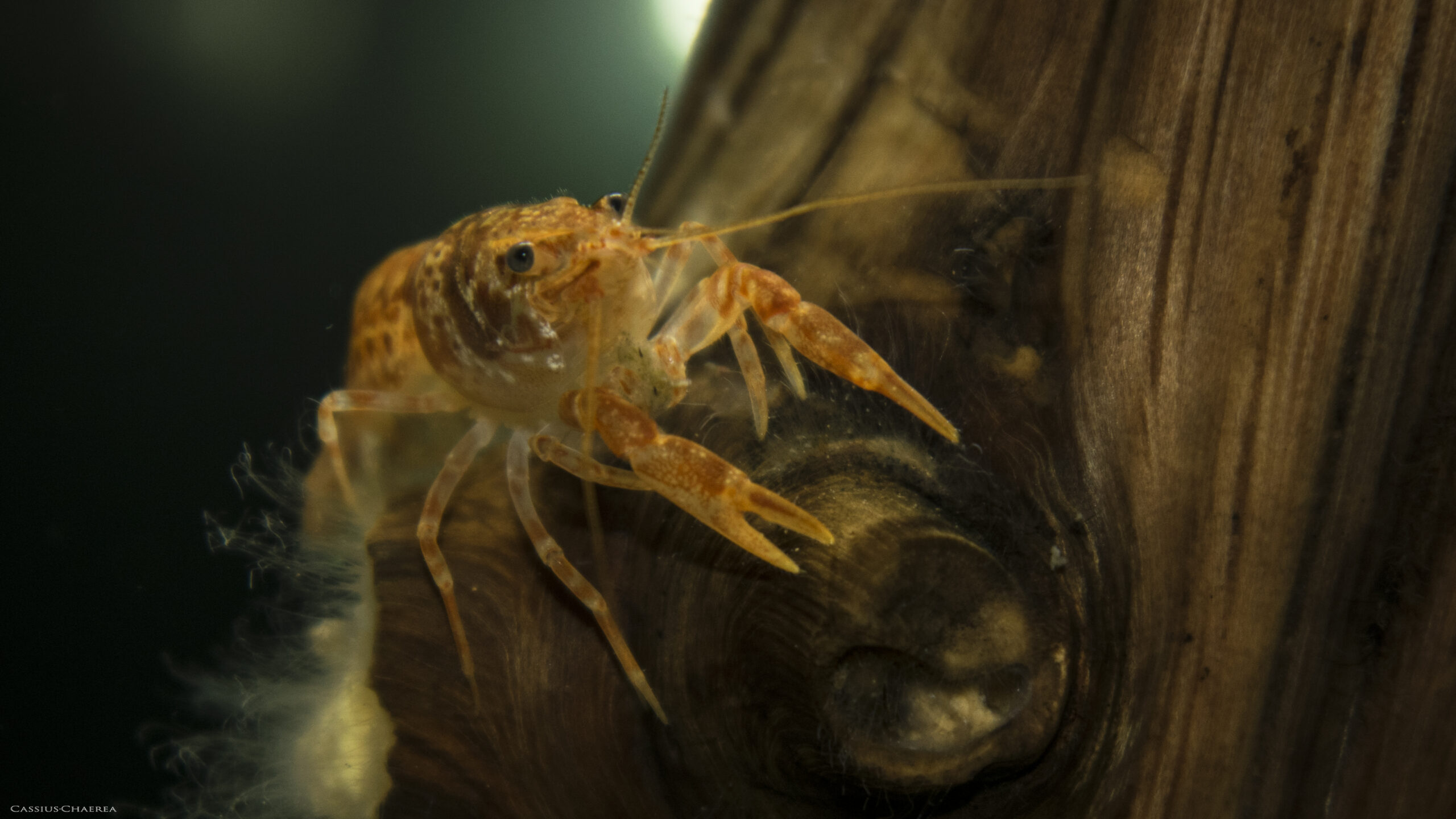
Diet
Mexican dwarf crayfish are omnivorous scavengers.
- Sinking shrimp or crayfish pellets
- Blanched vegetables such as zucchini, spinach and peas
- Occasional frozen bloodworms or brine shrimp
- Leaf litter such as Indian almond leaves
- Algae wafers
Feed small portions every day or every other day, and remove uneaten food. A calcium source like cuttlebone or mineral blocks helps shells.
Temperament and Tank Mates
Dwarf crayfish are among the calmest crayfish, but they are opportunistic. They will grab slow fish or sick shrimp, and they may catch baby shrimp.
Good tank mates: Small peaceful fish in the middle and upper water, such as ember tetras, chili rasboras or celestial pearl danios, though large groups of tiny fish may be nibbled.
Risky tank mates: Cherry shrimp and other dwarf shrimp. Many keepers succeed with plenty of moss, but expect some losses, especially of juveniles.
Bad tank mates: Bottom fish that compete for caves, long-finned slow fish that rest on the bottom, and larger aggressive fish like cichlids.
Same species: Keep one male and several females, or one per hiding spot. Crowding can lead to fighting, mostly during and after molting.
Breeding
Mexican dwarf crayfish breed easily in a warm tank. The female carries 20-50 eggs under her tail for about 3-4 weeks, then hatches miniature crayfish that look like adults. Young are not fed by the mother, so provide moss and fine foods. Remove or protect babies from adults, or provide a lot of plants. Rearing them in a separate tank gives the best survival.
Common Health Issues
- Failed molts: Usually due to low minerals or poor water. Keep GH up and do regular water changes.
- Hiding too much: Normal around a molt, but watch if it lasts for days.
- Pulled legs or claws: Fighting when hides are too few.
- Poor water: They are sensitive to ammonia and copper.
- Escapes: The most common cause of death.
Do not treat the tank with fish medication without checking that it is safe for invertebrates.
Molting: What to Expect
Crayfish grow by shedding their shell. Before a molt they may hide, stop eating and look dull. After it, the new shell is soft for a day or two and the crayfish is vulnerable, so it will hide. Leave the shed shell in the tank for a day or two, because the crayfish eats it to recover calcium. Never panic and remove a crayfish that looks "dead" without checking: an empty, translucent shell is usually just a molt. A crayfish that has lain motionless with a gray, cloudy body for a long time, or has a stuck half-shed shell, is in trouble, and the usual fixes are better mineral levels and stable water.
Setting Up for Success: Quick Checklist
- Cycle the tank for several weeks before adding crayfish
- Use a tight lid and cover filter intakes
- Add more hides than animals
- Test GH, KH and pH, and add a mineral supplement if the water is soft
- Acclimate slowly with a drip method over 30-60 minutes, since sudden changes can cause molting problems
- Quarantine new animals when you can, to avoid introducing parasites or disease to an established tank
Buy from a breeder or store you trust, and avoid mixing them with larger crayfish species, which will kill and eat dwarfs.
Difficulty Level
Beginner to intermediate. The care requirements are modest, but you must keep water stable, provide hard water and hides, and accept that they are predators.
From Aquagram
Explore AquagramTest Account
Hello aquarists!
Dan GL
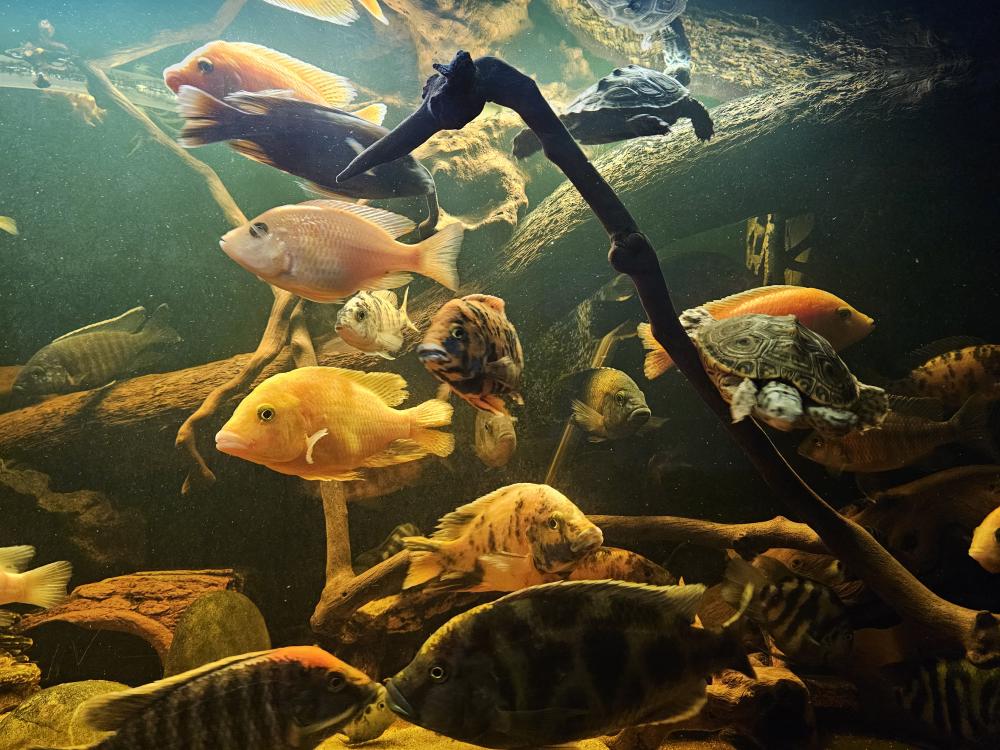
A view of my 125 gallon aquarium. Lots of fish and a few Northern Diamondback Terrapins too! 😁
SwitchTank
Incredible!
Mexican Dwarf Crayfish FAQ
What size tank do Mexican dwarf crayfish need?
A 10-gallon tank for a single crayfish or a pair. Allow about 5 more gallons per additional crayfish.
Can Mexican dwarf crayfish live with shrimp?
Sometimes, but they will eat baby shrimp and may catch adults. Heavy planting helps, but it is not guaranteed.
How long do Mexican dwarf crayfish live?
Usually 1-3 years, with cooler water often extending their lifespan.
Are Mexican dwarf crayfish aggressive?
They are mild for crayfish, but they can be territorial about hides.
What do dwarf crayfish eat?
Sinking pellets, blanched vegetables, algae wafers and occasional frozen foods.
How often do dwarf crayfish molt?
Young crayfish molt often, every few weeks. Adults molt less often, about every one to two months.
Why is my dwarf crayfish hiding all the time?
Hiding is normal during the day and before or after a molt. If it hides constantly and stops eating for many days, test the water and check for aggressive tank mates.
Will a dwarf crayfish eat my plants?
Rarely. They mostly graze on biofilm and decay, though they may snip soft stem plants. Hardy plants like Anubias and java fern are safe choices.
Can I keep dwarf crayfish in an unheated tank?
Yes, in most homes. They prefer cooler temperatures than tropical fish, and a stable room temperature around 68-75°F is fine.
Final Thoughts
Mexican dwarf crayfish are fun, active and small enough for most setups. Give them hard water, plenty of caves and a tight lid, and they will reward you with interesting behavior and easy breeding.
Disclaimer: This article is general information, not veterinary advice. For serious or persistent problems, consult an aquatic veterinarian.