
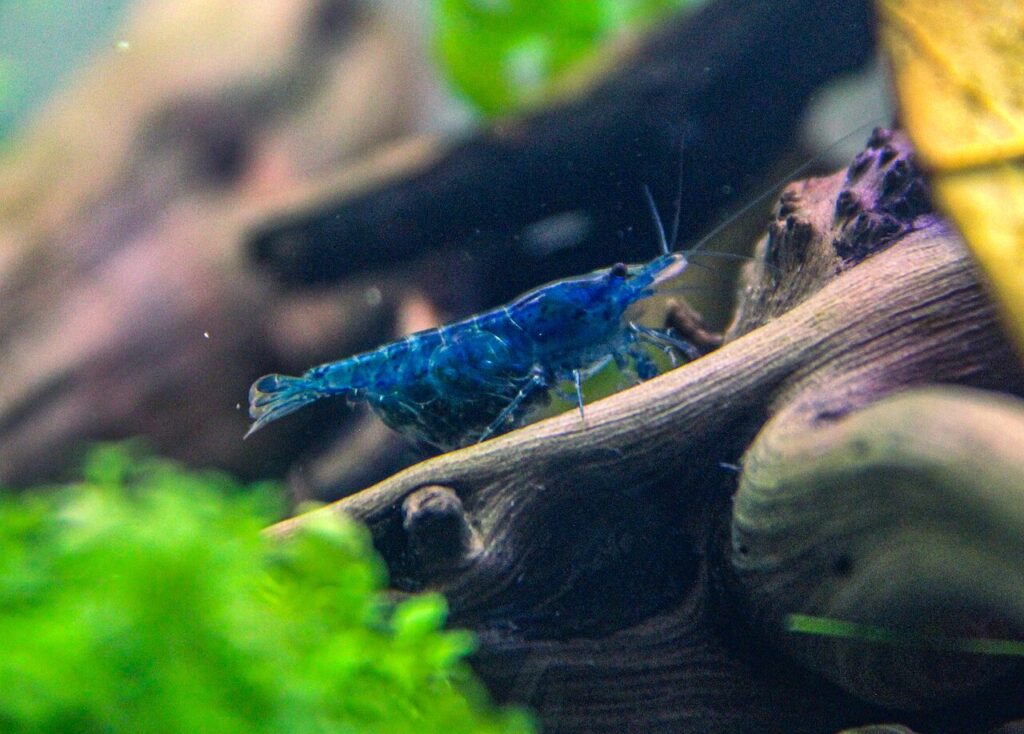
A shrimp that has died “while molting” usually did not die because molting is dangerous by itself. It died because something made the molt fail, most often unstable water parameters, a sudden change after a water change, or a lack of minerals. Healthy shrimp molt regularly and often hide for a day afterwards. The fix is almost always stable water, proper mineral levels and patience, not medication.
This guide covers what a normal molt looks like, how to tell a molt from a dead shrimp, the most common causes of failed molts, and what to do about them. It applies to the shrimp most people keep: cherry shrimp and other Neocaridina, Amano shrimp, crystal and bee shrimp (Caridina), and ghost shrimp.
Is My Shrimp Molting or Dying? What Normal Looks Like
Shrimp have a hard outer shell that does not grow, so they have to shed it to get bigger. The empty shell is called an exuvia (or “molt”), and it looks like a perfect, see-through ghost of the shrimp. It is not a dead shrimp.
Normal molting looks like this:
- Young shrimp molt often as they grow. Adults molt less often, roughly every few weeks in many tanks, but there is no exact schedule.
- A shrimp about to molt may hide, stop eating for a short time and look a little dull or cloudy.
- The shell splits near the back, and the shrimp pulls itself out. Afterwards the new shell is soft for a while and the shrimp usually stays hidden.
- Shrimp often eat their old shell to get the minerals back, so leave it in the tank for a day or two.
- Female shrimp often molt just before mating and laying eggs.
Wikipedia’s article on cherry shrimp (Neocaridina davidi) confirms that they molt periodically as they grow, that juveniles molt more often than adults, and that they eat their shed exoskeletons, so molts should not be removed right away.
Molt or dead shrimp?
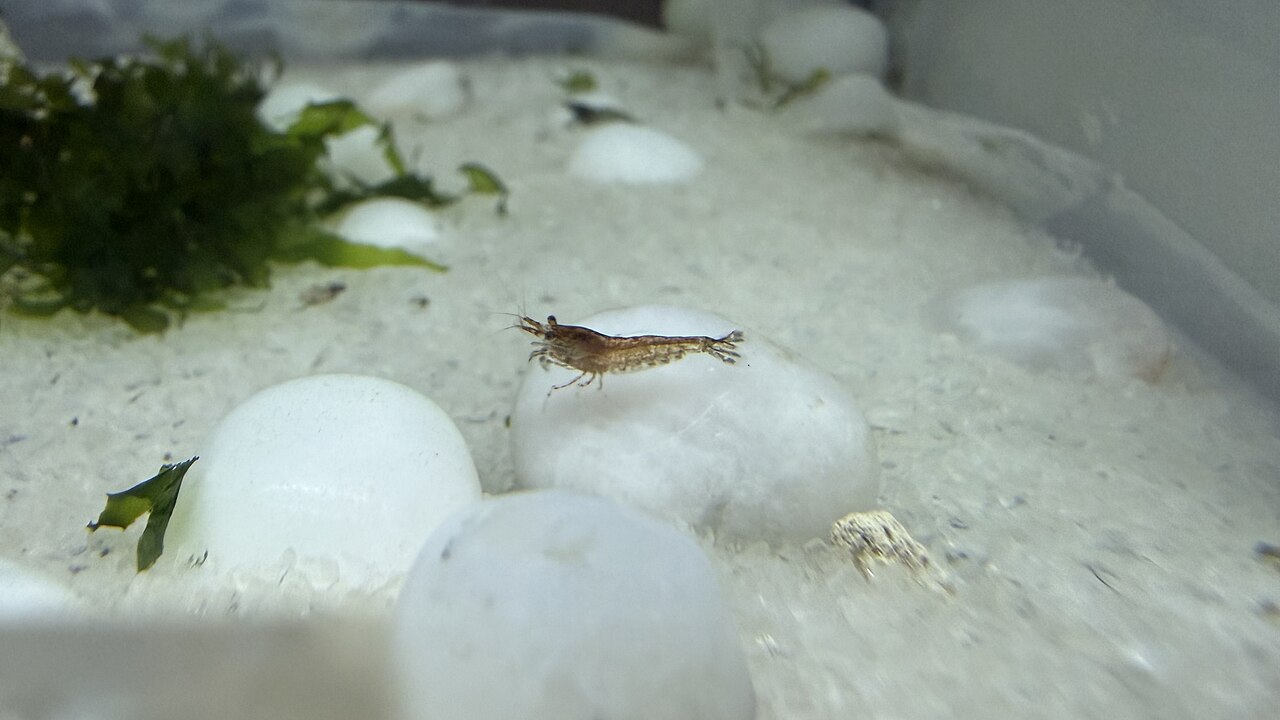
- Molt: transparent, empty, with every leg and antenna intact and a split along the back. The tank still has the same number of shrimp.
- Dead shrimp: solid, opaque color that turns pale pink or orange, and the body is not empty. Other shrimp may be swarming over it. If you are unsure, remove it, because rotting bodies add ammonia.
Most Common Causes of Failed Molts and Shrimp Dying While Molting
These are listed from most to least likely. Most are husbandry problems you can fix.
- Unstable or changing water parameters. Sudden shifts in temperature, pH, GH or TDS after a water change are the leading cause in most shrimp tanks. Our guide to shrimp dying after a water change goes into this in detail.
- Water that is too soft, or missing minerals. Shrimp need calcium and other minerals to build a new shell. Very soft or pure RO water with no remineralizing can lead to thin shells and stuck molts.
- Ammonia, nitrite or copper. Poison in the water stresses shrimp and weakens the molt. Copper, found in some plant fertilizers, medications and old pipes, is deadly to shrimp even at low levels.
- Frequent or large water changes with untreated tap water. Chlorine, chloramine and big swings in temperature all stress shrimp, and molting shrimp are especially vulnerable.
- Poor diet. A diet low in minerals and biofilm can contribute to weak shells.
- Old or poorly matched shrimp. Some deaths happen to shrimp near the end of their natural life, which can be only a year or two for many dwarf species. Wikipedia lists a typical 1-2 years for cherry shrimp.
- Stress from tank mates or being newly added. New shrimp often molt soon after arriving, and any shell problem may be the first sign that acclimation went badly.
How to Diagnose Which Cause Applies
Work through these checks in order:
- Test the water. Use a liquid test kit for ammonia, nitrite and nitrate, and a GH/KH test kit. Ammonia and nitrite should be zero. Many hobbyists keep Neocaridina in moderate GH, and sensitive Caridina like crystal shrimp want specialized soft water, so check the needs of your exact species.
- Look at timing. Did the deaths follow a water change, new decor, new plants, a fertilizer or a medication? Timing usually points to the culprit.
- Check where the deaths happen. If several shrimp die with a half-shed shell, think minerals or parameter swings. If only old shrimp die, it may be age.
- Check for copper. Plants bought from nurseries can carry pesticide residues, and some fertilizers and algae treatments list copper.
- Check temperature. Most common dwarf shrimp prefer a stable room-temperature tank, and warm water speeds up molting and stress.
Just a heads up: some of the links in this post are affiliate links, which means I may earn a small commission if you buy through them. But no worries, it is at no extra cost to you. Also, as an Amazon Associate I earn from qualifying purchases.
Step-by-Step Fixes
Step 1: Stop the changes
Do not rush to do a big water change. Fixing a problem with a large change can cause another swing.
Step 2: Match new water to tank water
When you do a water change, change about 10-20% at a time, using a water conditioner, and match temperature. Add the new water slowly, ideally by drip, over 15-30 minutes.
Step 3: Supply minerals
If your water is soft, use a shrimp-specific remineralizer for shrimp tanks and follow the label. Mineral-rich foods and some safe calcium sources can also help. Do not add anything that changes GH or pH quickly.
Step 4: Fix ammonia and nitrite
If you find ammonia or nitrite, treat it like an emergency. Do a partial water change with conditioned water, stop feeding for a day and use our guide on high ammonia in a fish tank. A new or “uncycled” tank is a common cause, so read how to cycle a fish tank.
Step 5: Remove stressors
Take out any copper-containing products. Remove aggressive fish. Provide plenty of hiding places such as moss, leaves and small caves so molting shrimp can hide while their shell hardens.
Step 6: Feed well, but not too much
Offer a quality shrimp food a few times a week, and let biofilm and algae do the rest. Remove leftovers after a few hours.
Step 7: Leave the shell
Do not take out the exuvia for a day or two. The shrimp will probably eat it.
When It Is Serious
- Several shrimp die within a short time.
- Shrimp are stuck in their old shell for hours, or they lie on their side and cannot get free.
- Ammonia or nitrite is detected.
- You see a pattern after every water change.
If this is happening, treat it as a tank-wide water problem. Test, stop making changes, and consider a slow, small water change with matched water. Shrimp do not have approved medications, so there is nothing to “treat” in the usual sense. A local aquatic vet or an experienced shrimp keeper can help with persistent cases.
How to Prevent Molting Problems
- Keep temperature and water parameters stable. Stability matters more than perfection.
- Do small, regular water changes instead of huge occasional ones.
- Acclimate new shrimp slowly. See our cherry shrimp care guide and Amano shrimp care guide for species-specific tips. Delicate species like crystal red shrimp are far less forgiving.
- Test the water regularly.
- Only add plants and decor that are safe for invertebrates, and rinse or quarantine plants first.
Shrimp Molting Problems FAQ
Is my shrimp molting or dying?
A molting shrimp leaves behind a clear, empty shell and then hides for a while. A dying shrimp is still intact, may be lying on its side or turn a pale pink or white color. If you see a transparent copy of the shrimp, it is just a molt.
Why did my shrimp die while molting?
Most deaths during molts trace back to unstable water, a sudden change after a water change, low minerals or toxins such as ammonia or copper. The molt is the most vulnerable moment, so any underlying problem shows up then.
How often do shrimp molt?
Young shrimp molt more often because they are growing. Adults usually molt less often, around every few weeks, but it varies with age, temperature and species.
Why is my shrimp not moving after molting?
It is normal for a shrimp to stay still and hidden for a day after a molt while the new shell hardens. If it is still motionless after a day or two and does not react to food, check water quality.
Should I remove the shrimp molt?
No. Shrimp usually eat their shed shell to recover minerals. Remove it only if it has not been touched for several days and is fouling the water.
Can shrimp die from molting?
Yes, but usually only when conditions are poor. Healthy shrimp in stable, mineral-appropriate water molt without trouble.
How do I prevent shrimp dying after water changes?
Change small amounts, match temperature and water chemistry, and add water slowly.
Final Thoughts
Molting is a normal part of shrimp life, and a clear empty shell is a good sign. When shrimp start dying around molts, look to the water: stability, minerals and zero toxins. Fix those, and most shrimp colonies settle down and thrive.
Disclaimer: This article is general information, not veterinary advice. For serious or persistent problems, consult an aquatic veterinarian or an experienced invertebrate keeper.
Sources and Fact Check
Reviewed 2026-11-15. Sources read: Wikipedia, “Neocaridina davidi” (cherry shrimp molt periodically, juveniles molt more often, shrimp eat their molts, typical lifespan 1-2 years). Mineral, parameter-swing, copper and temperature advice is commonly repeated hobby guidance and is not a proven threshold; check the requirements of your exact species. Limitation: search engines and several shrimp-care sites were unavailable while researching, so no university or vet source on shrimp molting was read.