
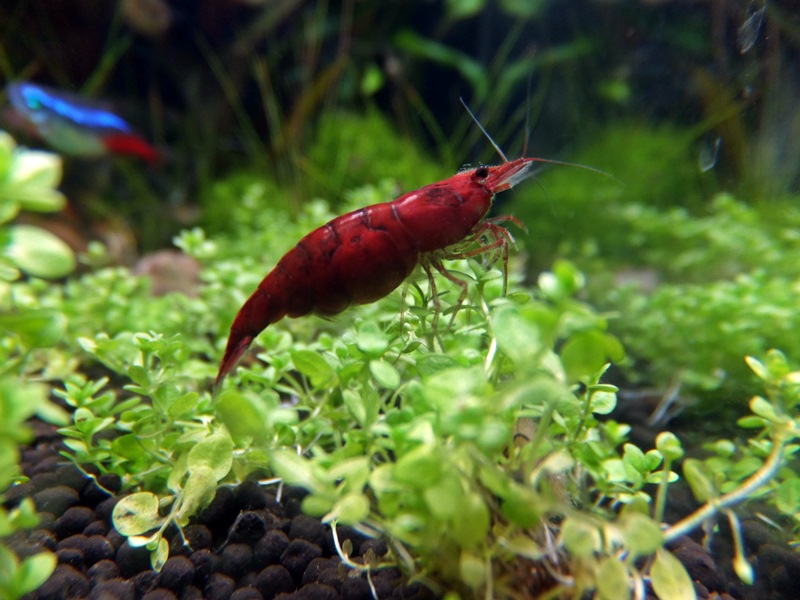
Cherry shrimp are one of the most popular freshwater invertebrates, and for good reason. They are tiny, bright red, constantly busy, and they clean up algae and leftover food. They also breed readily in a stable tank, so a handful can become a thriving colony.
They are often sold as a “beginner” animal, but they are less forgiving than their price suggests. Copper, sudden water changes and an unfinished cycle kill shrimp quickly. This cherry shrimp care guide covers everything you need to keep them alive and breeding.
Cherry Shrimp Overview and Appearance
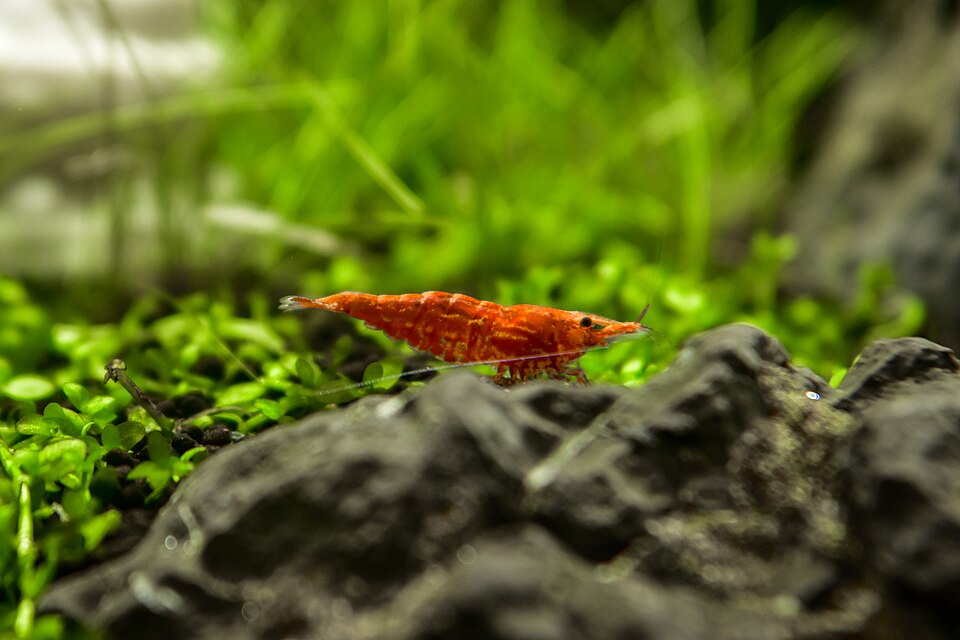
Photo: Atulbhats (CC BY-SA 4.0), via Wikimedia Commons.
The cherry shrimp (Neocaridina davidi, often listed under its older name Neocaridina heteropoda) is a small freshwater shrimp from Taiwan. In the wild it is a dull brown. The red color we know comes from selective breeding.
Quality is sold in grades. Lower grades are translucent with patchy red, while higher grades such as “sakura,” “fire red” and “painted fire red” are deeper and more solid. Females are larger and more strongly colored than males. Males are smaller and slimmer, with a clearer tail.
Related color morphs, such as blue velvet, yellow and orange, are the same species and have the same care. Do not mix them if you want a pure red colony, because they interbreed and revert to brown.
Size and Lifespan
Adult cherry shrimp reach about 1 to 1.5 inches (2.5 to 4 cm). The typical cherry shrimp lifespan is 1 to 2 years, so an established colony is really a series of generations rather than the same animals.
Cherry Shrimp Tank Size and Setup
The cherry shrimp minimum tank size is 5 gallons, and a 10 gallon is easier to keep stable. Small tanks can work, but water chemistry swings fast in a small volume, and swings are what hurt shrimp.
- Cycle the tank first. Shrimp are very sensitive to ammonia and nitrite. Wait several weeks after setting up. Our guide to how to cycle a fish tank walks through it.
- Use a sponge filter. A sponge filter is gentle, will not suck in baby shrimp, and gives them biofilm to graze on.
- Plant heavily. Moss, java fern and floating plants give cover for molting and for babies.
- Choose an inert substrate. Regular sand or gravel works. Active soils lower the pH and are better suited to shrimp that need soft water.
- Cover the tank. Shrimp occasionally climb out.
Just a heads up: some of the links in this post are affiliate links, which means I may earn a small commission if you buy through them. But no worries, it is at no extra cost to you. Also, as an Amazon Associate I earn from qualifying purchases.
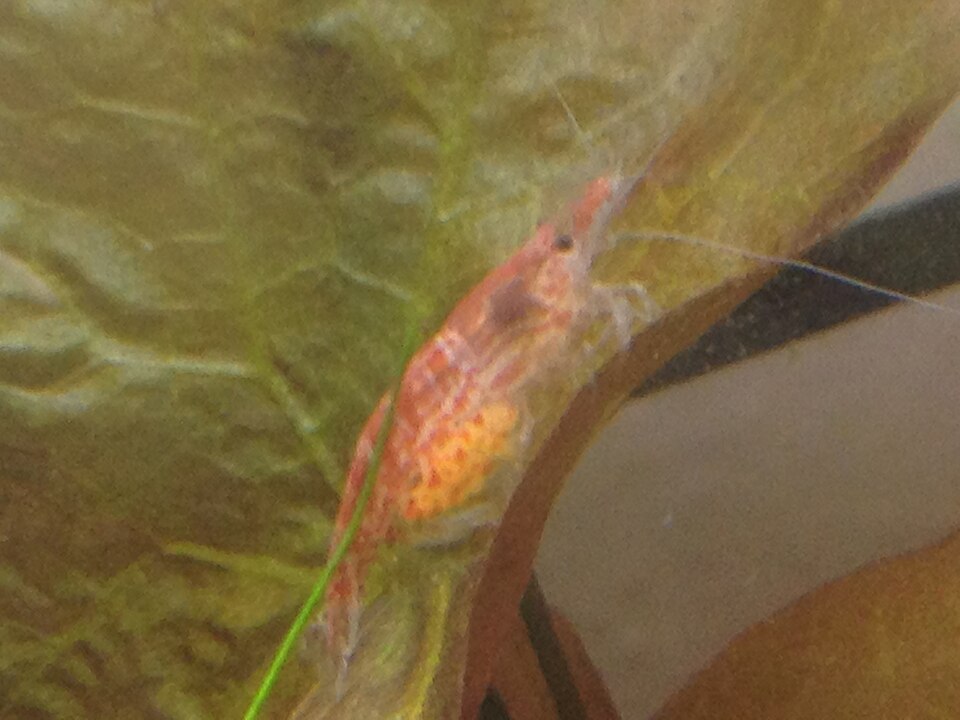
Photo: Tdwittt (CC0), via Wikimedia Commons.
Never use copper-based medications or fish foods and products that contain copper. Copper is lethal to shrimp, even in tiny amounts.
Water Parameters
Cherry shrimp are hardy compared with other shrimp, but they still dislike swings.
- Temperature: 65-78F (18-26C). Warmer water speeds up their metabolism and shortens their lives.
- pH: 6.5-8.0
- GH: 6-8 dGH (they need minerals to molt properly)
- KH: 2-8 dKH
- Ammonia and nitrite: 0 ppm
- Nitrate: below 20 ppm
Test with a freshwater test kit and a separate GH and KH test. When doing water changes, use treated water at the same temperature, replace only 10-20% at a time, and add it slowly.
Acclimate new shrimp over 1 to 2 hours with drip acclimation, because the water they come from often differs from yours.
What Do Cherry Shrimp Eat?
Cherry shrimp are scavengers and grazers. They constantly pick at biofilm, algae and decaying plant matter on every surface.
- Cherry shrimp diet basics: feed a small amount of quality shrimp food 2 to 3 times a week.
- Vegetables: blanched zucchini, spinach or cucumber now and then.
- Leaf litter: dried Indian almond leaves release tannins and grow biofilm.
- Feed a feeding dish: a small dish makes it easy to remove leftovers.
The most common mistake is overfeeding. Uneaten food fouls the water. If food remains after two hours, feed less. A mature, planted tank with some algae needs little extra food.
Temperament and Cherry Shrimp Tank Mates
Cherry shrimp are peaceful and spend their time grazing. The difficult part is picking neighbors that will not eat them.
Good tank mates:
- Other peaceful dwarf shrimp of the same genus
- Snails such as nerites and mystery snails
- Otocinclus, which graze peacefully (see our otocinclus care guide)
- Small, peaceful fish with tiny mouths, such as chili rasbora
Risky or bad tank mates:
- Bettas. Some bettas ignore shrimp and many hunt them. If you try it, use dense plants and plenty of shrimp, and be ready to remove the betta. See our betta fish care guide.
- Goldfish, cichlids, larger barbs, loaches and anything large enough to swallow a shrimp
- Crayfish and large predatory invertebrates
Babies are tiny and almost any fish will eat them, so a shrimp-only tank is the best way to build a colony. If you like larger shrimp, compare with amano shrimp and ghost shrimp, which are not the same species and do not interbreed.
Cherry Shrimp Breeding
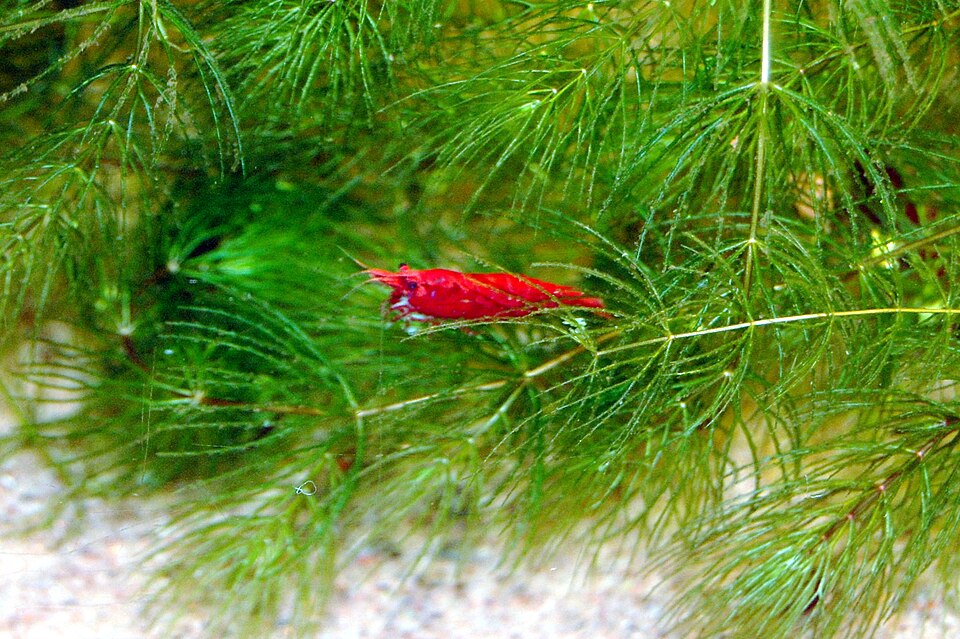
Photo: Corydoras-adolfoi (CC BY-SA 4.0), via Wikimedia Commons.
Breeding cherry shrimp is easy. A group of 10 shrimp with both sexes in a stable tank will breed on their own, and there is no special breeding setup.
- A female molts and releases pheromones, and males frantically search for her.
- After mating she carries yellow to green eggs under her tail. She is called “berried” or “in berry.”
- The eggs hatch after about 3 to 4 weeks, depending on temperature.
- The babies look like tiny adults, and no larval stage needs special water.
Feed the colony well and leave moss and plants for the babies. A sponge filter keeps them safe. If you have a lot of shrimp, they will usually regulate their own numbers.
Common Health Issues
Shrimp problems are mostly water-related:
- Failed molts. Shrimp stuck half out of their shell usually point to low minerals or sudden changes. Check GH.
- Sudden deaths. Look for copper, ammonia, nitrite or a big water change.
- White ring of death. A white band around the body is a sign of a molting problem, often from stress or unstable water.
- Parasites and ciliates. Fuzzy growths on the shell may be a type of harmless commensal organism or a sign of stress.
- Pesticides and chemicals. Wash plants and avoid aerosols near the tank.
Most medications that treat fish also harm shrimp, so quarantine sick fish in another tank. Our quarantine tank setup guide shows how.
How Hard Are Cherry Shrimp?
Honestly: easy to moderate. They tolerate a wide range of water, but they will not forgive a tank that is not cycled, copper, or fast changes. Beginners do best with a mature tank that has been running a month or more.
Cherry Shrimp FAQ
How many cherry shrimp should I start with?
Start with at least 6 to 10. They are social, and a group gives you both sexes for breeding.
Can cherry shrimp live with bettas?
Sometimes, but it is a risk. Many bettas will hunt and eat them.
How long do cherry shrimp live?
About 1 to 2 years in an aquarium.
Do cherry shrimp need a filter?
Yes. A gentle sponge filter is ideal.
Why are my cherry shrimp turning clear or pale?
Younger shrimp and low-grade ones are naturally less colored. Stress, a dark substrate or a molt can also affect color.
Do cherry shrimp eat algae?
They eat soft algae and biofilm, but they will not clear heavy algae problems alone.
Why did my shrimp die after a water change?
Large changes shift temperature, pH and GH too quickly. Change a small amount and add the water slowly.
Final Thoughts
Cherry shrimp are a rewarding first step into invertebrates. Cycle the tank, keep the water stable, avoid copper, skip hungry fish and let the colony grow at its own pace.
Do you keep cherry shrimp? Tell us how your colony is doing in the comments.
Disclaimer: This article is general information, not veterinary advice. For serious or persistent problems, consult an experienced shrimp keeper or aquatic professional.
Featured photo: Stevencaller (CC BY-SA 3.0), via Wikimedia Commons.