
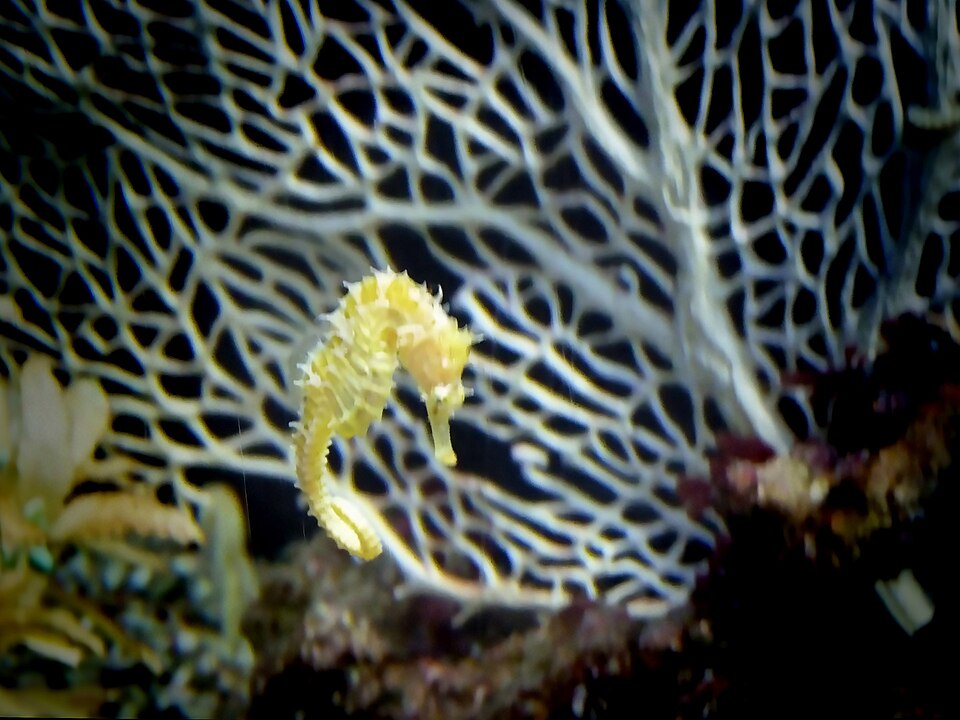
Seahorses are some of the most fascinating animals in the hobby, and also some of the most demanding. They are slow, shy, poor swimmers that eat only live or frozen foods and are easily stressed or outcompeted by faster tank mates. Done right, a seahorse tank is a calm and rewarding display. Done carelessly, it ends badly for the animals.
This seahorse care guide explains what they need, honestly, including how difficult they really are.
Seahorse Overview and Appearance
Seahorses (genus Hippocampus) are bony fish, not a separate kind of animal. They have a horse-shaped head, a prehensile tail for gripping, a dorsal fin that flutters to move them forward, and no stomach or teeth. They change color with mood and surroundings. Males carry the developing young in a brood pouch.
The species most often kept in aquariums include:
- Lined seahorse (H. erectus)
- Longsnout or Brazilian seahorse (H. reidi)
- Kuda or yellow seahorse (H. kuda)
- Pot-bellied seahorse (H. abdominalis), a cooler-water species
- Dwarf seahorse (H. zosterae), which stays about an inch long
Captive-Bred Seahorses: Start Here
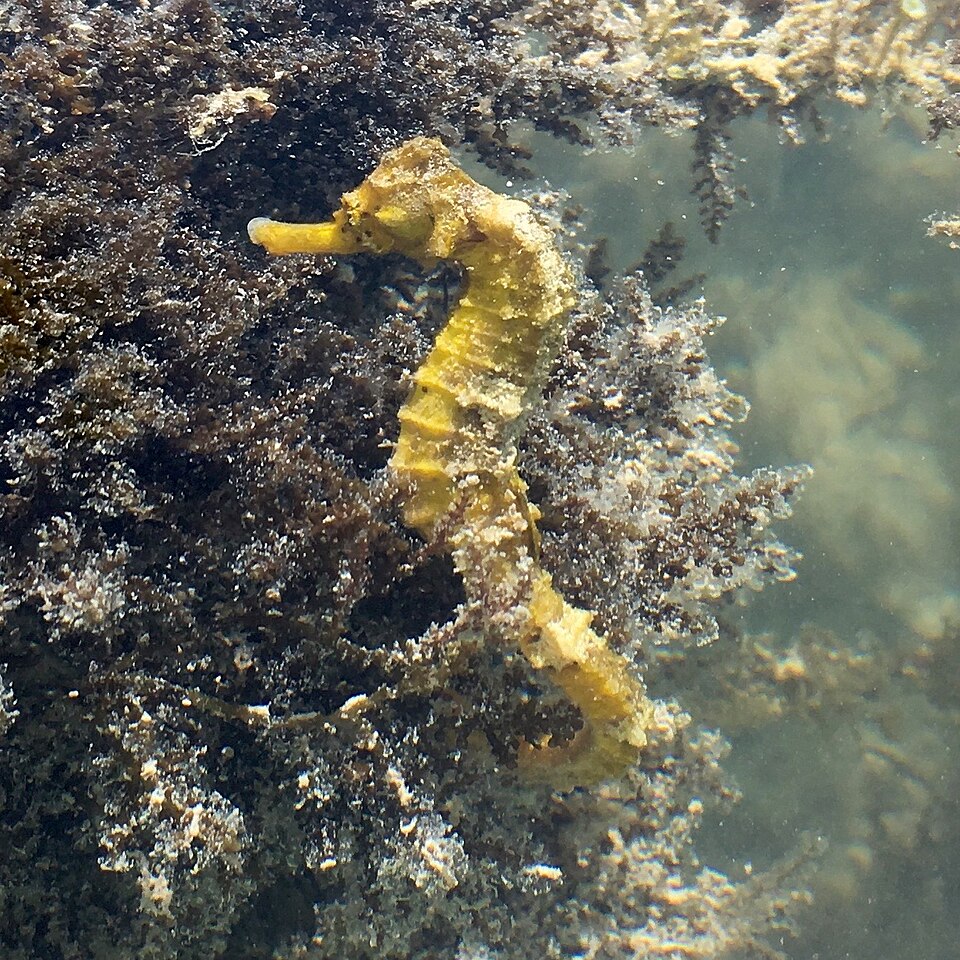
The most important decision is to buy captive-bred seahorses from a reputable breeder or store. Wild-caught seahorses are weak, often carry parasites and bacteria, and frequently refuse frozen food. Captive-bred animals are used to prepared foods and are far hardier. Seahorses are also protected under CITES in many countries, so buying responsibly supports conservation.
Seahorse Size and Lifespan
Size depends on the species: dwarf seahorses are about 1 inch (2.5 cm), while lined, longsnout and kuda seahorses reach roughly 5 to 7 inches, and pot-bellied seahorses can get larger. As for how long seahorses live, dwarfs live around 1 to 2 years, larger captive-bred species commonly 3 to 5 years, with good care sometimes longer. Wild lifespans are poorly known.
Seahorse Tank Size and Setup
Height matters as much as volume, since seahorses like to climb and move up and down the water.
- Dwarf seahorses: a species tank of about 5 to 10 gallons works for a small group.
- Larger seahorses: at least 30 gallons for a first pair, with a minimum height of 18 inches. More space is always better.
Setup essentials:
- Gentle filtration and low flow. Seahorses are weak swimmers and can be exhausted by strong currents. A sponge or hang-on filter with gentle outflow works. Place powerheads so flow stays soft.
- Plenty of hitching posts. Use gorgonians, artificial plants, macroalgae and branching live rock so every seahorse has a place to hold on.
- Heater and chiller if needed. Tropical seahorses do best in the low to mid 70s °F. Warm water encourages harmful bacteria, so avoid temperatures above the high 70s.
- Covered, screened intakes. Seahorses can get pulled into pumps. Cover intakes with foam.
- A mature, fully cycled tank. If you need a refresher, read our guide on how to set up a saltwater aquarium.
Just a heads up: some of the links in this post are affiliate links, which means I may earn a small commission if you buy through them. But no worries, it is at no extra cost to you. Also, as an Amazon Associate I earn from qualifying purchases.
Water Parameters for Seahorses
- Temperature: 72 to 76°F (22 to 24°C) for most tropical species; pot-bellied seahorses prefer cooler water
- Salinity: 1.022 to 1.025 specific gravity
- pH: 8.0 to 8.4
- Ammonia and nitrite: 0 ppm
- Nitrate: as low as possible, ideally under 10 ppm
Check salinity with a refractometer and test the rest regularly with a saltwater test kit. Because seahorses are sensitive to bacterial blooms, keep the tank very clean and do frequent small water changes.
What Do Seahorses Eat? Seahorse Diet
Seahorses are ambush feeders that eat small crustaceans. They need to eat several times a day, because they have no stomach and food passes through quickly. Good foods include:
- Frozen mysis shrimp, the staple for captive-bred animals. Look for frozen mysis that is enriched with vitamins
- Enriched brine shrimp
- Live feeder shrimp, ideally gut-loaded, for conditioning or picky eaters
Feed small portions two to three times daily, and remove leftovers promptly so they do not foul the water. Target-feed with a turkey baster or tongs, away from fast-feeding tank mates.
Temperament and Seahorse Tank Mates
Seahorses are peaceful but slow and timid. The key to choosing seahorse tank mates is to avoid anything that competes for food, nips or stings.
Better choices often include:
- Other seahorses of the same or similar species
- Peaceful, slow-feeding fish, such as some small gobies and pipefish (research each carefully)
- Snails, such as Nassarius, and some small hermit crabs for cleanup (watch for harassment)
Avoid fast, aggressive feeders such as damselfish, clownfish in small tanks, wrasses, tangs and anything large enough to eat a seahorse. Avoid anemones, fire corals, and stinging corals, which can sting and kill them. Seahorses do not need other species at all, and many keepers keep them alone.
Seahorse Breeding
Seahorses court with a daily dance, and males become “pregnant” when the female transfers eggs to the brood pouch. Gestation takes about 2 to 4 weeks depending on species and temperature. The male then gives birth to dozens or hundreds of tiny fry.
Raising the fry is the hard part. Many species need live foods such as rotifers, copepods and newly hatched brine shrimp at all stages, plus a dedicated nursery tank and constant maintenance. Expect high losses if you are new to it. Dwarf seahorses are the easiest to raise.
Common Seahorse Health Problems
Seahorses have a reputation for fragility, and it is mostly about stress and bacteria. Watch for:
- Bacterial infections such as Vibrio, which cause sores, cloudy skin or lethargy. See bacterial infections in aquarium fish for general background.
- Gas bubble disease: bubbles in or under the skin or pouch, often tied to supersaturated water or air in pumps.
- Parasites and skin problems, particularly in wild-caught animals.
- Failure to eat: a classic early sign that something is wrong with the water, temperature or stress levels.
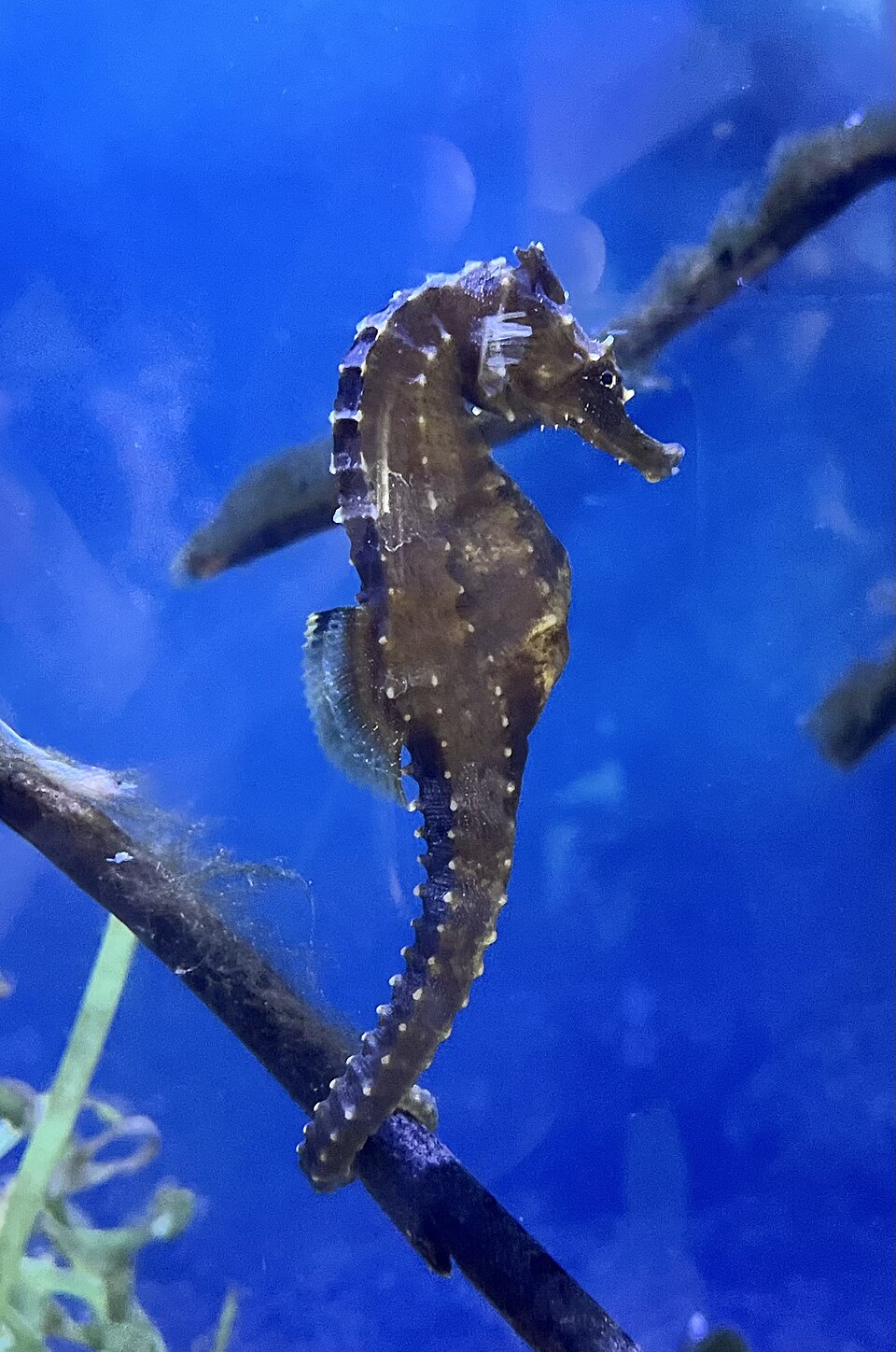
Many marine medications are unsuitable for seahorses, so prevention and quarantine matter most. Consult an experienced keeper or aquatic vet before treating.
How Hard Is Seahorse Care?
Difficulty: advanced. Seahorses are best for keepers who already have a stable saltwater tank, can manage multiple daily feedings, and are comfortable with water testing. They are not good for tanks with strong flow, aggressive fish or lots of competition. A specialized seahorse-only tank is the most reliable approach. If you are newer to saltwater, practice first with a hardier species such as the watchman goby or the mandarin dragonet, which also has demanding feeding needs.
Seahorse Care FAQ
Are seahorses hard to keep?
Yes. They are an advanced animal with specific feeding, flow and temperature needs. Captive-bred seahorses in a species tank are the most realistic way to succeed.
What size tank does a seahorse need?
For larger species, 30 gallons or more for a pair, at least 18 inches tall. Dwarf seahorses can live in 5 to 10 gallons.
What do seahorses eat in an aquarium?
Frozen enriched mysis shrimp, fed two to three times daily, for captive-bred animals.
Can seahorses live with other fish?
Only with very peaceful, slow-feeding species. Many keepers prefer a species-only tank.
How long do seahorses live?
About 1 to 2 years for dwarfs and commonly 3 to 5 years for larger captive-bred species.
Can you keep a seahorse in a freshwater tank?
No. True seahorses are marine fish. “Freshwater seahorse” is a misleading name sometimes applied to unrelated pipefish, which have their own needs.
Final Thoughts
Seahorses ask a lot, but a well-planned seahorse tank is peaceful and absorbing. Start with captive-bred animals, keep flow gentle, feed often, and keep the tank spotless.
Do you keep seahorses? Share your setup and tips in the comments.
Disclaimer: This article is general information, not veterinary advice. For serious or persistent problems, consult an aquatic veterinarian.