
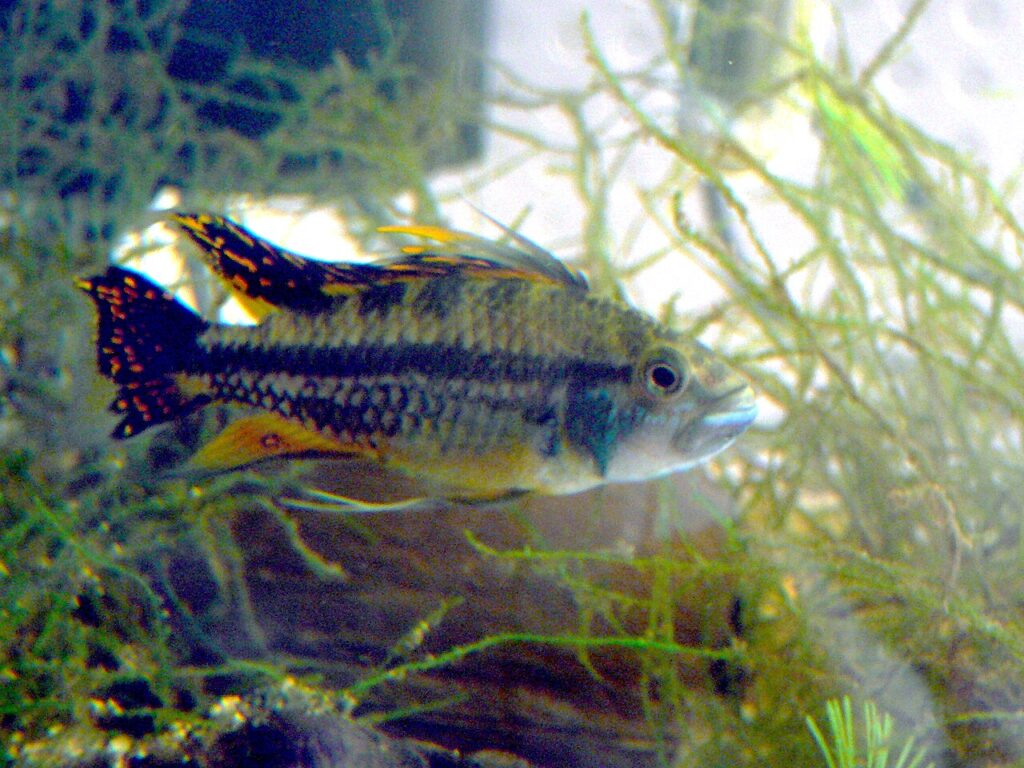
Apistogramma, often called “apistos,” are small South American dwarf cichlids with big personalities and spectacular fin colors. They stay small, breed in caves and are among the most rewarding fish a freshwater hobbyist can keep. They are also fussier than most community fish. This apistogramma care guide covers what they really need.
Overview and Appearance
The genus Apistogramma includes more than 90 described species. The ones you will see most often are:
- Cockatoo dwarf cichlid (A. cacatuoides): males have a tall, spiked dorsal fin and flashy tail. Probably the easiest.
- Agassiz’s dwarf cichlid (A. agassizii): yellow and blue with a black lateral stripe.
- Ram-like borelli / opal (A. borellii): a yellow-blue species, hardy and forgiving.
- Rarer wild-type species such as A. hongsloi, A. viejita or A. panduro: stunning, but best left to experienced keepers.
Males are larger and much more colorful, with extended fin rays. Females are smaller, often yellow, and turn bright yellow with black markings when guarding eggs or fry.
Size and Lifespan
Males reach 3-3.5 inches, females 1.5-2 inches. In good conditions they live 4-5 years, though many die earlier because of water quality problems.
Tank Size and Setup
A 20-gallon long is a good minimum for one male with 2-3 females. A pair can live in a 10-gallon, but a bigger footprint gives each female room for her own territory.
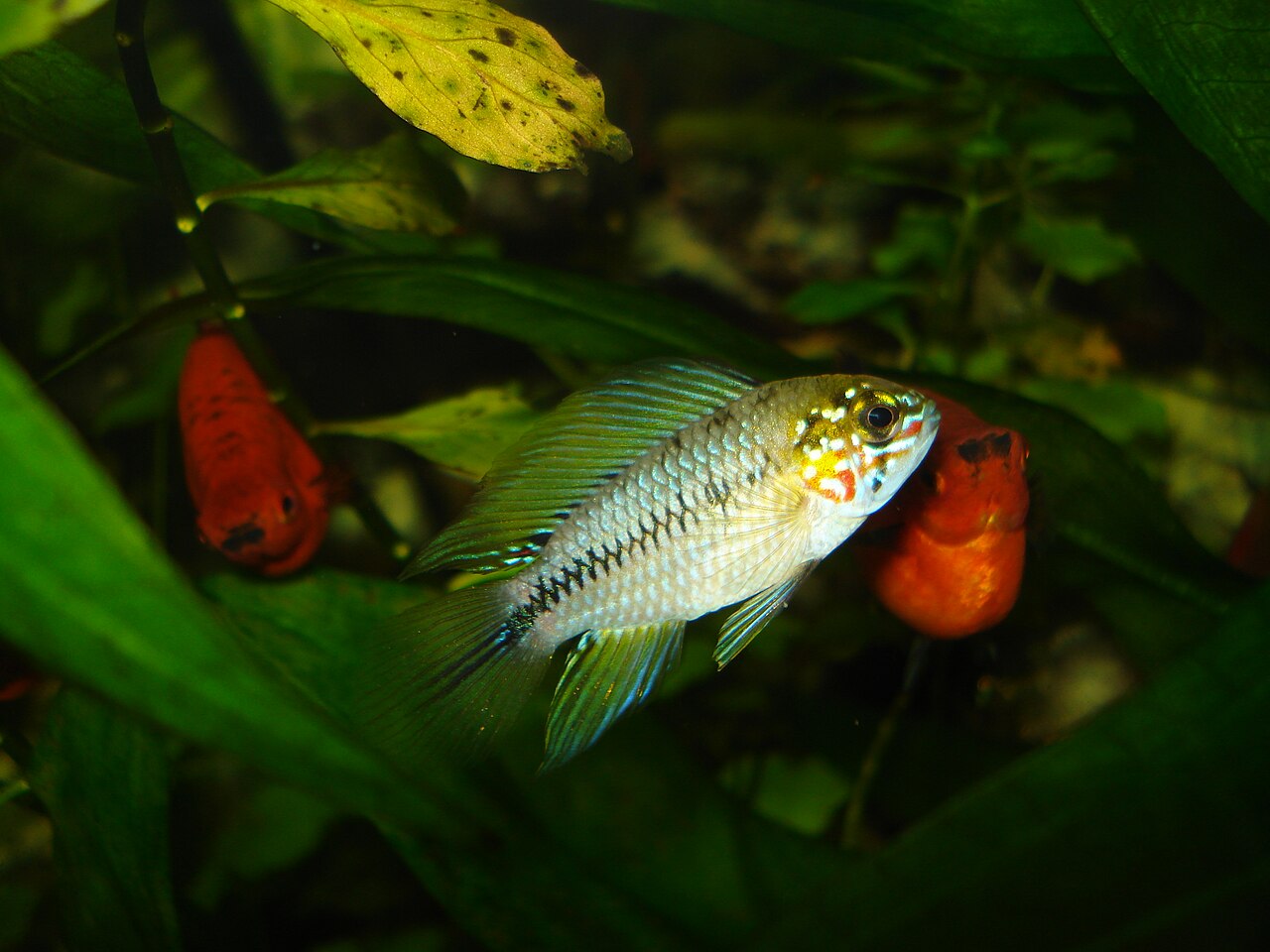
- Substrate: fine sand. They sift it and dig.
- Caves: one cave per female. Small clay pots, coconut shells and half-buried ceramic caves work well.
- Cover: dense planting, driftwood and leaf litter such as Indian almond leaves create sight lines and reduce stress.
- Lighting: subdued. Floating plants help.
- Filtration: a gentle sponge filter is ideal. They do not like strong current.
- Heater: a reliable aquarium heater set to the right temperature.
Just a heads up: some of the links in this post are affiliate links, which means I may earn a small commission if you buy through them. But no worries, it is at no extra cost to you. Also, as an Amazon Associate I earn from qualifying purchases.
If you are starting a new tank, make sure it is fully cycled; our guide to cycling a fish tank explains how.
Water Parameters
This is where apistos trip people up.
- Temperature: 76-82°F (many keepers do 78-80°F)
- pH: 5.5-7.0, ideally 6.0-6.8
- Hardness: soft, 1-8 dGH. Wild-type species may need 1-4 dGH.
- Ammonia and nitrite: 0
- Nitrate: below 20 ppm
They are sensitive to nitrate and dirty water, and prone to sudden problems after big swings. Regular weekly water changes of 25-30% are essential. A liquid test kit is non-negotiable. If your tap water is hard, you may need to use RO/DI water mixed with tap water.
Diet
Apistos are carnivores. They prefer small live or frozen foods and often reject flakes at first.
- Staple: frozen bloodworms, brine shrimp, daphnia and mysis
- Live foods: baby brine shrimp, microworms, blackworms
- Prepared foods: small micro pellets or sinking pellets once they accept them
- Feed small amounts 2 times a day and remove leftovers, because uneaten food fouls water quickly. Culturing your own microworms or hatching baby brine shrimp is cheap and keeps picky eaters and fry well fed.
Temperament and Tank Mates
Apistos are territorial, mostly toward each other. Males can fight and a lone female can be harassed by a male with no other targets. Keep one male with several females in a large, well-decorated tank.
Good tank mates: small calm tetras (cardinals, rummynose, ember), pencilfish, small rasboras, Corydoras and otocinclus. For more ideas see our guides to rummy nose tetras and chili rasboras.
Avoid: large or fast, boisterous fish, fin nippers (tiger barbs), and other aggressive cichlids. If you like cichlids but want something easier, consider the German blue ram or Bolivian ram, or the more forgiving kribensis.
Breeding
Apistos are cave spawners and harem breeders. Females choose caves, lay 30-100 eggs and guard them fiercely. Eggs hatch in 2-3 days and fry become free-swimming about a week later. The female guards them for weeks.
- Keep water soft, acidic and clean
- Feed live and frozen foods to condition fish
- Feed fry baby brine shrimp or microworms
- Note that many species are temperature-dependent for sex ratio: higher temperatures often produce more males, lower temperatures more females
Common Health Issues
- Hole-in-the-head and “Hexamita” type problems: associated with poor water, old nitrate and bland diet.
- Bacterial infections and fin rot: often follow poor water; see our bacterial infections guide.
- Ich (white spot disease): common on new fish. Quarantine them first; our quarantine tank setup guide walks through it.
- Sudden death after water changes: usually due to big swings in pH, hardness or temperature.
- Stress and clamped fins: often from bullying or empty tanks with no cover.
Apistos are sensitive to medications. Use the lowest effective dose and consult an aquatic vet when possible.
Buying Tips and Acclimation
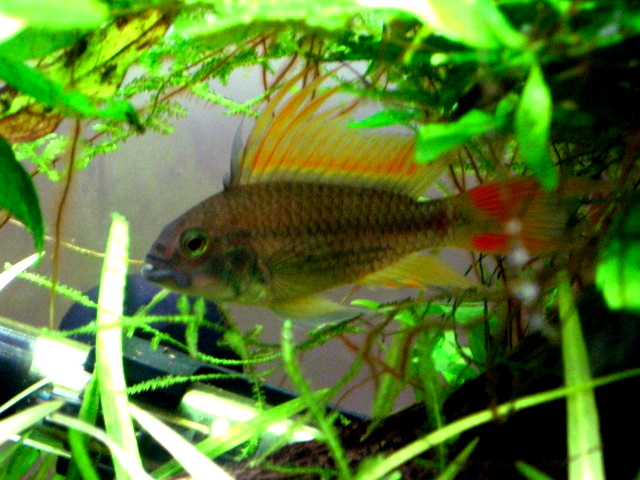
Buy from a breeder or a store that keeps its apistos in soft water, because fish raised in hard water often struggle when moved. Ask what the fish are eating. Wild-caught fish may carry parasites and need quarantine. Acclimate slowly by drip over an hour or more, since a sudden jump in hardness or pH can be fatal. Expect a shy first week; plants, caves and dim light help a new fish settle and start eating.
Difficulty Level
Intermediate to advanced. Cockatoo and borelli types are manageable if you maintain stable soft water. Wild-type and rare species are advanced. They are not good for new tanks, for hard-water setups without RO, or for people who skip water changes.
Apistogramma FAQ
What size tank do apistogramma need?
20 gallons long for a trio; a 10-gallon works for a single pair with caves and cover.
Can apistogramma live alone?
Yes. A single fish is fine, though males are often more colorful and relaxed with females in view.
What do apistogramma eat?
Small live, frozen and quality micro-pellet foods. Many start on frozen bloodworms or baby brine shrimp.
How many apistogramma can I keep together?
One male with 2-4 females in a 20-30 gallon. Keep only one male per tank unless it is very large and heavily decorated.
How long do apistogramma live?
3-5 years in good conditions.
Are apistogramma hard to keep?
They are harder than most community fish because of their water chemistry needs and sensitivity. Stable, soft, clean water is the key.
Are apistogramma aggressive?
Mostly toward their own species and other cichlids, especially when breeding. They are usually peaceful with other fish.
What is the best apistogramma for beginners?
Apistogramma cacatuoides (cockatoo) and A. borellii are most forgiving.
Final Thoughts
Apistos reward careful keepers with colors and behaviors few freshwater fish can match. Start with a hardy species, keep the water clean and soft, give females caves and keep the tank well planted.
Do you keep apistos? Tell us your favorite species in the comments.
Disclaimer: This article is general information, not veterinary advice. For serious or persistent problems, consult an aquatic veterinarian.
Photo credits: Wikimedia Commons, public domain images (Happy Birthday To You!, Leo-nie-weh-oh, Suiso).