
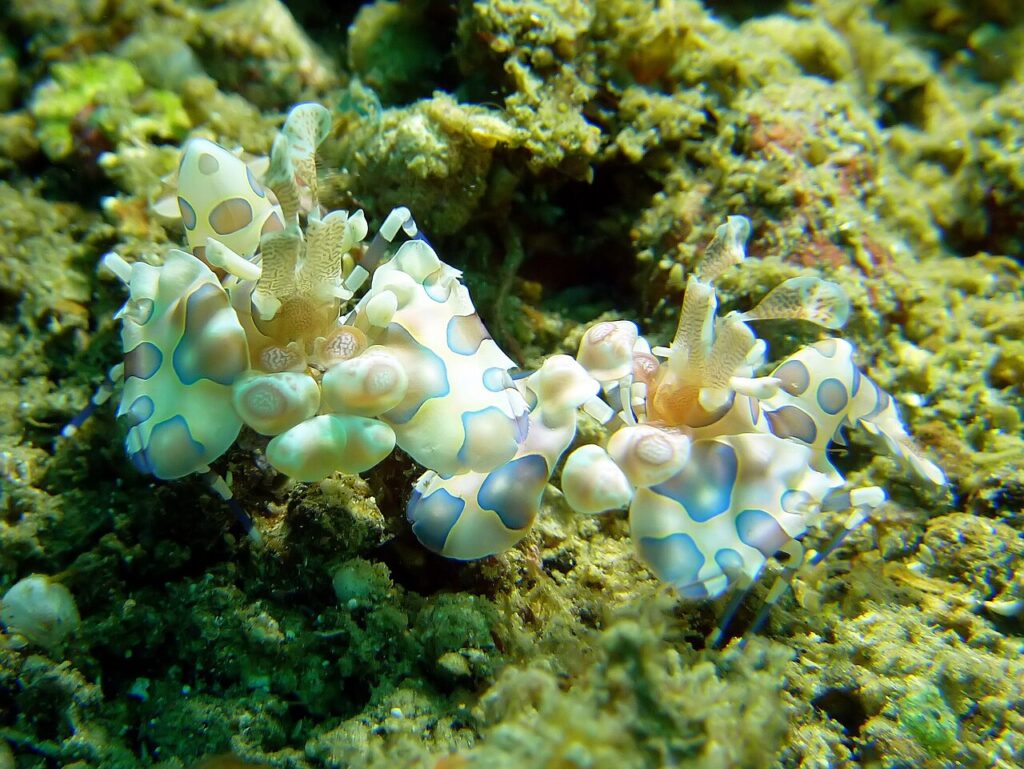
Few marine invertebrates are as striking as the harlequin shrimp (Hymenocera picta). With pastel white, pink and blue-spotted bodies and paddle-shaped claws, it looks like something from a fantasy reef. It is also one of the hardest shrimp to keep, because harlequin shrimp eat living starfish and little else. If you can’t supply a steady source of starfish, you shouldn’t buy one.
This guide covers what harlequin shrimp care really involves, so you can decide honestly whether you’re ready.
Overview and Appearance
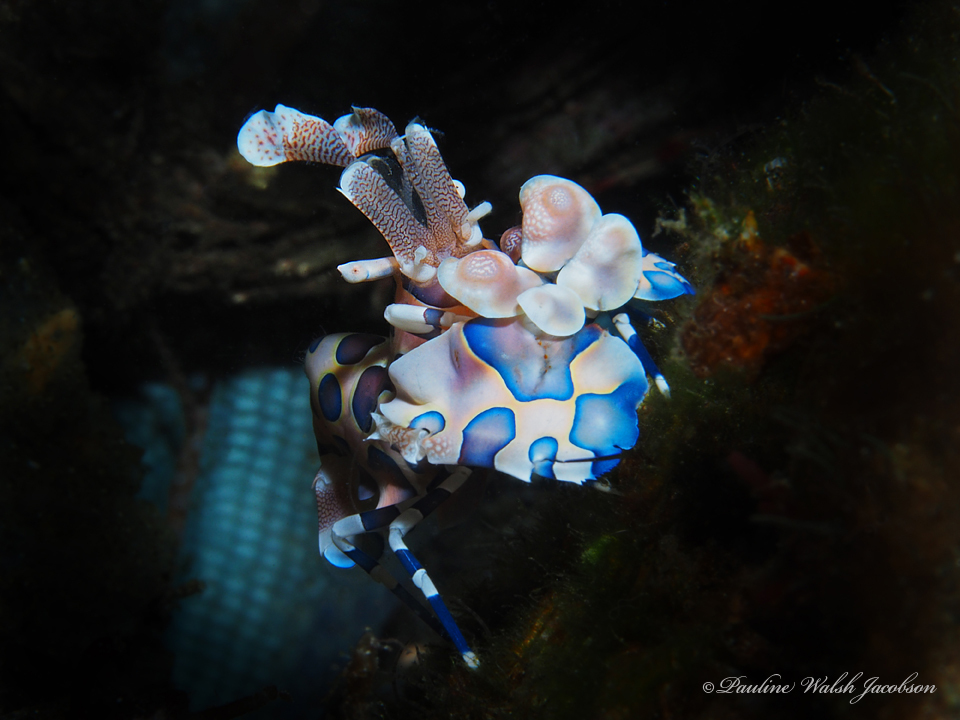
Harlequin shrimp live on Indo-Pacific reefs, usually in pairs. Adults are about 2 inches (5 cm) long. The body is cream or white with blue, purple or brown spots, and they have flattened, petal-like claws used to flip and hold starfish.
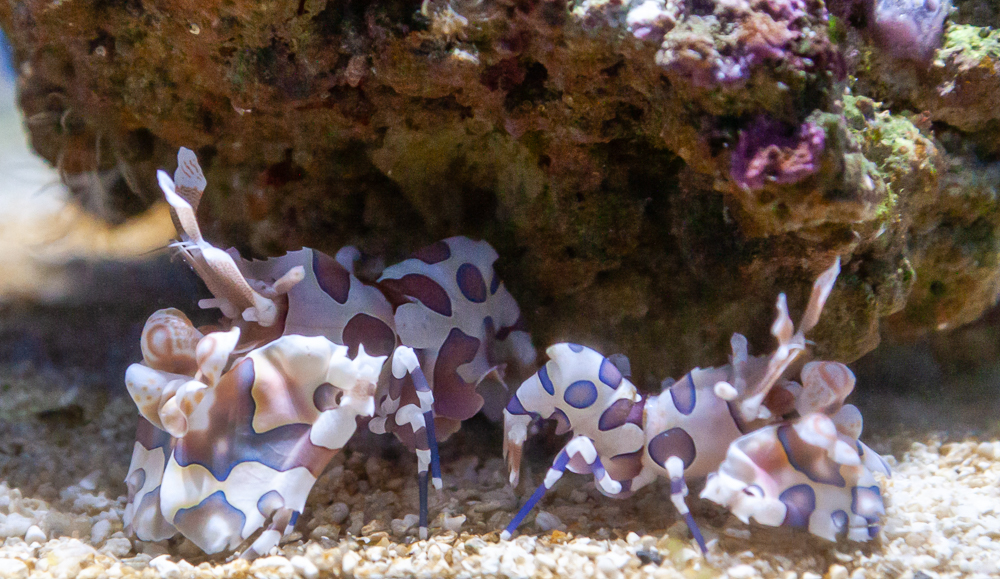
Males and females are told apart by size and color. Females are bigger with more intense blue spots, while males are smaller and more subdued. A bonded pair is more natural than a single shrimp.
Size and Lifespan
- Size: About 2 inches (5 cm), with females slightly larger.
- Lifespan: Around 3-5 years in captivity if well fed. Many do worse because they starve slowly or are stressed by shipping.
The Diet Problem
This is the entire difficulty of the species. In nature, harlequin shrimp hunt sea stars, flip them over and eat the tube feet, often keeping the starfish alive for weeks.
- Primary food: Live sea stars, especially common Linckia species and chocolate chip stars (check the species and legality where you live). Many hobbyists use small, cheap sea stars from a trusted source.
- Feeding pattern: A shrimp eats one arm or portion at a time. A frozen arm of a starfish can be stored and fed in pieces.
- Supply: Starfish are often wild-collected, can be hard to find and may be a poor sourcing choice for the reef.
- Fasting: Harlequins can go several days without food, so it’s normal to feed them every few days rather than daily.
Starfish alternatives are rarely accepted. Some shrimp take bits of frozen fish, shrimp or clam, but these aren’t reliable long-term diets. Don’t count on it.
Some keepers also culture Asterina starfish, which breed in reef tanks. A dedicated culture tank can provide a steady supply for harlequin shrimp. This is an advanced, ongoing project, but it is the most sustainable option.
Tank Size and Setup
- Minimum: 20-30 gallons for a pair. In practice, a mature, established reef tank is best.
- Rockwork: Lots of caves and crevices. Harlequins hide in daylight.
- Cycle: A fully cycled, stable tank with low nitrate. Invertebrates are highly sensitive. See our saltwater aquarium setup guide.
- Acclimation: Drip acclimate slowly over 1-2 hours. Invertebrates suffer from sudden salinity and pH swings.
Water Parameters
- Temperature: 72-78 F (22-26 C)
- Salinity: 1.024-1.026 (use a refractometer)
- pH: 8.1-8.4
- Ammonia and nitrite: 0 ppm
- Nitrate: Under 10 ppm
- Alkalinity and calcium: Stable. Shrimp need these to molt successfully.
Just a heads up: some of the links in this post are affiliate links, which means I may earn a small commission if you buy through them. But no worries, it is at no extra cost to you. Also, as an Amazon Associate I earn from qualifying purchases.
Avoid copper-based medications and keep a quality marine test kit on hand. Mix saltwater with a reliable reef salt and keep a stable top-off routine.
Temperament and Tank Mates
Harlequin shrimp are peaceful toward fish, but they are slow and can be attacked, so tank mates matter.
- Safe options: Small peaceful fish such as gobies, firefish, chromis, cardinalfish and dottybacks that aren’t aggressive (see our guides to green chromis and cleaner shrimp).
- Avoid: Large wrasses, triggers, puffers, hawkfish, mantis shrimp and pistol shrimp that might harass them. Compare our pistol shrimp care guide.
- Corals and fish: They won’t eat corals, but they will hunt any starfish. If you want to keep a sea star for display, a harlequin shrimp is a bad choice.
They can be kept with other invertebrates, although they may not do well with aggressive crustaceans. Some keepers have reported shrimp eating urchin tube feet.
Breeding
Harlequins breed in captivity when a bonded pair is kept happy and well fed.
- The female molts, then mates with the male.
- Eggs are carried under the female’s abdomen for about 3 weeks.
- Larvae hatch at night. They are tiny and need a separate, carefully fed larval setup.
Raising the larvae is very difficult and rarely achieved by hobbyists. Captive-bred shrimp are now sometimes available and are a better ethical choice than wild-caught animals.
Buying a Healthy Harlequin Shrimp
- Ask what the shrimp has been eating. A shrimp that has been fed starfish and looks plump is a better bet than a thin one.
- Look for a rounded, full body, intact antennae and legs, and active movement when you approach.
- Buy a bonded pair if you can, and prefer captive-bred animals. Wild collection can damage reefs.
- Have starfish ready before you bring the shrimp home, and keep it in a quiet, dimly lit tank for the first week.
Common Health Issues
- Starvation: The most common cause of death. Shrimp that stop eating become thin and lethargic.
- Molting problems: Poor water chemistry or low calcium causes stuck molts.
- Poor acclimation: Often fatal in the first week.
- Copper and chemical exposure: Many fish medications are lethal. Treat sick fish in a separate quarantine tank, not the display.
- Aggression: Fish or other shrimp may attack or harass them.
If a shrimp is clearly failing, a vet familiar with invertebrates may offer advice, but options are limited. Prevention is the main strategy.
Difficulty Level
Expert. Harlequin shrimp are not hard because of water chemistry alone, but because of their diet. Unless you have a long-term source of starfish, such as an Asterina culture, you shouldn’t buy one. For a more forgiving cleaning invertebrate, consider a cleaner shrimp.
Harlequin Shrimp FAQ
What do harlequin shrimp eat?
Almost exclusively starfish. Some may take small pieces of frozen seafood, but it can’t be relied on.
Are harlequin shrimp reef safe?
Yes for corals and fish, but not for starfish.
How big do harlequin shrimp get?
About 2 inches (5 cm).
How long do harlequin shrimp live?
Typically 3-5 years if well fed. Many live much shorter lives in poor setups.
How often should I feed a harlequin shrimp?
They can eat every few days. One starfish arm may last for a while.
What size tank does a harlequin shrimp need?
At least 20-30 gallons, with plenty of rock and a mature system. A bonded pair does better in a larger tank.
Are harlequin shrimp hard to keep?
Yes. The starfish diet makes them one of the more demanding invertebrates.
Final Thoughts
Harlequin shrimp are among the most spectacular animals in saltwater tanks, and among the most committed. Plan the food supply before the shrimp, buy captive-bred if possible, and keep the system stable.
Have you kept harlequin shrimp? Share your starfish tips in the comments.
Photos: Pauline Walsh Jacobson (CC BY 4.0), Kai Squires (CC BY 4.0) and Julia Sumangil (CC BY-SA 4.0), via Wikimedia Commons.
Disclaimer: This article is general information, not veterinary advice. For serious or persistent problems, consult an aquatic veterinarian.