
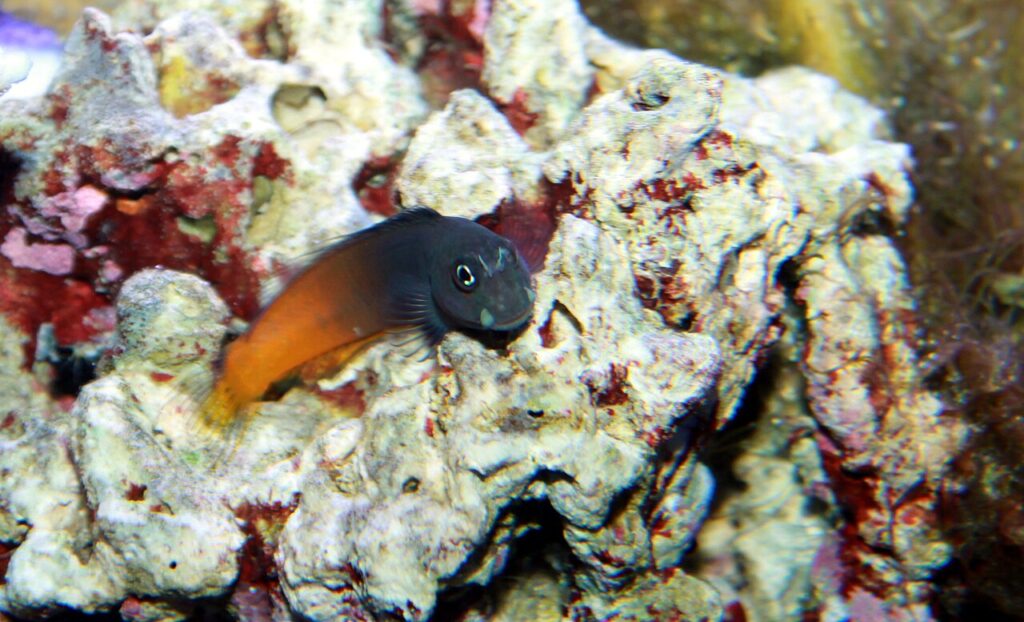
The bicolor blenny (Ecsenius bicolor) is one of the best-known personalities in the saltwater hobby. It perches on rocks, pokes its head out of holes, and nibbles algae all day. It is hardy and reef safe in most tanks, but it has quirks that matter. Here is what bicolor blenny care really involves.
Overview and Appearance
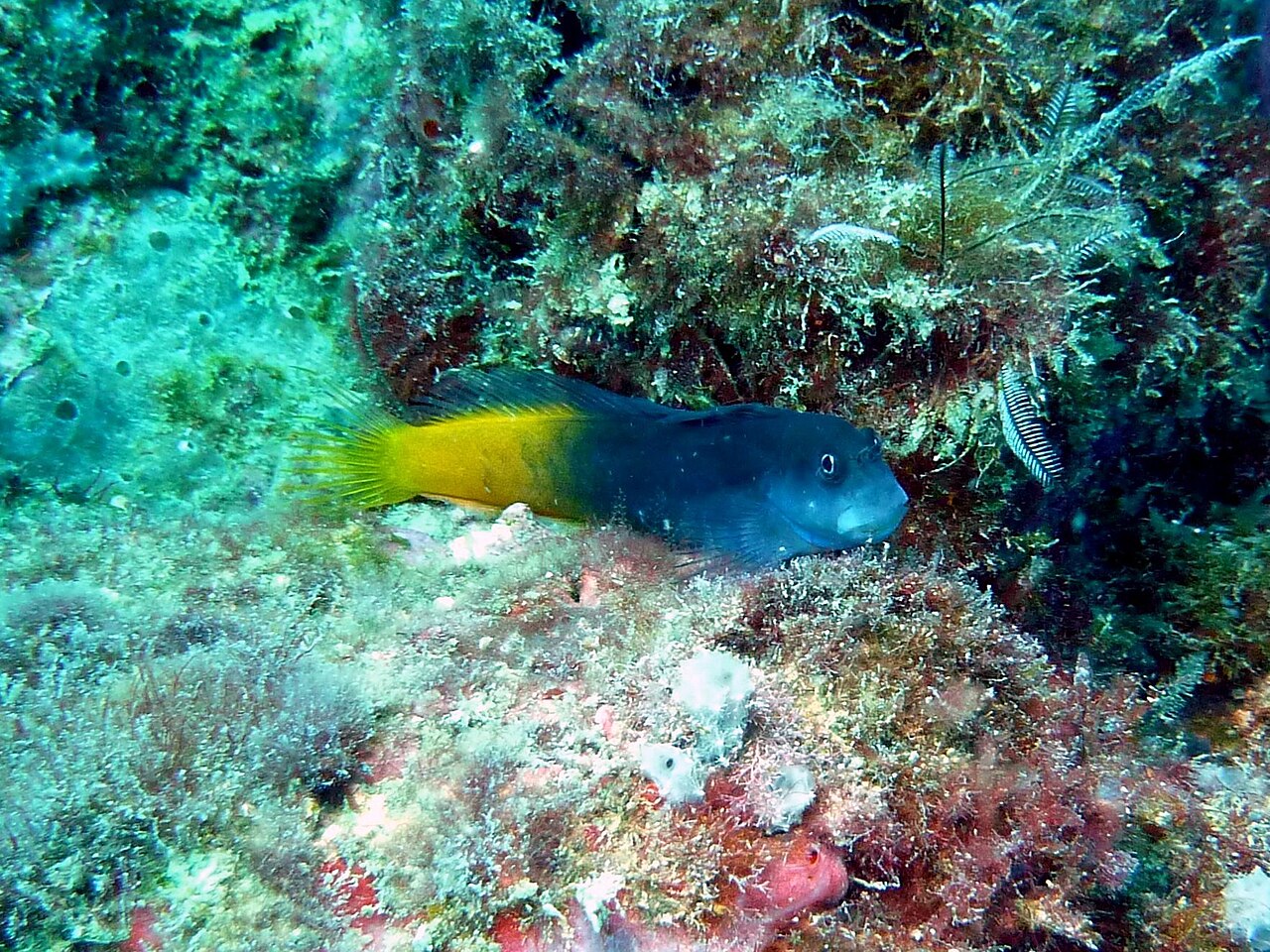
Bicolor blennies are small, elongated fish with a dark front half and an orange, yellow or tan back half. Color varies with mood and region; the dark portion can be brown, blue-gray or almost black. They have a blunt face with big eyes, and lack scales. They have no swim bladder, so they hop and perch rather than swim in open water.
They are found around reefs from the Indian Ocean to the western Pacific, where they inhabit holes in rock and coral.
Size and Lifespan
Adults reach about 4 inches. With good care they live 4-6 years, sometimes longer.
Tank Size and Setup
The usual minimum is a 20-gallon tank, though a 30 gallon or bigger is better if you want more fish or more grazing area.
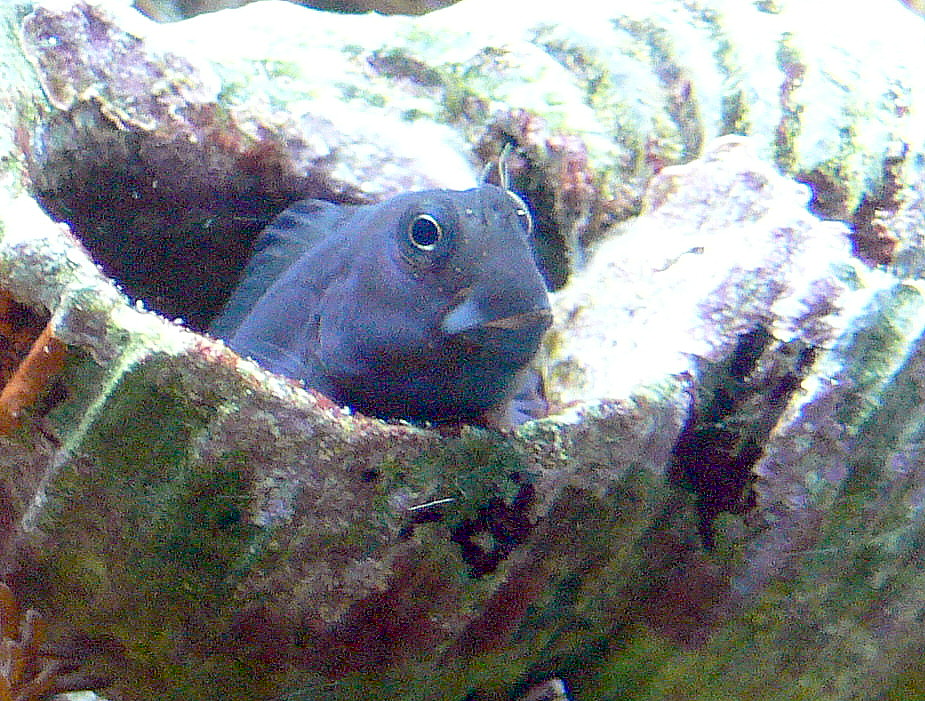
- Rockwork: lots of live rock with holes and caves. A blenny without a bolt-hole is a stressed blenny.
- Aquascape: stable, with open perching spots at the top of the rockwork
- Lid: always use one. Blennies jump.
- Flow and lighting: standard reef levels are fine
- Algae: a mature tank with film algae helps. See our guide to setting up a saltwater aquarium if you are starting from scratch.
Water Parameters
- Temperature: 72-78°F
- Salinity: 1.023-1.025 specific gravity (a refractometer is more accurate than a swing-arm hydrometer)
- pH: 8.0-8.4
- Ammonia and nitrite: 0
- Nitrate: below 20 ppm for fish only tanks, lower for reefs
Just a heads up: some of the links in this post are affiliate links, which means I may earn a small commission if you buy through them. But no worries, it is at no extra cost to you. Also, as an Amazon Associate I earn from qualifying purchases.
Use a reliable saltwater test kit and make weekly 10-20% water changes with quality reef salt.
Diet
Bicolor blennies are mostly herbivores that also accept meaty foods.
- Grazing: film algae and diatoms on rocks
- Nori: clip a sheet of dried seaweed to the glass a few times a week
- Pellets and flakes: high-quality marine herbivore pellets
- Frozen foods: mysis, brine shrimp and spirulina-enriched foods
- Offer a few small feedings per day; they browse constantly
In very clean tanks with little algae, feeding is the most important thing to get right. A thin, hollow-bellied blenny is a warning. Rinse nori or algae sheets before use, and take down any uneaten food after a few hours so it does not rot. If your fish ignores prepared foods at first, try frozen mysis or a smear of fresh algae-based paste near its favorite hole, and offer food when other fish are not competing.
Temperament and Tank Mates
Bicolors are active and curious, but territorial about their rock. They may chase similar-shaped fish, especially other blennies and dartfish, and can get harassed by bullies.
Generally good tank mates:
- Clownfish, gobies (like the neon goby or firefish), cardinalfish and royal grammas
- Dottybacks that are not too aggressive; see neon dottyback care
Be careful with:
- Other blennies, including scooter blennies in small tanks
- Aggressive fish like large dottybacks, triggers and some tangs; bigger fish may bully or eat a bicolor
- Mandarin dragonets, which can be outcompeted for pods; see our mandarin guide
Keep only one bicolor blenny per tank under 75 gallons.
Reef Safety
Bicolor blennies are usually considered reef safe. They graze algae and rarely bother corals, but some individuals nip at the mantles of clams or sample soft corals or zoanthids. Watch your fish for a few weeks.
Breeding
Bicolor blennies have been bred in captivity. Their dedicated hobbyist community says the key is a bonded pair, plenty of caves and live foods. Breeding is uncommon in home tanks. Pairs lay adhesive eggs in a cave. The male guards them. Fry are tiny and need rotifers and specialized rearing, so it is mostly for advanced hobbyists.
Common Health Issues
- Marine ich (cryptocaryon): common in new fish. Quarantine before adding them; see our quarantine tank setup guide.
- Starvation: from lack of algae and bullying at feeding time
- Jumping out: blennies are famous jumpers; keep a lid on
- Stress from bullies: leads to hiding and refusing food
- Parasites and bacterial infections: treat in a hospital tank; see bacterial infections
Buying and Acclimation Tips
Choose a blenny that is alert, has a rounded belly and perches actively. Avoid thin fish with sunken bellies, cloudy eyes or torn fins. Many stores starve blennies because their tanks are bare of algae, so ask to see it eating. Acclimate by drip, quarantine for 3-4 weeks, then add it to the display after other peaceful fish are settled, or at the same time as other new fish, so it does not claim the whole rockwork first. Place its favorite hole near the front where you can enjoy watching it.
Difficulty Level
Beginner to intermediate. Bicolor blennies are tough and eat most foods, making them one of the better first marine fish. The risk comes from a sterile tank with no algae, no hiding holes or bullying tank mates. It is not a good fit for a brand-new tank that has not cycled.
Bicolor Blenny FAQ
What size tank does a bicolor blenny need?
A 20-gallon tank is the minimum; 30 gallons or more is better.
Is a bicolor blenny reef safe?
Usually yes, although a few individuals nip clam mantles or soft corals.
What do bicolor blennies eat?
Algae, nori, marine herbivore pellets, mysis shrimp and other frozen foods.
Can you keep two bicolor blennies together?
Not in tanks under 75 gallons. They are territorial and will fight.
How long do bicolor blennies live?
Around 4-6 years with good care.
Bicolor blenny vs tailspot blenny: what is the difference?
The bicolor blenny (Ecsenius bicolor) has a two-tone body, dark in front and orange or yellow behind. The tailspot blenny (Ecsenius stigmatura) is yellow-orange with a dark spot at the base of its tail. Tailspots are shyer and smaller.
Why is my bicolor blenny hiding?
New fish often hide for several days. If it persists, check water quality and look for bullies.
Do bicolor blennies jump out of tanks?
Yes. Always use a tight lid or mesh.
Final Thoughts
The bicolor blenny is a hardy, entertaining algae grazer that suits many marine tanks. Provide holes, keep a good algae film and supplement with nori, and it will be a long-lived favorite.
Do you keep a bicolor blenny? Tell us about its personality in the comments.
Disclaimer: This article is general information, not veterinary advice. For serious or persistent problems, consult an aquatic veterinarian.
Photo credits: Bicolor blenny Ecsenius bicolor by Brian Gratwicke (CC BY 2.0); Ecsenius bicolor (public domain); Ecsenius bicolor 66407963 by Kai Squires (CC BY 4.0), via Wikimedia Commons.