
As an Amazon Associate I earn from qualifying purchases. This post contains affiliate links, which means I may earn a small commission at no extra cost to you.
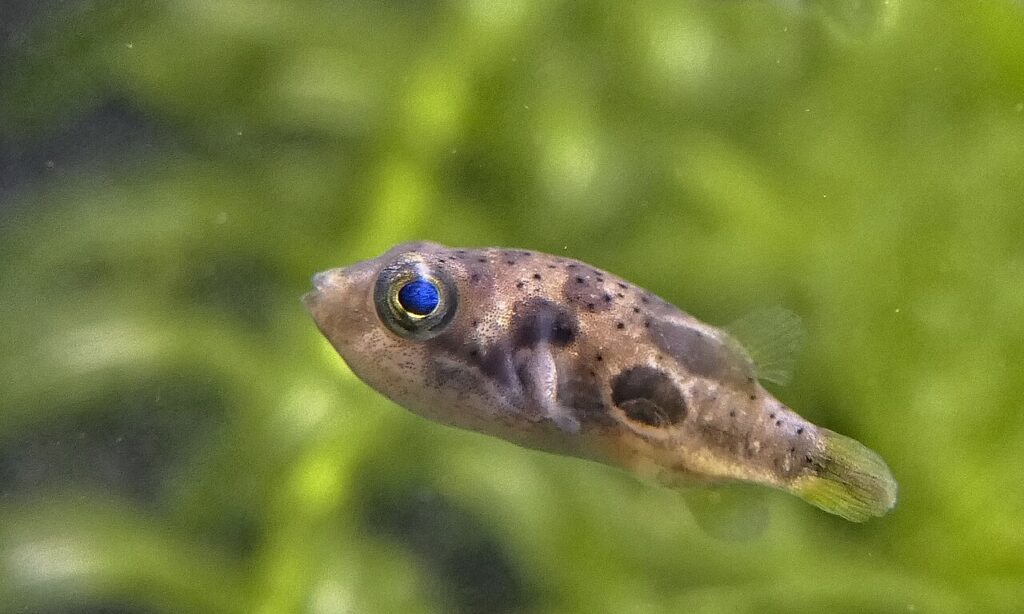
The pea puffer (Carinotetraodon travancoricus), also called the dwarf puffer or pygmy puffer, is the world’s smallest pufferfish. At under an inch long, it has the big personality of a much larger fish: it hunts, tracks you with its eyes and can be wonderfully entertaining. It is also a fussy, aggressive little predator that is not a good fit for a community tank.
This guide explains how to keep pea puffers healthy, what tank size they need, what to feed them and the tank mates (if any) that work.
Pea Puffer Overview and Appearance
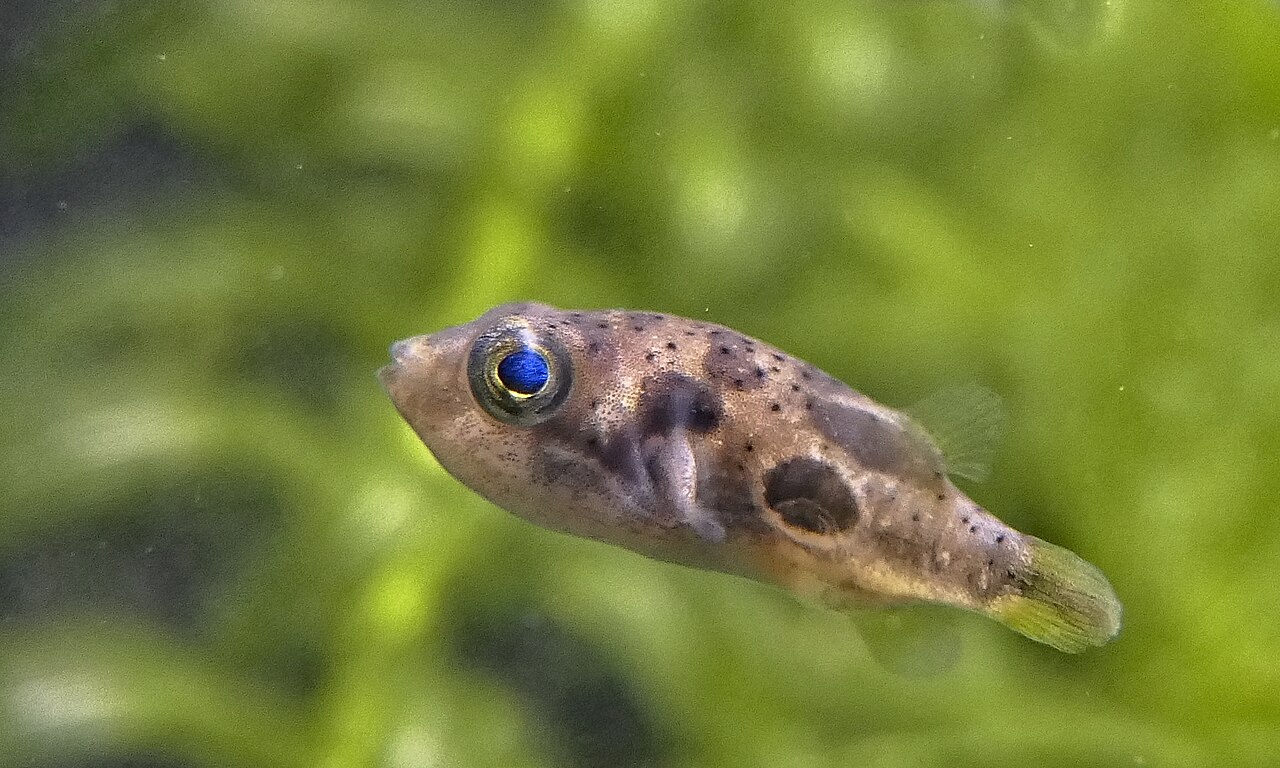
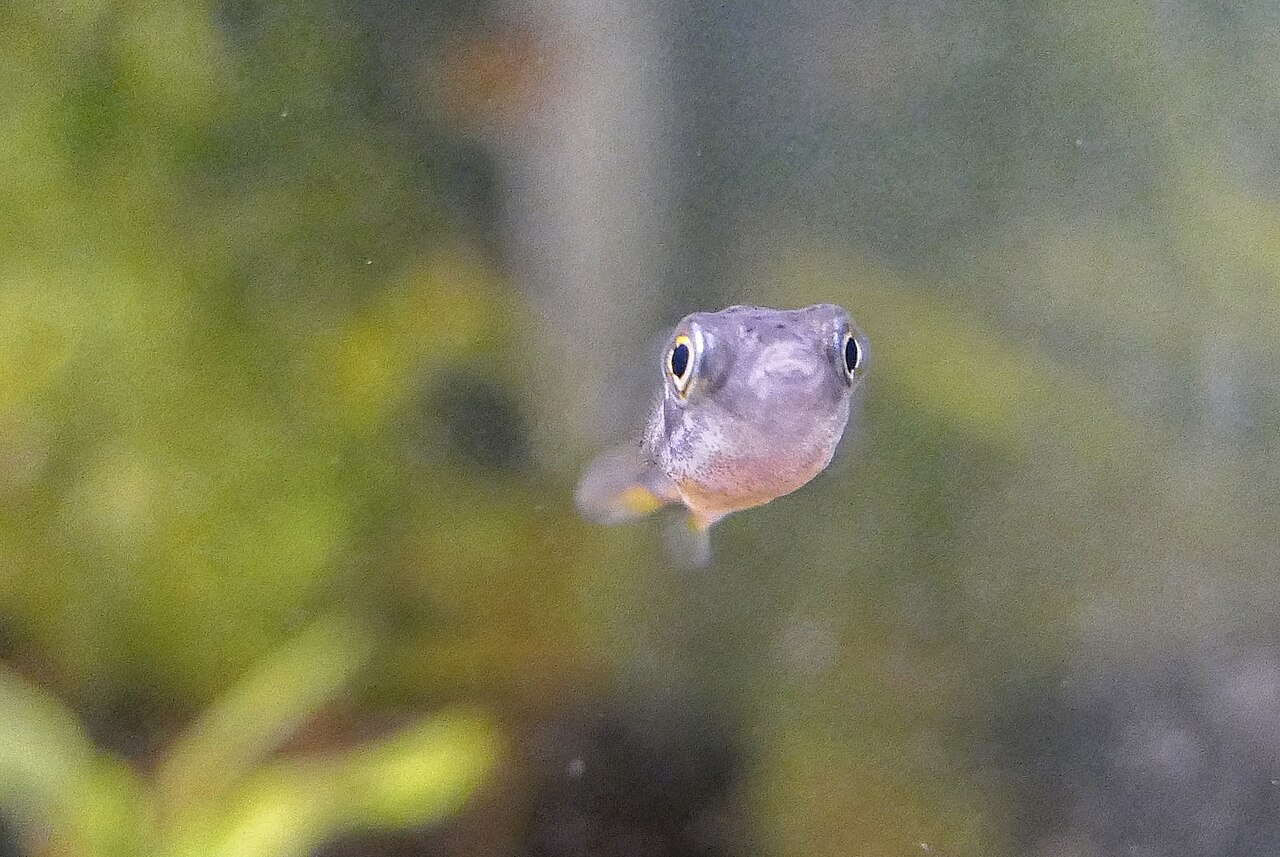
Pea puffers are yellow to olive green with dark spots and a pale belly. Their eyes move independently, and they can slowly turn to look at you. Males develop a dark line down the belly and wrinkles around the eyes, and females are rounder with a more uniform pattern, although sexing young fish is hard.
They come from slow-moving, heavily planted waters in southwestern India. In the aquarium they like to hunt among plants and hide in cover, then dart out to grab a snail or worm.
Size and Lifespan
Adults reach about 1 inch (2.5 cm). How long do pea puffers live? Typically 3 to 4 years in good care, and sometimes longer. Many die early from poor water quality, bad food, or stress from being housed with aggressive or nippy companions.
Tank Size and Setup
The minimum for a small group is a 5 gallon tank for one puffer, though many keepers recommend a 10 gallon as the starting size. As a rule of thumb, allow about 5 gallons for the first puffer and 3 gallons per additional puffer. A 20-gallon long can hold a group of 5 to 6 with plenty of cover, and bigger tanks make it easier to break up territory.
Setup tips:
- Dense planting. Use live aquarium plants such as java fern, anubias, hornwort and floating plants. Plants break line of sight and reduce aggression.
- Hardscape and caves. Driftwood, rock caves and leaf litter give each puffer a place to claim.
- Gentle filtration. A small sponge filter or low-flow aquarium filter is ideal. They are not strong swimmers.
- A lid. Not for jumping so much as for keeping humidity and temperature stable.
- A tank that is already cycled. Pea puffers are sensitive to ammonia and nitrite. Our guide to how to cycle a fish tank walks through it.
Water Parameters
Pea puffers prefer clean, stable, freshwater conditions:
- Temperature: 76 to 82°F
- pH: 6.5 to 7.8 (stable is more important than exact)
- Hardness: soft to moderately hard, 5 to 15 dGH
- Ammonia and nitrite: 0 ppm
- Nitrate: under 20 ppm
They produce a lot of waste for their size, and they eat messy foods like snails and worms. Plan on a weekly water change of 25 to 40% and use a water conditioner. A good liquid test kit is a must. Some keepers use a small amount of aquarium salt for brackish-like tolerance, but true pea puffers are freshwater fish and do best in freshwater. If you’re curious, see our discussion on using aquarium salt.
Pea Puffer Diet: What Do They Eat?
Pea puffers are carnivores that need hard-shelled and live or frozen foods. Their teeth grow constantly, and crunching on shells helps keep them worn down.
Good foods:
- Small snails (pond, bladder or ramshorn). Many keepers breed a snail culture just for puffers.
- Live or frozen bloodworms, blackworms, brine shrimp and daphnia
- Frozen foods such as frozen bloodworms and brine shrimp
- Occasional small shrimp such as ghost shrimp or baby shrimp
Feed once or twice daily with an amount they finish in a few minutes. Many pea puffers will refuse dry flakes and pellets. Overfeeding is a common cause of poor water, so remove leftovers. Because they’re picky, a new puffer may need live food for a few days before accepting frozen.
Temperament and Tank Mates
This is the section most people want to read first. Pea puffer tank mates are limited. In a typical community tank, pea puffers will nip fins and even the eyes of slow, long-finned fish. Keepers often recommend a species-only tank, ideally with several puffers in a well-planted space.
Aggression is strongest in males, and it also depends on the individual. A few will live peacefully with other fish, but it can’t be predicted. If you try tank mates, choose small, fast, short-finned fish and shrimp with an ample backup plan, since puffers often eat shrimp. Fast schooling fish like chili rasbora or celestial pearl danios are sometimes tried, but both are small enough to be hunted. Don’t mix pea puffers with bettas, guppies, or other long-finned, slow fish.
Keep in mind these animals are not for the “put a fish in the tank and see” approach. Have a separate tank ready in case someone has to be removed.
Breeding Pea Puffers
Pea puffer breeding is possible in a home aquarium. In a well-planted tank with good food, males court females by chasing them and the pair lays a few eggs on a leaf or in a cave, usually 1 to 5 at a time. The male guards them, and they hatch in about 3 to 6 days.
The fry are tiny and need microscopic live foods such as infusoria, vinegar eels or newly hatched brine shrimp, then work up in size. Raising them requires a separate tank and a constant supply of live food. Most keepers find it rewarding but demanding.
Common Health Issues
- Overgrown teeth. Caused by a soft diet. Offer snails and crunchy foods regularly.
- Fin nipping and stress injuries. Aggression within a group or with tank mates leads to wounds that can become infected. Add cover and separate fighters.
- Ich and other parasites. Wild-caught or newly purchased fish may carry them. Our guide on the white spots on fish helps with identification. Many medications are harsh on puffers, so ask a knowledgeable source about dosing.
- Poor water. Ammonia or nitrite stress shows up as lethargy and clamped fins.
- Starvation. A puffer that won’t eat anything frozen needs live food quickly.
How Hard Are They? Honest Difficulty
Moderate. Pea puffers are small and inexpensive, but they need cycled, planted tanks, live or frozen food, and careful monitoring of aggression. They are a poor choice for the beginner who wants a peaceful community fish. For an experienced beginner willing to run a species tank, they can be very rewarding.
Pea Puffer FAQ
What size tank does a pea puffer need?
At least 5 gallons for one, plus around 3 more gallons for each additional puffer.
Can pea puffers live together?
Often yes in a heavily planted tank with enough space, but watch for bullying, particularly between males.
What do pea puffers eat?
Snails, frozen and live worms, brine shrimp and small crustaceans.
How long do pea puffers live?
Usually 3 to 4 years.
Are pea puffers good for beginners?
Not usually. They are best for keepers who understand cycling and can offer live and frozen foods.
Are pea puffers brackish?
No. They are generally kept in freshwater, although some retailers suggest a little salt for brackish-like conditions. A species tank with stable freshwater is the safer choice.
Final Thoughts
Pea puffers are tiny, curious and full of attitude. Give them a cycled, planted tank, a steady supply of snails and frozen foods, and a species-only setup, and they’ll reward you with years of entertaining behavior.
Do you keep pea puffers? Share how yours get along in the comments.
Disclaimer: This article is general information, not veterinary advice. For serious or persistent problems, consult an aquatic veterinarian.