
As an Amazon Associate I earn from qualifying purchases. This post contains affiliate links, which means I may earn a small commission at no extra cost to you.
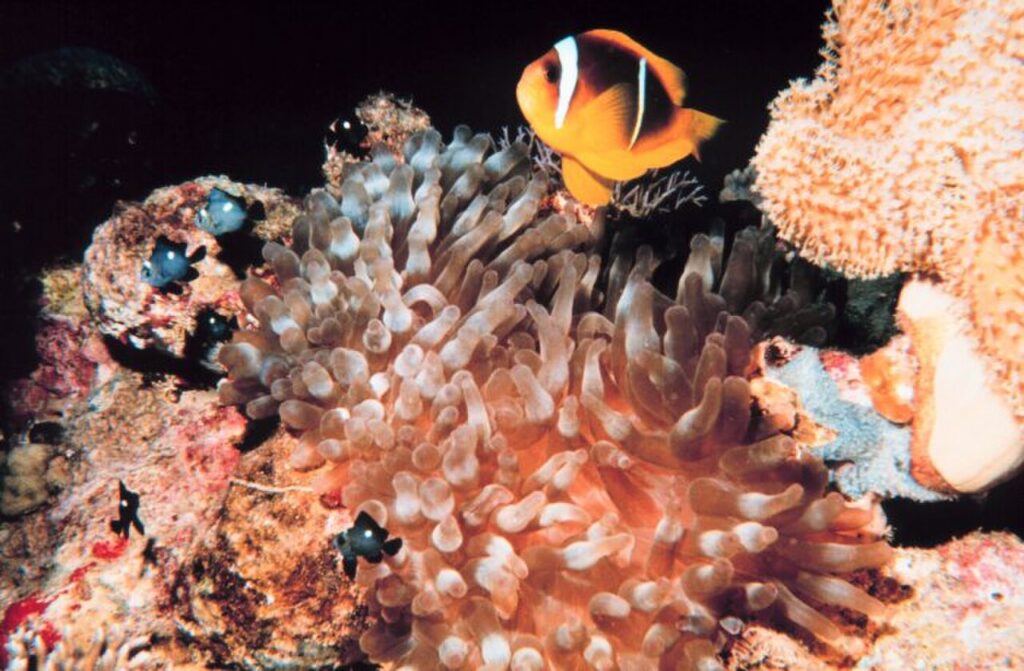
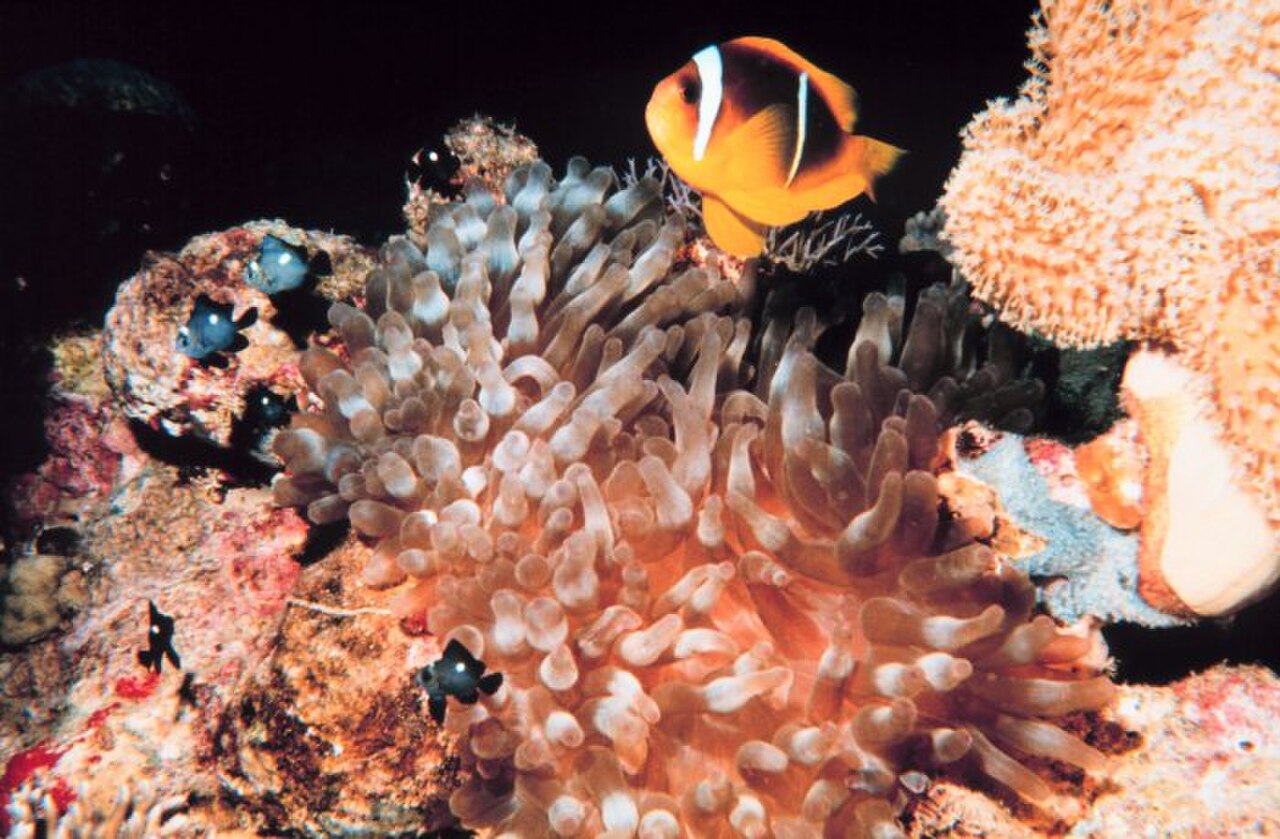
The bubble tip anemone (Entacmaea quadricolor, often shortened to BTA) is the most popular anemone in the saltwater hobby. It is the species clownfish most readily host in captivity, and a healthy one is a showpiece. It is also a living animal that dies quickly in the wrong conditions, and a dying anemone can foul an entire tank.
This guide covers what you need to know before buying one: tank size, lighting, water quality, feeding, tank mates, and the questions keepers ask most.
Bubble Tip Anemone Overview and Appearance
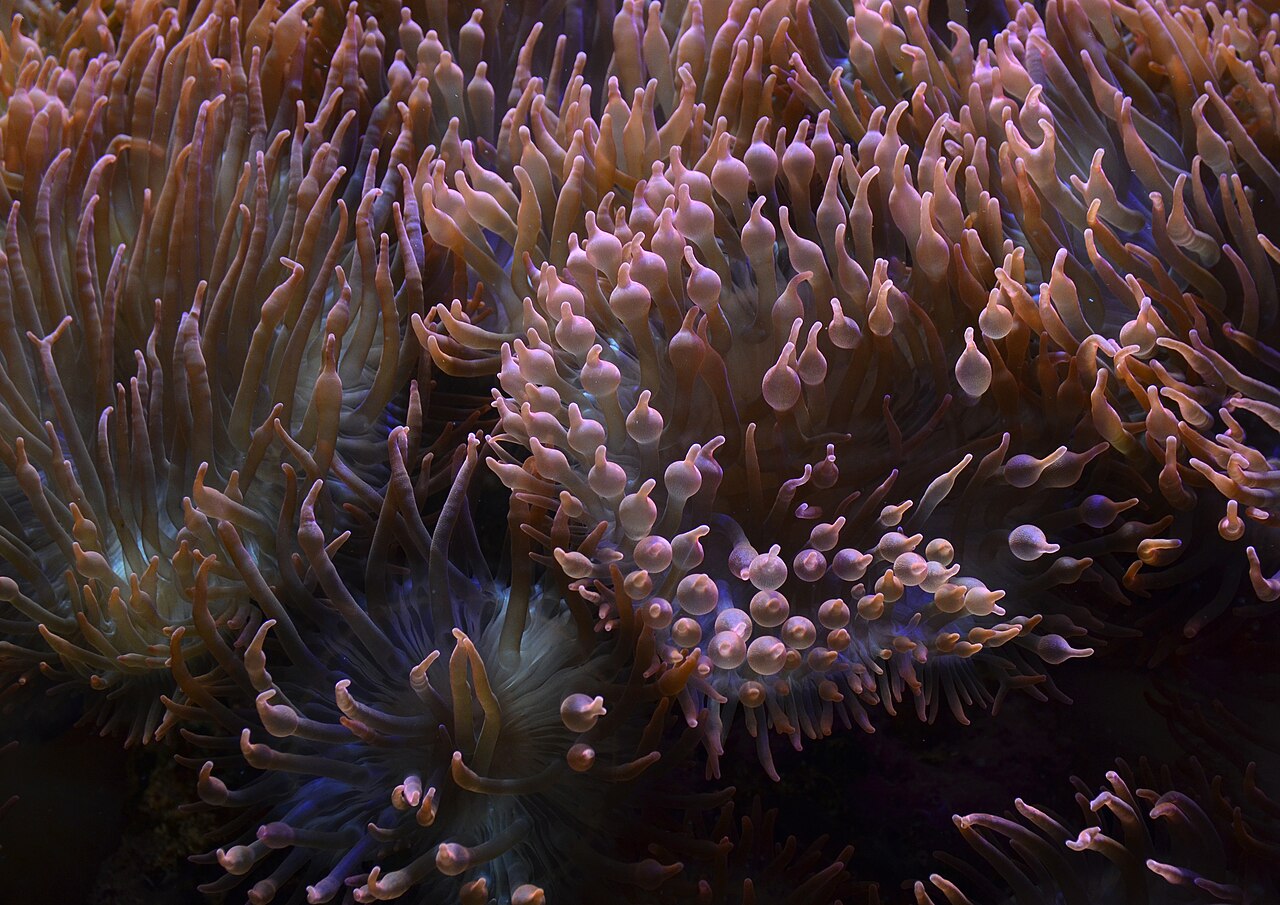
BTAs get their name from the swollen, bulb-shaped tips on their tentacles. The bubbles are most obvious when the anemone is well fed and happy, and they can shrink or flatten when it is stressed or fully expanded in strong light. If yours has no bubbles, that is often normal: some individuals simply show straight tentacles, especially under strong light, though it can also be a sign of stress.
Common color names include rose, green, red, pink, rainbow and “sunburst.” These are mostly marketing labels for the same species. Color comes from the anemone’s symbiotic algae and its own pigments, and it can shift with lighting.
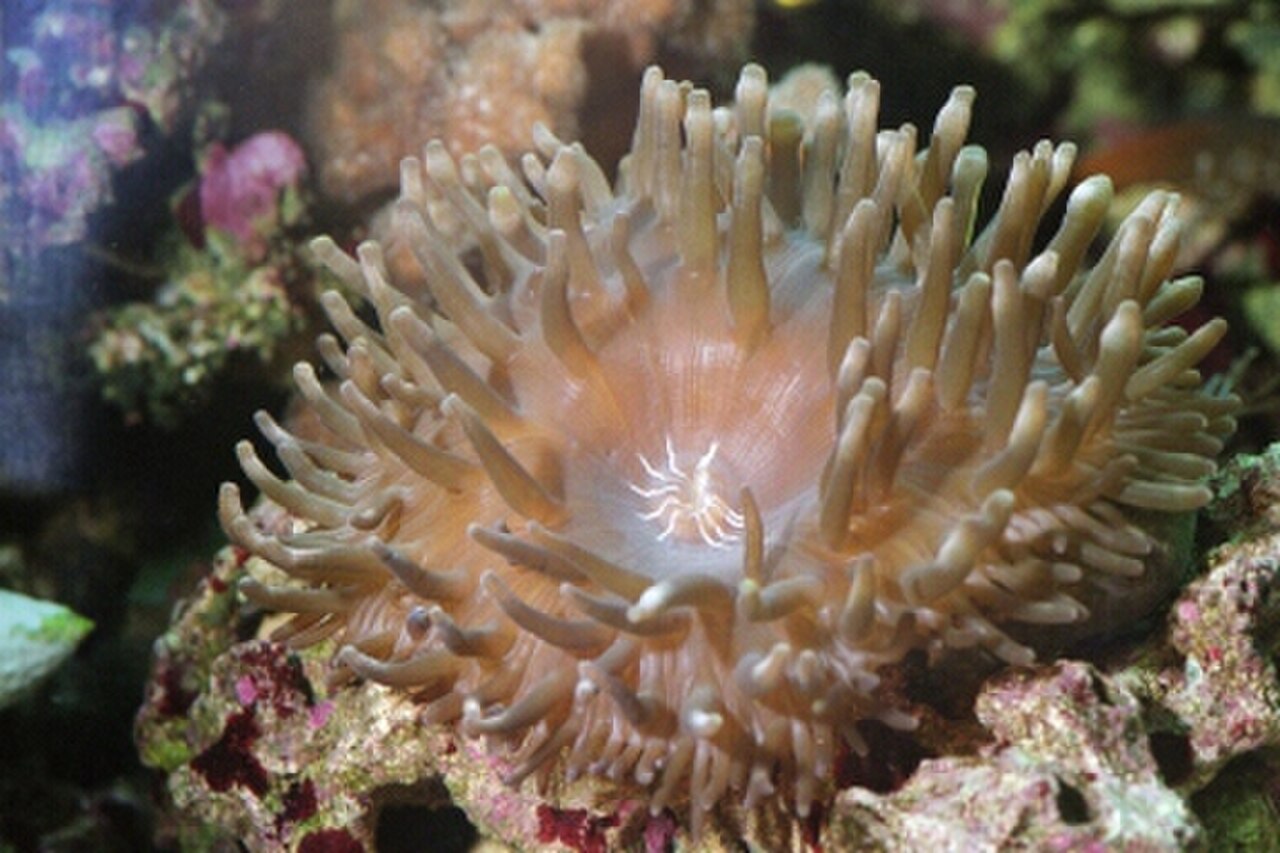
Under the tentacles is a foot (the pedal disc) that anchors the animal into rockwork. A healthy BTA has a firm, sticky foot, full inflated tentacles, and a tight closed mouth in the center of the disc.
Size and Lifespan
How big do bubble tip anemones get? Most aquarium specimens reach roughly 4 to 6 inches across, and large ones in a mature tank can pass 12 inches. A single anemone can split into several, so a tank can fill up faster than expected.
Lifespan is one of the most interesting facts about anemones. They do not have a fixed life expectancy and can live for decades in stable conditions. Most losses in home aquariums come from poor water quality, bad lighting, or stress during shipping, not old age.
Tank Size and Setup
Bubble tip anemone minimum tank size is usually given as 30 gallons, with 40 to 75 gallons a much better target. More important than raw volume is tank age and stability. Most experienced keepers recommend waiting until the tank has run 6 to 12 months with a stable, mature system before adding any anemone. Brand new tanks swing too much in nutrients, alkalinity and temperature. If you need a refresher, read our guide to how to set up a saltwater aquarium and how to cycle a fish tank.
Setup essentials:
- Mature live rock with caves and crevices. BTAs want to tuck their foot into a hole so the body can stretch out in the light.
- Strong, bright lighting. A BTA is photosynthetic. Reef-capable LED aquarium lights are a good fit, and low-output fish-only lights are not.
- Moderate, indirect flow. Anemones dislike being blasted, but they also need turnover to bring food and carry waste away.
- Covered overflows and pump intakes. A wandering anemone can be sucked into a pump. Use intake covers and keep the area around it open.
- A stable heater. Temperature swings are a common trigger for anemone stress.
Water Parameters
Anemones are far less forgiving than most fish. Aim for:
- Temperature: 76 to 80°F
- Salinity: 1.025 to 1.026 specific gravity (about 35 ppt)
- pH: 8.1 to 8.4
- Ammonia and nitrite: 0 ppm
- Nitrate: ideally under 10 ppm
- Phosphate: low but not zero, around 0.03 ppm
- Alkalinity: 8 to 11 dKH, and keep it stable
- Calcium 400 to 450 ppm and magnesium 1250 to 1350 ppm
Stability is more important than a perfect number. Test regularly with a quality reef test kit, and use a reliable aquarium heater and a refractometer for salinity rather than a cheap swing-arm hydrometer.
Feeding: What Does a Bubble Tip Anemone Eat?
A BTA gets a large share of its energy from light through its algae, but it also eats. Feed it small pieces of meaty food once or twice a week:
- Chopped silversides, shrimp, or mussel
- Mysis or krill
- Quality frozen or anemone and carnivore pellets
Use a pair of tweezers or a turkey baster to place a piece (about the size of the anemone’s mouth or smaller) onto the tentacles. If it is accepted it will be pulled to the mouth. Remove anything that is rejected after about 30 minutes.
Overfeeding fouls the water and adds nothing, so skip feeding if the anemone isn’t expanded or has recently split.
Temperament and Tank Mates
Do bubble tip anemones eat fish? Rarely, and generally only slow or injured ones that stumble into the tentacles. Their sting is mild to humans, and most people just feel a slight stickiness, though you should still avoid handling them and keep hands clean and out of the water when you don’t need to be in there.
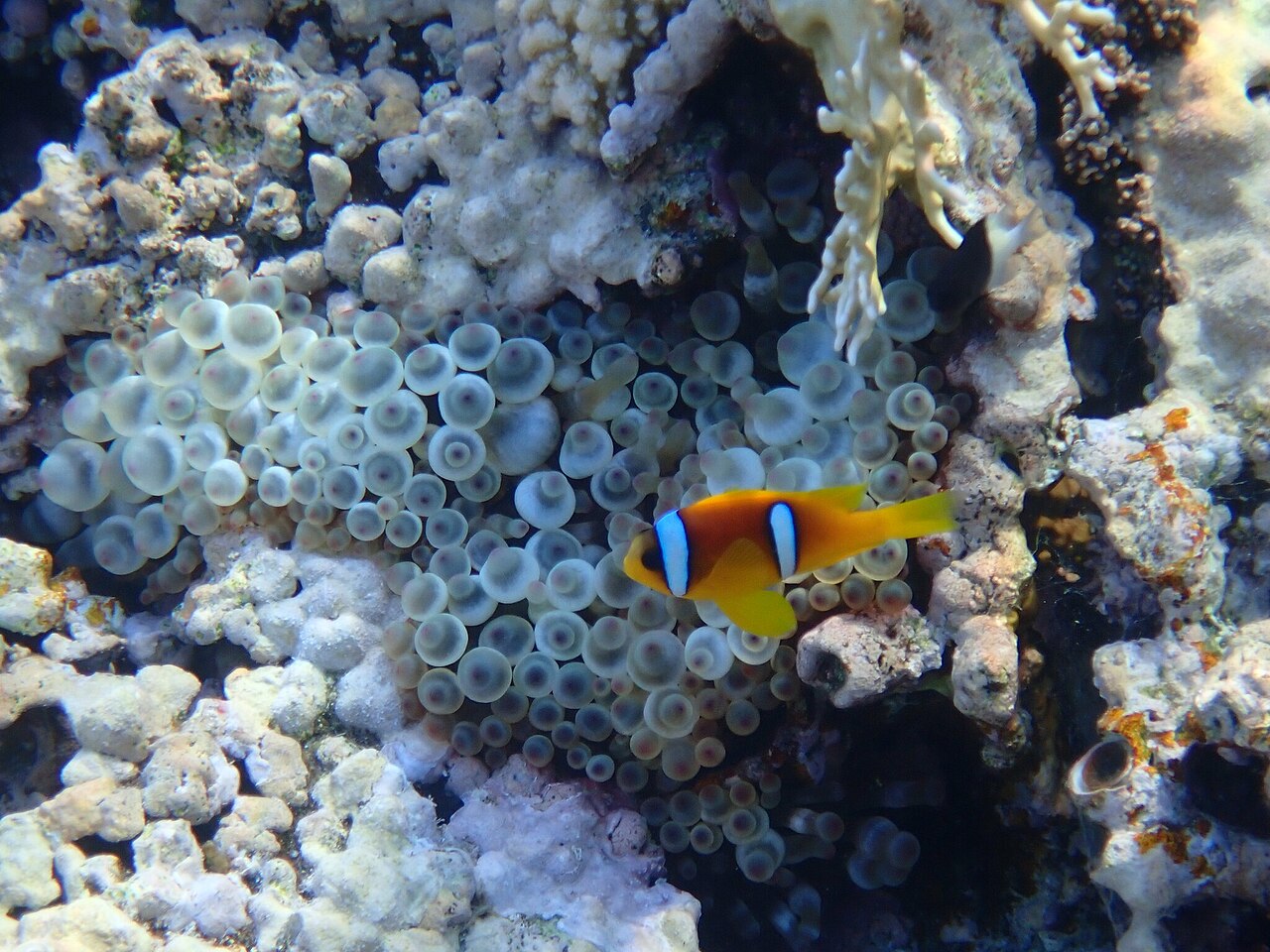
Clownfish are the classic partner. Ocellaris, percula, maroon, tomato and cinnamon clownfish may all host a BTA. Captive-bred clownfish don’t always know to host, and they may ignore the anemone entirely. Never buy an anemone for the fish, and don’t force the issue.
Things to watch for:
- Corals. Anemones sting corals they touch, and a roaming BTA can kill what it lands on. Leave space between the anemone and any corals.
- Aggressive fish. Butterflyfish and some angelfish will nip at anemones.
- Other anemones. Different anemone species can fight chemical wars. Keep other species out of reach.
- Cleanup crew. Hermit crabs, snails and most shrimp are fine. Large crabs and mantis shrimp are risky.
Breeding and Splitting
How do bubble tip anemones reproduce? In aquariums, most reproduction is asexual. A BTA splits down the middle (longitudinal fission), producing a clone. Splitting is often a sign of good conditions or mild stress, and can occur after a change in light or water. It happens within a few days and you usually end up with two smaller anemones. Sexual reproduction in home tanks is possible but extremely rare.
Common Health Issues
- Shrinking and deflating. Occurs when the anemone is not getting enough light, is underfed, or is reacting to a water quality shift. Test your water first.
- Bleaching. A pale, washed-out anemone has lost its algae. It can follow a temperature spike or sudden lighting change. A bleached anemone needs help fast, so correct the cause and keep feeding small amounts.
- Wandering and disappearing. A BTA that is unhappy will move. Check pump intakes, overflows and powerheads at once.
- Closed up with a gaping mouth. A mouth that stays open with internal tissue showing is a bad sign. A dying anemone releases toxins, so remove it immediately and do a water change.
- Shipping and acclimation stress. Buy from a store that keeps it healthy and let you see it expanded, and acclimate slowly with a drip acclimation kit.
How Hard Is It? An Honest Difficulty Rating
Moderate to advanced. Many sellers call the BTA “hardy,” and it is among the more forgiving anemones, but it still needs a mature tank, strong lighting, stable parameters and weekly attention. If your tank is under six months old, or your salinity and alkalinity swing, wait. Beginners are better off with a clownfish that doesn’t need an anemone, which will do just fine in a standard tank.
Bubble Tip Anemone FAQ
Is a bubble tip anemone good for beginners?
Not for a brand new tank. A well-established system with stable parameters and good light is the minimum.
Will a bubble tip anemone eat my clownfish?
Generally no. Healthy clownfish are protected by a mucus coating. Other fish are at more risk.
Why did my bubble tip anemone disappear?
It likely moved into a rock crevice, overflow or pump. Check there carefully and cover intakes.
Can a bubble tip anemone kill coral?
Yes. It can sting and damage corals it touches, and a dead anemone can crash the tank.
Can you touch a bubble tip anemone?
You can, but you shouldn’t. Handling stresses the animal and the sting may irritate sensitive skin.
How often should I feed it?
Once or twice a week, small pieces of meaty food.
Final Thoughts
A bubble tip anemone rewards patient keepers with decades of colorful life. Wait for a mature tank, give it strong light and stable water, feed lightly, and protect it from pumps. Do that, and it can be the centerpiece of your reef.
Do you keep a BTA? Tell us how it’s doing in the comments.
Disclaimer: This article is general information, not veterinary advice. Sea anemones can sting, so use caution when handling.