
As an Amazon Associate I earn from qualifying purchases. This post contains affiliate links, which means I may earn a small commission at no extra cost to you.
The royal gramma (Gramma loreto), also sold as the fairy basslet, is a reef favorite. Its purple front and golden back is striking, and it’s hardy, reef-safe, and stays small. It is also a fish that can become territorial, hide for days after introduction and be hard to feed if you aren’t prepared.
This guide covers royal gramma care from tank size and diet to tank mates, lifespan and breeding.
Royal Gramma Overview and Appearance
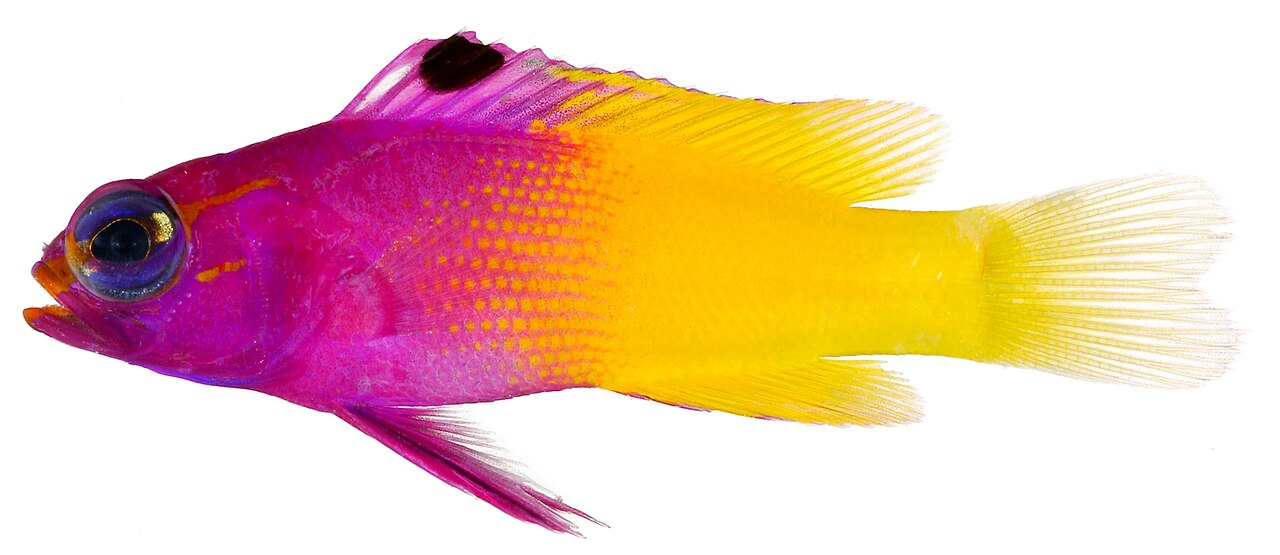
Photo: Smithsonian Institution (public domain).
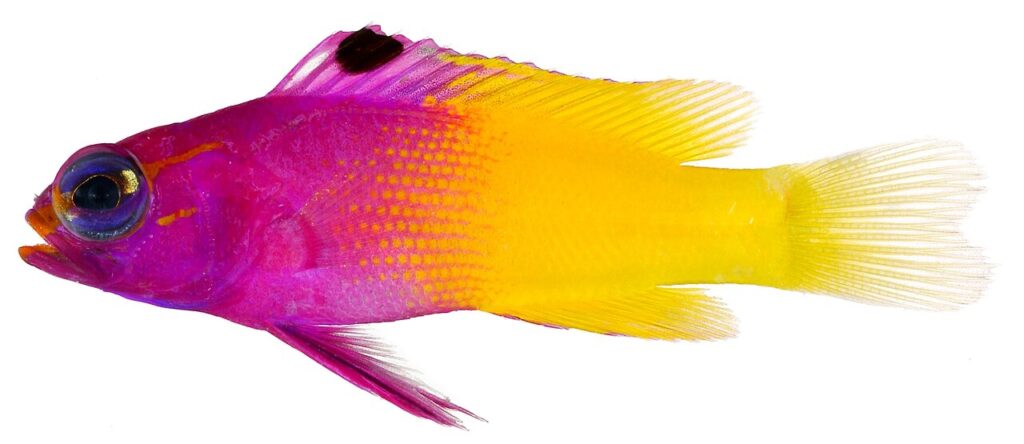
The front half of the body is magenta to purple, and the back half is yellow to orange. A thin black stripe runs through the eye, and there’s a black spot on the dorsal fin. Males and females look almost identical, and males are usually larger.
Royal grammas live in the Caribbean, where they hang around reef walls and caves, often swimming upside down along ceilings. You may see yours do that in your tank, which is normal behavior.
Size and Lifespan
How big does a royal gramma get? About 3 inches (7.5 cm), and sometimes a bit more. How long do royal grammas live? Commonly 5 years or more, and some live well past that in stable conditions.
Tank Size and Setup
The royal gramma minimum tank size is 30 gallons for a single fish, which is a conservative recommendation for a fish that claims territory. Some keepers keep a single fish in a 20, but 30 gallons or more gives you room for rockwork and tank mates. If you’re new to saltwater, start with our saltwater aquarium setup guide.
Setup essentials:
- Lots of live rock with caves and overhangs. A royal gramma needs a cave of its own, and it will defend it.
- A secure lid. They are not known as big jumpers, but any fish can leap if spooked.
- Moderate flow and good filtration. A protein skimmer and quality saltwater aquarium salt mix help keep things stable.
- Moderate lighting. The fish isn’t light-sensitive, so lighting is set by your corals.
- A mature tank. Add after the cycle is done and the tank has been stable for several weeks. See how to cycle a fish tank.
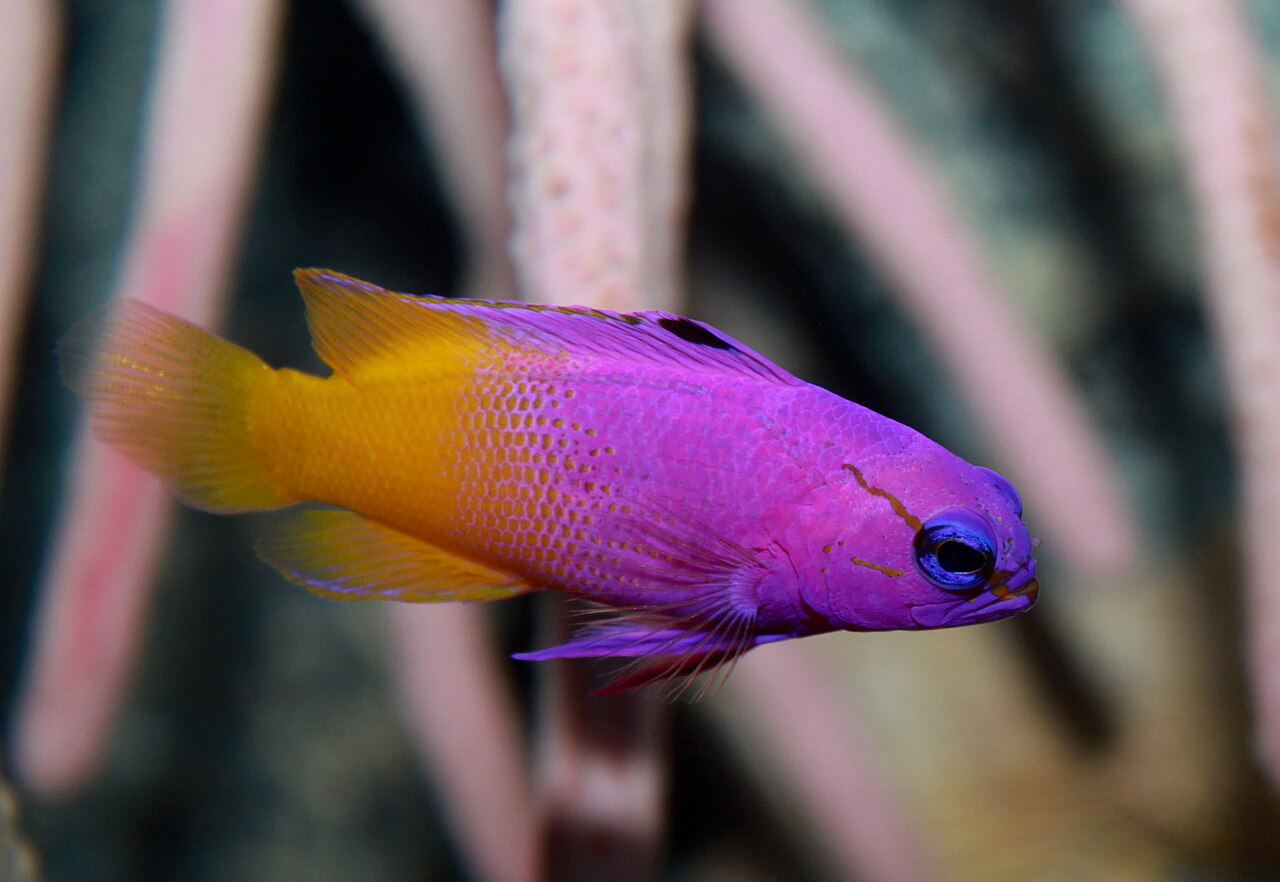
Photo: Brian Gratwicke, CC BY 2.0.
Water Parameters
- Temperature: 72 to 78°F
- Salinity: 1.023 to 1.025 specific gravity
- pH: 8.1 to 8.4
- Ammonia and nitrite: 0 ppm
- Nitrate: under 20 ppm, lower is better
- Alkalinity: 8 to 11 dKH
Royal grammas are hardy for saltwater fish and tolerate small mistakes better than many species, but they still depend on stable conditions. Test with a saltwater test kit and measure salinity with a refractometer. Acclimate slowly, since stressed fish are prone to disease.
Royal Gramma Diet: What Do They Eat?
Royal grammas are carnivores that accept a wide range of foods. They pick at food in the water and also grab from the rocks:
- Frozen mysis, brine shrimp and krill
- Chopped seafood
- Quality marine pellets and flakes
- Copepods and live foods as a treat
Feed small portions once or twice daily. Some new fish are shy and decline to eat for the first few days, so try small frozen foods near its cave. A royal gramma that’s hiding and not eating is usually stressed. Keep the lights low and give it time before escalating. Many will bite at passing food within a week.
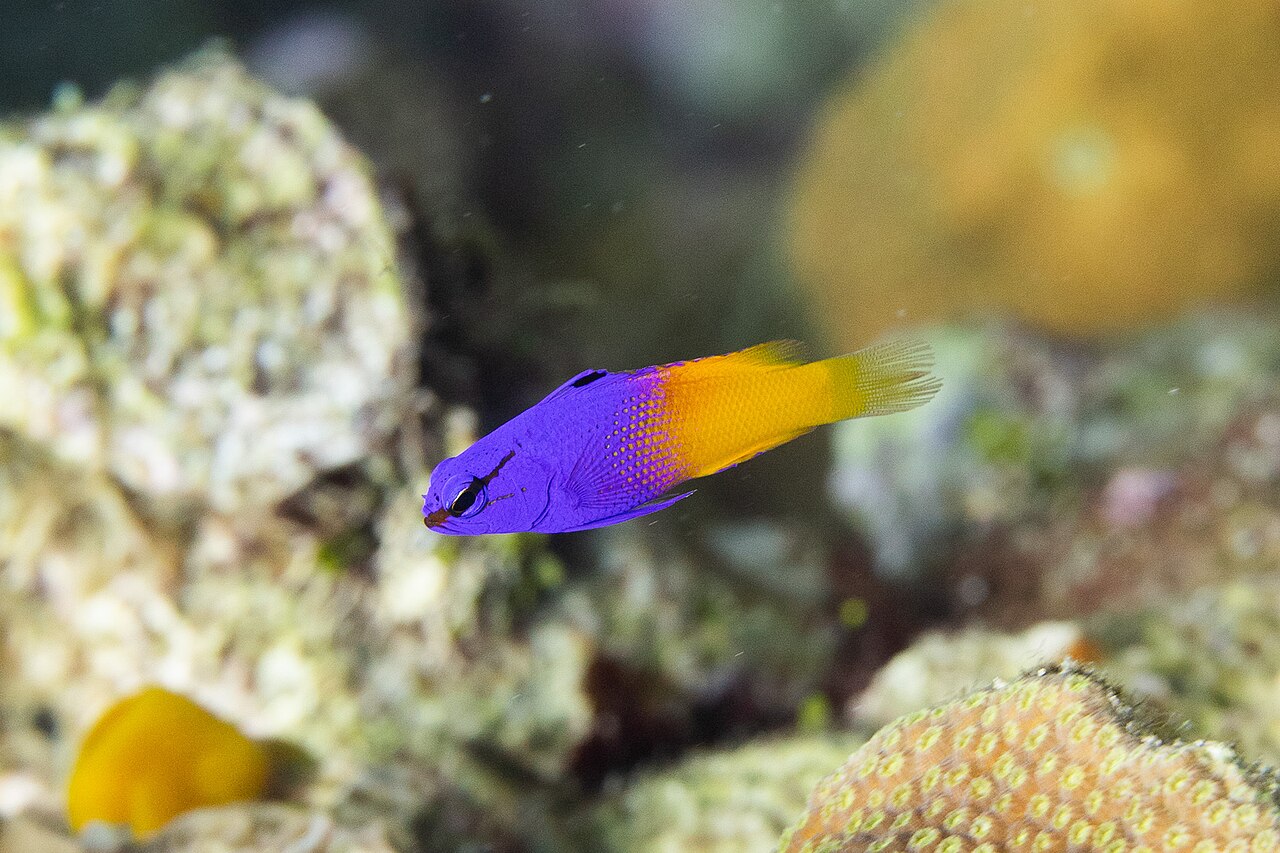
Photo: cello caruso-turiello, CC BY 4.0.
Temperament and Tank Mates
Royal gramma tank mates require some thought. Despite the small size, a gramma is semi-aggressive and territorial, especially toward similar-shaped or similar-colored fish. It will chase other grammas, dottybacks and basslets, particularly in smaller tanks. Are royal grammas aggressive? Mostly toward their own kind and look-alikes.
Good companions:
- Ocellaris and percula clownfish
- Firefish gobies and neon gobies
- Watchman gobies
- Cardinalfish, blennies and most peaceful reef fish
Be careful with:
- Other grammas and basslets, unless the tank is large and heavily aquascaped. A harem doesn’t work well with this species because they are territorial.
- Dottybacks, which can fight with grammas
- Large aggressive fish that would eat a 3-inch fish
How many royal grammas can you keep? One is the safe answer. Adding a pair requires a big tank and luck. Introduce the gramma last if you can, since it will claim a territory first.
They’re generally reef safe. Royal grammas eat copepods, small worms, and may pick at bristle worms, and occasionally nip small shrimp or other tiny invertebrates. Most keepers find them safe with corals and larger shrimp.
Breeding
Royal grammas live in groups with a harem-like social structure in the wild and have been bred in captivity. The male builds a nest from algae in a cave and cares for the eggs. Breeding in home aquariums is uncommon, and raising the tiny larvae is difficult. It’s a project for experienced keepers with a dedicated setup.
Common Health Issues
- Marine ich (Cryptocaryon). White spots and scratching. New fish should go through a quarantine period before entering the display. See our guide to the white spots on fish to identify it.
- Bullying injuries. Territorial fights can leave torn fins and stress.
- Hiding and not eating. Often stress, but a prolonged refusal to eat can signal disease.
- Poor water quality. Causes lethargy and increased susceptibility to infection.
How Hard Is It? Honest Difficulty
Easy to moderate. The royal gramma is among the better choices for a first saltwater fish when the tank is cycled and stable. The challenges are territoriality, the occasional shy feeder, and matching it with compatible tank mates.
Royal Gramma FAQ
Is the royal gramma reef safe?
Generally yes. It does not harm corals and is safe with most invertebrates.
How big a tank does a royal gramma need?
At least 30 gallons is the common recommendation, and larger is better.
Why is my royal gramma hiding?
New fish are often shy. Give it caves, dim lighting and time. If it hides for more than a week and refuses food, check your water.
Why does my royal gramma swim upside down?
This is normal. It swims along ceilings in caves, as it does on the reef.
Can I keep two royal grammas?
Only in a large tank with lots of rock. One is simpler.
What do royal grammas eat?
Mysis, brine shrimp, chopped seafood and marine pellets.
Final Thoughts
The royal gramma is a rewarding, colorful fish that suits most reef tanks. Give it a mature tank, plenty of caves, and compatible tank mates, and it may live for years.
Do you keep a royal gramma? Tell us about yours in the comments.
Disclaimer: This article is general information, not veterinary advice. For serious or persistent problems, consult an aquatic veterinarian.
Image credits: royal gramma photographs from Wikimedia Commons by Smithsonian Institution (public domain), Brian Gratwicke (CC BY 2.0), and cello caruso-turiello (CC BY 4.0).