
As an Amazon Associate I earn from qualifying purchases. This post contains affiliate links, which means I may earn a small commission at no extra cost to you.
Betta fish (Betta splendens), also called Siamese fighting fish, are one of the most popular aquarium pets in the world. They are also among the most misunderstood. Bettas are sold in tiny cups and told to live in bowls, but a betta kept properly is an active, curious fish with real personality.
This betta fish care guide covers everything you need: tank size, setup, water parameters, diet, tank mates, lifespan, breeding and common health problems.
Betta Fish Overview and Appearance
Bettas come from shallow, slow-moving waters in Thailand, Cambodia, Laos and Vietnam, including rice paddies and floodplains. They breathe air from the surface through a special labyrinth organ, which is why they survive in low-oxygen water. That does not mean they thrive in a bowl.
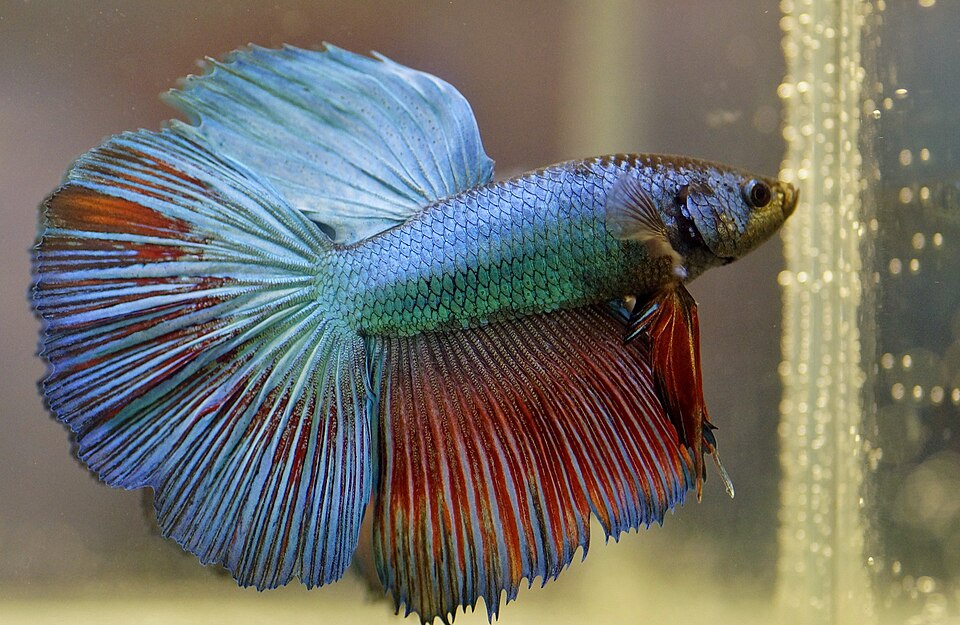
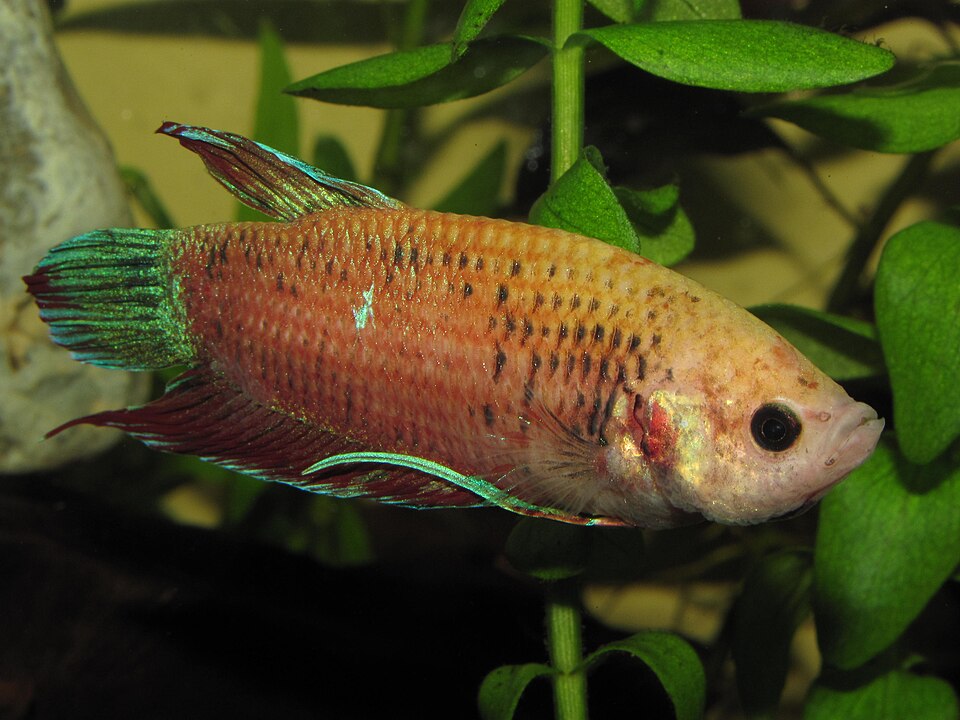
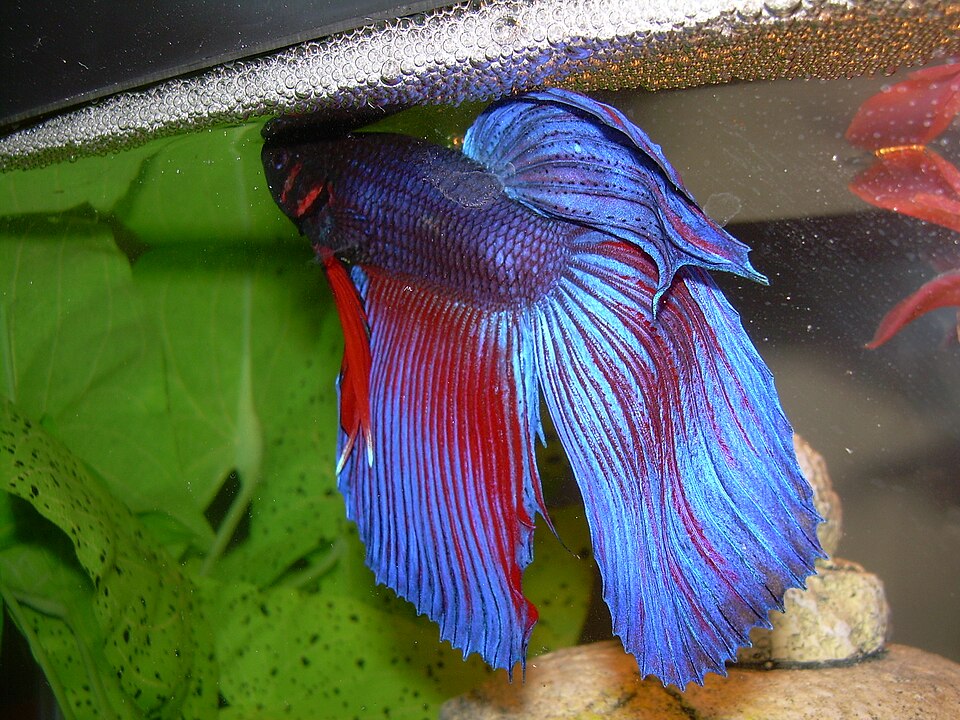
Males are famous for their long, flowing fins and a huge range of colors: red, blue, turquoise, white, black, orange and multicolor. Common fin types include veiltail, halfmoon, crowntail, plakat and delta. Females are shorter-finned and usually less vivid, though many are beautiful.
Betta Size and Lifespan
Adult bettas reach about 2.5 to 3 inches (6 to 7.5 cm) including the tail. A common question is how long do betta fish live. With good care, expect 3 to 5 years. Fish bought from a store are often already several months old, so a lifespan of 2 to 4 years after purchase is realistic. Stable, warm, clean water is the biggest factor in a long life.
Betta Fish Tank Size: How Big Should the Tank Be?
The minimum we recommend is 5 gallons, and 10 gallons is better. Larger tanks hold temperature and water quality more steadily, give you room to add plants and decor, and make it possible to keep tank mates. Bowls and 1-gallon vases are not suitable.
Our guide to the best aquarium for betta fish compares good small tanks. A few setup essentials:
- Heater. Bettas are tropical. Use an adjustable aquarium heater and keep the tank steady.
- Gentle filter. Long fins struggle in strong current. A sponge filter or a filter with an adjustable flow works well.
- Lid or cover. Bettas jump, and they need access to warm air above the water.
- Soft decor and plants. Silk or live plants and smooth caves protect fins. Add a floating plant or betta hammock for resting near the surface.
- Fine gravel or sand. Smooth substrate is easier on the fish.
Water Parameters for Betta Fish
- Temperature: 76 to 82°F (24 to 28°C)
- pH: 6.5 to 7.5
- Hardness: soft to moderately hard
- Ammonia and nitrite: 0 ppm
- Nitrate: under 20 ppm
Always cycle the tank before adding a betta, and use a water conditioner with every water change. In a heated and filtered 5 to 10 gallon tank, a weekly change of about 25 to 30 percent is a good starting routine. Check your numbers with a liquid test kit rather than guessing.
What Do Betta Fish Eat? Betta Fish Diet
Bettas are carnivores that feed mostly on insects and larvae in the wild. A good diet has:
- A high-protein betta pellet as the staple
- Frozen or freeze-dried bloodworms, brine shrimp or daphnia a few times a week
- Variety, because a single food leads to boredom and constipation
Feed small portions once or twice a day, only what the fish eats in about 2 minutes. Remove uneaten food. Many keepers skip feeding one day a week to help digestion. Flakes marketed as general fish food are usually too low in protein.
Betta Temperament
Male bettas are aggressive toward other males and often toward fish with similar flowing fins or bright colors. Never keep two males together. Females can sometimes live in groups called sororities, but this takes a large, heavily planted tank and experience, and it often fails. Individual bettas vary: some are calm, others will attack almost anything.
Betta Fish Tank Mates
Many beginners ask about betta fish tank mates. Some bettas live alone happily, and that is always the safest choice. If you want company, use a tank of 10 gallons or more, with lots of plants and hiding places, and watch closely. Fish that often work:
- Nerite snails and Malaysian trumpet snails (usually ignored)
- Ghost shrimp or cherry shrimp (some bettas eat them, especially babies)
- Kuhli loaches and small bottom-dwelling corydoras, such as pygmy or habrosus corydoras
- Ember tetras, chili rasboras or harlequin rasboras in larger, well-planted tanks. See our chili rasbora care guide.
- Otocinclus in a mature tank. See our otocinclus care guide.
Avoid guppies (their colorful tails look like a rival), fin nippers such as tiger barbs, other gouramis and any large or aggressive fish. If your betta stays aggressive or the new fish are stressed, separate them right away.
Betta Breeding
Breeding bettas is a project, not a casual add-on. In brief:
- Condition a healthy male and female separately with live or frozen foods.
- Introduce them in a breeding tank with the female in a clear divider at first.
- The male builds a bubble nest at the surface and wraps around the female to release the eggs.
- Remove the female after spawning. The male guards the eggs and fry.
- Eggs hatch in about 24 to 48 hours. Fry need tiny foods such as infusoria and baby brine shrimp, and the male should be removed once they swim freely.
Be sure you can house and rehome many fry, because a spawn can produce dozens or hundreds.
Common Betta Health Problems
Most betta illness traces back to cold, dirty or stressful water. Watch for:
- Fin rot: ragged, shrinking fins. Read our guide to fin rot causes, treatment and prevention.
- Ich (white spot): small white dots on the body. See what are the white spots on my fish.
- Bacterial infections such as cloudy eyes and sores. See bacterial infections in aquarium fish.
- Constipation or swim bladder trouble: bloating, floating or struggling to swim, often linked to overfeeding.
- Velvet: a gold or rusty dust on the body.
Many medications are harsh on bettas. Our roundup of aquarium medications explains your options, and a small hospital tank makes treatment easier.
How Hard Are Bettas to Keep?
Difficulty: beginner-friendly, but not effortless. A betta is a good first fish only if you provide a heated, filtered tank of at least 5 gallons and keep up with water changes. Bad information about bowls is the main reason bettas die early. Our list of the best aquarium fish for beginners has more options.
Betta Fish Care FAQ
Can betta fish live in a bowl without a filter?
They can survive for a while, but they do much better in a heated, filtered tank of at least 5 gallons. Bowls are hard to keep stable and clean.
Do betta fish need a heater?
Yes. Bettas are tropical and do best at 76 to 82°F. Cold water weakens them and makes illness more likely.
How often should I feed my betta?
Once or twice daily in small portions, only what it eats in about 2 minutes.
Can I keep a betta with other fish?
Sometimes, in a planted tank of 10 gallons or more with peaceful tank mates. Some bettas must live alone.
Why is my betta not eating?
Common causes are cold water, poor water quality, stress from a new tank, or a food the fish does not like. Check temperature and test your water first.
How can I tell a male from a female betta?
Males have longer fins and more vivid color. Females are shorter-finned, with a small white egg spot (ovipositor) near the belly.
Final Thoughts
A betta in a warm, filtered, planted tank is a delight to watch, and it will often learn to recognize you at feeding time. Get the basics right, keep the water clean, and you can enjoy your fish for years.
What do you name your betta, and what setup works for you? Tell us in the comments.
Disclaimer: This article is general information, not veterinary advice. For serious or persistent problems, consult an aquatic veterinarian.