
As an Amazon Associate I earn from qualifying purchases. This post contains affiliate links, which means I may earn a small commission at no extra cost to you.
Few reef invertebrates are as popular as the cleaner shrimp. The red-and-white striped body, the long white antennae and the habit of climbing onto fish to “clean” them make it a favorite in saltwater tanks. It also has a reputation for being easy, but cleaner shrimp are sensitive to sudden changes, and many die within days of purchase because of poor acclimation.
This cleaner shrimp care guide covers the common skunk (Lysmata amboinensis, also called the Pacific cleaner) and the closely related species sold in the hobby.
Cleaner Shrimp Overview and Appearance
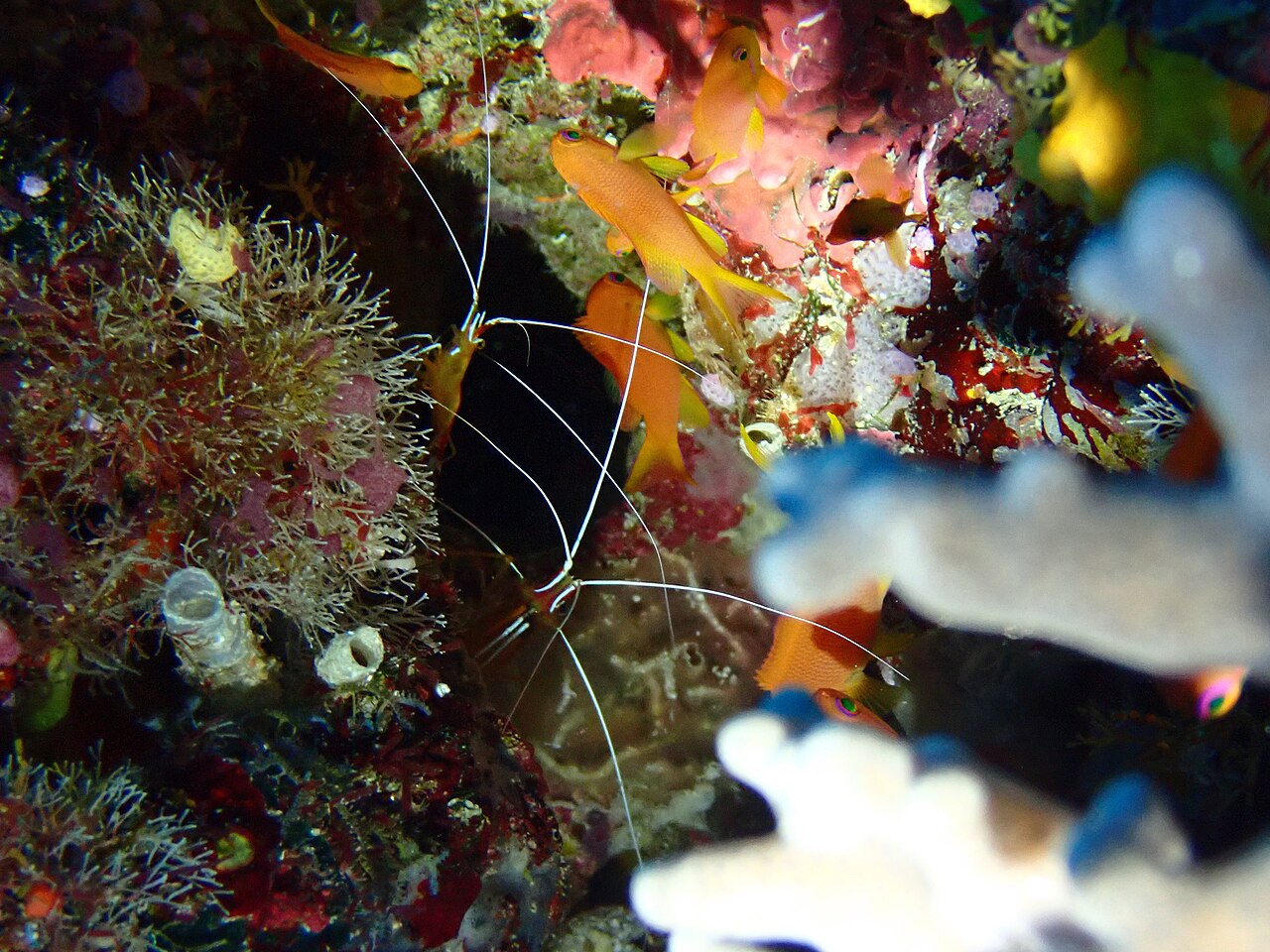
Photo: Debra Baker (CC BY 4.0), via Wikimedia Commons.
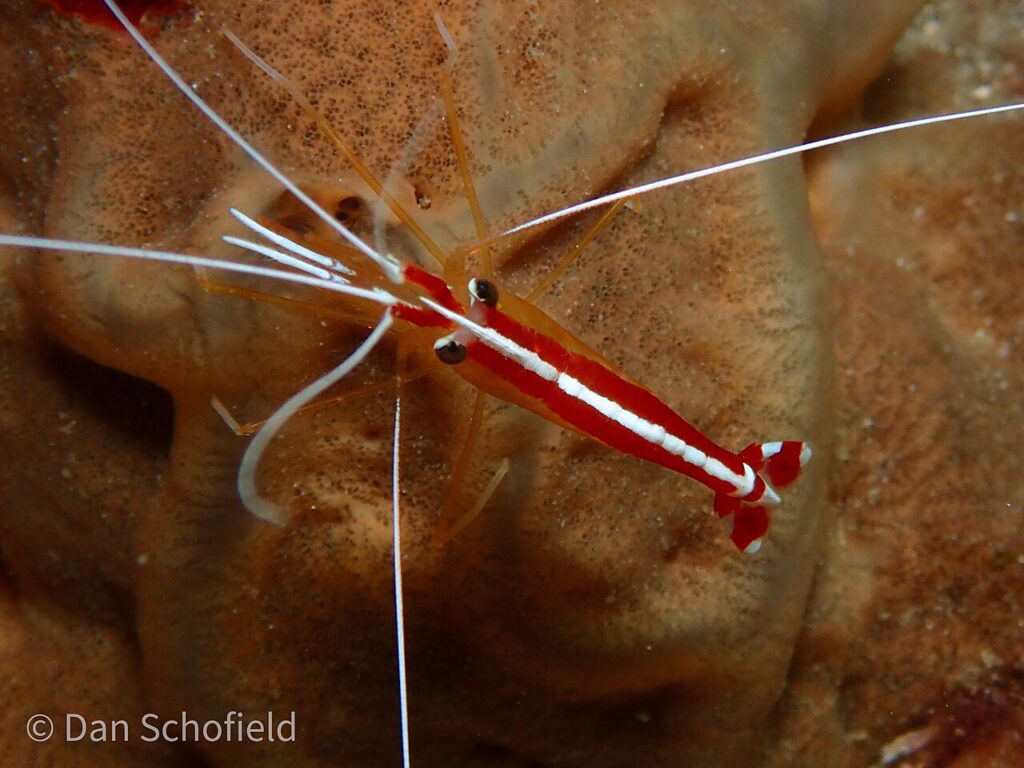
The skunk cleaner shrimp, also called the scarlet skunk or Pacific cleaner shrimp, has a bright red body with a white stripe down the back and long white antennae. Related species include the Pederson cleaner shrimp (clear body with purple and white markings) and the red-line cleaner shrimp, but they have different needs.
In the wild, cleaner shrimp set up “cleaning stations” on reefs, where fish visit to have parasites and dead tissue picked from their bodies. Some will climb on fish in the home aquarium, too, which is entertaining to watch.
Size and Lifespan
How big does a cleaner shrimp get? About 2-2.5 inches (5-6 cm) for the body, plus the antennae. How long do they live? Often 3-5 years in a stable tank, and some keepers report longer.
Cleaner Shrimp Tank Size and Setup
The cleaner shrimp minimum tank size is usually quoted as 10 gallons, but a 20-gallon or larger reef is better, because more water is more stable. Keep the tank mature and stable. Our saltwater aquarium setup guide and the article on how to cycle a fish tank cover the basics.
Setup tips:
- Live rock with caves and overhangs. Shrimp hide when they molt and feel safest with cover.
- A tight lid and covered overflows. They can crawl out of the water or into equipment.
- Stable flow. Moderate flow is fine. Shield intake pipes with a sponge.
- Mature tank only. Add shrimp after the tank has been stable for at least a few weeks, not during the cycle.
Never use copper-based medications in a tank with shrimp or any other invertebrate. Copper is toxic to them.
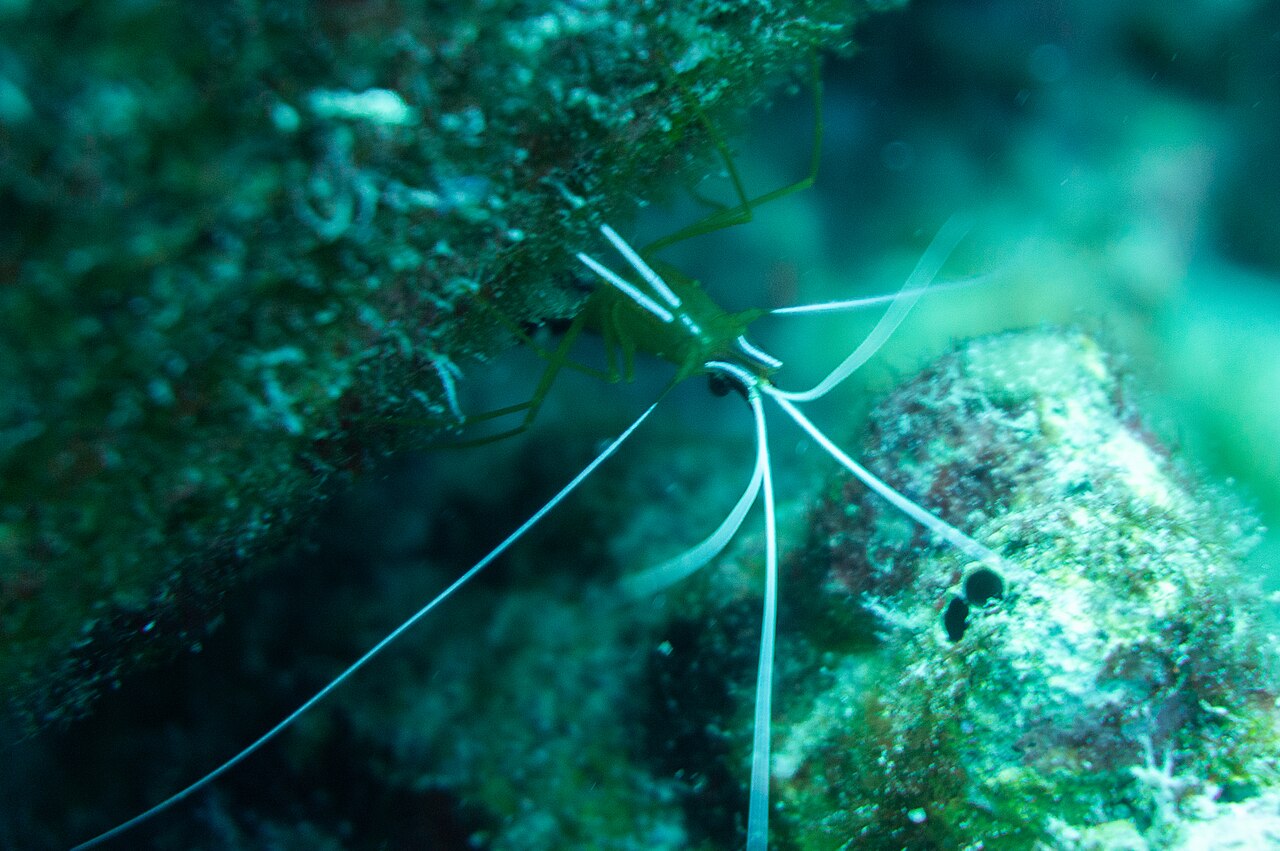
Photo: cello caruso-turiello (CC BY 4.0), via Wikimedia Commons.
Water Parameters
Invertebrates are less forgiving than most fish.
- Temperature: 72-78°F (22-26°C)
- Salinity: specific gravity 1.024-1.026
- pH: 8.1-8.4
- Ammonia and nitrite: 0 ppm
- Nitrate: below 10-20 ppm
- Alkalinity, calcium and magnesium: stable and in the normal reef range
The most important rule is stability. Measure salinity with a refractometer, mix saltwater with a quality reef salt, and use a saltwater test kit regularly. Keep top-off water fresh and measured so salinity doesn’t creep up.
Acclimation and Molting
Poor acclimation is the leading cause of early cleaner shrimp deaths. Shrimp are very sensitive to sudden changes in salinity.
- Float the sealed bag for about 15 minutes to match temperature.
- Move the shrimp and bag water to a clean container.
- Drip acclimate over 1-2 hours with airline tubing and a valve, so salinity and pH change slowly. A drip acclimation kit makes this easy.
- Lift the shrimp with a net or container and place it in the tank. Don’t pour the shop’s water in.
Molting is normal. Shrimp shed their shell as they grow, often every few weeks, and may hide for a day or two beforehand. You may find what looks like a dead shrimp lying in the tank, which is usually just the empty shell. The shrimp often eats it, so leave it unless it is fouling the water.
Cleaner Shrimp Diet
Cleaner shrimp are omnivores and scavengers. They pick at leftover food, detritus and algae, and they accept most foods in the tank.
A good plan includes:
- Frozen mysis shrimp, brine shrimp and finely chopped seafood
- Quality pellets and flakes
- Occasional algae or sheets of nori
- Direct feeding with tweezers or a feeding pipette, especially for new shrimp
Don’t rely on a shrimp to survive on leftovers alone, and don’t overfeed the tank in general.
Temperament and Tank Mates
Cleaner shrimp are peaceful and reef-safe in most cases, though they are not for every tank.
Good tank mates:
- Ocellaris and percula clownfish
- Royal grammas
- Gobies, such as the firefish and neon goby
- Most peaceful reef fish and snails
Risky tank mates:
- Triggerfish, large wrasses, hawkfish, pufferfish, groupers and lionfish, which may eat them (see our lionfish guide)
- Mantis shrimp and large crabs, which are predators (see our mantis shrimp guide)
- Large anemones, which can catch shrimp, though shrimp often live with anemones in the wild
Mixed groups of different cleaner shrimp species may fight, particularly when a shrimp is molting. A single shrimp or a bonded pair of the same species is safest.
Some keepers report cleaner shrimp picking at coral or eating small soft corals, such as the tentacles of torch coral. It is not common, but is more likely when the shrimp is underfed. Feed it directly.
Can cleaner shrimp live in freshwater? No. They are marine animals and can’t live in freshwater.
Do cleaner shrimp eat ich? They may pick at parasites on fish, but they are not a cure for ich. Do not use them in place of quarantine and proper treatment.
Cleaner Shrimp Breeding
Cleaner shrimp are hermaphrodites, which means any two adult shrimp can pair up. They do spawn in home tanks, with the female carrying green eggs under her tail. After hatching, the larvae are tiny, drift in the water column and are usually eaten by fish or sucked into filters.
Raising larvae to adulthood is very difficult. It needs a separate larval rearing tank, very small live foods and a lot of time. For most hobbyists, breeding means enjoying the egg-carrying phase, not raising shrimp.
Common Health Issues
- Failed molts. Poor water, low calcium, or unstable parameters are often to blame. The shrimp gets stuck in its old shell, and this can be fatal.
- Salinity or acclimation stress. The most common reason a new shrimp dies in the first week.
- Copper and medications. Many treatments harm invertebrates, so treat sick fish in a separate hospital tank.
- Predation. Keep predators out of the tank, and watch fish that may bully the shrimp.
- Poor water quality. Test often, and keep nitrate low.
Difficulty Level
Easy to intermediate, as long as you have a mature, stable tank and you acclimate carefully. The shrimp itself is hardy, but invertebrates punish sloppy water changes and fast changes in salinity. For a first reef tank, it is a good invertebrate, but don’t treat it as indestructible.
Cleaner Shrimp FAQ
What size tank do cleaner shrimp need?
At least 10 gallons, and 20 gallons or more is better.
How long do cleaner shrimp live?
Typically 3-5 years, and sometimes longer in a stable tank.
Are cleaner shrimp reef safe?
Usually yes, though some may nip at soft corals if underfed.
Will cleaner shrimp clean my fish?
Often they will, but don’t count on it for parasite control.
What do cleaner shrimp eat?
Frozen mysis shrimp, pellets, flake and leftover food, plus occasional algae.
Do I need two cleaner shrimp?
No. One does well, and two of the same species can live together.
Final Thoughts
With careful drip acclimation, stable water and peaceful tank mates, the cleaner shrimp is one of the most rewarding invertebrates you can add to a reef. Take your time, avoid copper and keep the tank stable, and it will be a lively resident for years.
Have you kept cleaner shrimp? Tell us how your shrimp are doing in the comments.
Disclaimer: This article is general information, not veterinary advice. For serious or persistent problems, consult an aquatic veterinarian.
Image credits: Dan Schofield, Debra Baker and cello caruso-turiello (all CC BY 4.0), via Wikimedia Commons.