
As an Amazon Associate I earn from qualifying purchases. This post contains affiliate links, which means I may earn a small commission at no extra cost to you.
The figure 8 puffer (Dichotomyctere ocellatus, long sold as Tetraodon biocellatus) is a small, charming pufferfish with yellow swirls on its back, big expressive eyes and a lot of attitude. It is also one of the most misunderstood fish in the trade, because it is often sold as a “freshwater” fish when adults really need brackish water.
If you are searching for figure 8 puffer care information, this guide covers salinity, tank size, diet, tank mates, lifespan, breeding and health.
Figure 8 Puffer Overview and Appearance
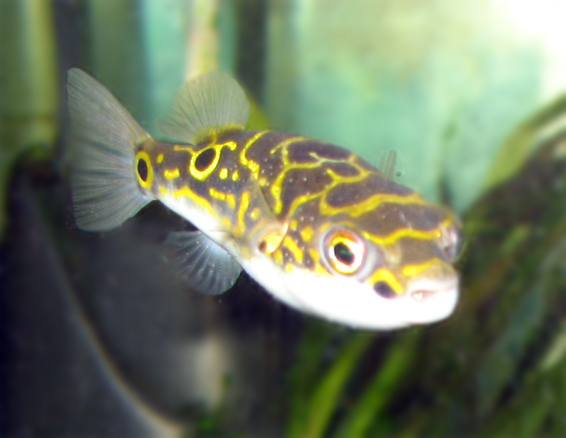
Photo: ColdmachineUK (CC BY 2.5), via Wikimedia Commons.
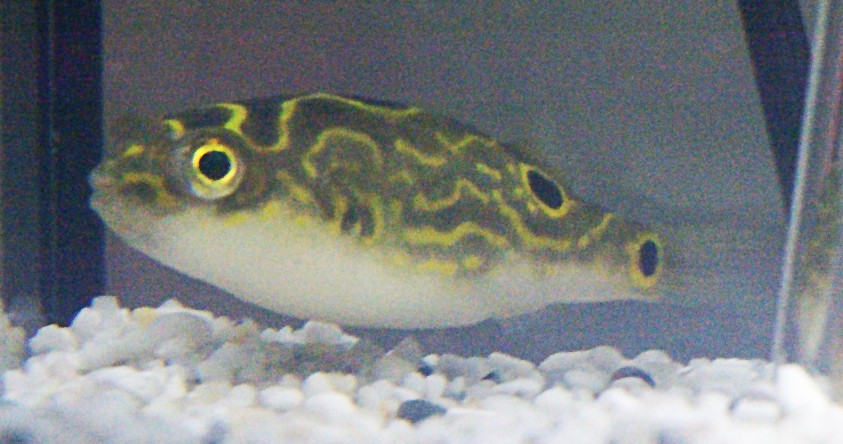
The fish gets its name from the swirling dark and yellow pattern on its back, which can look like a figure 8 (or a set of eyes) near the tail. It has a pale belly, a round body, a beak-like set of fused teeth and independently moving eyes. Like other puffers, it can inflate with water or air when stressed, which should be avoided since it is harmful to the fish.
Size and Lifespan
How big do figure 8 puffers get? Around 3 inches (7-8 cm). How long do they live? With good care, commonly 8 years, and some keepers report up to 10.
Does a Figure 8 Puffer Need Brackish Water?
Yes, for the long term. This is the most common question about the species, and the answer matters for its health.
Young fish are often found in fresh or very slightly brackish water, which is why shops sell them in freshwater. As they mature, they do best in brackish water, where salt is gradually increased. Long-term freshwater keeping is a common reason these puffers decline.
A typical plan:
- Juveniles: fresh to a specific gravity (SG) of about 1.005
- Adults: SG of about 1.008-1.015 (low to moderate brackish)
Use a marine salt mix, not table salt, and measure with a refractometer, because floating hydrometers are not very accurate. Our article on aquarium salt explains why freshwater tank salt is a different product.
Raise salinity slowly over days or weeks. Don’t jump from fresh to brackish in a single water change.
Figure 8 Puffer Tank Size and Setup
The tank size is where many people go wrong, because the fish is small.
- 20 gallons is a good minimum for one fish
- Add roughly 10 more gallons per additional puffer, and only if the group is stable
- A longer tank is better than a tall one, since puffers like to cruise
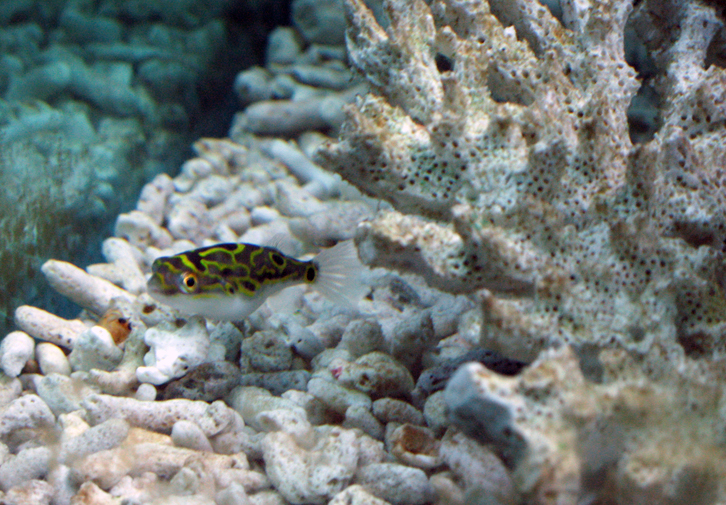
Photo: ColdmachineUK (CC BY 2.5), via Wikimedia Commons.
Setup tips:
- Plenty of cover. Use plants (live brackish-tolerant plants such as java fern can work in low salinity), rocks and driftwood to break lines of sight.
- A sand or fine gravel substrate. Puffers like to bury and rest.
- A tight lid. Puffers rarely jump, but a lid also keeps salt creep from affecting equipment.
- Good filtration. They are messy eaters. A quality filter with room for biological media works well.
- Strong biological maturity. Cycle the tank first. See our guide on how to cycle a fish tank.
Water Parameters
- Temperature: 76-82°F (24-28°C)
- Salinity: SG 1.005-1.015, adjusted for the fish’s age
- pH: 7.5-8.5
- Ammonia and nitrite: 0 ppm
- Nitrate: below 20 ppm, kept as low as possible
Puffers are very sensitive to poor water. Test often and do weekly water changes of 25-30%, matching salinity and temperature precisely. A liquid test kit handles the basics.
Figure 8 Puffer Diet: What Do They Eat?
Figure 8 puffers are carnivores. In the wild they eat small crustaceans, snails and worms.
A good menu includes:
- Small snails, such as ramshorn, bladder and pond snails, which keep the ever-growing beak in check
- Frozen foods, like bloodworms, mysis shrimp, brine shrimp and krill
- Live or frozen shell-on shrimp and clam, a few times a week
- Occasional high-quality pellets, if your fish will accept them
Hard shells matter because a puffer’s teeth never stop growing. If they get too long, the fish can’t eat. Many keepers breed snails in a separate tub to stay stocked. A frozen puffer food variety pack works for the base diet.
Feed small amounts once a day, and a bit less on a weekly fasting day. Overfeeding fouls the water.
Temperament and Tank Mates
Figure 8 puffers are curious, intelligent and nippy. Some are peaceful with their own kind, but many are not, and they are notorious for nipping fins and eyes.
- Best option: a species-only tank
- Possible with caution: a group of puffers in a large, heavily planted tank, with plenty of line-of-sight breaks, and with a fallback plan to separate fish
- Poor choices: long-finned fish, slow fish, or anything tiny enough to be a snack
If you want to keep puffers with other fish, your options in brackish water are very limited. Some keepers add fast-moving brackish fish like certain mollies, but results vary, and puffers can still nip them.
If you are new to puffers, you may also like our pea puffer care guide for a freshwater species, or our dogface puffer and porcupine puffer guides for larger marine and brackish puffers.
Breeding
Breeding figure 8 puffers in a home aquarium is uncommon but possible.
- Pairs usually form in well-kept brackish tanks
- The male often guards eggs laid on the substrate or near a cave
- Fry are tiny and need very small live foods, such as newly hatched brine shrimp or microworms
- Most breeding reports come from experienced keepers with very stable water
If you want a project, plan carefully and treat it as an advanced step.
Common Health Issues
- Overgrown beak. Fix with hard-shelled foods, and have an aquatic vet trim the beak if needed.
- Ich and parasites. Puffers are scaleless, so many medications can harm them. Use reduced doses of treatments and quarantine new fish. Our guide on the white spots on fish covers identification.
- Bacterial infections and fin damage. Often tied to poor water or aggression. See bacterial infections.
- Refusing food. Often due to stress, incorrect salinity or poor water. Test first.
- Bloat. Usually from overfeeding or poor diet.
Always research a medication before using it on a puffer, and ask an experienced keeper or vet when in doubt.
Difficulty Level
Intermediate to advanced. The fish is small, but the brackish water, live-snail feeding, nippy temperament and sensitivity to medication make it much harder than the average community fish. Don’t buy one on impulse from a “freshwater” tank.
Figure 8 Puffer FAQ
Can a figure 8 puffer live in freshwater?
Juveniles can for a short time, but adults need brackish water to stay healthy.
What salinity does a figure 8 puffer need?
About SG 1.005 for young fish and SG 1.008-1.015 for adults, raised gradually.
What tank mates are safe for a figure 8 puffer?
Few. A species tank is safest, and nippy puffers can hurt nearly any other fish.
What do figure 8 puffers eat?
Snails, frozen shrimp and bloodworms, with hard-shelled foods to wear down the beak.
How many figure 8 puffers can I keep together?
In a 20-gallon, usually one. A larger tank can hold a small group, with 10 gallons added for each fish.
Are figure 8 puffers saltwater fish?
No. They are brackish fish and come from river mouths and estuaries in Southeast Asia.
Final Thoughts
The figure 8 puffer is a delightful, interactive fish, but only if you give it brackish water, hard-shelled food and a species tank. Do the homework before buying, and you will be rewarded with one of the most expressive small fish in the hobby.
Have you kept a figure 8 puffer? Share your setup in the comments.
Disclaimer: This article is general information, not veterinary advice. For serious or persistent problems, consult an aquatic veterinarian.
Image credits: Robin Geyer (public domain) and ColdmachineUK (CC BY 2.5), via Wikimedia Commons.