
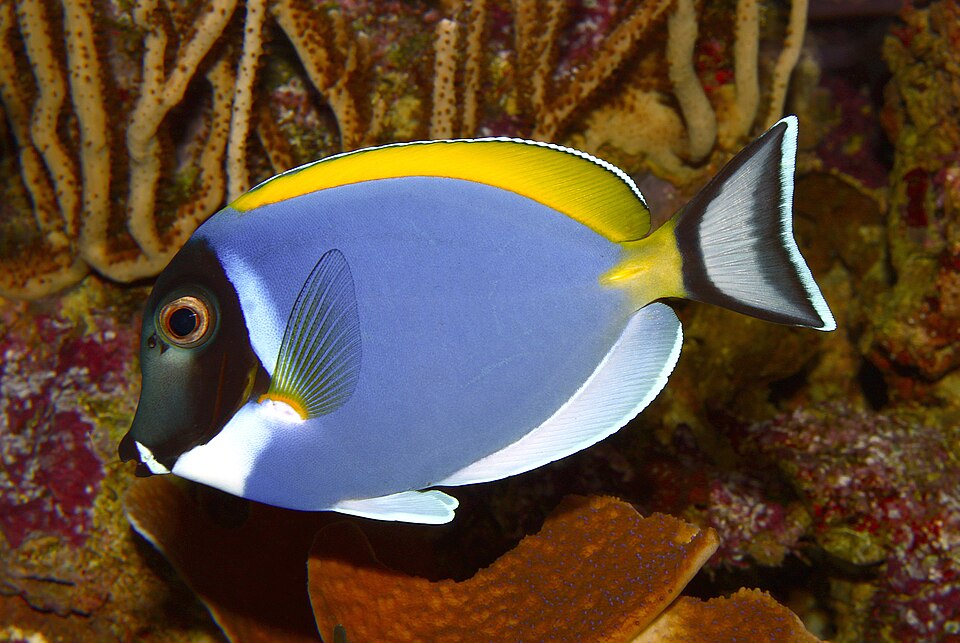
The powder blue tang is one of the most striking fish in the saltwater hobby. It has a bright blue body, a yellow dorsal fin, and a black face with a white chin. It is also one of the most challenging tangs to keep alive. Many are lost to ich, stress and starvation within the first weeks.
This powder blue tang care guide explains what they need, who should keep one and, honestly, who should not.
Powder Blue Tang Overview and Appearance
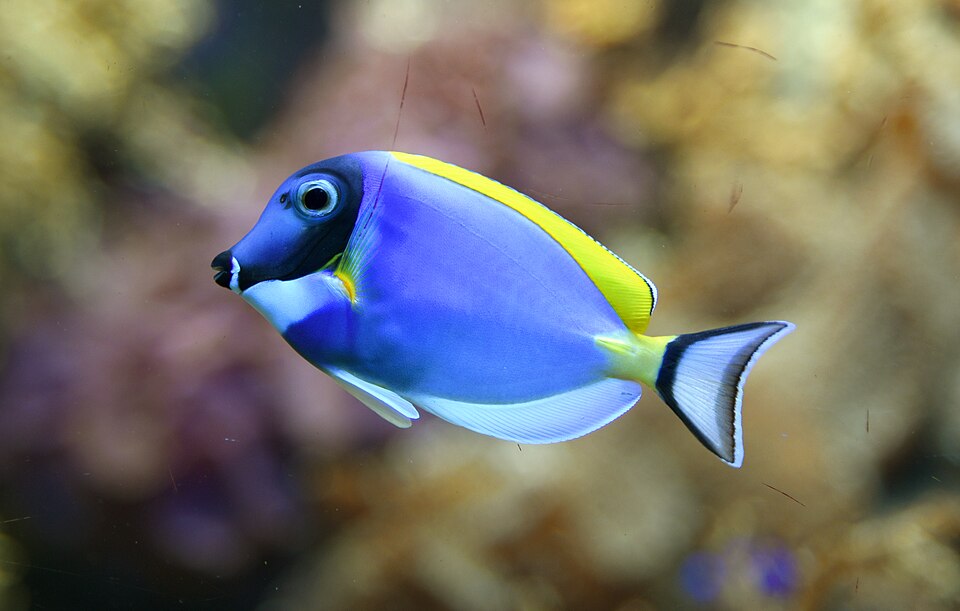
Photo: Amada44 (CC BY-SA 3.0), via Wikimedia Commons.
The powder blue tang (Acanthurus leucosternon), also called the powder blue surgeonfish, comes from the Indian Ocean. Its sleek, oval body is a vivid blue, with a yellow dorsal fin, a white throat and a black head. Like all surgeonfish, it has a sharp, scalpel-like spine on each side of the tail base. Handle it carefully when moving it, because the spines can cut skin and snag in nets.
Do not confuse it with the regal or “blue” tang (Dory) covered in our blue tang care guide. They are different fish with different needs.
Size and Lifespan
Adults reach about 9 inches (23 cm) in the aquarium, and larger in the wild. With excellent care a powder blue tang can live 10 years or more, but many do not survive their first year because of stress and disease.
Powder Blue Tang Tank Size and Setup
The powder blue tang minimum tank size is 125 gallons, and 180 gallons or more is better. This is an open-water swimmer that patrols a long stretch of reef all day. A 6-foot tank is a more realistic minimum than a tall small one.
- Length matters most. Swimming space is more important than height.
- Lots of live rock. Rock provides algae to graze and hiding places to retreat to at night.
- A mature tank. Do not add a tang to a new tank. Wait until the tank is at least 6 months old and has stable algae growth. Our saltwater aquarium setup guide explains the basics.
- Strong flow and high oxygen. Use powerheads to mimic reef currents.
- A tight lid. Tangs sometimes jump when startled.
Just a heads up: some of the links in this post are affiliate links, which means I may earn a small commission if you buy through them. But no worries, it is at no extra cost to you. Also, as an Amazon Associate I earn from qualifying purchases.
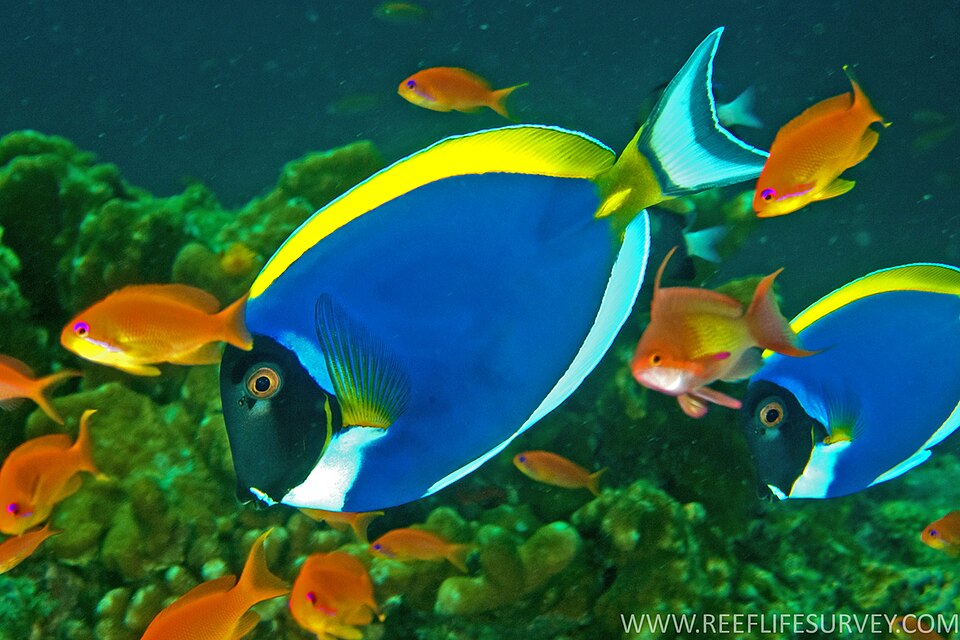
Photo: Ian V. Shaw / Reef Life Survey (CC BY 3.0), via Wikimedia Commons.
Water Parameters
- Temperature: 75-80F (24-27C)
- Salinity: 1.023-1.025 specific gravity
- pH: 8.1-8.4
- Ammonia and nitrite: 0 ppm
- Nitrate: below 10 ppm is ideal
Powder blue tangs are sensitive to poor water and to swings. Test often with a saltwater test kit and use a refractometer for accurate salinity.
What Do Powder Blue Tangs Eat?
Powder blue tangs are primarily herbivores that graze on algae all day. In captivity, many refuse food after being shipped, which is a major reason for early losses.
- Marine algae sheets (nori): the staple. Clip it to the glass or a veggie clip several times a day.
- Quality herbivore pellets or flakes with spirulina and other marine algae.
- Frozen preparations containing algae and mysis.
- Natural algae growing on the rock.
Many keepers feed small amounts 2 to 4 times a day. A well-fed tang has a rounded belly. A tang with a pinched, concave belly is in trouble. Good nutrition also helps prevent head and lateral line erosion.
Temperament and Powder Blue Tang Tank Mates
Powder blue tangs are aggressive, especially toward other tangs. They are known for harassing similar fish.
- Other tangs: usually a bad idea. If you keep several tangs, add the least aggressive one first and the powder blue last, in a very large tank. Compare with the calmer yellow tang and the purple tang.
- Peaceful fish: clownfish, wrasses and fast gobies often work.
- Reef tanks: they are generally considered reef-safe because they do not eat coral, but they are very active and can stress slower fish.
Add them last, after quarantine, and rearrange rocks to break up territories.
Acclimation and Buying Tips
Because so many powder blues are lost early, how you buy and introduce one matters as much as the tank.
- Watch it eat before you buy. Ask the store to feed it in front of you. A fish that grazes on algae and takes food is a far better bet than one that hides.
- Check the body. Look for a rounded belly, clear eyes, clean fins and no white spots, pitting on the face or heavy breathing.
- Ask how long it has been in the store. Fish that have been eating there for a few weeks are much better than fresh arrivals.
- Acclimate slowly. Drip acclimation over an hour or more reduces shock, especially if salinity differs.
- Dim the lights and keep other fish calm for the first days so the tang is not bullied while it settles.
- Make algae available. A mature tank with green film on the rocks gives it something to graze straight away.
Expect a settling-in period of a few days to a couple of weeks. Keep notes on how much it eats, how it breathes, and how other fish behave around it.
Powder Blue Tang Breeding
Breeding powder blue tangs in home aquariums is not practical. They spawn in the open water of the wild reef, and the larvae go through a long, delicate pelagic stage. Almost all specimens are wild-caught, which is one reason they are expensive and fragile. Captive-bred examples are rare, but you may see them occasionally.
Common Health Issues
Powder blue tangs are famous for being prone to ich (white spot disease):
- Marine ich. Even a healthy tang may show a few white spots after stress. See our what are the white spots on my fish article.
- Head and lateral line erosion. Linked to poor water, poor diet and lack of minerals.
- Starvation. Fish that never eat in captivity gradually waste away.
- Flukes and other parasites after shipping stress.
Quarantine is critical. Keep a new tang in a separate tank for at least 4 weeks, so that you can observe feeding and treat any problem. Follow our quarantine tank setup guide. Some keepers use a prophylactic treatment protocol, so ask an experienced reef-keeper or aquatic vet about options and always follow the label.
How Hard Is a Powder Blue Tang?
Honestly: advanced. It needs a very large, mature tank, strong flow, high-quality water, dependable feeding and careful quarantine. If you have a small tank or are new to saltwater, choose a more forgiving tang or a different fish. Even good keepers lose powder blues.
Powder Blue Tang FAQ
How big do powder blue tangs get?
About 9 inches in captivity.
What is the smallest tank for a powder blue tang?
At least 125 gallons, and 180 gallons or larger is better.
Are powder blue tangs reef safe?
Generally yes. They eat algae, not coral, but they may nip some soft coral rarely.
Why is my powder blue tang not eating?
Stress after shipping, poor water or bullying. Offer nori, quality pellets and keep the lights low until it settles in.
Can I keep two powder blue tangs together?
Not unless the tank is very large and they are introduced together. Normally they fight.
What is the difference between a powder blue tang and a powder brown tang?
The powder brown is a close relative with a brown body and a blue-white face. It is generally hardier and more peaceful.
How long do powder blue tangs live?
Ten years or more with excellent care.
Final Thoughts
The powder blue tang is gorgeous, but it asks a lot. Provide a big, mature tank, quarantine carefully, feed algae consistently, and be realistic about difficulty. When the conditions are right, it is an active and rewarding centerpiece fish.
Have you kept one? Share what worked in the comments.
Disclaimer: This article is general information, not veterinary advice. For serious or persistent problems, consult an aquatic veterinarian.
Featured photo: H. Zell (CC BY-SA 3.0), via Wikimedia Commons.