
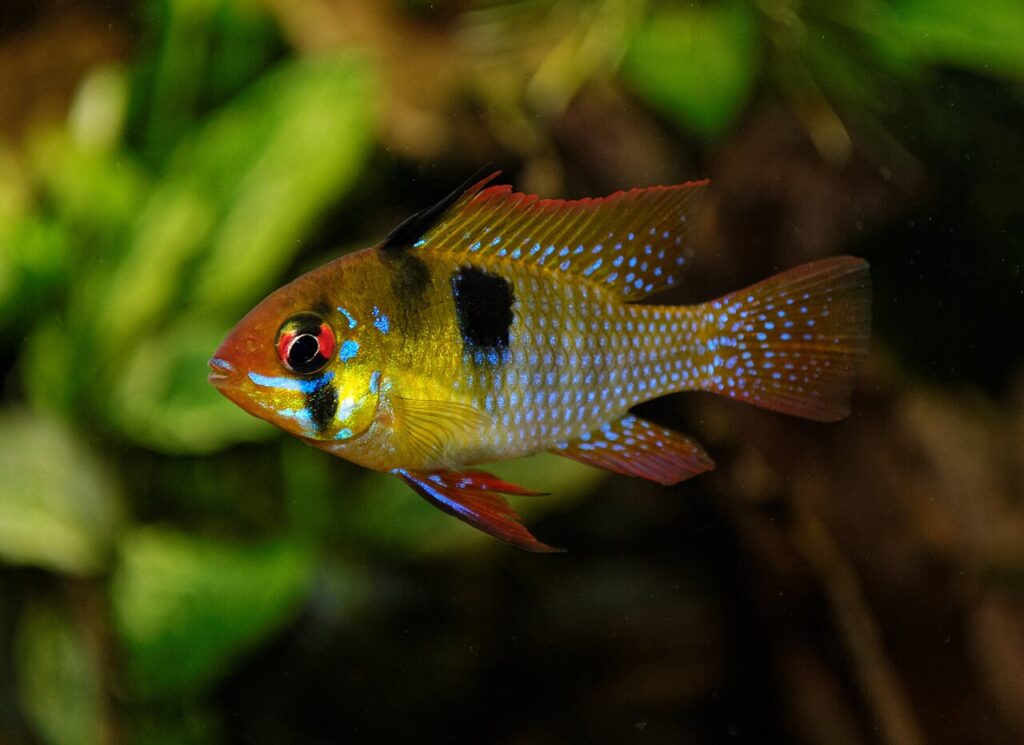
The German blue ram (Mikrogeophagus ramirezi, also sold as the blue ram, butterfly cichlid, or Ramirez’s dwarf cichlid) is one of the most beautiful small fish in the hobby. It’s also one of the most commonly lost. German blue ram care is demanding: they need warm, clean, stable water, a mature tank and careful feeding, and they are far less forgiving than most community fish.
This guide covers what they really need, how to avoid the usual mistakes, and the problems to watch for.
Overview and Appearance
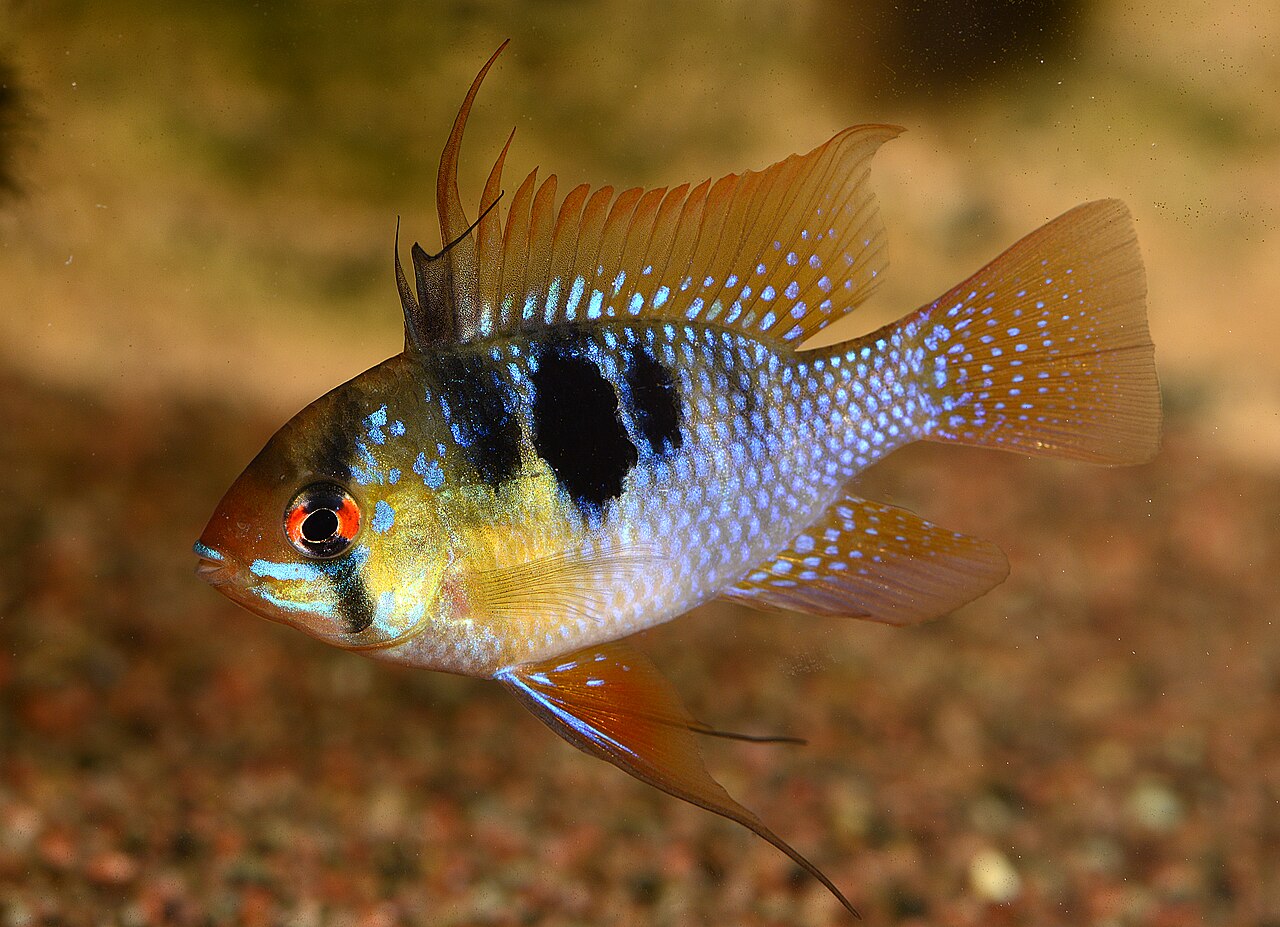
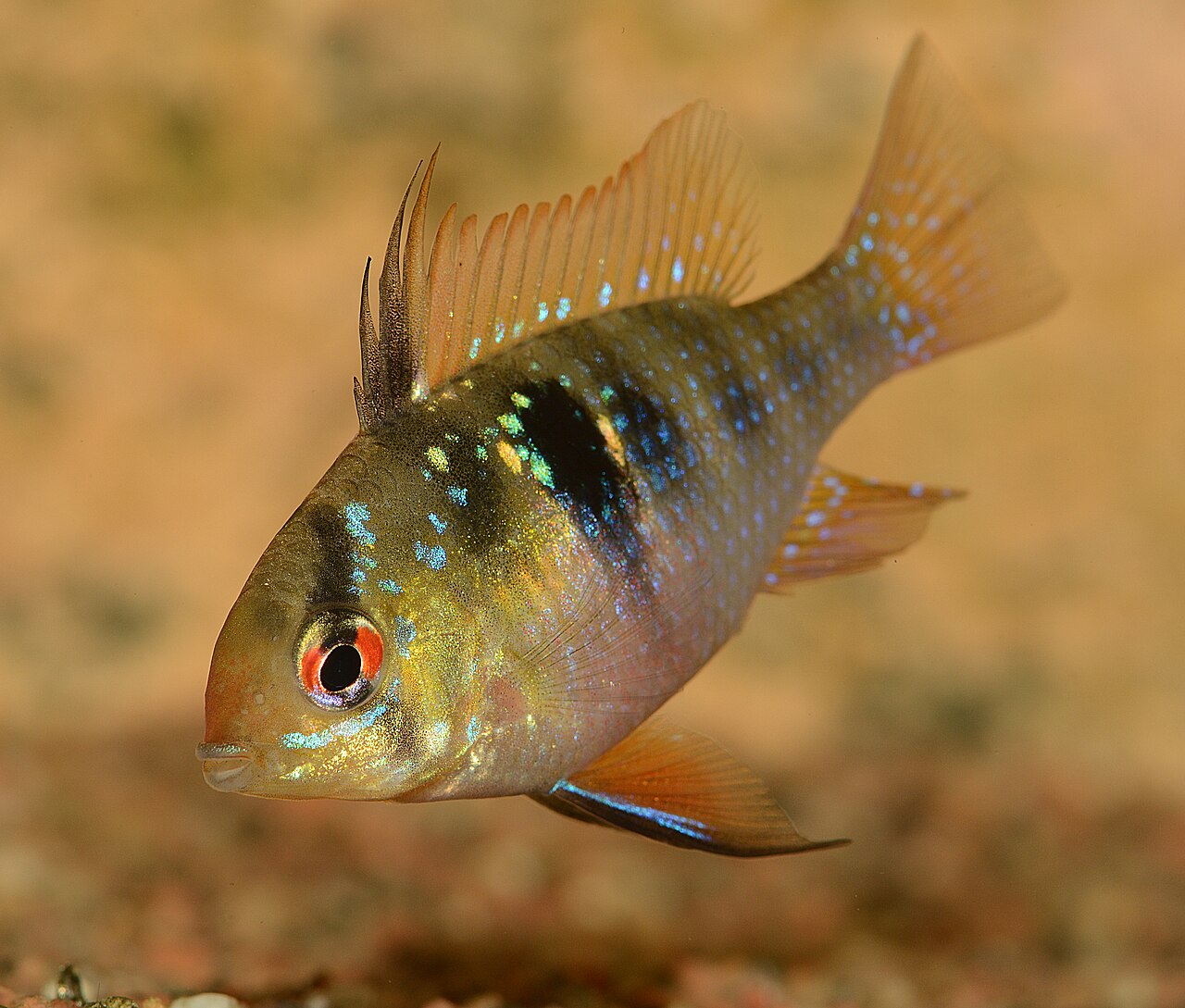
Rams are small, peaceful dwarf cichlids from the savannas of Colombia and Venezuela. Males have a yellow and blue-spangled body, a black bar through the eye, a black spot on the side, a red eye and elongated spines on the dorsal fin. Females are a little rounder, with a pink or reddish belly that brightens when ready to spawn.
Captive varieties include electric blue, gold, black and balloon rams. Electric blue and balloon rams are heavily line-bred and are generally more fragile than the standard wild-type. Many stores sell fish that are stressed or carry parasites, so choose a healthy, active, well-fed ram from a source you trust.
Size and Lifespan
- Size: Males reach about 2.5 inches (6 cm) and females a bit less.
- Lifespan: 2-3 years is typical, and many mass-bred fish live under 2 years. Healthy specimens in ideal conditions can do better. A short lifespan is a common complaint and usually reflects breeding quality and water stability.
Tank Size and Setup
A single pair can live in a 20 gallon (75 L) tank, though a 29 gallon gives more room for tank mates and keeps water stable. Smaller tanks swing too quickly.
- Substrate: Fine sand or smooth gravel. Rams sift and dig.
- Decor: Rocks, caves, driftwood and plenty of live plants. A flat stone makes an ideal spawning site.
- Lighting: Moderate. Floating plants help the shy fish feel secure.
- Filtration: Gentle, well-sized sponge or canister filter. Rams are sensitive to dirty water but dislike strong current.
- Cycle: Never add rams to a new tank. Wait until the tank has been fully cycled and stable for months. Our guide to cycling a fish tank explains how.
Just a heads up: some of the links in this post are affiliate links, which means I may earn a small commission if you buy through them. But no worries, it is at no extra cost to you. Also, as an Amazon Associate I earn from qualifying purchases.
Water Parameters
This is where most keepers go wrong.
- Temperature: 78-84 F (26-29 C). Rams need warmth, and many tropical community tanks are too cool for them. Use a reliable adjustable aquarium heater.
- pH: 5.5-7.0 (wild fish prefer acidic, and tank-raised fish adapt to around 6.5-7.0)
- Hardness: Soft, ideally 1-10 dGH
- Ammonia and nitrite: 0 ppm
- Nitrate: Under 15-20 ppm
Test with a liquid test kit, and keep the temperature steady. Many “mysterious” ram deaths are ammonia, nitrate buildup or a heater swing. Use a quality dechlorinator and do frequent small water changes (20-30% weekly) instead of occasional large ones.
Diet
Rams are omnivores that lean toward small live and frozen foods. Offer a varied diet:
- High-quality micro pellets or granules
- Frozen or live brine shrimp, daphnia, bloodworms and mysis
- Occasional flake as a supplement
Feed small amounts two or three times a day and remove leftovers. They are easily outcompeted by faster fish, so target feeding is useful. Poor diet is linked to weak immunity and bloat.
Temperament and Tank Mates
Rams are peaceful but can be shy and territorial toward each other, especially when breeding. Good tank mates stay peaceful and small and tolerate warm water:
- Cardinal tetras (see our neon tetra care guide for similar tetras, though standard neons prefer cooler water) and ember tetras
- Rummynose tetras, harlequin rasboras and pencilfish
- Corydoras catfish that tolerate warmth
- Otocinclus and snails
Avoid big or aggressive fish, fin nippers like tiger barbs, and boisterous fish that compete at feeding time. Compare the larger, hardier relative, the Bolivian ram, which tolerates cooler water. Avoid keeping rams with bettas.
Breeding
Rams are among the easier dwarf cichlids to spawn when they are healthy and conditions are right.
- Keep a bonded pair with warm (about 82 F), soft, clean water.
- The pair cleans a flat stone and the female lays 100-300 eggs.
- Eggs hatch in about 2-3 days. The parents guard and move the fry.
- Feed baby brine shrimp or crushed fine foods once fry are free swimming.
Inexperienced pairs often eat the eggs. Don’t panic if the first few spawns fail. Hold off on disturbing the tank.
Common Health Issues
- Hole-in-the-head and intestinal parasites (including hexamita and camallanus worms): Often from stress and poor imported stock. White stringy waste and weight loss are warning signs.
- Ich: Rams are prone when temperature or conditions swing. See our guide to white spots on fish.
- Dropsy and bacterial infections: Often follow water quality issues. See our guides on bacterial infections and quarantine tank setup.
- Sudden death: Usually linked to ammonia or nitrate, low oxygen, or poor genetics.
Always quarantine new rams and treat any parasites. An aquatic vet can help if a fish doesn’t respond.
Difficulty Level
Intermediate to advanced for a community fish. They’re not hard to feed, but they are very hard to keep alive if you’re careless with water quality, temperature, and stock quality. Choose a mature, stable tank, buy the healthiest fish you can, and avoid mixing them with cool-water species.
German Blue Ram FAQ
How big do German blue rams get?
Around 2-2.5 inches (5-6 cm).
What size tank does a German blue ram need?
20 gallons for a pair at the minimum. A 29 gallon gives you better stability and room for tank mates.
What temperature do German blue rams need?
78-84 F. Many keep them around 80-82 F.
Are German blue rams hard to keep?
Yes, compared with most community fish. They need stable, warm, soft, clean water and quality stock.
How long do German blue rams live?
Typically 2-3 years. Mass-bred, line-bred and electric blue fish may live shorter lives.
Can I keep a German blue ram with a betta?
It’s usually not recommended. Bettas may harass rams, and temperatures and feeding needs differ.
How many rams should I keep together?
A single pair in a 20 gallon, or a few fish in larger tanks with plenty of territories.
Final Thoughts
A healthy German blue ram is a showpiece, and keeping them well is a real accomplishment. Provide a mature tank, warm and clean water, varied foods, and peaceful tank mates, and you’ll be rewarded with colorful behavior and even spawning.
Have you kept rams? Tell us what worked, and what didn’t, in the comments.
Photos: Eric Mengel (public domain) and Sven Kullander (CC BY-SA 4.0), via Wikimedia Commons.
Disclaimer: This article is general information, not veterinary advice. For serious or persistent problems, consult an aquatic veterinarian.