
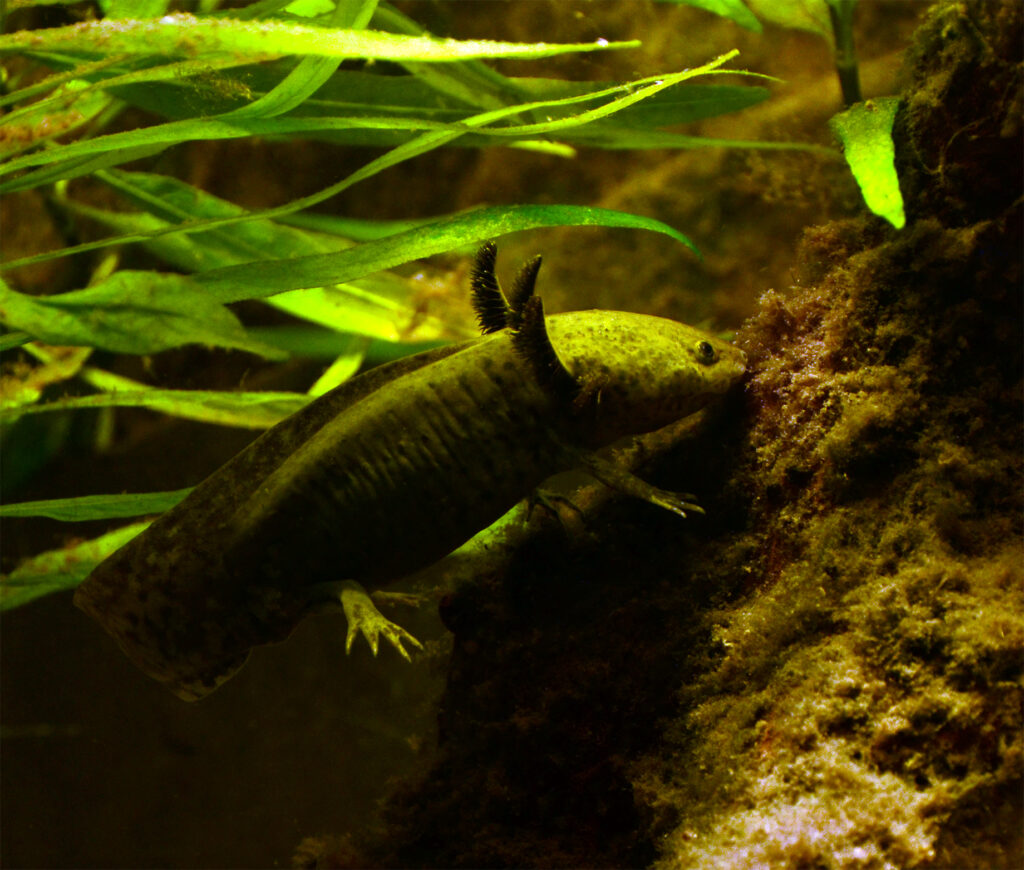
Axolotls (Ambystoma mexicanum) are fully aquatic salamanders that need a cool, clean, gently filtered tank of at least 20 gallons long, water kept between roughly 60 and 68°F, and a diet of worms and sinking pellets. They are not fish, they cannot live in a heated tropical tank, and they are far more sensitive to water quality, heat and stress than their cute smile suggests. Do it right and they can live 10 to 15 years.
This axolotl care guide covers everything from tank size and temperature to feeding, tank mates, breeding and health.
Axolotl Overview and Appearance
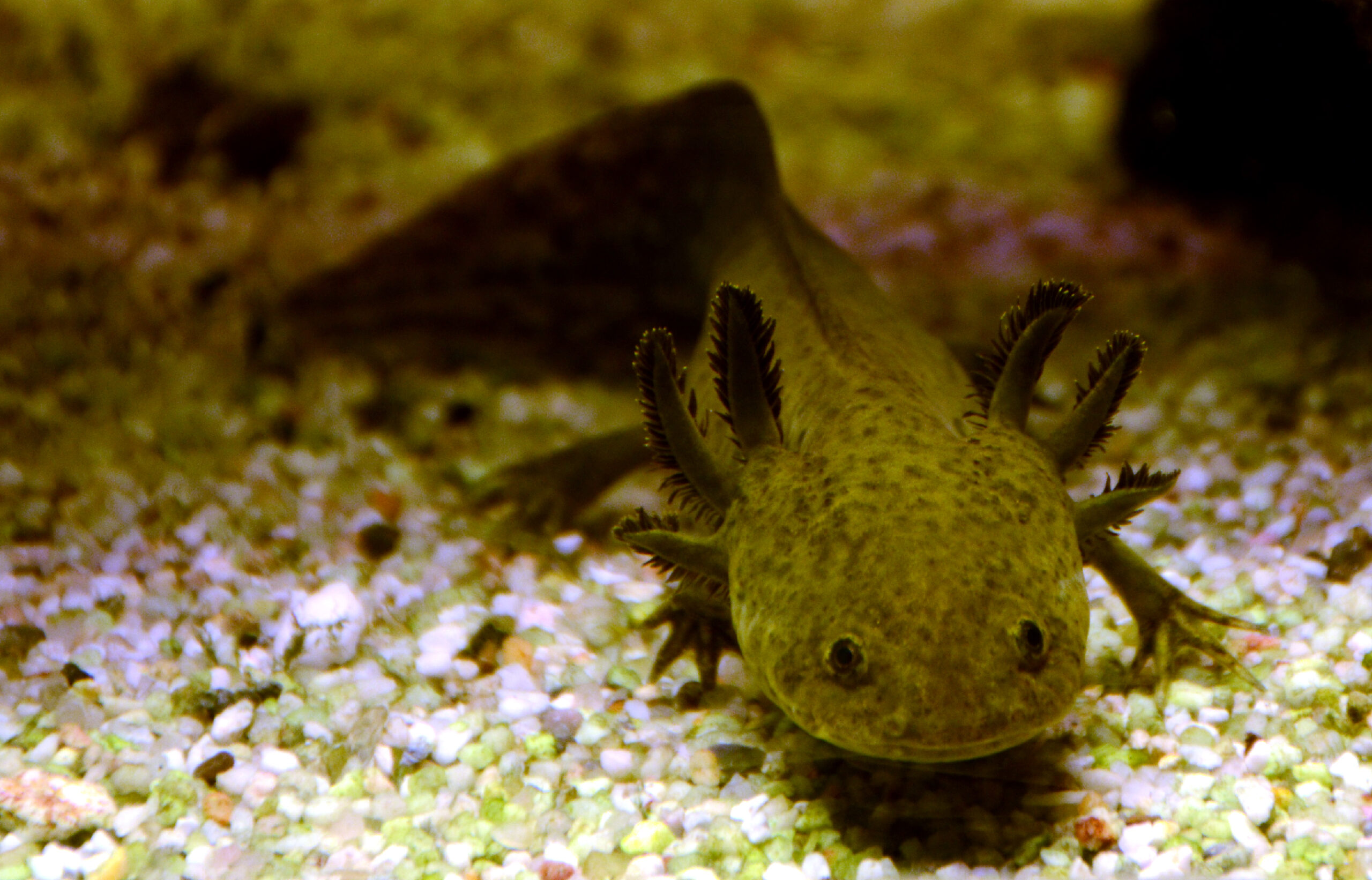
Axolotls are native to a single lake system near Mexico City and are critically endangered in the wild, yet common in captivity. They stay in their larval form for life (a trait called neoteny), keeping external feathery gills and a finned tail. Common colours include wild type (olive-brown), leucistic (pink with dark eyes), albino (golden), melanoid (black) and many others.
Size and Lifespan
Adults typically reach 9 to 12 inches. With excellent care, axolotls live 10 to 15 years, though many die far younger from heat, ammonia or bad substrate. This is a long commitment, similar to a small dog.
Tank Size and Setup
- Tank size: a 20-gallon long is the minimum for one adult; 29 to 40 gallons is better. Add 10 or more gallons for each additional axolotl. Floor space matters more than height.
- Lid: axolotls can jump, especially when stressed. Use a tight, ventilated lid.
- Substrate: use either bare bottom or very fine sand. Do not use gravel. Axolotls gulp food and gravel causes deadly impaction. Pebbles or rocks must be too large to swallow.
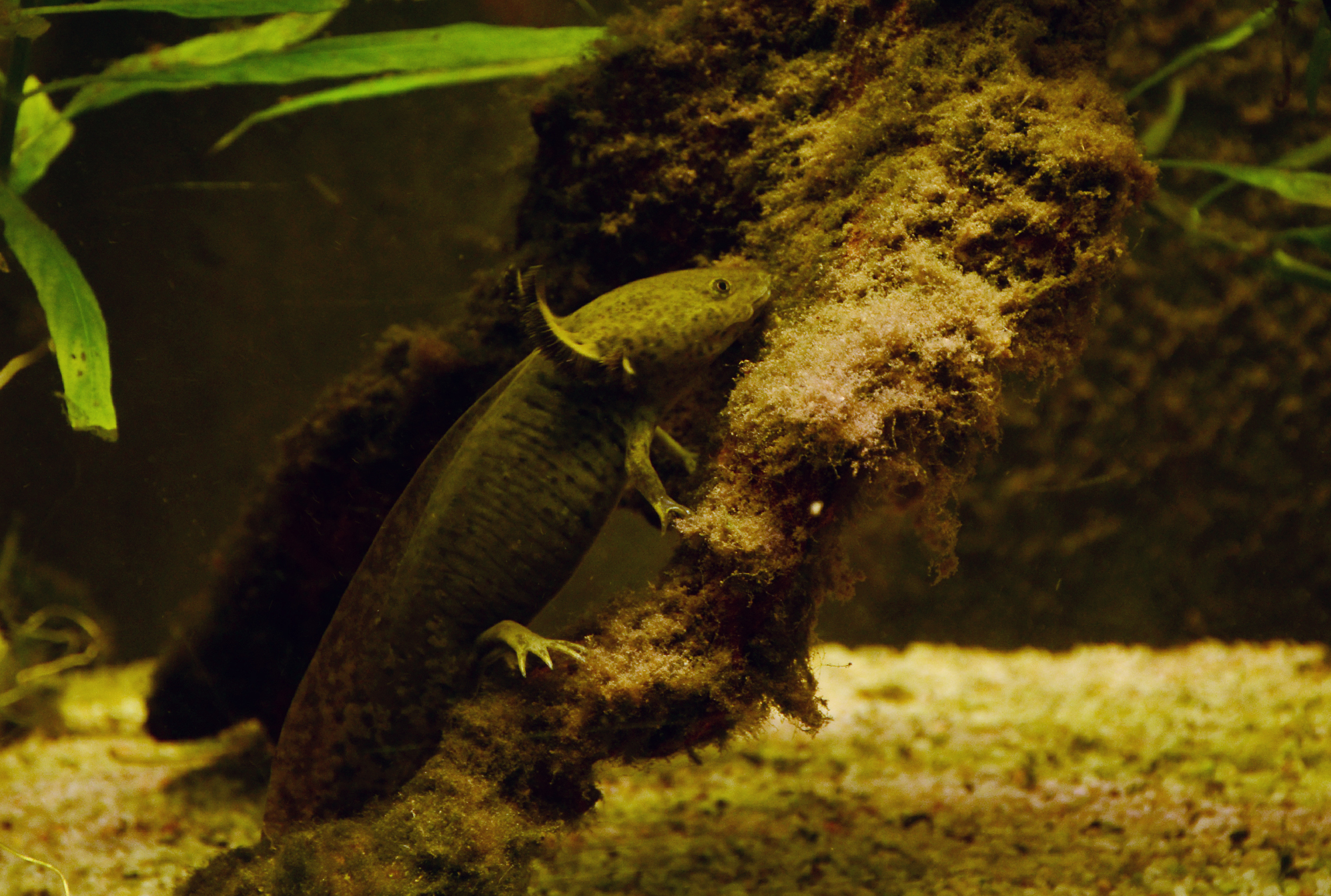
- Hides: provide caves, driftwood and plants. Axolotls dislike bright light and strong current.
- Filtration: a sponge filter or a canister filter with the outflow baffled gives gentle flow. A sponge filter is a popular choice because it is soft and low flow.
- Plants: java fern, anubias, java moss and hornwort cope with cool water.
- Cooling: most homes are warmer than ideal in summer. A aquarium chiller or a fan blowing across the surface can help. Do not use a heater unless the room is under 60°F.
Just a heads up: some of the links in this post are affiliate links, which means I may earn a small commission if you buy through them. But no worries, it is at no extra cost to you. Also, as an Amazon Associate I earn from qualifying purchases.
Water Parameters
- Temperature: 60 to 68°F (16 to 20°C). Above about 74°F is dangerous: stress, gill curling, fungus and refusal to eat.
- pH: 6.5 to 8.0
- Ammonia and nitrite: 0 ppm
- Nitrate: under 20 ppm
- Hardness: moderate
Cycle the tank fully before adding an axolotl; see our guide to how to cycle a fish tank. Use a water conditioner that removes chlorine and chloramine, and test with a liquid test kit. Axolotl skin is delicate, so ammonia or nitrite can cause burns and gill damage quickly.
Diet
Axolotls are carnivores with poor eyesight and find food by smell and movement.
- Staples: earthworms (nightcrawlers cut to size) are the best staple, along with blackworms and quality sinking axolotl or salmon pellets.
- Treats: bloodworms, brine shrimp and the occasional small piece of lean seafood. Avoid feeder fish, which carry parasites.
- Feeding schedule: juveniles daily, adults every 2 to 3 days. Remove leftovers.
- Tongs or a feeding dish help keep the tank clean.
Temperament and Tank Mates
Axolotls are solitary, docile and best kept alone or with another axolotl of similar size. Even then, they may nip each other’s gills and limbs, so feed well and provide space. Fish are generally a bad idea. Most nip the gills, and axolotls swallow anything that fits in their mouths. Cold-water species may survive with some risk, but a species-only tank is safest. Snails and shrimp are often eaten or can harm the axolotl.
Daily and Weekly Care Routine
Good axolotl keeping is mostly routine. Each day, check the temperature, look at the gills (they should be fluffy and spread, not curled forward) and remove uneaten food. Each week, test ammonia, nitrite and nitrate, and change 20 to 30 percent of the water with treated water at the same temperature. Never rinse the filter in tap water, and avoid deep cleaning the whole tank at once. If the tank climbs above 70°F in summer, act early: freeze-water bottles floating in the tank, a clip-on fan across the surface or a chiller can all keep temperatures down. Axolotls also hate bright light, so use a dim, shaded setup with plants for cover.
Budget for the long term, too. A cycled 40-gallon tank, filter, test kit, a chiller if you live somewhere warm and weekly worms add up, and an axolotl can live well over a decade.
Breeding
Axolotls breed readily in captivity when cooled, then warmed slightly. Males drop spermatophores, females lay hundreds of eggs on plants, and eggs hatch in about 2 to 3 weeks. Raising the larvae is demanding: they need live food such as baby brine shrimp, daily water changes and separation to avoid cannibalism. Breeding is only worthwhile if you have homes for the young.
Common Health Issues
- Gill curling forward: often stress from heat, poor water or strong flow
- Fungus: cotton-like growth on gills or skin, usually in warm or dirty water
- Impaction: from gravel or large chunks of food
- Ammonia burns: red, irritated gills or skin
- Floating or bloating: often gas, impaction or temperature problems
- Limb or gill loss: axolotls regenerate well, but injuries can get infected in dirty water
Keep a separate hospital tank in mind; see our guide to setting up a quarantine tank. Many fish medications are unsafe for amphibians, so do not use copper or aquarium salt without advice. For anything serious, consult an exotic or aquatic vet.
How Difficult Are Axolotls?
Moderate to hard. The animals are hardy once their conditions are right, but keeping water cool, spotless and still gentle is demanding, especially in warm climates. Beginners can succeed if they cycle first, control temperature and never use gravel.
Axolotl Care FAQ
What size tank does an axolotl need?
At least 20 gallons long for one adult, ideally 29 to 40 gallons.
Do axolotls need a heater?
No. They need a cool tank, usually 60 to 68°F. Heat is the most common cause of illness.
What do axolotls eat?
Earthworms, blackworms and sinking pellets. Avoid feeder fish.
Can axolotls live with fish?
Generally no. Fish nip gills and axolotls will eat anything that fits in their mouth.
How long do axolotls live?
Typically 10 to 15 years with good care.
Can I keep two axolotls together?
Yes, if they are similar in size and well fed in a large enough tank, but watch for nipping.
Can you touch an axolotl?
Avoid it. Their skin is delicate and handling can harm them. Use a soft net or container if you must move them.
Final Thoughts
Axolotls are fascinating and long-lived, but they are demanding in a way that many pet owners do not expect. Keep them cool, give them sand and soft filtration, and they will reward you with years of calm entertainment.
Image credits: Axolotl photographs by Vassil, CC0, via Wikimedia Commons.
Disclaimer: This article is general information, not veterinary advice. For serious or persistent problems, consult an aquatic or exotic veterinarian.