
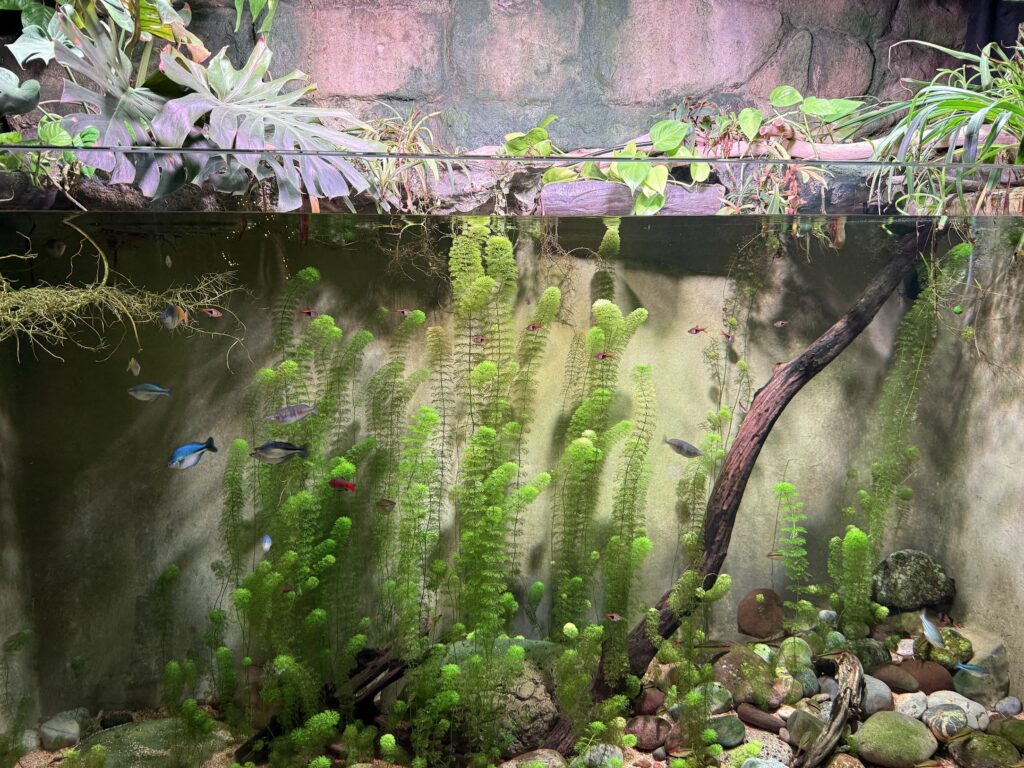
If your fish tank water is cloudy, the cause is almost always one of four things: a bacterial bloom (milky white or grey haze), fine debris or substrate dust, a green algae bloom, or a spike in waste from overfeeding or a dying filter. The colour of the cloud tells you most of what you need to know. White or milky haze in a new tank or after a filter change is a bacterial bloom and usually clears on its own in a few days to a week. Green water is algae, and brown or tan murk is usually stirred-up debris or tannins. Whatever the cause, test your water first, because the fix depends on the numbers.
This one guide covers every version of the problem people search for: cloudy water in a new tank, cloudy water after a water change, milky white tank water, green water and cloudy water in an established tank that was fine yesterday.
Most Common Causes of Cloudy Aquarium Water (Ordered by Likelihood)
- Bacterial bloom. Milky white or greyish haze, especially in a new tank, after a big cleaning, after replacing the filter media or after adding lots of food. Free-floating bacteria multiply faster than the tank can use them.
- Substrate dust or debris. Cloudy right after setup, after rinsing gravel poorly, or after digging fish (cichlids, loaches, goldfish) stir up the bottom.
- Overfeeding and waste. Uneaten food and heavy waste feed bacteria and make the water look hazy.
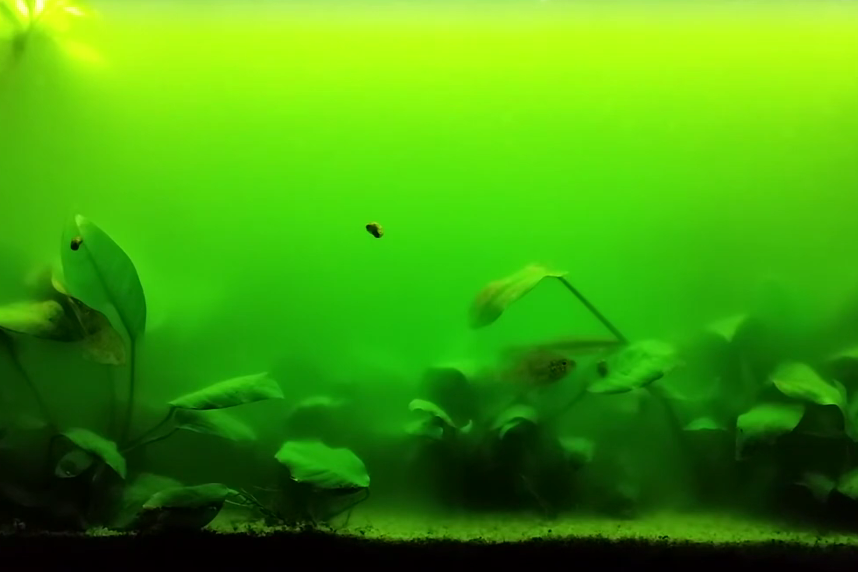
- Green water (algae bloom). Pea-soup green, usually from too much light (especially direct sun) plus excess nutrients.
- Dissolved organics and tannins. Yellow or brown tint from driftwood, leaves or old water. This is tea-coloured, not truly cloudy.
- Filter problems. A clogged, undersized or recently cleaned-too-hard filter that no longer clears particles or hosts enough beneficial bacteria.
- Tap water issues. Phosphates or silicates in your tap water, or white cloudiness from a hard-water source that settles out.
- Hard water and additives. Some buffers, medications and mineral products cause a temporary white haze.
How to Diagnose Which Cause You Have
Look at the colour, the age of the tank and what changed in the last week.
- Milky white, tank under 6 weeks old: almost certainly a bacterial bloom from the cycle. See our guide on how to cycle a fish tank.
- Grey or white after you cleaned the filter or changed all the media: you removed bacteria; a bloom follows.
- Light brown or dusty, appearing right after setup or a water change: debris and substrate dust that settles if you leave it.
- Bright green, see-through but tinted: free-floating algae.
- Cloudy tank that was clear for months: suspect overfeeding, a dead fish or snail, or a failing filter.
Then test the water. A liquid freshwater test kit takes five minutes. Ammonia and nitrite should be 0 ppm. If either is above zero, the cloudy water is a symptom of a cycling or overload problem and the fish are at risk, not just the view. Saltwater keepers should also check salinity, alkalinity and phosphate.
Just a heads up: some of the links in this post are affiliate links, which means I may earn a small commission if you buy through them. But no worries, it is at no extra cost to you. Also, as an Amazon Associate I earn from qualifying purchases.
Step-by-Step Fixes
1. Bacterial bloom (milky white water)
- Do nothing drastic. A bloom is harmless to fish in most cases and clears within about 3 to 7 days as bacteria populations settle.
- Stop feeding heavily; feed only what your fish finish in a minute or two.
- Make sure the filter is running and the water is well oxygenated, because blooms use up oxygen. Add an air stone if fish are at the surface (see fish gasping at the surface).
- Test ammonia and nitrite daily. If either is above 0 ppm, do a 25-50% water change with water treated with a dechlorinator or water conditioner.
- Avoid chasing the cloud with big water changes, filter scrubbing or chemical clarifiers, which can restart the cycle.
2. Debris and substrate dust
- Rinse new gravel or sand until the water runs clear before it goes in the tank.
- Use a gravel vacuum during water changes to remove debris.
- Add a fine filter floss or filter sock to catch particles. Cloudiness from dust typically clears in a day or two with good filtration.
3. Overfeeding and waste
- Cut feeding in half for a week, remove uneaten food and check for a dead fish, snail or rotting plant.
- Do a 25-30% water change and clean pre-filter sponges in old tank water, not tap water.
- Consider whether the tank is overstocked; more fish means more waste.
4. Green water
- Cut the lighting to 6-8 hours a day and keep the tank out of direct sunlight.
- Do regular water changes and reduce nutrients (feeding, phosphate).
- A UV sterilizer clears green water quickly and reliably. A blackout of 3-4 days also works for some tanks, but check that your plants and fish tolerate it.
5. Filter problems
- Make sure the filter is the right size for the tank and that flow is not blocked.
- Rinse sponges and media gently in used tank water. Never replace all media at once.
- If the filter is too small, upgrade to a better aquarium filter.
Cloudy Water After a Water Change
This usually comes from one of three things: stirred-up debris, tap water that is high in dissolved minerals or gas (it looks cloudy for a few minutes then clears), or a bloom triggered by a very large change. Use a dechlorinator, match temperature and pour slowly. If it still looks cloudy after a day, test for ammonia and nitrite.
Cloudy Water in a New Tank
New-tank cloudiness is normal. The tank has no established bacteria, so the water goes through a bloom and then clears as the nitrogen cycle develops. Keep stocking light and be patient. Our quarantine tank guide and the cycling guide above explain how to keep fish safe while the bacteria establish.
When Cloudy Water Is Serious
Cloudy water is a warning sign when:
- Ammonia or nitrite is above 0 ppm
- Fish are gasping, lethargic or clamping fins (see betta clamped fins)
- There is a bad smell, which can mean something has died or the tank has gone anaerobic
- The cloudiness is getting worse after several days of care
- Fish show white fuzz, ulcers or other signs of disease (see bacterial infections in aquarium fish)
In those cases, do water changes, add aeration, stop feeding for a day and remove anything dead. If several fish are affected, ask an experienced fishkeeper or an aquatic vet.
How to Prevent Cloudy Aquarium Water
- Cycle the tank properly before adding many fish
- Do a 20-30% water change every week
- Feed small amounts and remove leftovers
- Do not overstock and do not replace all filter media at once
- Clean the gravel and prefilter regularly
- Control light and keep the tank out of direct sun
- Quarantine new fish and plants so nothing disrupts the balance
Cloudy Aquarium Water FAQ
Why is my fish tank cloudy after a water change?
Usually disturbed debris or a bloom triggered by a big change. It often clears in 24 to 48 hours with good filtration.
Is cloudy water bad for fish?
A harmless bacterial bloom is generally not, but it can lower oxygen. The real danger is ammonia or nitrite behind the cloud.
How long does cloudy water take to clear?
Dust clears in a day or two; a bacterial bloom in 3 to 7 days; green water depends on fixing light and nutrients.
Why is my new aquarium cloudy?
The tank is cycling. A bloom is normal while bacteria establish.
What is milky white tank water?
Typically a bacterial bloom. It looks alarming but resolves on its own if you keep feeding low and test the water.
Should I use a water clarifier?
Clarifiers can clump particles for the filter to catch, but they do not fix the cause. Use them sparingly, after finding the cause.
Why is my tank green?
Too much light and nutrients feeding free-floating algae.
Final Thoughts
Cloudy water looks dramatic but is one of the most fixable problems in the hobby. Test, identify the colour and age pattern, fix the cause and resist the urge to overcorrect. Most tanks clear in under a week.
Have you beaten a stubborn cloudy tank? Share what worked in the comments.
Image credit: Green water algae photo by Russel Leidich (dangerousfishbowl), CC BY 3.0, via Wikimedia Commons. Aquarium photo by Netha Hussain, CC0.
Disclaimer: This article is general information, not veterinary advice. For serious or persistent problems, consult an aquatic veterinarian.