
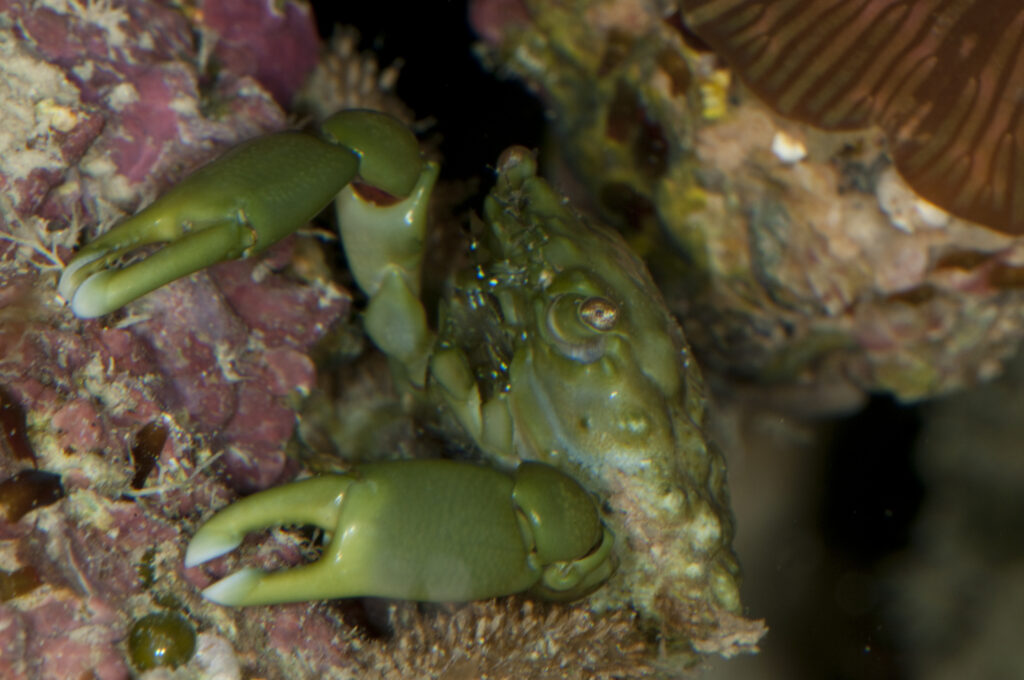
Emerald crabs (Mithraculus sculptus) are small, green, hairy-bodied reef crabs best known for eating nuisance algae, including bubble algae and hair algae, but they are not guaranteed reef safe. Most are peaceful scavengers that do a great job cleaning rock, yet some individuals, especially larger ones, will nip at corals, snails or even small fish when underfed. A well-fed emerald crab in a mature tank is a useful cleaner; an unfed one is a gamble.
This emerald crab care guide covers size, tank setup, diet, tank mates, breeding and how to keep yours healthy.
Overview and Appearance
Emerald crabs come from the Caribbean and western Atlantic. They are mostly dark green, sometimes mottled, with pale, olive claws and hairy legs. Their claws are small compared to many crabs, which suits them to picking algae off rock.
Size and Lifespan
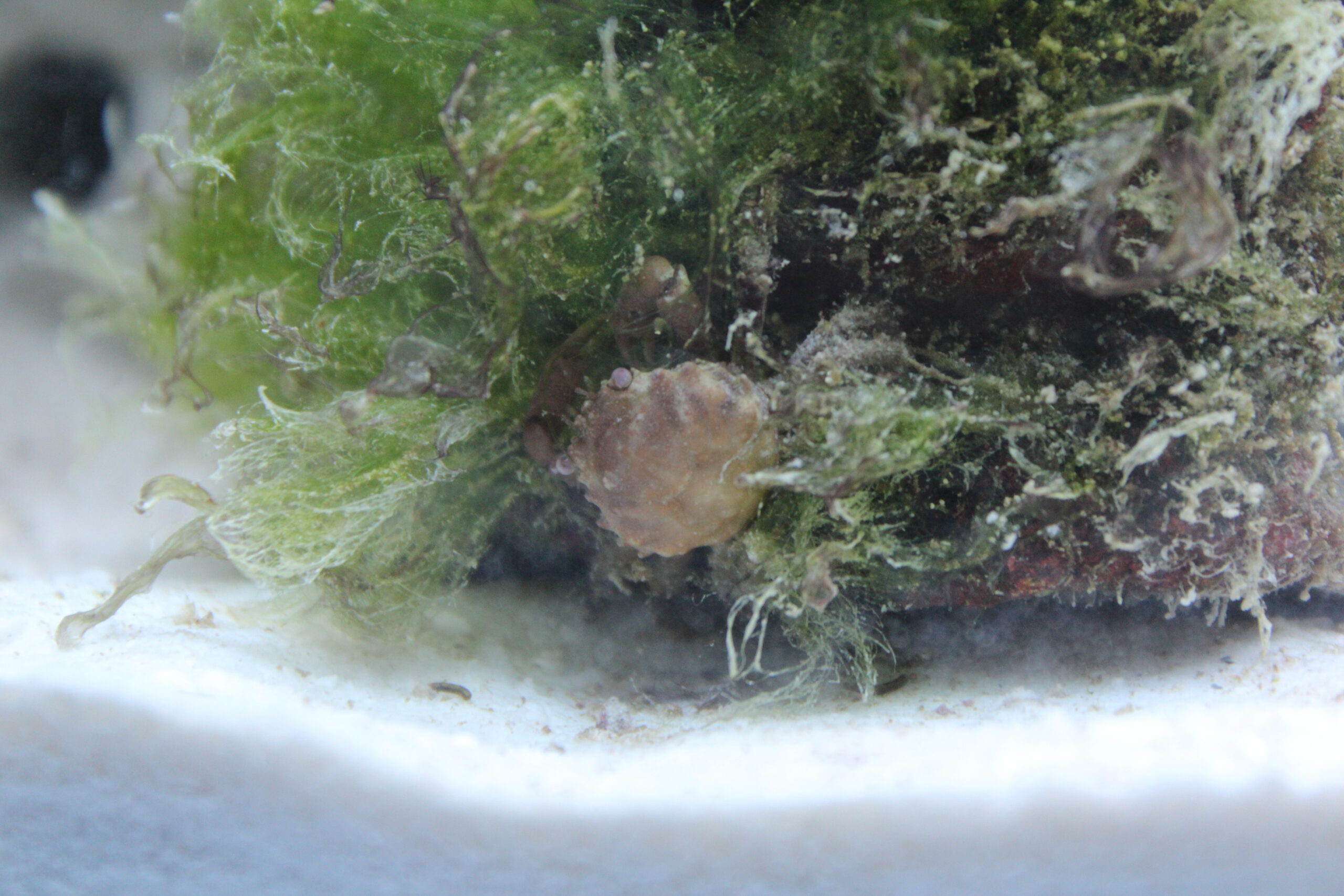
Adults reach about 2 to 3 inches across, with legs extended making them look larger. With stable conditions they can live 2 to 5 years in captivity. Because they molt as they grow, they need stable calcium, alkalinity and magnesium.
Tank Size and Setup
- Tank size: 20 gallons minimum for one crab. Larger tanks give the crab more rock to graze and reduce competition.
- Rockwork: plenty of live rock with caves and crevices so the crab can hide, especially during molting.
- Mature tank: crabs need algae and biofilm. Add them after the tank has cycled and has some algae growth. See our guide to setting up a saltwater aquarium.
- Lid: crabs can climb. Check that cords and tubing are not a way out.
- Acclimation: drip acclimate slowly; invertebrates are sensitive to salinity swings and copper. Quarantine as you would for fish; see quarantine tank setup, and never treat with copper in a tank that holds invertebrates.
Water Parameters
- Temperature: 72 to 78°F
- Salinity: 1.023 to 1.025 specific gravity (a refractometer is more accurate than a swing-arm)
- pH: 8.1 to 8.4
- Ammonia and nitrite: 0 ppm
- Nitrate: under 20 ppm; stable reef parameters help with molting
Just a heads up: some of the links in this post are affiliate links, which means I may earn a small commission if you buy through them. But no worries, it is at no extra cost to you. Also, as an Amazon Associate I earn from qualifying purchases.
Use a quality saltwater test kit and keep salinity stable. Invertebrates do not tolerate sudden swings.
Diet: What Do Emerald Crabs Eat?
Emerald crabs are omnivores and grazers. In a tank with enough algae they eat:
- Hair algae, bubble algae and film algae
- Leftover fish food, pellets and algae sheets
- Frozen foods such as mysis and shrimp
- Detritus and biofilm on rock
If your tank has little algae, supplement with a few nori sheets or algae wafers a few times a week. A hungry crab is more likely to pick at corals, snails or sessile invertebrates.
Are Emerald Crabs Reef Safe?
Mostly, but with caution. Many reef keepers keep them without trouble, but there are known risks:
- They may eat soft coral polyps, zoanthids or small snails when hungry
- They can nip slow or sleeping fish, such as small gobies
- They may steal food from corals and fish
- Large males can become aggressive
If yours begins harming livestock, remove it and offer a tank with more algae. Because emerald crabs are cheap, some people keep one per 30 gallons and watch it for the first few weeks.
Temperament and Tank Mates

Emerald crabs are peaceful toward most fish and corals. Good tank mates: clownfish, gobies, blennies, firefish, royal grammas (see royal gramma care) and cleaner shrimp. Bad tank mates: large predatory fish such as triggers, puffers, hawkfish and many wrasses, which eat crabs; and aggressive crustaceans such as mantis shrimp (see mantis shrimp care). Keep only one emerald crab in a small tank, since they can fight.
Buying, Acclimating and Introducing an Emerald Crab
Choose a crab that is alert, clings firmly to the rock and has a complete set of legs and claws. Avoid crabs that look dull, sit motionless in the bag or have missing limbs. Drip acclimate over 45 to 60 minutes, because crustaceans are more sensitive to salinity and pH changes than most fish. Add the crab to the tank at lights-out and make sure it has a cave to hide in while it settles.
For the first week, watch how it behaves. A crab that grazes rock, picks at algae and ignores corals is working as intended. A crab that goes after a coral, hunts snails or harasses fish should be removed to a refugium or another tank. Feed your fish as normal so food is available, but do not rely on the crab to clean up all leftovers; overfeeding feeds the algae you want it to remove.
Emerald Crabs and Other Cleanup Crew
Emerald crabs work best as part of a mixed crew. Snails such as astrea and nerites graze film algae, hermit crabs pick at detritus, and cleaner shrimp tidy the fish. No single animal fixes an algae problem on its own. Find the cause first (excess nutrients, old lighting, too much feeding) and use the crab as a helper, not a cure.
Breeding
Emerald crabs spawn in captivity, but the larvae float in the plankton and need specialized live food and a separate rearing tank. In a home reef the larvae are eaten by fish and filtered out, so breeding is rare for hobbyists.
Common Health Issues
- Molting problems: from low calcium or alkalinity, or lack of hiding places. Never remove the old shell; crabs eat it to recover minerals.
- Poor water quality: sudden salinity or nitrate swings can kill crabs.
- Copper exposure: fatal to all crustaceans, so avoid copper medications.
- Starvation: causes aggression and wandering.
- Predation: triggers, puffers and large wrasses will eat them.
How Difficult Are Emerald Crabs?
Easy to moderate. They are hardy in a mature, stable tank, but they are not a guaranteed algae cure and their behavior can be unpredictable. They work best as part of a balanced cleanup crew, not as a fix for a poorly maintained tank.
Emerald Crab Care FAQ
Are emerald crabs reef safe?
Usually, but not always. Keep them fed and watch for nipping at corals and snails.
What do emerald crabs eat?
Hair and bubble algae, leftover food, nori and detritus.
How big do emerald crabs get?
About 2 to 3 inches across.
Do emerald crabs eat bubble algae?
Yes, they are among the few animals that reliably eat it, though results vary.
How many emerald crabs per tank?
One per 20 to 30 gallons is a common guideline.
Will an emerald crab eat my fish?
Rarely, but small or sleeping fish are at risk if the crab is hungry.
How long do emerald crabs live?
2 to 5 years with stable conditions.
Final Thoughts
An emerald crab is a charming, useful cleanup animal if your expectations are realistic. Keep it fed, keep conditions stable and it can be a quiet worker for years.
Image credits: Female Mithraculus sculptus Crab by Mark Loch, CC BY-SA 2.0; Emerald Crab munching on Hair Algae by aquarist.me, CC BY 2.0; both via Wikimedia Commons.
Disclaimer: This article is general information, not veterinary advice. For serious or persistent problems, consult an aquatic veterinarian.