
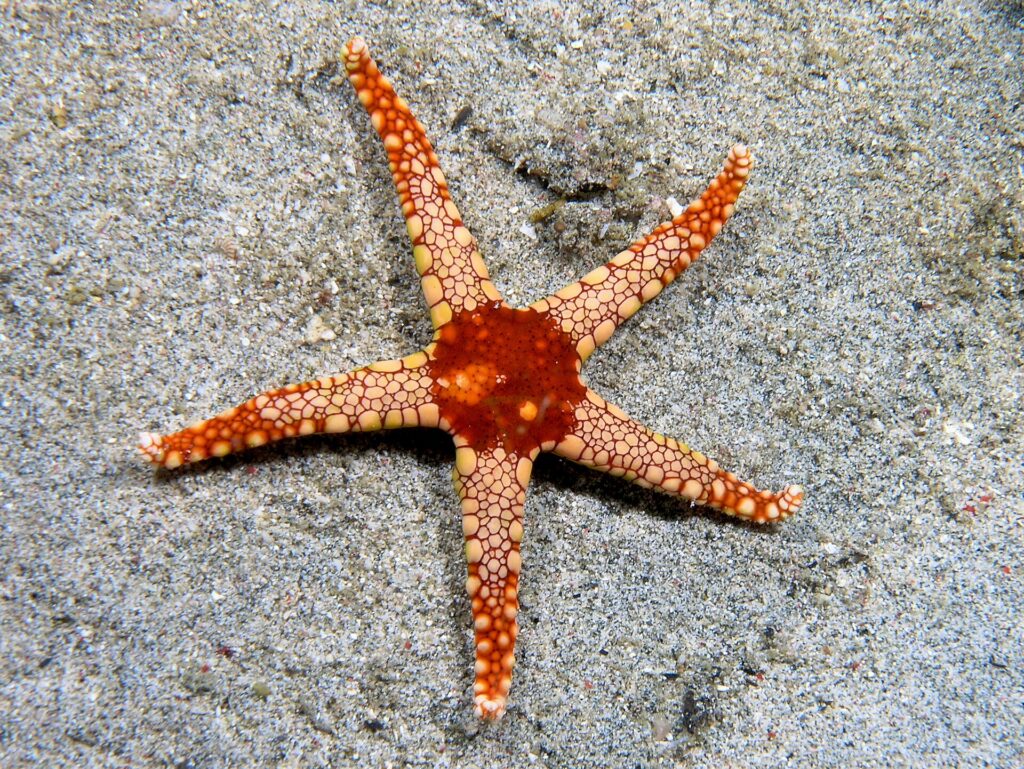
Sea stars look like the perfect reef tank addition: colorful, slow, harmless-looking. They are also among the animals most likely to die slowly in new home aquariums. The honest answer to “how do I care for a sea star?” is that it depends entirely on the species, and many of the most popular ones starve because the tank is too young or has too little natural food. This guide sorts out which sea stars have a fair chance and what they need.
Why Sea Stars Are Harder Than They Look
Sea stars are echinoderms. They have no gills in the fish sense, no fat reserves to speak of, and little tolerance for sudden change. Most sold in the trade are wild-caught, and many have already spent days in shipping. Three problems cause most losses:
- Starvation. Many species graze on thin films of algae, sponges, bacteria and detritus on rock surfaces. A new tank does not have that food.
- Rapid changes. Poor acclimation, salinity swings, temperature changes, or air exposure can be fatal.
- Predators and pests. Some fish, shrimp and crabs eat sea stars.
Because many individuals are wild-caught, think carefully about whether your tank can actually support the species before buying.
Species Guide: What You’ll See for Sale
Necklace or tiled sea star (Fromia monilis)
Wikipedia lists a diameter up to about 30 cm (12 in), with red arm tips and disc center and paler plates. It feeds on encrusting sponges, detritus and small invertebrates. Wikipedia notes that in aquariums it grazes thin layers of algae on the stones, so it can live only in an old, well-ripened tank, and if the algae is not growing fast enough, supplemental feeding is usually unsuccessful and it dies of starvation. Difficulty: advanced, needs a mature tank.
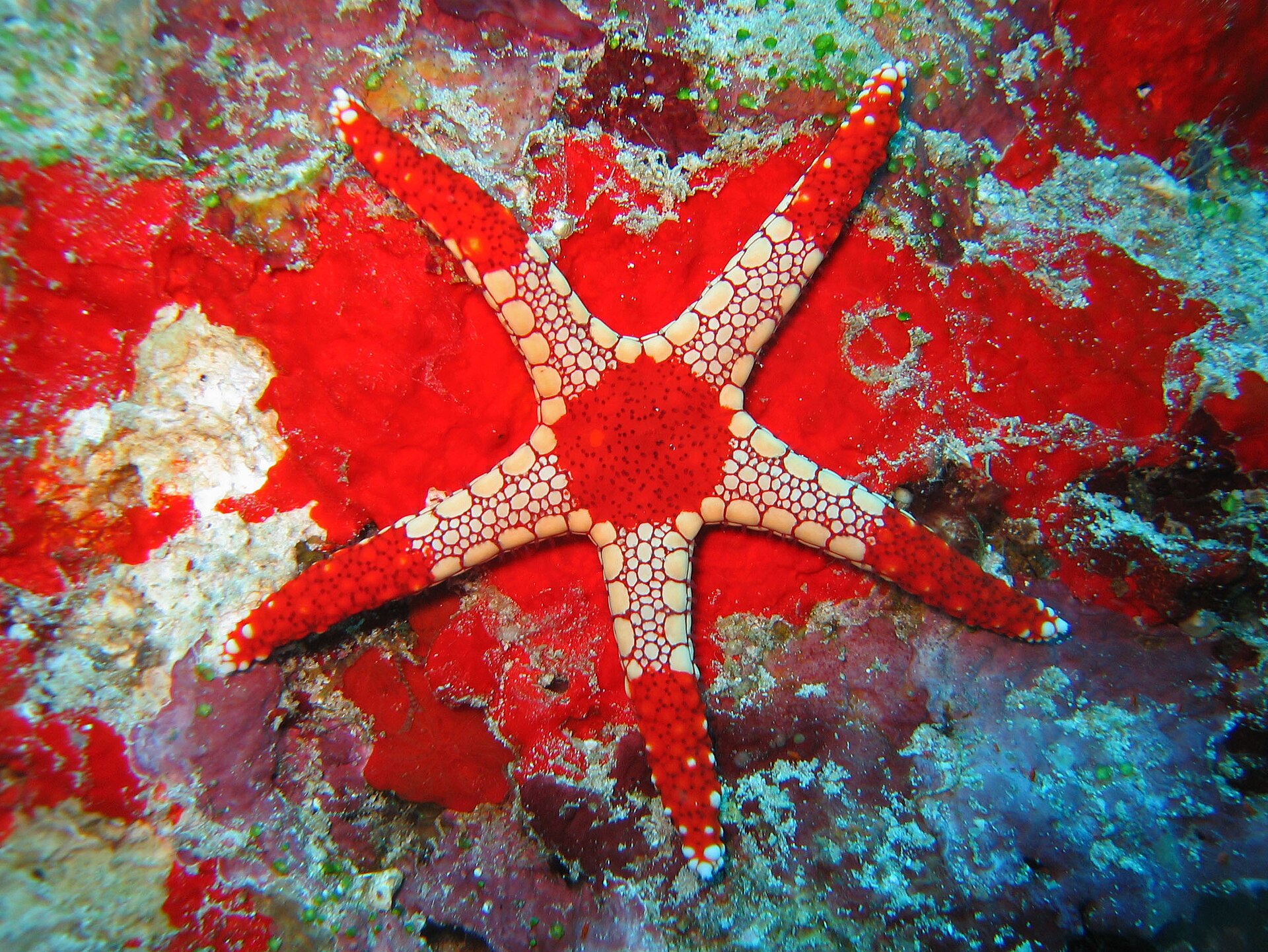
Blue sea star (Linckia laevigata)
A tropical Indo-Pacific species that can reach about 30 cm (11.8 in) in diameter, according to Wikipedia. It moves slowly, lives on coral reefs and seagrass beds, and is eaten in the wild by various pufferfish, triton shells, harlequin shrimp and even some anemones. Blue Linckia are famous in the hobby for poor long-term survival in captivity. Many keepers report slow decline after purchase, so this one is generally best left to expert keepers with very mature systems. Difficulty: advanced, high loss rate reported by hobbyists.
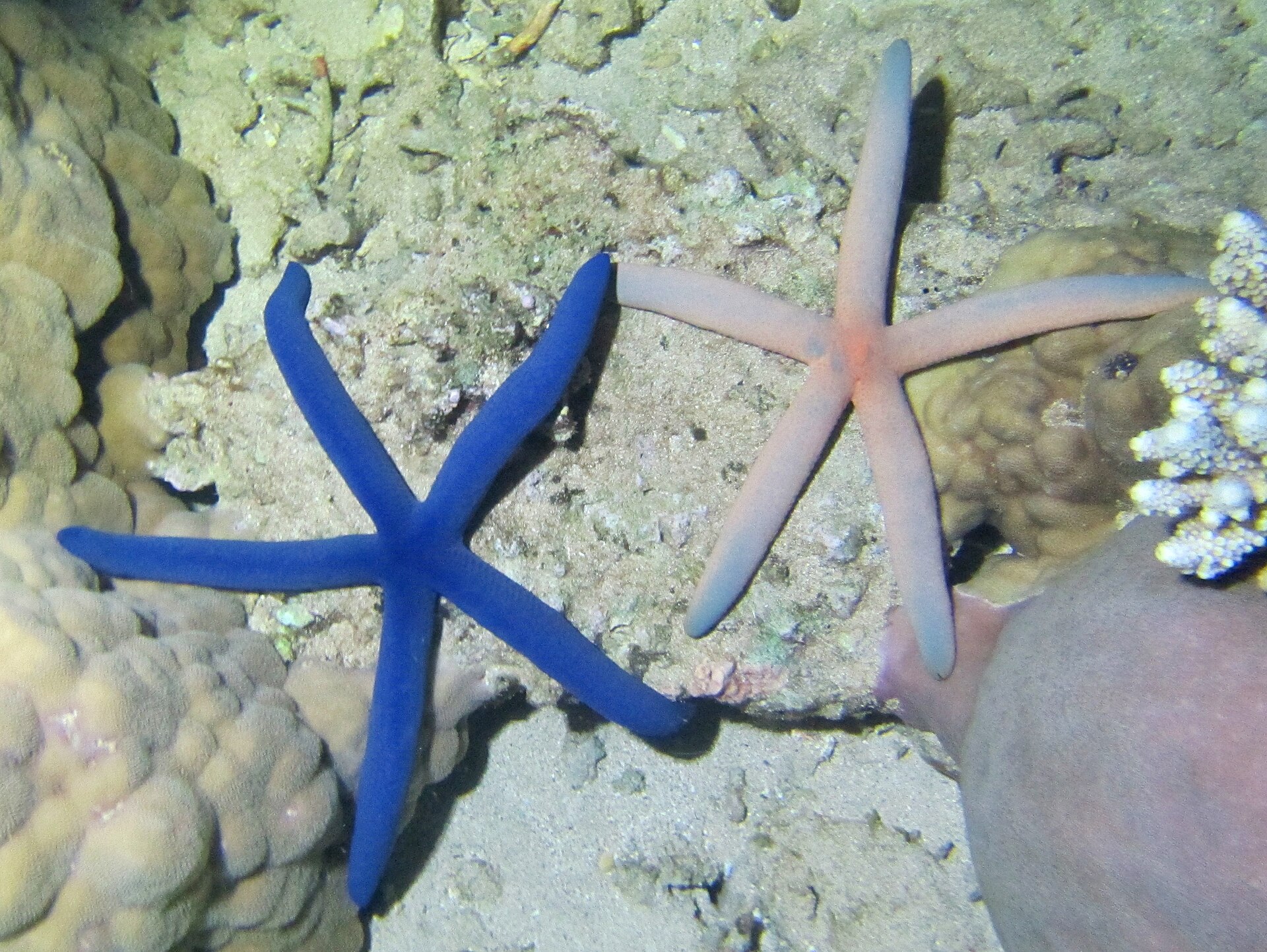
Horned or chocolate chip sea star (Protoreaster nodosus)
Wikipedia describes rows of dark horns on a red to tan body and a diameter up to 30 cm (12 in). In aquariums adults are known to prey on most sessile life, including hard corals and sponges, and will hunt down snails. They don’t withstand rapid changes well. Hobbyists often consider this the hardiest of the commonly sold stars, but it is not reef safe. It’s better suited to a fish-only or specially planned system. Difficulty: moderate, but a threat to reef inhabitants.
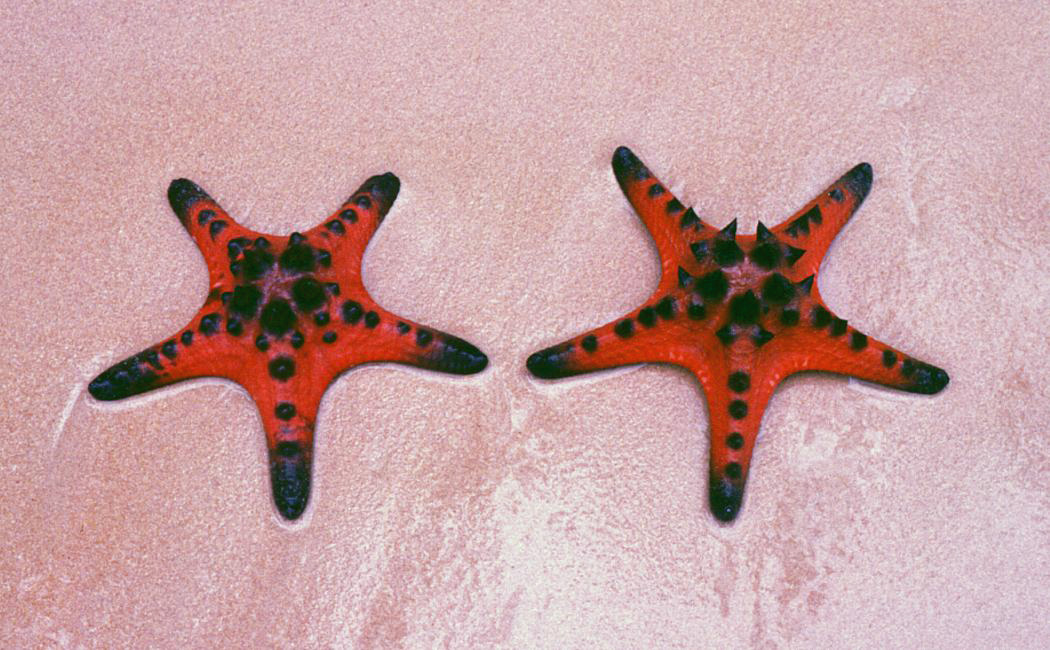
Sand-sifting star (Archaster typicus)
Wikipedia lists a diameter of 12-15 cm (4.7-5.9 in), a life on sandy and silty bottoms, and burying in the sediment. It is a detritivore that eats detritus and other edible material it finds, and a broadcast spawner that performs pseudocopulation. A sand star needs a large, deep, mature sand bed with enough detritus to eat, and in small tanks many starve while stripping the sand bed of its microfauna. Hobbyists often recommend a large tank, a deep established sand bed and only one or two. Because it eats detritus and microfauna, it competes with other sand dwellers. Difficulty: moderate to advanced.
Tank Size and Setup
There is no single minimum, because food supply matters more than gallons. As a guide drawn from general reef-keeping practice rather than a single source:
- Established system: The tank should be at least six months to a year old with stable parameters, plenty of live rock covered in natural film and algae, and visible pods and microfauna.
- Size: Many keepers suggest at least 50-75 gallons or more for a single star, and bigger for sand stars and any species that grows large.
- Live rock and sand: Ample live rock for grazers, and a deep sand bed for sand stars.
- Flow: Moderate, with calm resting places.
- Lid and equipment: Cover pump intakes with foam intake covers so a slow star does not get stuck.
- Sump and overflow: Sea stars can crawl into overflows. Use a strainer.
Just a heads up: some of the links in this post are affiliate links, which means I may earn a small commission if you buy through them. But no worries, it is at no extra cost to you. Also, as an Amazon Associate I earn from qualifying purchases.
If you are still planning, our saltwater aquarium setup guide explains cycling and maturity.
Water Parameters
These are common reef targets, not star-specific proven thresholds:
- Temperature: 76-80°F (24-27°C)
- Specific gravity: about 1.024-1.026 (35 ppt), kept very stable
- pH: 8.1-8.4
- Ammonia and nitrite: 0 ppm
- Nitrate: low
Stability matters most. Test with a reef test kit and use a refractometer rather than a swing-arm hydrometer. Avoid copper medications in any tank with echinoderms or other invertebrates.
Acclimation: The Step That Kills Most Stars
- Never expose a sea star to air. Move it in a container of water.
- Drip acclimate slowly, over a few hours, matching salinity and temperature to your tank. Many hobbyists use two to four hours or longer.
- Avoid pouring shipping water into the tank.
- Quarantine if possible. See our quarantine tank guide.
Diet and Feeding
Feeding depends on the species. Wikipedia reports Fromia feeds on encrusting sponges, detritus and small invertebrates. Sand stars eat detritus. Chocolate chip stars are opportunistic carnivores.
- Watch for a star that is losing color, shrinking, or leaving bite marks and holes.
- Some hobbyists target-feed small bits of seafood or sinking pellets under the star, but notes on Fromia warn supplemental feeding is often unsuccessful if the tank lacks natural film. Treat feeding as a backup, not the plan.
- Don’t add a second star if the first is struggling.
Tank Mates
Avoid: pufferfish, some triggerfish, harlequin shrimp (they eat sea stars, see our harlequin shrimp guide), and large hermit crabs or aggressive crabs. Triton shells and some anemones can eat them too.
Usually fine: peaceful reef fish such as clownfish, gobies and small wrasses. Be careful with large wrasses and fish that peck at soft bodies. Tangs, like the yellow tang, compete with star-grazers for algae film in smaller tanks.
Breeding
Sea stars are broadcast spawners and are not realistically bred by hobbyists. Wikipedia notes that Linckia multifora has been observed reproducing asexually in captivity, but there is no reliable home breeding route for the commonly sold species.
Common Health Problems
- Slow starvation: shrinking, pale or fading color.
- Arm loss or “melting”: often shows a failing star. Healthy ones may lose an arm to injury, but widespread tissue loss usually means a problem with water, food or stress.
- Salinity or temperature shock.
- Predation by fish or shrimp.
- Being sucked into pumps or overflows.
Remove a dying star promptly, because it can foul the tank quickly. Do a water change and test. See coral not opening for related reef stability checks.
From Aquagram
Explore AquagramTest Account
Hello aquarists!
Dan GL
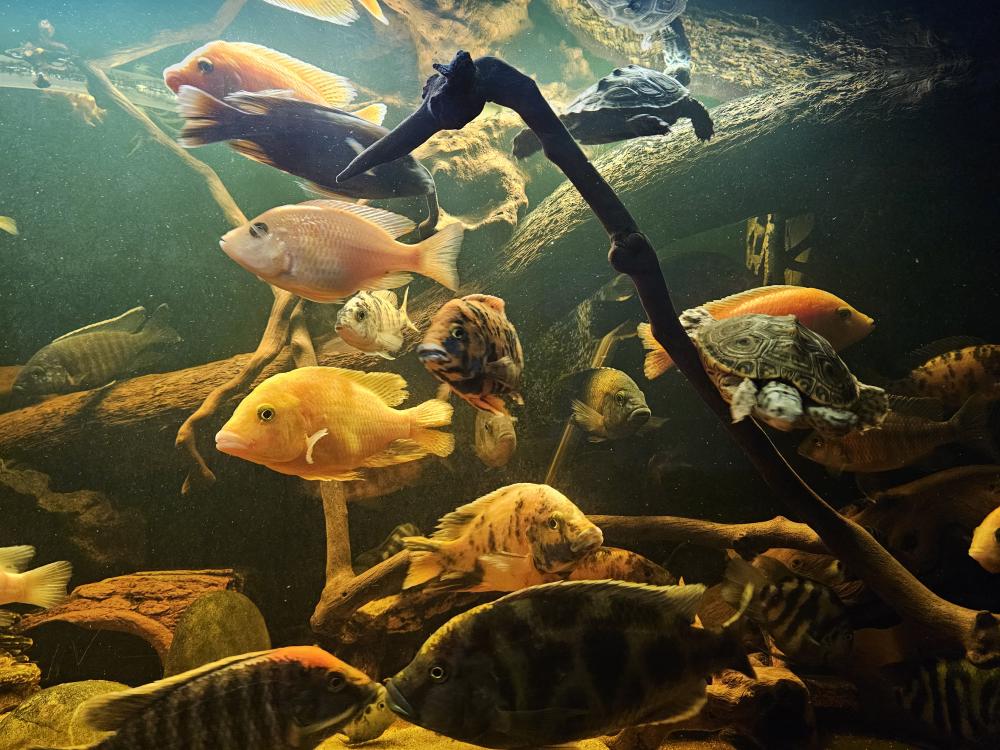
A view of my 125 gallon aquarium. Lots of fish and a few Northern Diamondback Terrapins too! 😁
SwitchTank
Incredible!
Honest Difficulty
Advanced overall. Fromia and Linckia need mature, food-rich tanks and often still fail. Chocolate chip stars are hardier but harm corals. Sand stars need big sand beds. If your tank is less than six months old, wait. A better choice for beginners wanting a clean-up crew is often hardy snails and hermits, or an emerald crab for algae.
Sea Star FAQ
Why did my sea star die?
Most common reasons are starvation in a young tank, poor acclimation, salinity swings, or predators.
Are sea stars reef safe?
Some are, some are not. Chocolate chip stars eat corals, sponges and snails. Fromia and Linckia graze film and sponges but need mature tanks.
How do I acclimate a sea star?
Keep it submerged at all times and drip acclimate slowly over several hours.
What do sea stars eat in a home aquarium?
Algae film, sponges, detritus and small invertebrates for grazers; sand stars eat detritus; chocolate chip stars eat sessile animals and snails.
How big do sea stars get?
Fromia monilis, Linckia laevigata and Protoreaster nodosus can each reach about 30 cm (12 in) in the wild; sand stars get about 12-15 cm.
What tank mates are bad for sea stars?
Pufferfish, harlequin shrimp, triggerfish, large crabs and triton shells.
Do sea stars need a mature tank?
Yes. Most do best in a tank at least six months to a year old with live rock and natural food.
Sources and Fact Check (reviewed November 18, 2026)
- Wikipedia, Fromia monilis: size, diet and the aquarium starvation note.
- Wikipedia, Linckia laevigata: size, habitat and predators.
- Wikipedia, Protoreaster nodosus: size, aquarium predation on sessile life and snails.
- Wikipedia, Archaster typicus: size, habitat, diet and reproduction.
- Limitation: Google and specialist reef sources were not available during research. Tank minimums, acclimation times, parameter targets, “hardiest” and survival comments are hobbyist consensus rather than proven thresholds. Check current reef-keeping sources before buying.
Photos via Wikimedia Commons: Fromia monilis (Nhobgood Nick Hobgood, CC BY-SA 3.0); Linckia laevigata x2 (Frédéric Ducarme, CC BY-SA 4.0); Protoreaster nodosus (Franz Xaver, CC BY-SA 3.0).
Disclaimer: This article is general information, not veterinary advice. For serious or persistent problems, consult an aquatic veterinarian.