
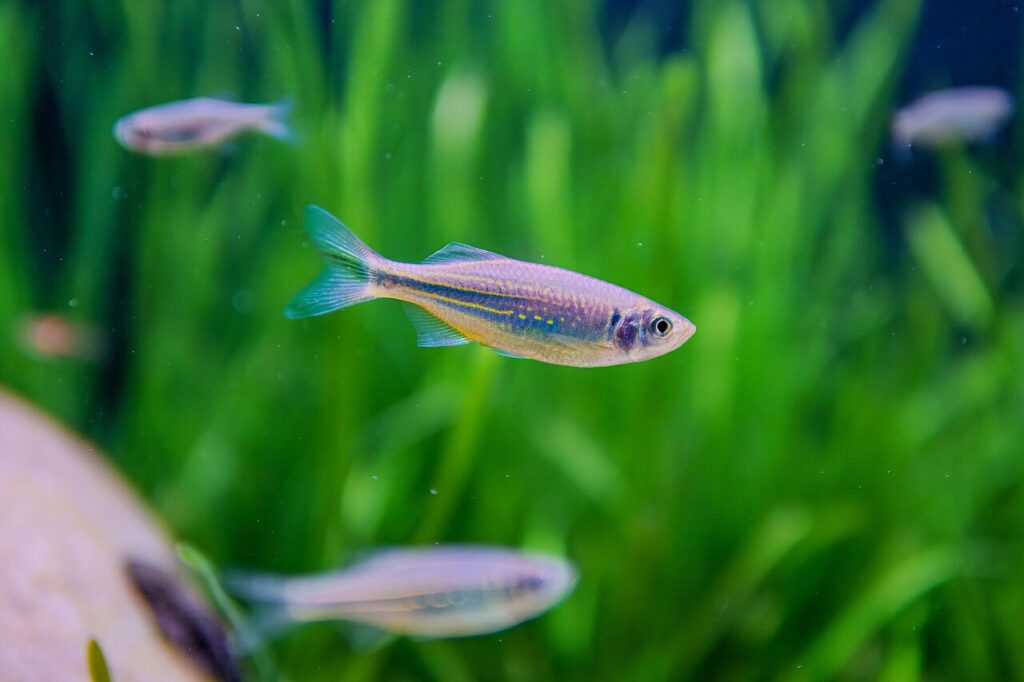
If your fish is swimming erratically, darting around the tank, spinning in circles or bolting up and down the glass, the most likely cause is water that is stressing or burning it: ammonia or nitrite, a chlorine or temperature shock after a water change, or low oxygen. Test your water first, because a bad reading explains most cases. If the water tests clean, look for bullying, new-tank stress, parasites, or a swim bladder or neurological problem.
This guide covers every common way people describe this problem, including “my fish is swimming crazy,” “fish swimming erratically after a water change,” “fish swimming in circles,” “fish darting around the tank” and “fish swimming erratically in a new tank.” It ranks the causes by how often they turn out to be the answer, shows you how to tell them apart, and walks through the fixes.
What “Swimming Erratically” Looks Like
Hobbyists use many words for the same warning sign. You may be seeing:
- Darting or zooming rapidly from one end of the tank to the other
- Swimming in circles or spirals, or spinning in place
- Swimming up and down the glass (often called glass surfing)
- Crashing into decor or the tank walls
- Frantic swimming near the surface, sometimes with gasping
- Shaking, twitching or “seizure-like” movements
- Swimming sideways, upside down, or struggling to stay level
Not every burst of speed is a problem. Fish sometimes race around after a water change because fresh water feels good, males chase females during breeding, and a healthy school may dart when startled by a light or a hand. The red flags are movement that is new, constant, panicked, or combined with other symptoms such as clamped fins, gasping, hiding, refusing food or discolored gills.
Most Common Causes (Ordered by Likelihood)
- Ammonia or nitrite poisoning. Fish excrete ammonia, and a tank without enough beneficial bacteria cannot clear it. Ammonia and nitrite damage the gills and reduce the fish’s ability to take up oxygen, which is why affected fish may dash around, gasp, clamp their fins and sit at the bottom. This is especially common in a new, uncycled tank or after a filter problem, overfeeding or a dead fish going unnoticed.
- Water change shock. Tap water with chlorine or chloramine, or a sudden temperature or pH swing, can send fish into a frenzy within minutes.
- Low oxygen. Warm water, a clogged filter, an overstocked tank or no surface movement can leave fish struggling, usually near the surface.
- New-tank or new-fish stress. Fish that were just added often dart, hide and explore nervously for the first day or two.
- Bullying, wrong tank mates or a tank that is too small. Constantly harassed fish bolt away, and active schooling fish confined in a small space may race back and forth.
- Parasites or irritants. Gill and skin flukes, ich and other external parasites can make fish flick, rub and dart. See our guides on fish flashing and scratching and white spots on fish.
- Swim bladder trouble. If the fish struggles with buoyancy or swims sideways, read our swim bladder disease guide.
- Toxins and contamination. Aerosol sprays, cleaning products, new decor that leaches, copper from medications used on the wrong species, or an overdose of treatment can cause sudden frantic swimming.
- Rare neurological or infectious problems. Spinning or whirling can be caused by serious conditions that are difficult to confirm at home. This is where an aquatic vet earns their fee.
How to Diagnose Which Cause You Have
Work through these questions in order. It takes about ten minutes.
1. Test the water right now
Use a liquid test kit, not just strips, and check ammonia, nitrite, nitrate, pH and temperature. A liquid freshwater master test kit covers all of these. Ammonia and nitrite should read 0 ppm. Test kits usually report total ammonia, and how harmful it is depends on pH and temperature, so treat any reading above zero as a problem. Our ammonia in a fish tank guide explains the numbers in detail.
Just a heads up: some of the links in this post are affiliate links, which means I may earn a small commission if you buy through them. But no worries, it is at no extra cost to you. Also, as an Amazon Associate I earn from qualifying purchases.
2. Think back over the last 24 hours
- Did you do a water change, and did you use a water conditioner? Was the new water about the same temperature?
- Did you add new fish, decor, plants or a medication?
- Did the filter or heater stop working, or did the power go out?
- Did you spray anything near the tank?
3. Look at the fish closely
- Gasping, red or purple gills, clamped fins: ammonia, nitrite or low oxygen.
- Flicking against decor, white dots, excess slime: parasites.
- One fish being chased: aggression.
- Struggling to stay level: swim bladder or buoyancy trouble.
- Normal appearance, normal water, recently added: most likely acclimation stress.
4. Watch the other fish
If every fish in the tank is acting up, suspect the water. If only one is, suspect aggression, illness or an individual problem.
Step-by-Step Fixes
Step 1: Fix the water first
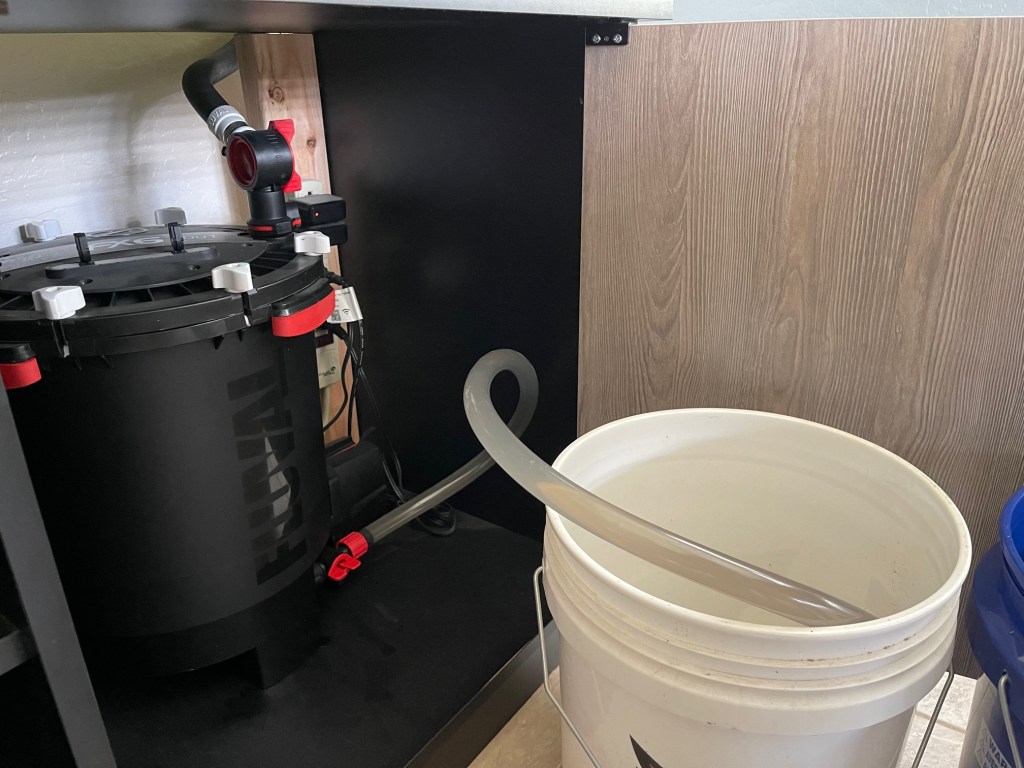
If ammonia or nitrite is above zero, do a 25-50% water change with dechlorinated water at the same temperature as the tank, then retest. Repeat daily until readings are zero, and add a dose of conditioner that detoxifies ammonia if you have one. Stop feeding for a day. If the tank is new, you are cycling in a tank with fish, so keep ammonia and nitrite at zero with frequent water changes while the filter matures. See how to cycle a fish tank.
One exception: in an old tank that has never had regular water changes, the pH may be very low, and a huge water change can swing it suddenly. Check the pH first. If it is very low, change water in smaller steps over several days.
Step 2: Raise oxygen
Point the filter outlet at the surface or add an air pump and air stone to increase surface movement. Rinse a clogged filter sponge in old tank water, never under the tap. Lower the temperature slightly if the tank is running hot. Extra aeration also helps ammonia-stressed fish whose gills are damaged. If gasping is your main symptom, read fish gasping at the surface.
Step 3: Correct a chlorine, temperature or pH shock
If the erratic swimming began right after a water change, add conditioner to the tank at the correct dose and do a gentle partial water change with matched, conditioned water. Keep the lights dimmed, because fish usually calm down within hours once the water is back to normal. Fish that look stunned for a day or two may still recover.
Step 4: Remove stressors
Take out aggressive tank mates or add hiding places and line-of-sight breaks. Move one fish out if it is being relentlessly chased. Cover the glass sides briefly if reflections or movement outside the tank are causing panic, and avoid tapping or flashing lights. Check that your species are kept in the right group size, because schooling fish often dart when kept in twos or threes.
Step 5: Give new fish time
Keep the room quiet, leave the lights off for the first evening, offer small meals the next day and avoid rearranging the tank. Most acclimation stress fades within one to three days.
Step 6: Treat suspected parasites carefully
If you see white spots, scratching or heavy breathing and the water is clean, move the fish to a hospital tank and treat for the specific problem following the label. Our quarantine tank setup guide shows how. Do not guess at medications, since some are toxic to scaleless fish, invertebrates and live plants.
From Aquagram
Explore AquagramTest Account
Hello aquarists!
Dan GL
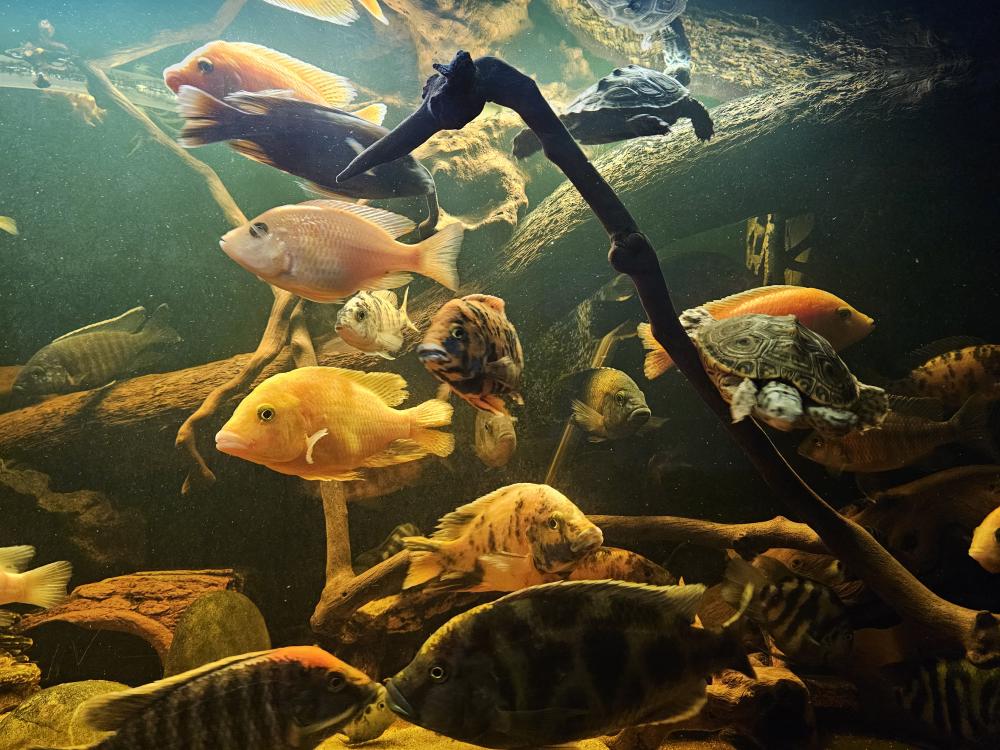
A view of my 125 gallon aquarium. Lots of fish and a few Northern Diamondback Terrapins too! 😁
SwitchTank
Incredible!
When It Is Serious
Get help promptly, ideally from an aquatic or exotics vet, if you see any of these:
- Erratic swimming continues for more than a few days after the water is fixed
- Spinning, seizure-like movements, or a curved or twisted body
- Bulging eyes, a swollen belly with raised scales, or open sores
- Several fish dying in a short time
- Fish that cannot right themselves or reach the surface
Meanwhile, keep the water pristine, reduce stress and do not start several medications at once. If more than one fish dies, test the water and check for toxins, because a shared problem is usually environmental.
How to Prevent Erratic Swimming
- Cycle the tank fully before adding fish, and add new fish gradually
- Test the water weekly with a liquid kit
- Do regular partial water changes with conditioned, temperature-matched water
- Never overstock, and match tank mates to temperament and tank size
- Keep decent surface agitation and clean filter media gently
- Quarantine new fish for several weeks before adding them to the main tank
- Keep sprays, cleaners and hand lotions away from the tank, and rinse your hands and equipment
Fish Swimming Erratically FAQ
Why is my fish swimming erratically in a new tank?
Usually because the tank is still cycling and ammonia or nitrite is building up, or because the fish is stressed by the move. Test the water and do frequent partial water changes.
Why is my fish swimming crazy after a water change?
Chlorine or chloramine, a temperature difference or a pH swing is the likely trigger. Use a conditioner every time and match the temperature of the new water to the tank.
Why is my fish swimming in circles?
Circling can come from stress, poor water, a swim bladder problem, or in rare cases a neurological or infectious condition. Check the water first, then watch for other symptoms. If it continues, see a vet.
Why is my fish darting around the tank?
Darting often means irritation from parasites or water quality, fear from bullying or sudden movement, or normal play and breeding behavior. Look for other signs before assuming it is sick.
Why is my fish swimming up and down the glass?
Glass surfing is a stress or boredom sign. Common triggers are poor water, a tank that is too small, lack of hiding places, reflections, or a new environment.
Why is my betta swimming erratically?
Bettas react quickly to ammonia, cold water and chlorine. They also may dart when they spot their reflection. Confirm the water is clean and warm, and remove mirror-like surfaces.
Can a fish recover from erratic swimming?
Yes, if the cause is water quality or stress and it is corrected quickly. Fish with permanent gill or nerve damage may not fully recover.
Should I do a big water change when my fish is swimming erratically?
Usually a 25-50% water change is safe and helpful if ammonia or nitrite is present. Be more cautious in an old tank with very low pH, and change water in smaller steps.
Sources and Fact Check
Reviewed 2026-11-19. Source access was limited (several veterinary and hobby sites blocked automated access), so the practical thresholds, water change sizes and acclimation advice below are hobby guidelines, not proven limits, and are labeled as such.
- Wikipedia, Ammonia poisoning: ammonia damages gills and impairs oxygen uptake; symptoms include gasping, clamped fins, red or bleeding gills; gill damage reported at levels as low as 0.25 mg/L; treatment through water changes, aeration, cycling and removing stressors.
- Wikipedia, Fishkeeping: tap water chlorine and chloramine require conditioner; ammonia and nitrite toxicity and the nitrogen cycle; water changes control toxins.
- Wikipedia, Fish diseases and parasites: background on parasitic and infectious causes, including whirling disease in trout, a different animal and context from aquarium fish.
Image credits: giant danio (Shifu Tanks, CC BY-SA 4.0), via Wikimedia Commons; sponge filter and canister filter photos (Ofkun and Fish Tank Society, CC BY-SA 4.0), already on this site.
Disclaimer: This article is general information, not veterinary advice. For serious or persistent problems, consult an aquatic veterinarian.