
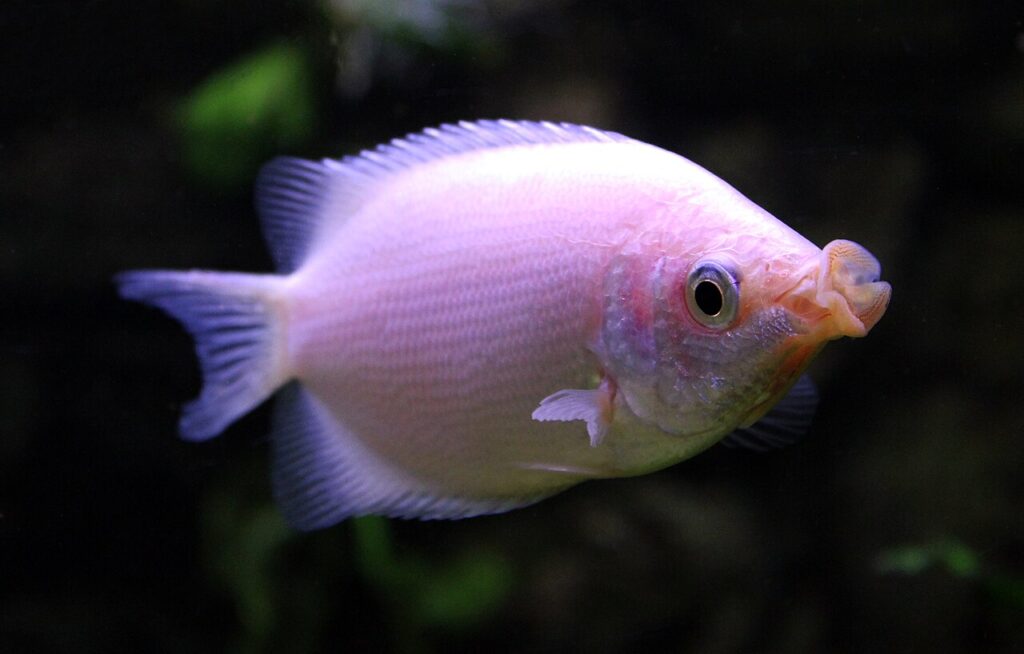
The kissing gourami (Helostoma temminckii) is sold as a cute, peaceful community fish, but it is neither small nor especially peaceful. It can reach about 12 inches (30 cm), needs a large tank, and can bully tank mates. This guide covers what they really need.
Overview and Appearance
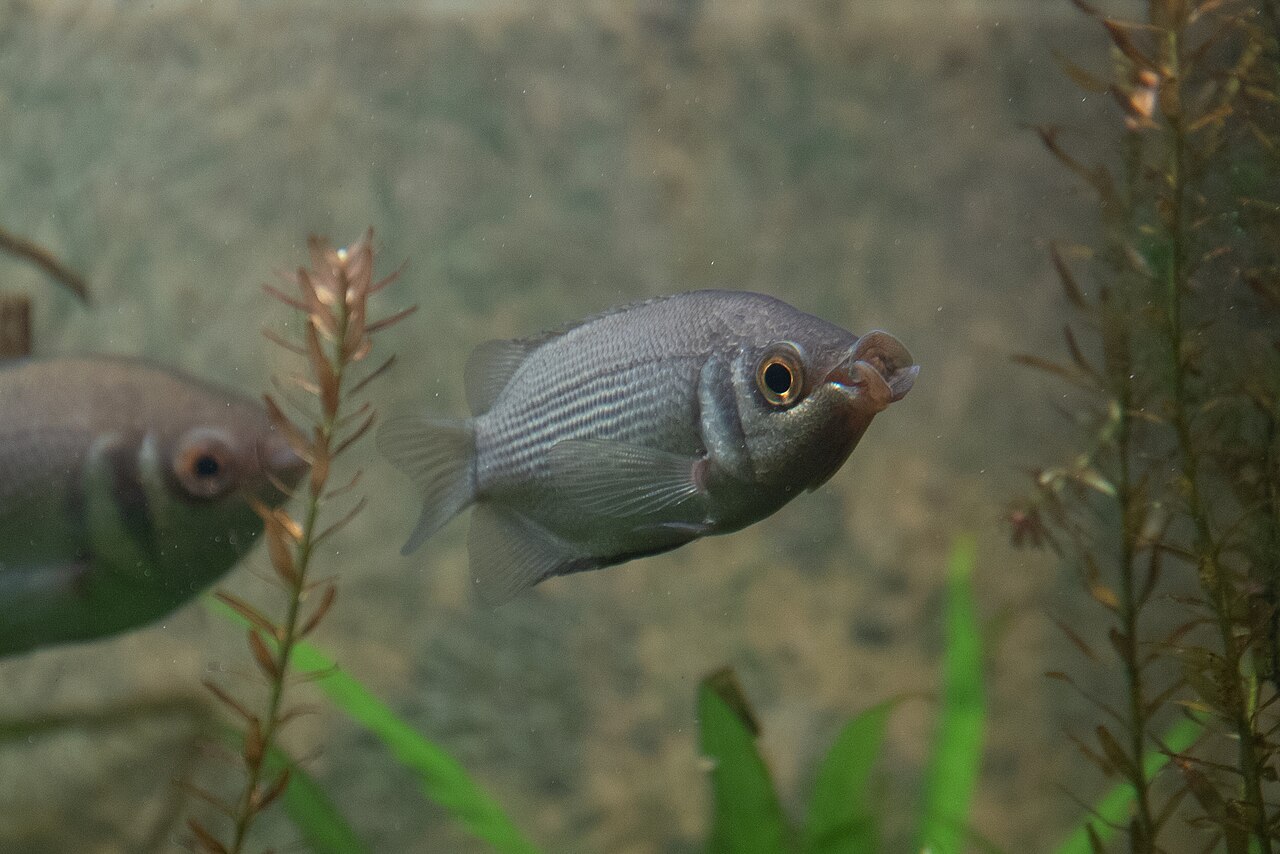
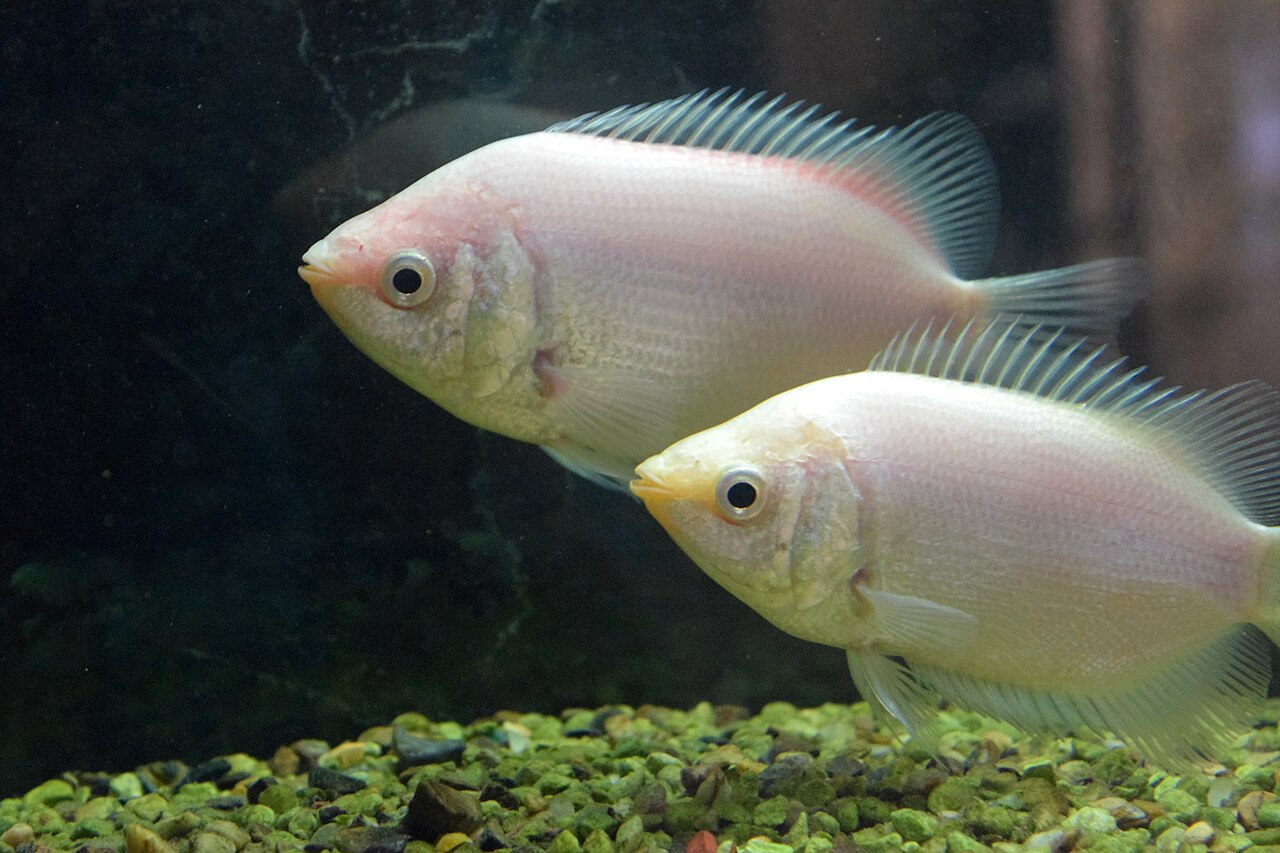
Kissing gouramis come from Thailand to Indonesia. They are oval, laterally flattened fish with thick, toothed lips. Two forms are common: the wild greenish-silver form and the pink (leucistic) form usually seen in stores. A short-bodied “balloon” morph also exists.
The “kiss” is not affection. Two fish press their mouths together and push, which is generally considered ritualized aggression, a kind of mouth wrestling. The same lips are used to rasp algae off surfaces.
Size and Lifespan
FishBase lists a maximum length of about 30 cm (12 in). Store fish are juveniles of a couple of inches, which is why so many are bought for small tanks. Reported lifespans for well-kept fish are commonly 6 to 8 years or more, though sources vary, so treat it as a long commitment.
Tank Size and Setup
FishBase’s aquarium note says the species is not recommended for home aquariums and gives a minimum tank length of 150 cm (about 5 feet). As a practical hobby guideline, think 75 gallons or more for one fish, longer is better than taller, and larger if you keep several or have tank mates.
- Use a strong, quality aquarium filter because they are big, messy eaters.
- Add plants, but expect nibbling; hardy species like anubias and java fern last longer.
- Provide open swimming space and some cover.
- Keep a lid on the tank with a small air gap: they are air-breathers (labyrinth organ) and need access to the surface.
Just a heads up: some of the links in this post are affiliate links, which means I may earn a small commission if you buy through them. But no worries, it is at no extra cost to you. Also, as an Amazon Associate I earn from qualifying purchases.
Water Parameters
FishBase gives a tolerance range of pH 6.0 to 8.0, hardness 5 to 19 dH and temperature 22 to 28 °C (72 to 82 °F). Aim for stable water in the middle of those ranges, around 76 to 80 °F with a reliable aquarium heater. Keep ammonia and nitrite at zero; if you are new to this, read how to cycle a fish tank first.
Diet
Kissing gouramis are omnivores. In the wild they graze algae, plants, insects and larvae. In the aquarium, feed:
- A quality flake or pellet food as the base
- Blanched vegetables such as spinach, zucchini and peas
- Frozen or live bloodworms, brine shrimp and daphnia a few times a week
They will graze algae and may strip it from decor, but algae alone is not a full diet.
Temperament and Tank Mates
Wikipedia notes that kissing gouramis are territorial and may chase or torment similar-sized fish, and can rasp mucus from other fish, which can open them to infection. They tend to be fine with fish that are large, robust and fast, and poor with small, slow or long-finned fish.
Better options: large barbs, larger danios, big tetras, plecos and similar sturdy fish in a large tank. Avoid: bettas, guppies, fancy goldfish and any small, delicate fish. If aggression appears, add space, add hiding spots or separate the fish. Compare with calmer relatives like the pearl gourami and dwarf gourami, which stay far smaller.
Keeping more than one adds sparring. Sexes are nearly impossible to tell apart, so pairing is guesswork.
Breeding
Kissing gouramis spawn under floating vegetation, scattering around 1,000 buoyant eggs that hatch in about a day. They do not guard the eggs or fry, and sexual maturity may take three to five years. Home breeding requires a very large tank and is uncommon.
Common Health Issues
Most problems come from poor water and stress: ich, fin rot, and bacterial infection. Fish being picked on by a kissing gourami may be the ones that get sick. A quarantine tank for new arrivals helps. See our guide to fin rot if fins fray. Cold air above the water can also harm labyrinth fish, so keep the room and tank warm. For persistent illness, consult an aquatic vet.
Honest Difficulty Level
Hardy, but not beginner-friendly in practice. The fish is tough; the challenge is the tank size, the tank mates and the long commitment. If you can’t offer 75+ gallons (ideally far more), choose another species.
Buying Tips and Planning Ahead
Because juveniles look small and harmless, plan the tank before you buy. Choose a fish with intact lips and fins, clear eyes and an active, steady swim, and avoid fish with clamped fins, white spots or torn mouths. Quarantine any new fish for a few weeks. If you already own one in a smaller tank, upgrade as it grows rather than waiting: stunted growth and chronic stress are common when they are kept too small. Also consider whether you will have room for a fish that may live many years; rehoming a 10-inch gourami is much harder than rehoming a juvenile.
Weekly water changes of 25 to 30 percent are a common hobby routine for big, heavy-feeding fish like this. Since they graze, check that algae-covered decor isn’t their only meal, and vary the diet so they stay in good condition.
From Aquagram
Explore AquagramTest Account
Hello aquarists!
Dan GL
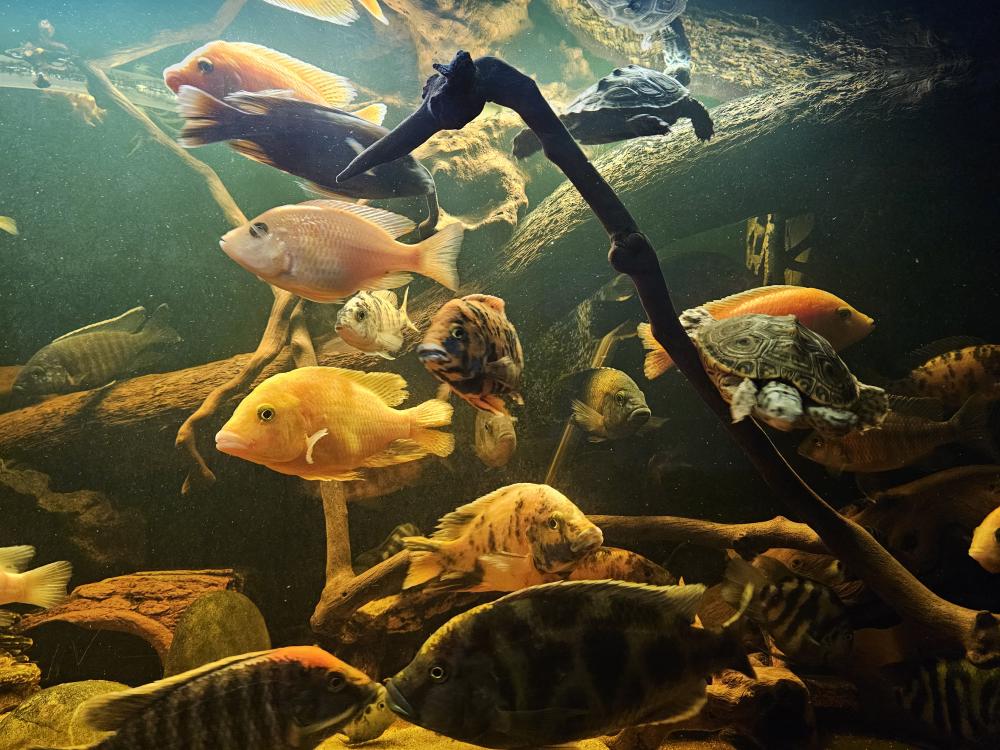
A view of my 125 gallon aquarium. Lots of fish and a few Northern Diamondback Terrapins too! 😁
SwitchTank
Incredible!
FAQ
How big do kissing gouramis get?
Up to about 12 inches (30 cm) in a large tank.
What size tank does a kissing gourami need?
FishBase suggests at least 150 cm in length; as a rule of thumb 75 gallons or larger for a single fish.
Are kissing gouramis aggressive?
They can be. They are territorial and may chase or harass similar-sized or smaller fish.
What is the kissing about?
Mostly mouth fighting between males and females alike, a ritual form of aggression.
What do kissing gouramis eat?
Algae, plants, insects and larvae in nature; flakes, pellets, vegetables and frozen foods in a tank.
How long do kissing gouramis live?
Often 6 to 8 years or more with good care.
Can kissing gouramis live with goldfish?
Not recommended: temperature needs differ, and both produce heavy waste and can harass each other.
How can you tell male from female?
It is very difficult; the sexes look almost identical.
Final Thoughts
Kissing gouramis are fascinating but need room. Give a large tank and robust tank mates, and they are long-lived characters.
Disclaimer: This article is general information, not veterinary advice. For serious or persistent problems, consult an aquatic veterinarian.
Sources and Fact Check
Reviewed 2026-11-16. Sources read: FishBase, “Helostoma temminckii” (max 30 cm, pH 6.0-8.0, 5-19 dH, 22-28 °C, range, air-breathing, diet, minimum aquarium length 150 cm, spawning under floating vegetation); Wikipedia, “Kissing gourami” (rasping behavior, mouth fighting, territoriality and mucus-rasping on tank mates, 1,000 buoyant eggs hatching in one day, maturity at three to five years, color morphs, sexes hard to distinguish). The 75-gallon guideline, lifespan range, tank mate lists and feeding schedule are hobby guidelines. Limitation: Google search was unavailable and no veterinary source was reviewed.
Image credits via Wikimedia Commons: Lilbitmessy (CC BY-SA 4.0), Green Yoshi (CC BY-SA 3.0), Aditi Jivani (CC BY-SA 4.0).