
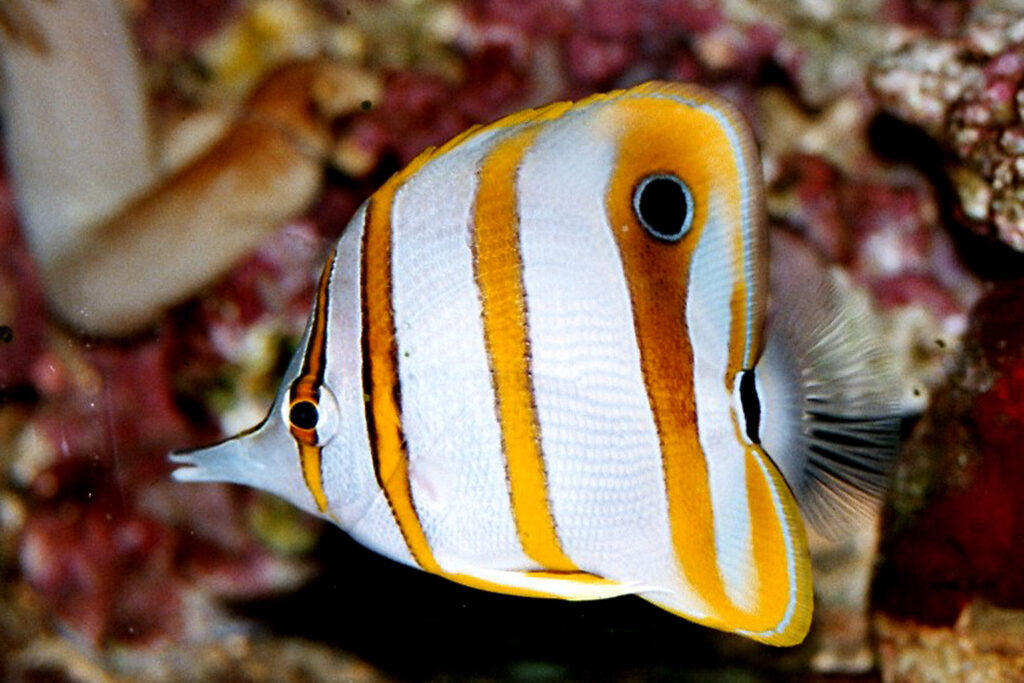
The copperband butterflyfish (Chelmon rostratus) is a gorgeous fish with orange-gold vertical bands and a long, tweezer-like snout. It is also one of the more challenging marine fish for hobbyists. Many are bought to eat pest anemones, and many starve because they won't accept aquarium food. This copperband butterflyfish care guide explains what it really takes.
Overview and Appearance
The copperband is also called the beaked coral fish. It lives on reefs and rocky shores in the Indo-Pacific, and FishBase lists it as ranging from the Andaman Sea to the Ryukyu Islands and Australia. It is found alone or in pairs, in depths of roughly 1-25 meters, and sometimes in estuaries and silty inner reefs.
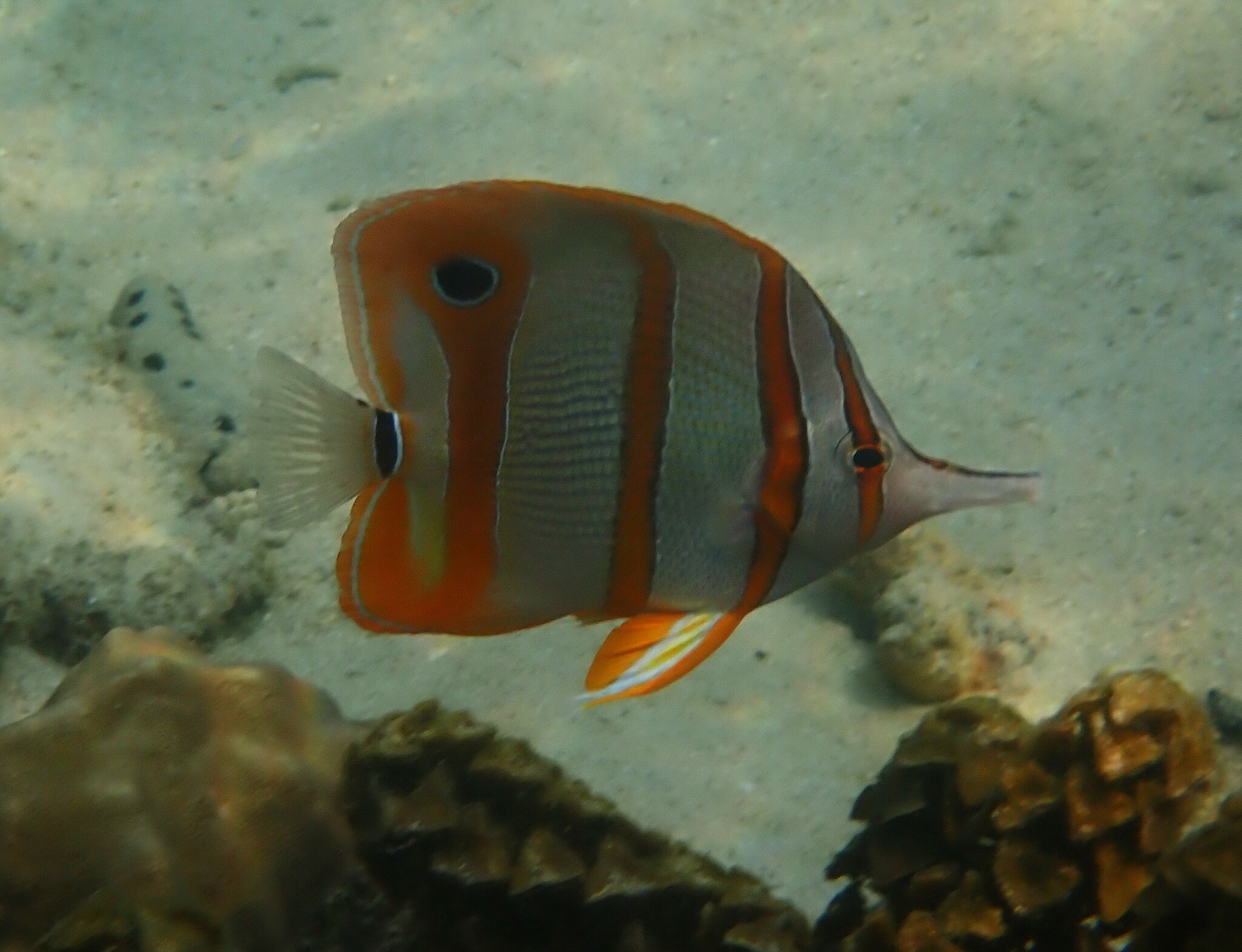
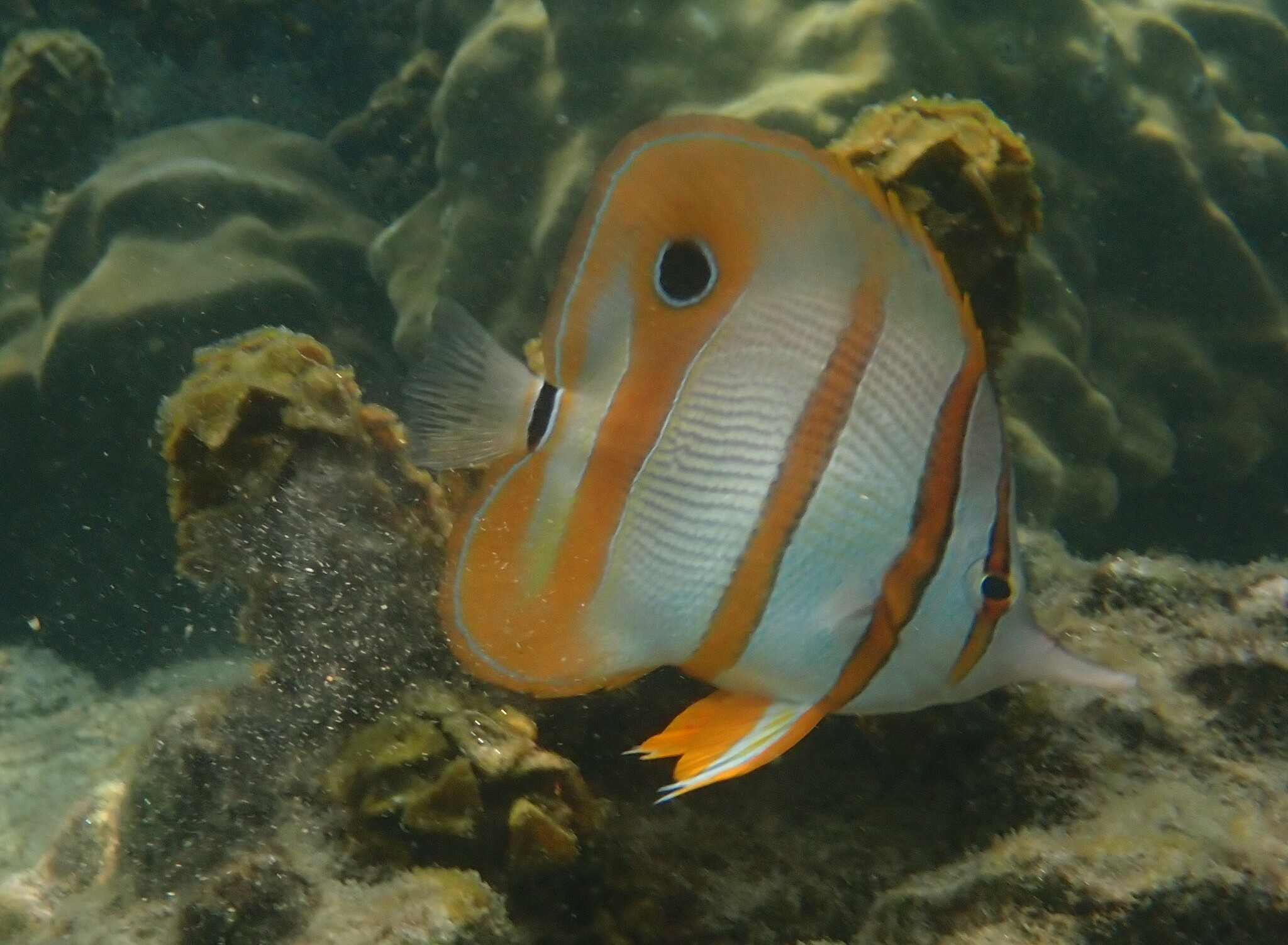
It has a deep, flat body with yellow-orange bands on a white background, a dark eyespot on the dorsal fin and a long snout built for picking food out of crevices.
Size and Lifespan
FishBase gives a maximum length of 20 cm (about 8 in) and a reported maximum age of 10 years. Wikipedia notes that aquarium fish are usually about half that size. A fish that eats well in a stable, mature tank can live for years, but many wild-caught copperbands fail early because of feeding problems.
Tank Size and Setup
- Tank size: Wikipedia gives at least 75 gallons with plenty of live rock to graze on. Many keepers prefer larger, mature systems because stability matters. See our guide to setting up a saltwater aquarium.
- Live rock: mature rock with microfauna provides natural grazing, which helps a nervous new arrival feel secure.
- Age of the tank: add a copperband only to a stable, established tank, ideally with a refugium or well-populated rock.
- Quarantine: wild-caught fish should go through quarantine. Our quarantine tank guide covers the basics, and a bare quarantine tank kit keeps stress low.
- Lid and flow: moderate flow with open swimming space. Cover the tank to prevent jumping.
Just a heads up: some of the links in this post are affiliate links, which means I may earn a small commission if you buy through them. But no worries, it is at no extra cost to you. Also, as an Amazon Associate I earn from qualifying purchases.
Water Parameters
Wikipedia lists a reef temperature range of 75-84°F (24-29°C). Typical reef targets (hobby guidelines, not a species-specific study) are:
- Salinity: about 1.023-1.025 specific gravity
- pH: 8.1-8.4
- Ammonia and nitrite: 0 ppm, with low nitrate
Check them regularly with a saltwater test kit, and use a refractometer for accurate salinity.
Diet: The Real Challenge
Copperbands are specialist grazers. Wikipedia reports that they eat tube and substrate worms, clams, mollusks and other invertebrates, and that many buyers purchase them for aiptasia without considering their long-term needs.
Practical tips from the hobby (not formal studies):
- Ask the store to show it eating frozen foods before you buy it. Never buy a thin, hiding fish that won't eat.
- Offer small, meaty foods such as frozen mysis, brine shrimp and finely chopped seafood in small amounts several times a day. A frozen mysis shrimp feeding is a good starting point.
- Use a feeder syringe or turkey baster to place food near the fish so it can pick it up with its beak.
- Keep food moving and remove leftovers to prevent water quality problems.
- Keep competition low. Fast, aggressive eaters can starve a copperband.
If a copperband refuses food for days, it may be failing. Plan for this before you buy, and talk with your fish store about their feeding records.
Temperament and Tank Mates
Copperbands are generally peaceful toward other fish but territorial with their own kind. FishBase calls the species territorial and notes pairs form in nature. Keep one per tank unless you have a very large system and a bonded pair.
Good companions are calm, non-competitive fish. Avoid aggressive eaters and large predators. Consider peaceful species such as royal grammas or spotted watchman gobies, and be cautious with rapid feeders like tangs and wrasses.
Reef Safety and the Aiptasia Myth
Wikipedia calls the copperband reef safe but notes it eats many invertebrates, including tubeworms, parasitic anemones and Aiptasia, and says that, given a choice, Aiptasia is the least favored food. Don't count on a copperband to cure a pest anemone problem. It may also nip at feather dusters, tube-dwelling worms, clams and small polyps. Treat it as "reef-risky" and introduce it with caution. Our bubble tip anemone guide covers anemone-safe fish.
Breeding
FishBase describes the species as monogamous, with pairs forming during breeding. It is oviparous, and home-aquarium breeding is not realistic. Almost all aquarium copperbands are wild-caught, which adds disease and shipping stress.
From Aquagram
Explore AquagramTest Account
Hello aquarists!
Dan GL
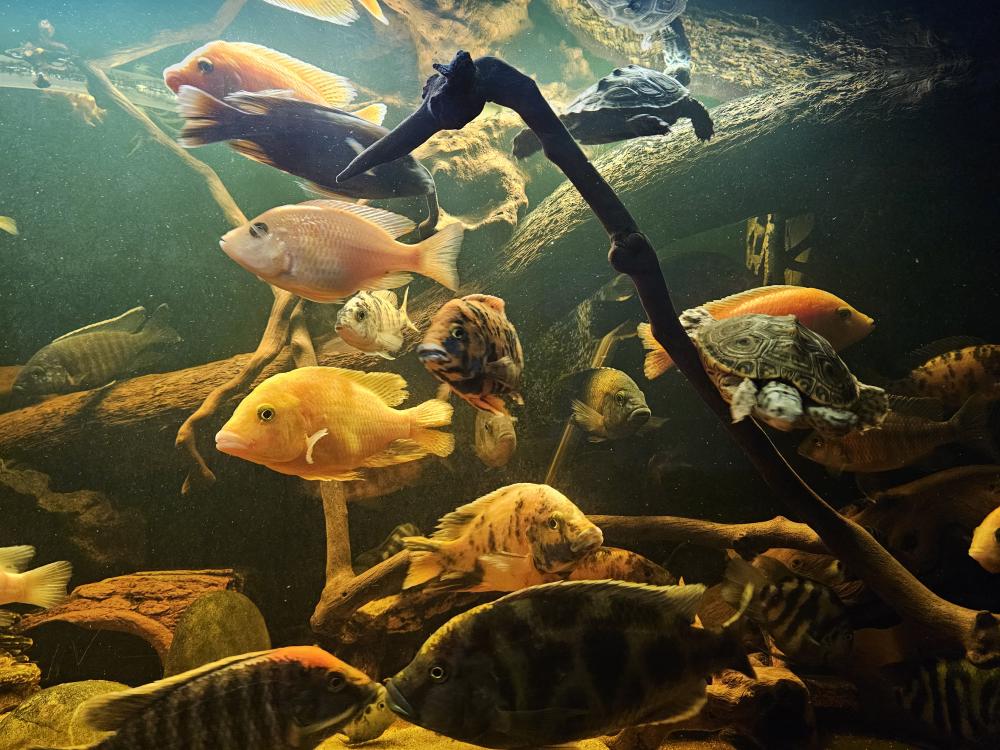
A view of my 125 gallon aquarium. Lots of fish and a few Northern Diamondback Terrapins too! 😁
SwitchTank
Incredible!
Common Health Issues
- Starvation and poor body condition: the leading problem. Watch for a sunken belly.
- Marine ich (Cryptocaryon): butterflyfish are often considered ich-prone. Quarantine and good husbandry matter.
- Stress: from aggression, rapid acclimation or unstable water.
- Bacterial infection: can follow stress or injury.
Treat only with a confirmed diagnosis, and consult an aquatic veterinarian for serious cases. See also fin rot for general bacterial problems.
Difficulty Level
Advanced. Wikipedia says it is not recommended for inexperienced aquarists because it needs excellent tank conditions to thrive or even survive. If you can get a fish that eats prepared foods and you have a mature tank, success is realistic. Without those, it is a risky purchase.
Copperband Butterflyfish FAQ
How big does a copperband butterflyfish get?
Up to about 20 cm (8 in), though aquarium fish are often smaller.
What size tank does a copperband butterflyfish need?
At least 75 gallons with plenty of live rock. Bigger and mature is better.
What do copperband butterflyfish eat?
In nature, worms, small crustaceans and mollusks. In aquariums, frozen mysis and brine shrimp, often fed in small portions several times a day.
Will a copperband butterflyfish eat aiptasia?
Sometimes, but Wikipedia says it's the least favored food. Don't rely on it.
Is a copperband butterflyfish reef safe?
With caution. It may eat tubeworms, feather dusters, clams and some small invertebrates.
How long do copperband butterflyfish live?
FishBase reports up to 10 years, but many wild-caught fish do not survive long in captivity.
Can I keep two copperbands together?
Usually no. The species is territorial, so keep one unless you have a very large tank and a true pair.
Why won't my copperband butterflyfish eat?
Common reasons are stress, competition, unfamiliar food or poor health. Try small live or frozen foods near the fish.
Is the copperband butterflyfish good for beginners?
No. It's best for experienced marine hobbyists.
Sources and Fact Check
Reviewed 2026-11-20. Google search was blocked, so there was no check against reef-specific or veterinary sources. Feeding techniques, salinity targets and ich notes are hobby guidelines, not verified clinical advice.
- FishBase, Chelmon rostratus: range, habitat, 20 cm maximum length, reported 10-year maximum age, territorial behavior and monogamy.
- Wikipedia, Copperband butterflyfish: appearance, 75-gallon minimum, temperature range, diet, aiptasia statement, and the not-for-beginners warning.
Photo credits: "Chelmon rostratus" photographs by fishhead (CC0) and a public-domain image from BS Turner Hof, via Wikimedia Commons.
Disclaimer: This article is general information, not veterinary advice. For serious or persistent problems, consult an aquatic veterinarian.