
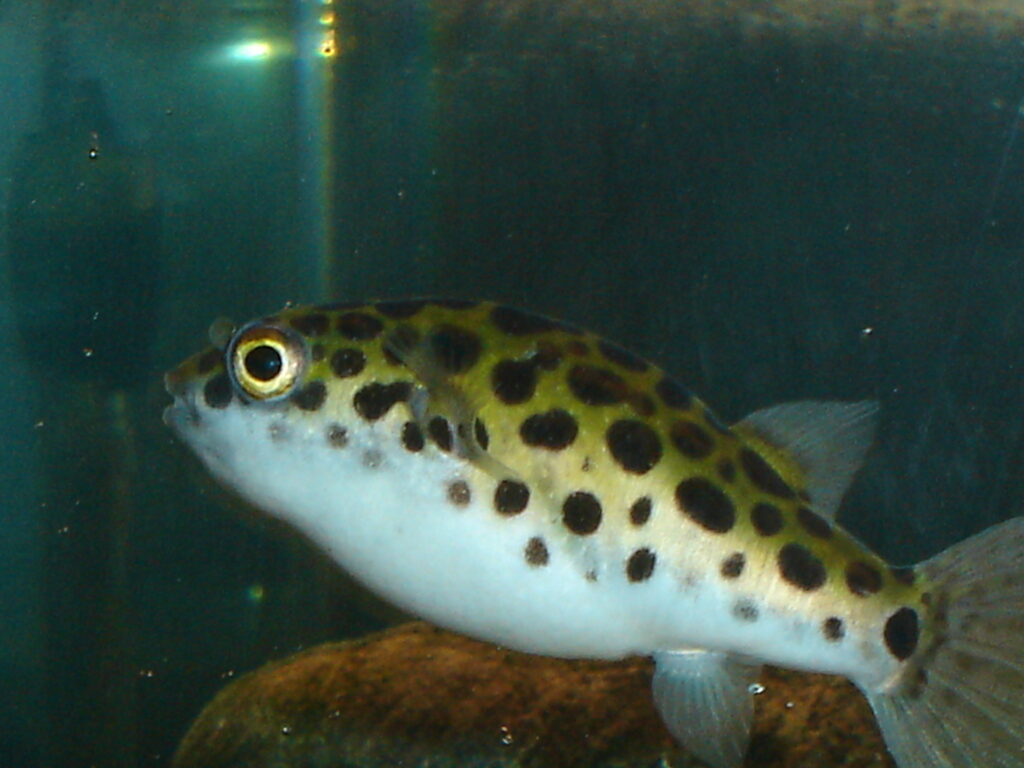
The green spotted puffer (Dichotomyctere nigroviridis, formerly Tetraodon nigroviridis) is a bold, intelligent and endlessly entertaining fish. It is also one of the most commonly mis-sold fish in the hobby. Stores often label it “freshwater”, but it only does well short term in fresh water and needs brackish and eventually near-marine conditions as an adult.
This guide explains how to keep one properly, what it eats, why it should live alone, and the honest difficulty level that comes with green spotted puffer care.
Overview and Appearance
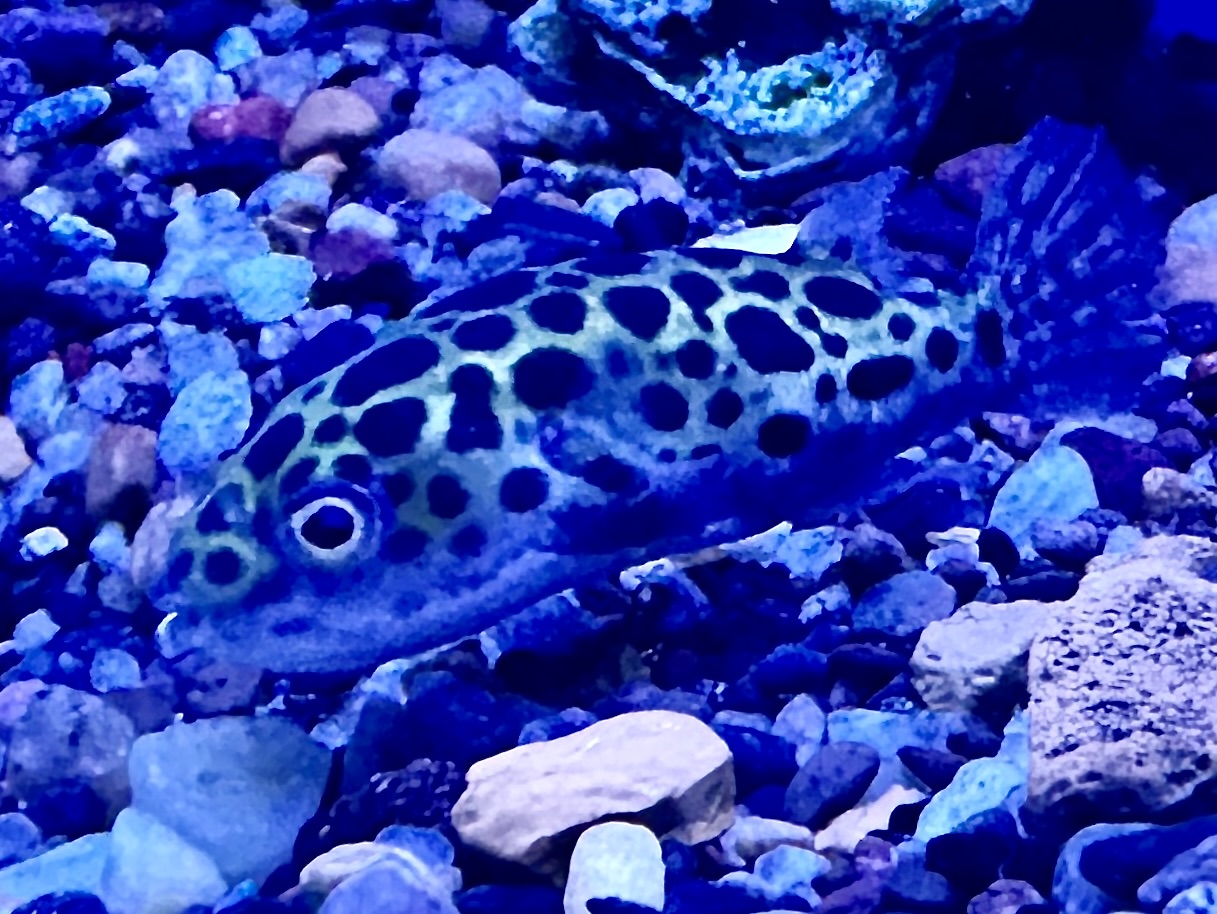
Green spotted puffers have a yellow-green body covered with dark, round spots and a pale belly. They have big expressive eyes, move each eye independently, and inflate when stressed or handled. Their personality is the main draw: they learn their owner, beg for food and explore constantly.
They come from estuaries and coastal waters in South and Southeast Asia, where they move between fresh, brackish and marine water.
Size and Lifespan
- Adult size: about 6-7 inches (15-17 cm), occasionally a bit more.
- Lifespan: often around 10 years with good care.
Many puffers are sold at 1-2 inches, which tempts buyers to underestimate the long-term commitment.
Tank Size and Setup
- Juvenile: a 20-30 gallon tank is fine for a small young fish.
- Adult: 55 gallons or larger for a single fish. More space helps with swimming and water stability.
- Cover: a tight lid, because puffers can jump.
- Decor: rocks, caves, driftwood and some plants for broken lines of sight. Use smooth materials, since puffers push things around.
- Substrate: sand or fine gravel. Crushed coral or aragonite helps buffer brackish and marine water.
- Filtration: strong filtration with extra biological capacity. Puffers eat messy, shelled food and have a heavy bioload. A good canister filter is a sensible choice.
Just a heads up: some of the links in this post are affiliate links, which means I may earn a small commission if you buy through them. But no worries, it is at no extra cost to you. Also, as an Amazon Associate I earn from qualifying purchases.
Water Parameters: Freshwater, Brackish or Saltwater?
This is where most owners go wrong. Salinity should rise as the fish grows.
- Juveniles (under about 2 inches): low brackish, specific gravity roughly 1.005-1.010.
- Sub-adults: mid brackish, around 1.010-1.018.
- Adults: high brackish to full marine, roughly 1.018-1.025.
- Temperature: 76-82°F (24-28°C).
- pH: 7.8-8.4 for adult salinity.
- Ammonia and nitrite: 0 ppm. Nitrate: keep under 20 ppm.
You need a reliable refractometer to measure salinity, plus marine salt mix, not table salt. Increase salinity gradually, with top-offs of fresh water only to replace evaporation. Long-term freshwater keeping is a common cause of poor health and early death.
Diet
Green spotted puffers are carnivores with teeth that never stop growing. Hard-shelled food is essential to keep their beak in shape.
- Staples: snails (a pest-snail culture such as ramshorn or bladder snails works well), plus clams, mussels and cockles in the shell.
- Occasional: krill, shrimp, raw white fish, earthworms and bloodworms.
- Avoid: feeder goldfish and fatty meats fed every day, which can lead to nutritional problems and a fatty, bloated fish.
Puffers are smart and can become picky. Offer frozen foods from frozen shrimp and clam mixes and vary them so your fish does not refuse everything except one favorite. Hand-feeding with tongs or a feeding stick also lets you check your puffer’s appetite daily, which is one of the best early warning signs of illness.
Feed juveniles once or twice a day and adults every other day. Remove leftovers. A varied diet and regular shelled food usually prevents overgrown teeth. If the teeth do overgrow, a vet or an experienced puffer keeper may need to trim them.
Temperament and Tank Mates
Green spotted puffers are aggressive fin nippers. Most keepers eventually find that a single puffer in its own tank is the safe plan. Even if the fish look compatible at first, nipped fins, bite wounds and stress tend to show up later.
- Do not keep with slow, long-finned or small fish.
- Do not keep with invertebrates you care about. They will eat shrimp, crabs and snails.
- Multiple puffers usually fight unless the tank is very large and heavily structured.
If you enjoy puffer keeping but want something smaller, our pea puffer care guide and figure 8 puffer care guide cover other puffer options.
Breeding
Breeding in home aquariums is rare. In nature they spawn in brackish and coastal environments, and the male guards eggs. Most home attempts fail, so expect to enjoy one fish rather than raising fry.
Common Health Issues
- Overgrown beak or teeth: from soft-only diet.
- Ich or velvet: especially in stressed fish. See white spots on fish. Puffers are scaleless and sensitive to many medications, so research each treatment before use.
- Poor water quality: causes lethargy, bloating and fin damage.
- Bloating or constipation: often linked to overfeeding or the wrong diet.
- Fin or skin injuries: from fights or sharp decor.
A separate quarantine tank helps you observe new puffers and treat problems carefully. Always check that a treatment is safe for scaleless fish and puffers.
Is a Green Spotted Puffer Right for You?
Ask yourself honestly before buying:
- Can you provide a 55-gallon or larger tank for roughly ten years?
- Are you comfortable mixing salt water, measuring salinity and raising it over time?
- Are you happy to keep it alone, without a community of tank mates?
- Can you supply a steady stream of snails and other shelled foods?
- Do you have a plan for water changes on a heavy-bioload tank, ideally 20-30% weekly?
If any answer is no, a smaller species or a different setup is kinder to the fish.
Difficulty Level
Intermediate to advanced. The fish is hardy once settled, but it needs gradually rising salinity, excellent filtration, live shelled food, a species-only tank and a decade of commitment. It is not a good first fish, and it is definitely not a freshwater community fish.
Green Spotted Puffer FAQ
Can green spotted puffers live in freshwater?
Only as small juveniles and only for a short time. Adults need brackish to marine water.
How big do green spotted puffers get?
Typically 6-7 inches, and they need an adult-sized tank from the start of your planning.
What tank size does a green spotted puffer need?
20-30 gallons while young, and 55 gallons or more as an adult.
Can I keep a green spotted puffer with other fish?
It is risky. Most are aggressive and fin-nip, so a single-species tank is the safest choice.
What do green spotted puffers eat?
Snails, clams, mussels and other shelled foods, with some shrimp and chopped seafood for variety.
Do green spotted puffers need saltwater?
Adults do best in high brackish or full marine conditions, increased gradually.
How long do they live?
Often around 10 years in good conditions.
Final Thoughts
The green spotted puffer is a fascinating fish for an informed keeper willing to commit to brackish and saltwater setups. Get the salinity, tank size and diet right, and you will have one of the most interactive pets in the hobby.
Disclaimer: This article is general information, not veterinary advice. For serious or persistent problems, consult an aquatic veterinarian.
Photo credits: images from Wikimedia Commons (public domain and CC0).