
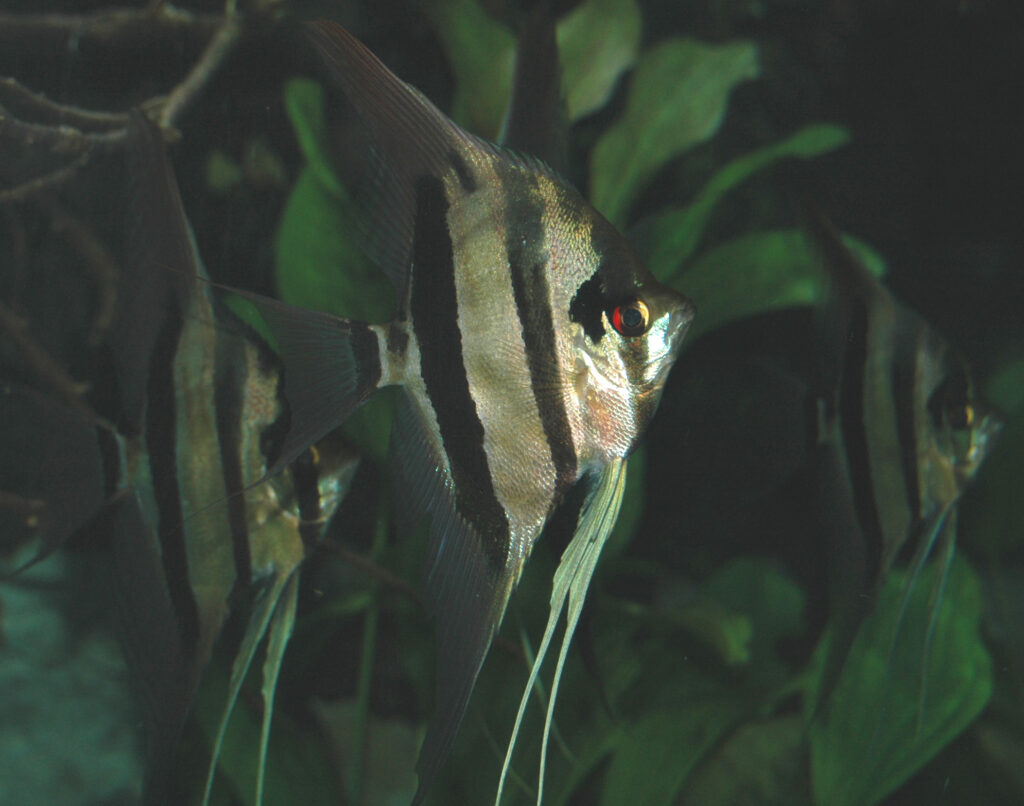
Freshwater angelfish (Pterophyllum scalare) are among the most recognizable aquarium fish in the world. Tall, graceful and surprisingly intelligent, they are also cichlids, which means they have a predatory streak and strong opinions. Good angelfish care comes down to a tall tank, stable warm water, sensible tank mates and a varied diet.
This guide covers everything you need, including honest difficulty ratings.
Overview and Appearance
Angelfish come from slow-moving, heavily vegetated waters in the Amazon basin. Their disc-shaped, laterally compressed bodies and long trailing fins let them slip between plants and roots. Wild fish are silver with black stripes, but decades of breeding have produced marble, koi, veil, black, gold, platinum, zebra and many other strains.
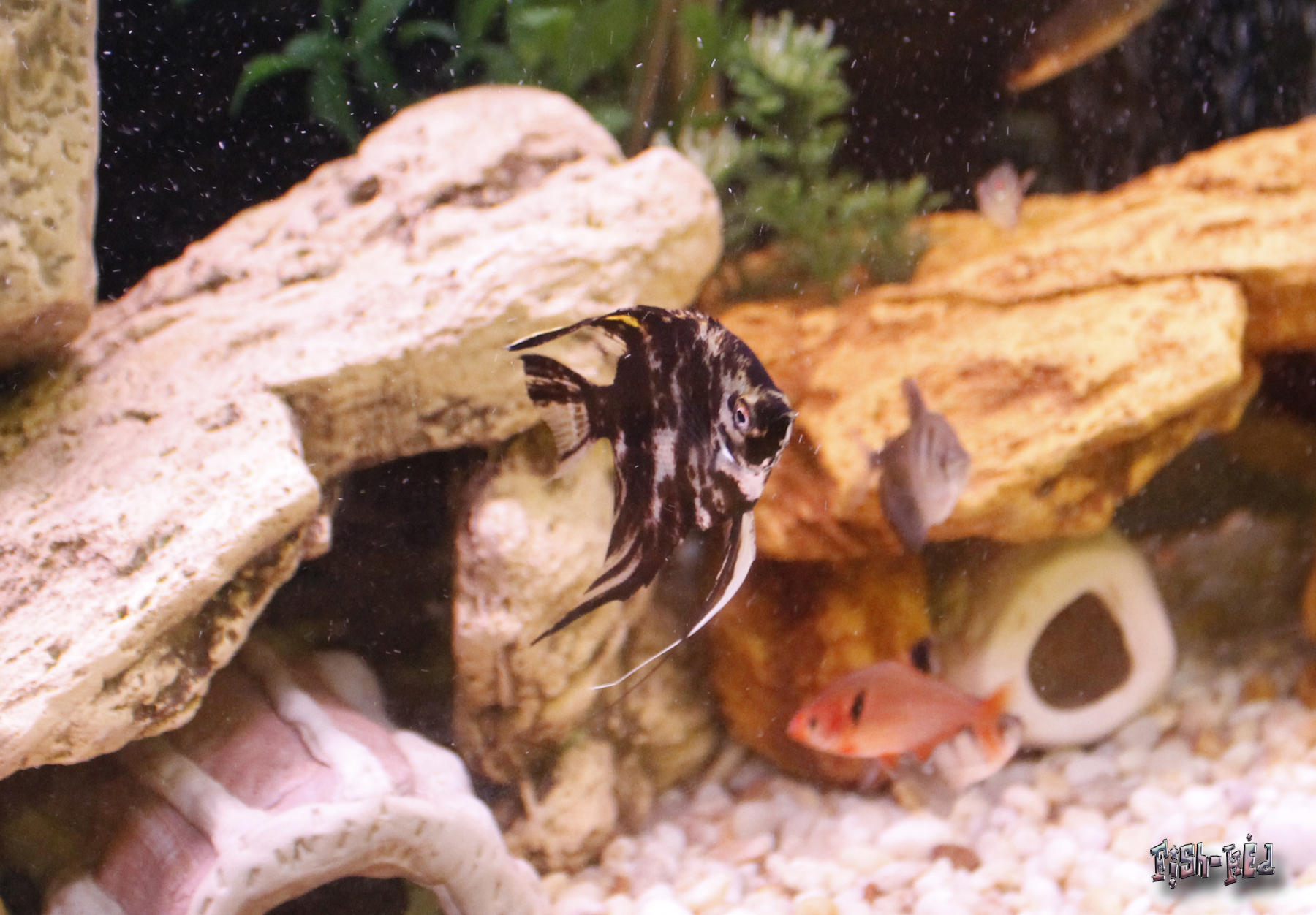
Photo: Fish-Hed, Wikimedia Commons, CC BY-SA 3.0.
Size and Lifespan
- Body size: about 6 inches long, but fins can reach 8-10 inches from top to bottom
- Lifespan: 8-12 years with good care, sometimes longer
Because of their height, angelfish need depth, not just floor space.
Tank Size and Setup
- Minimum for a pair or small group: 55 gallons, ideally at least 20 inches tall
- Single juvenile: 20 gallons temporarily, but plan to upgrade
- Decor: tall plants such as Amazon swords and vallisneria, driftwood and smooth rocks
- Substrate: sand or fine gravel
- Lighting: moderate, with floating plants to diffuse it
- Flow: gentle. Angelfish do poorly in strong current.
A quality hang-on-back or canister filter and a reliable aquarium heater are non-negotiable. Cycle the tank first by following our guide to how to cycle a fish tank.
Just a heads up: some of the links in this post are affiliate links, which means I may earn a small commission if you buy through them. But no worries, it is at no extra cost to you. Also, as an Amazon Associate I earn from qualifying purchases.
Water Parameters
- Temperature: 76-82 F
- pH: 6.0-7.5 (about 6.8-7.2 is a safe target)
- GH: 3-10 dGH
- Ammonia/nitrite: 0 ppm
- Nitrate: under 20 ppm
Angelfish are sensitive to nitrate and dirty water. Do a 25-30% water change weekly and test with a liquid test kit.
Diet
Angelfish are omnivores that lean toward meat.
- Staple: a quality cichlid or tropical flake or pellet
- Treats: frozen or live brine shrimp, bloodworms, daphnia and mysis shrimp
- Veggies: occasional blanched spinach or spirulina
- Schedule: feed twice a day, only what they eat in 2 minutes
Avoid overfeeding, which fouls the water and can cause bloat.
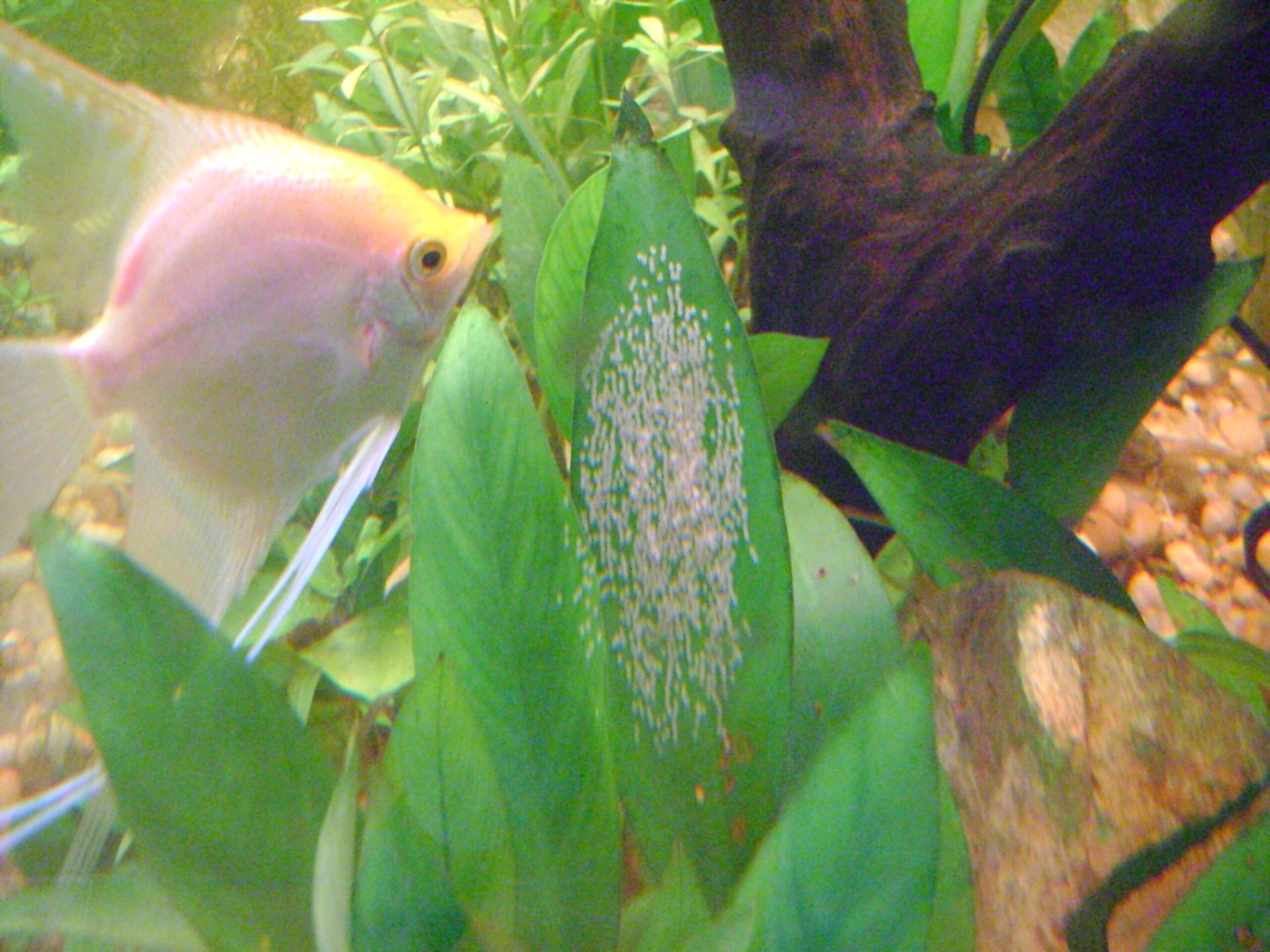
Photo: Carlosar, Wikimedia Commons, CC BY-SA 3.0.
Temperament and Tank Mates
Angelfish are peaceful with similar-size fish but will eat anything that fits in their mouth, including neon tetras, small shrimp and fry. They can also be territorial, especially when breeding.
Good tank mates:
- Larger tetras such as black skirts, lemon tetras and congo tetras
- Corydoras catfish
- Bristlenose plecos
- Peaceful gouramis, such as pearl gouramis
- Rams in larger tanks, though they prefer warmer, calmer water
Avoid:
- Fin nippers such as tiger barbs
- Very small fish like neons and chili rasboras
- Aggressive cichlids and large, boisterous fish
- Betta fish, since angelfish may nip their fins
Keep a group of 5-6 juveniles and let them pair off naturally, but be ready to rehome extras once pairs form.
Breeding
Angelfish are egg-laying substrate spawners that form monogamous pairs.
- Condition a pair with live and frozen foods.
- Provide a flat, vertical surface: a slate, broad leaf or breeding cone.
- The pair cleans the surface and lays several hundred eggs, which the male fertilizes.
- Eggs hatch in 2-3 days and fry become free-swimming in about a week.
- Feed newly hatched baby brine shrimp or fry food.
First-time pairs often eat their eggs. Many breeders move eggs to a separate tank with an air stone.
Choosing Healthy Angelfish
Buy from a store with clean tanks and ask to see the fish eat. Look for:
- Fully intact fins, with no ragged edges or white spots
- Clear eyes and a rounded belly (not sunken or swollen)
- Active, upright swimming with no clamped fins
- Straight, symmetrical bodies. Bent spines and crooked fins don't improve with age.
Young angelfish 1-2 inches long adapt best and let you watch pairs form. Wild-caught angelfish such as altum angelfish are far more demanding, needing soft, acidic, very clean water, and are not suited to beginners.
Common Health Issues
- Ich (white spot): often triggered by temperature swings. See our guide to white spots on fish.
- Fin rot: usually from dirty water. See our fin rot guide.
- Hole in the head and bloat: linked to poor water and diet.
- Gill flukes and internal parasites: often from new or stressed fish.
- Stress from tank mates: fin nipping and chasing.
Quarantine new fish for 4 weeks with a quarantine tank. If a fish is seriously ill, consult an aquatic veterinarian.
Difficulty Level
Moderate. Angelfish are not hard to keep alive, but they are often sold to beginners in tanks that are too small and too crowded. Tall tank, stable water and the right tank mates matter most. If you want a smaller, more demanding cichlid, compare with our Apistogramma care guide.
Angelfish Care FAQ
What size tank do angelfish need?
At least 55 gallons for a pair or small group, with a tank height of 20 inches or more.
How long do angelfish live?
Commonly 8-12 years with good care.
Can angelfish live with neon tetras?
Not safely. Adult angelfish eat neon tetras.
Are angelfish aggressive?
They are semi-aggressive. Paired fish defend territory, and angelfish bully smaller or slower fish.
Can I keep a single angelfish?
Yes. A lone fish is fine, though they enjoy company in larger tanks.
What do angelfish eat?
Flakes, pellets, frozen and live foods, with a mix of meat and plant matter.
What temperature do angelfish need?
76-82 F.
How can I tell male and female angelfish apart?
It's very hard until breeding, when the female's ovipositor appears. Most hobbyists buy a group and let pairs form.
Final Thoughts
Angelfish reward patient keepers with decade-long companions that recognize you at feeding time. Give them height, warm stable water and mates large enough to be safe, and they are one of the most elegant fish in freshwater.
Disclaimer: This article is general information, not veterinary advice. For serious or persistent problems, consult an aquatic veterinarian.