
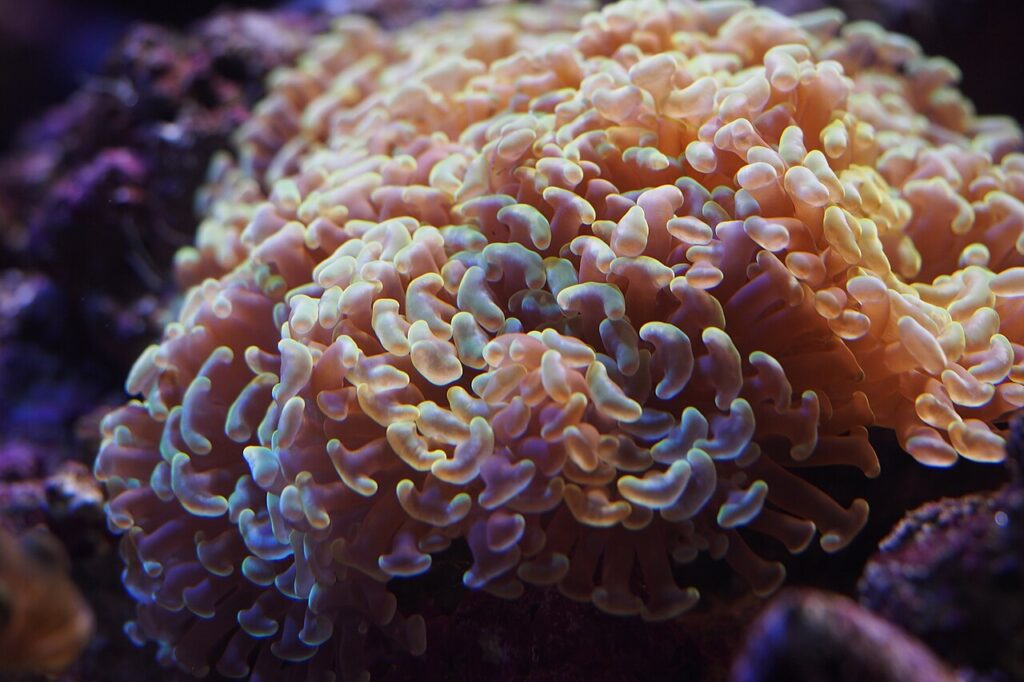
Hammer coral (Fimbriaphyllia ancora, long sold as Euphyllia ancora) is a large polyp stony (LPS) coral with flowing tentacles tipped with hammer or anchor shapes. It is a reef favorite because it sways in the current and stays extended day and night. It is generally considered moderate in difficulty: forgiving of small mistakes, but it needs stable water, a mature tank and plenty of space, because it will sting nearby corals.
Overview and Appearance
Hammer coral is also called anchor coral. Each head has long, tubular tentacles that end in T-shaped tips, which is where the names come from. Colors range from blue-gray and brown to green, gold and orange, and a skeleton of branching or wall-like structures supports the polyps. In the wild it comes from the Indo-West Pacific, and colonies are typically under a meter across (Wikipedia).
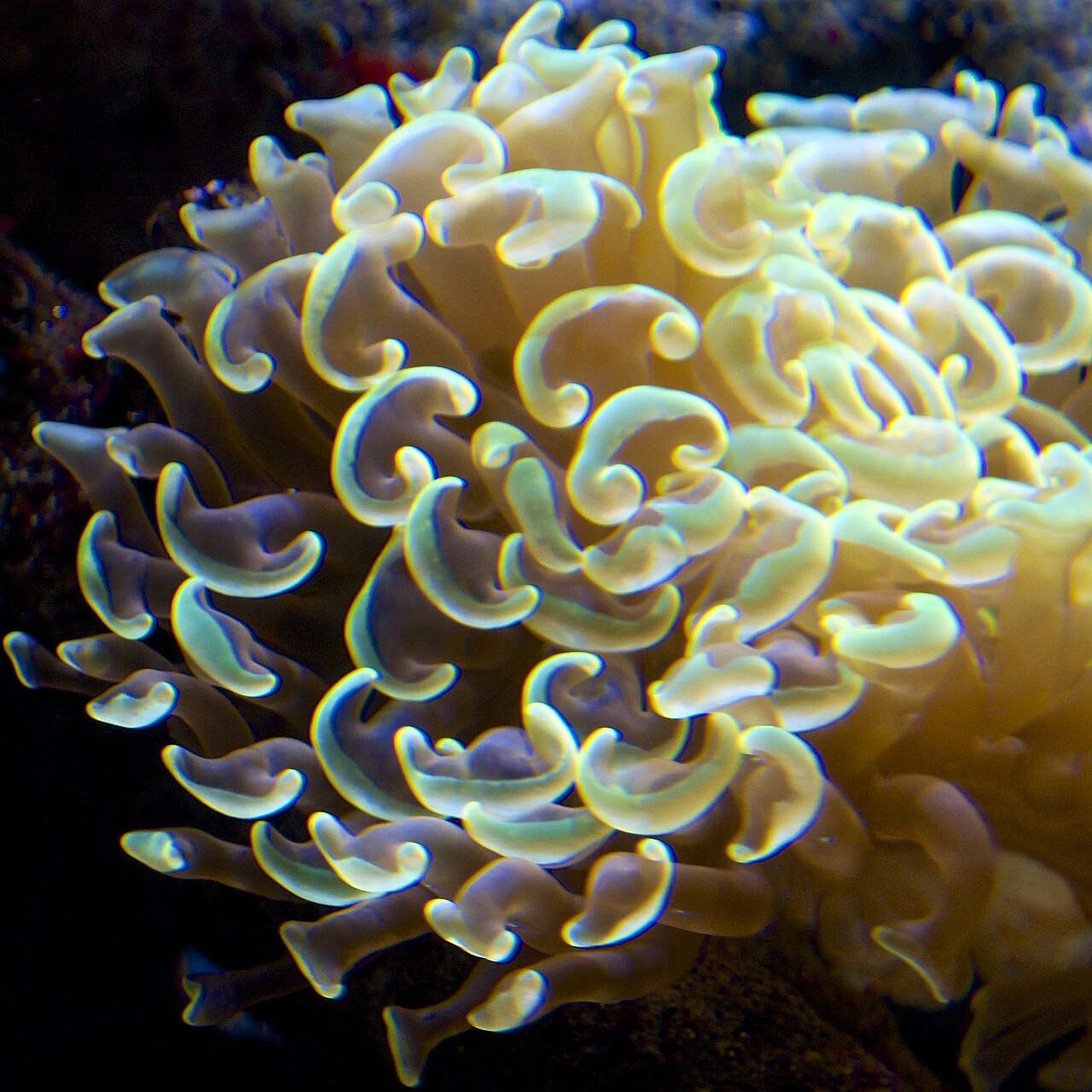
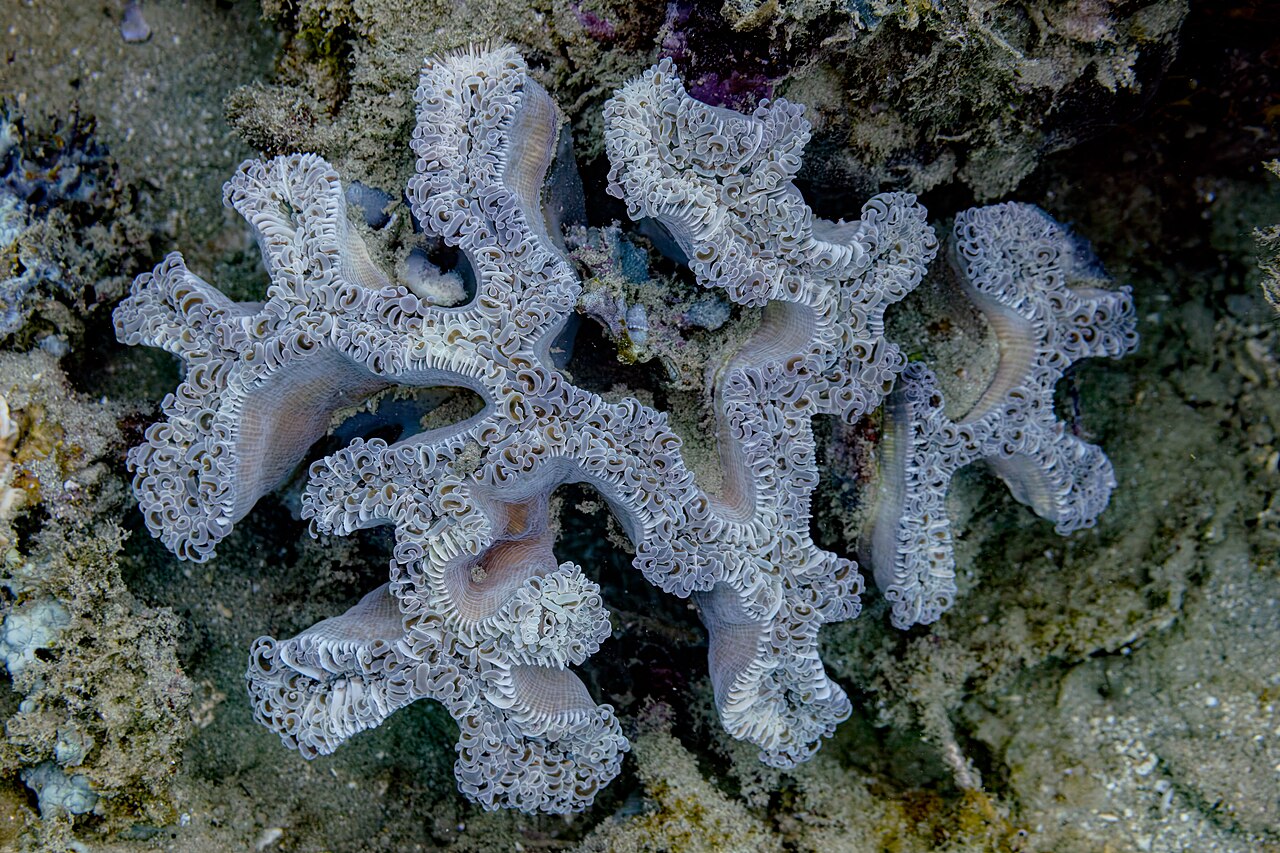
Common forms in the hobby include branching, wall (a flat, folded colony), and gold or green varieties. Beginners often confuse hammer coral with torch coral (a close relative) and frogspawn. The tentacle tips are the easiest tell: hammer tips are T-shaped, torch tips are rounded, and frogspawn tips look like clusters of eggs.
Size, Growth and Lifespan
A colony grows slowly into a large, bushy head over several years. Provide room for it to reach roughly 6-12 inches in diameter or more, and add the tentacle reach on top of that. Reliable captive lifespan data is not available, so treat any lifespan claim online with suspicion. With stable conditions, LPS corals can live many years and may be fragged to create new colonies.
Tank Size and Setup
Hobby guidelines suggest a mature reef of roughly 40-50 gallons or more for a single head, with more space if you want to keep it next to other corals. See how to set up a saltwater aquarium for the basics.
- Maturity: Add hammer coral to a tank that has been stable for at least several months, not a brand-new system.
- Placement: Low to mid-level on the rockwork or sand bed, where light is moderate. A lone frag can sit on a rock or a frag plug placed on the sand.
- Space: Hobbyists commonly leave about 4-6 inches around it. Sweeper tentacles can extend much farther at night.
- Stability: Once placed, avoid moving it. Handling can tear tissue and cause retraction.
Lighting and Flow
Hammer coral prefers moderate light and moderate, indirect flow. Strong light can make it retract, and heavy flow can shred the tentacles. The aim is for the tentacles to sway gently without being whipped. If the coral is fully inflated and relaxed, the placement is probably good. If it is closed up and shrunken, try shifting it lower or into a calmer area.
Water Parameters
These are common reef-keeping targets rather than hard limits. Hobby sources differ, so choose stable values and avoid swings.
- Temperature: 76-80°F (some sources quote a cooler 72-78°F range, which is below what most reefs run)
- Salinity: 1.025-1.026 (35 ppt)
- pH: 8.1-8.4
- Calcium: about 400-450 ppm
- Alkalinity: 8-11 dKH, kept stable
- Magnesium: 1,250-1,400 ppm
- Nitrate and phosphate: low but not zero
A saltwater test kit and a good refractometer are essential. Stable alkalinity matters more than hitting a perfect number. Mix reef salt in advance and do regular small water changes.
Just a heads up: some of the links in this post are affiliate links, which means I may earn a small commission if you buy through them. But no worries, it is at no extra cost to you. Also, as an Amazon Associate I earn from qualifying purchases.
Feeding
Hammer coral gets a lot of energy from its symbiotic algae, but it also eats. Feed meaty foods such as mysis shrimp, brine shrimp or finely chopped seafood about once a week, and more often if you want faster growth. Turn off the pumps for a few minutes, then use a coral target feeder or tweezers to place a small amount in the polyps. Remove uneaten food so it does not foul the water. Offering too much can raise nitrates and feed algae.
Temperament, Tank Mates and Stinging
Hammer coral is an aggressive stinger. Its tentacles carry stinging cells and can reach out to damage nearby corals, especially at night. Keep it away from soft corals, zoanthids and other LPS, and give it its own territory. Many hobbyists house it with other euphyllids only when there is plenty of space.
Most reef fish are fine, and small clownfish may even sway among the tentacles. Be careful with butterflyfish and other coral nippers. Bubble-tip anemone and clownfish combinations do well in the right setup, but keep the anemone separate from the coral's reach.
Breeding and Propagation
In the wild, hammer coral is a broadcast spawner, releasing eggs and sperm into the water. New colonies can also form from detached tentacle tips (Wikipedia). Home aquarists propagate it by fragging: cutting branches with a coral saw, then gluing the frags to plugs. Most coral in the trade is aquacultured, which reduces pressure on wild reefs, so ask your retailer.
From Aquagram
Explore AquagramTest Account
Hello aquarists!
Dan GL
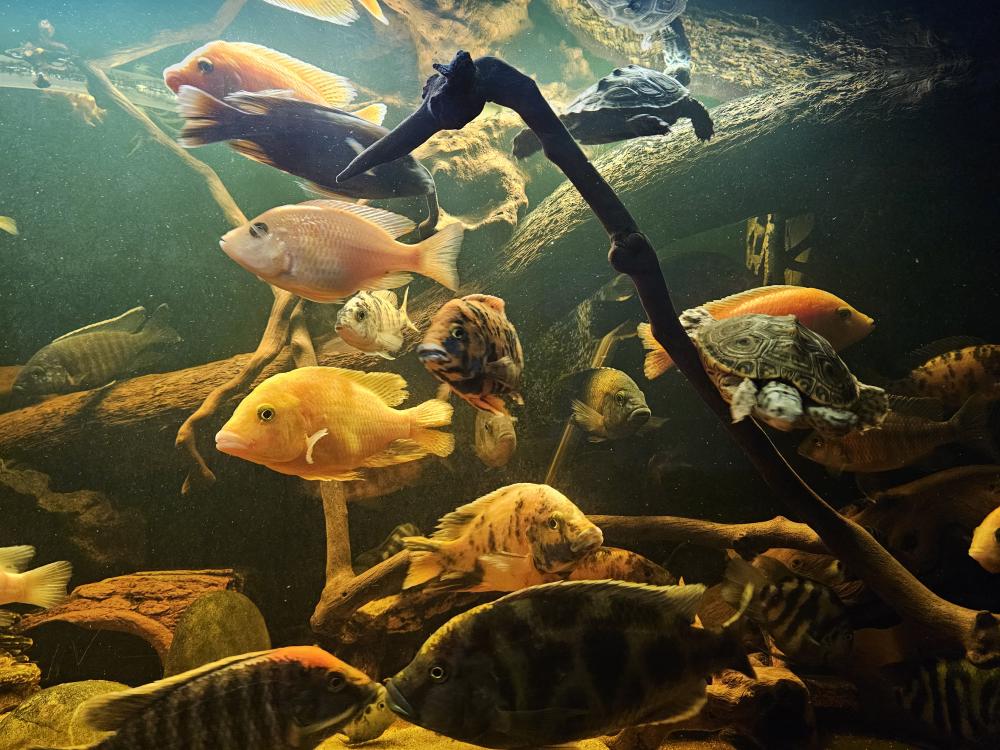
A view of my 125 gallon aquarium. Lots of fish and a few Northern Diamondback Terrapins too! 😁
SwitchTank
Incredible!

Common Problems
- Not opening or retracted: Test alkalinity, nitrate and temperature, then check flow, light and recent changes. See our coral not opening guide.
- Receding tissue or skeleton showing: Usually from poor water, a pest, an injury or sustained stress. Remove dead tissue and improve conditions. Quarantine and dip new frags to catch pests.
- Brown jelly infection: A rapid, slimy tissue breakdown that can spread. Remove affected tissue and quickly isolate the coral, then work on water quality.
- Stung neighbors: Increase spacing or move the neighbor.
- Medications: Avoid copper-based treatments, which kill corals and other invertebrates.
For a stressed colony in a tank with fish, look at the whole system. Aquatic vets rarely treat corals, so reef forums and local fish stores are the usual place to compare notes.
How Difficult Is Hammer Coral?
Moderate. It is more forgiving than SPS corals, but it will not tolerate unstable alkalinity, poor flow or a harsh neighbor. It is a good second or third coral for someone with a stable reef and a working test routine, not the first thing to add to a three-week-old tank.
Hammer Coral FAQ
Is hammer coral good for beginners?
It is often recommended as a step up, since it is hardy compared to many corals, but it needs a stable, mature tank and space from neighbors.
Why is my hammer coral not opening?
Common causes are unstable water, wrong light or flow, pests, recent handling or a new tank. Test parameters first.
How far apart should hammer coral be from other corals?
A common hobby guideline is 4-6 inches, with more room for large heads.
Does hammer coral need feeding?
It benefits from occasional meaty food, about once a week, though it also gets energy from light.
What is the difference between hammer and torch coral?
Hammer tips are T-shaped, while torch coral tentacles end in rounded tips and form longer, stringier displays.
Can hammer coral sting fish?
It can, but most fish avoid it. Small or slow fish should not be forced into contact.
Sources and Fact Check
Reviewed 2026-11-19. Access to reef-specific and veterinary sources was limited, so numerical targets (tank size, spacing, feeding, parameters) are hobby guidelines and are labeled as such.
- Wikipedia, Hammer coral: tubular, T-tipped tentacles; typical colony size; Indo-West Pacific range; color forms; spawning and new colonies from detached tentacle tips.
- Fishkeeping World, Hammer coral: hobby guidelines for moderate care, moderate light and flow, meaty feedings and aggression toward neighbors. Its temperature range and lifespan claims were not used.
Image credits: harum.koh (CC BY-SA 2.0), Les Williams (CC BY-SA 2.0) and Diego Delso (CC BY-SA 4.0), via Wikimedia Commons.
Disclaimer: This article is general information, not professional advice. Reef conditions vary, so adjust to your own system.