
As an Amazon Associate I earn from qualifying purchases. This post contains affiliate links, which means I may earn a small commission at no extra cost to you.
Ghost shrimp are one of the cheapest and most common invertebrates in the hobby. They are see-through, active and fun to watch as they scavenge the tank. They are also sold by the hundreds as live food, which is why so many arrive stressed and die within days.
This ghost shrimp care guide covers what they are, how many you can keep, what they eat, who they can live with, and how to answer the questions keepers ask most: are ghost shrimp aggressive, do they breed in freshwater, and why are they turning white?
Ghost Shrimp Overview and Appearance
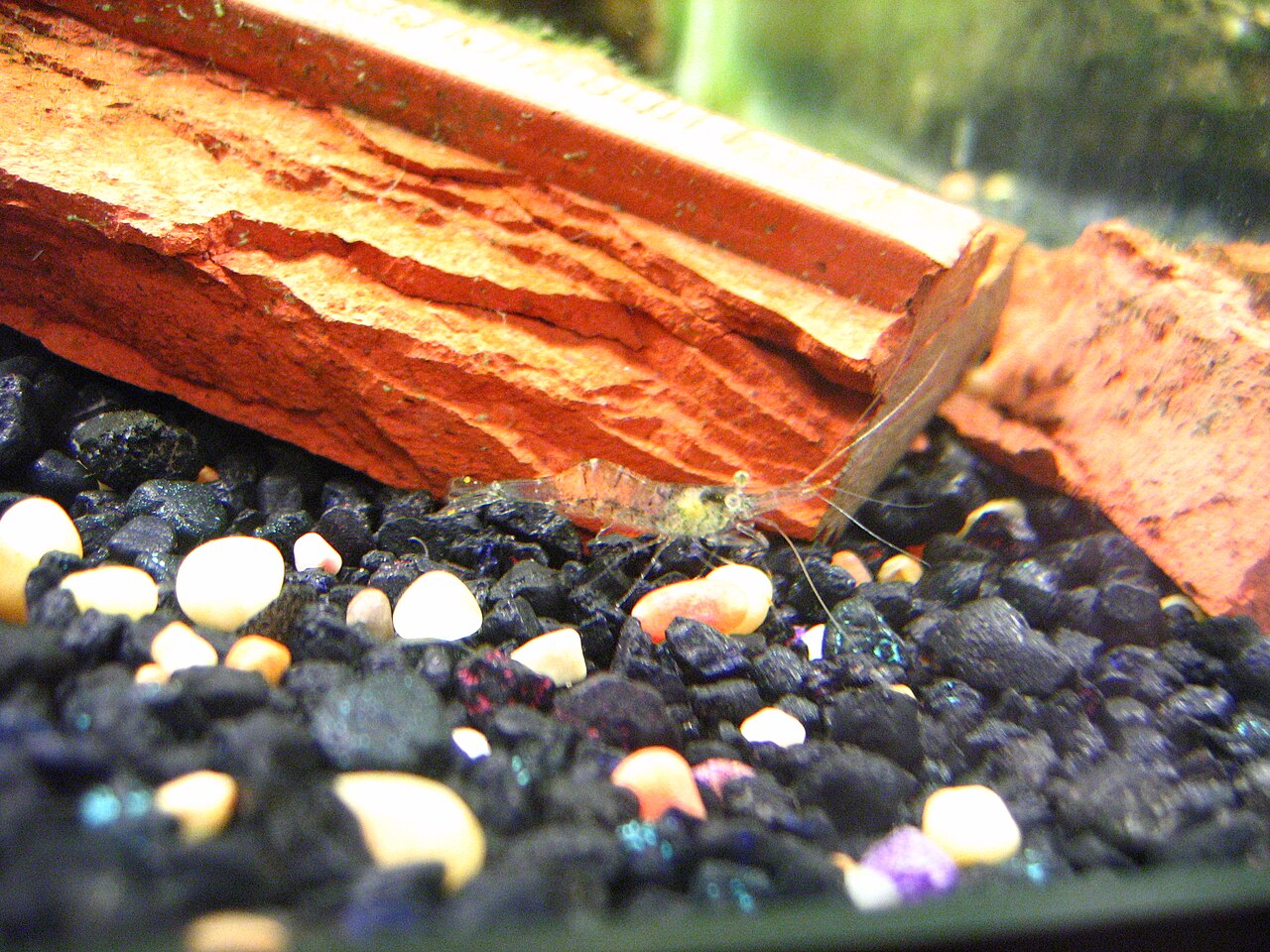
Photo: Enziarro / Joseph Stansbury Roth (public domain), via Wikimedia Commons.
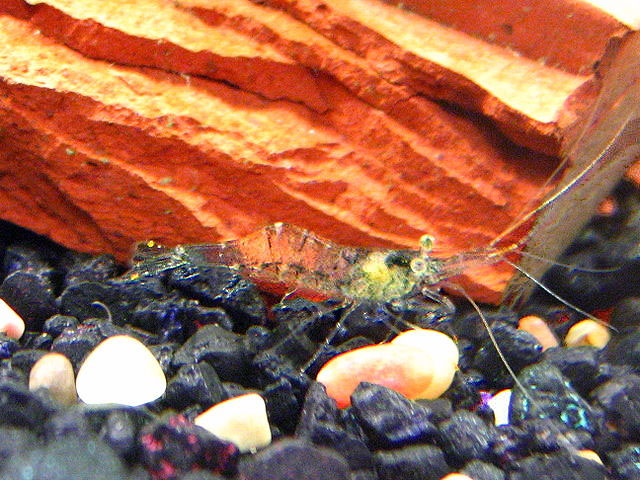
“Ghost shrimp” or “glass shrimp” is a trade name, not one species. Most are freshwater grass shrimp from the genus Palaemonetes, often Palaemonetes paludosus, which is native to the southeastern United States. They have clear bodies, so you can see the stomach and sometimes the eggs. A few small dots or a faint tint on the body is normal.
Ghost shrimp are not the same as Neocaridina shrimp like cherry shrimp. They are larger, more predatory and less colorful, and they do not make good partners for tiny shrimp.
Size and Lifespan
Expect a body length of about 1.5 inches (4 cm), with females usually a bit larger than males. The ghost shrimp lifespan is short: about 1 year, with some living up to 2 years in a stable tank. Because they are often sold as feeders, many have already lived part of that life by the time you buy them.
Ghost Shrimp Tank Size and Setup
The ghost shrimp minimum tank size for a small group is 5 gallons, which is also the most common answer to how many ghost shrimp fit in a 5 gallon tank: about 3 to 5. A rough rule is 1 shrimp per gallon, so a 20-gallon holds around 10-15 and a 30-gallon around 15-20 if there are no predators. Bigger tanks hold stable water, which matters for shrimp.
- Cycled tank only. Shrimp are sensitive to ammonia and nitrite. Our guide to how to cycle a fish tank explains the process.
- Plants and moss. Java moss and floating plants give cover and a place to graze on biofilm.
- Fine gravel or sand and hides. Rocks, driftwood and small caves help shrimp feel safe when they molt.
- A lid and covered filter intake. Ghost shrimp can jump, and they slip into open intakes. A sponge pre-filter solves the intake problem and is gentle on shrimp.
Water Parameters
- Temperature: 65-82°F (18-28°C), with 72-78°F ideal
- pH: 7.0-8.0
- Hardness: moderate to hard water (GH around 6-12 dGH) with some minerals for healthy molts
- Ammonia and nitrite: 0 ppm
- Nitrate: below 20 ppm
Shrimp are very sensitive to copper, which is found in some fish medications and fertilizers, and to sudden changes in water chemistry. Check your parameters with a liquid test kit, and always read the label of any medication before using it in a tank with shrimp. Use a water conditioner at every water change.
Acclimate new shrimp slowly. Drip them over 1-2 hours so the water in their new home changes gently. Most early deaths come from skipping this step.
What Do Ghost Shrimp Eat?
Ghost shrimp are scavengers that eat almost anything. They pick at leftover food, algae film, biofilm and dead plant matter. They do not clean a tank on their own, though, and need real feeding.
- Sinking shrimp pellets or wafers, a few times per week
- Blanched vegetables such as zucchini or spinach
- Occasional frozen foods, like bloodworms or daphnia
- Leaf litter such as Indian almond leaves to graze on
Feed small amounts and remove uneaten food after a few hours. Ghost shrimp eating each other does happen. They are not true cannibals by nature, but they will eat a dead or freshly molted shrimp, which is how they recycle nutrients.
Temperament and Tank Mates
Are ghost shrimp aggressive? Toward other shrimp, they are mostly peaceful. Toward very small fish and fry, they can be opportunistic. They will grab a sick or sleeping fish, and they can overpower baby shrimp and tiny fish.
Good tank mates are small, peaceful fish that will not hunt shrimp: small rasboras, ember tetras, and small corydoras. Our chili rasbora care guide and panda corydoras guide are a good start. Avoid goldfish, cichlids, large barbs and any fish with a mouth big enough to swallow a shrimp.
Can ghost shrimp live with a betta? Sometimes, in a planted 10-gallon or larger tank, but it depends on the fish. Some bettas ignore shrimp, others hunt them. Read our betta fish care guide before trying it, and have a backup plan.
Breeding Ghost Shrimp
Ghost shrimp are among the easier shrimp to breed, with a catch. A female carries a cluster of small green eggs under her tail, often called being “berried” or “saddled”. The eggs hatch in about 2-3 weeks.
The larvae are tiny and need fine food such as powdered fry food or infusoria. The catch is that not all “ghost shrimp” are the same species. Palaemonetes paludosus can complete its life cycle in fresh water, but some sold as ghost shrimp need brackish water for the larvae. If the babies keep dying, that is a likely reason.
To raise them, move the pregnant female (or the larvae) into a separate tank with a sponge filter, as parents and fish will eat the fry.
Common Health Issues
- Turning white or milky. A shrimp that goes opaque white is often stressed, injured or dying, which can follow bad water or a failed molt. A clear, empty shell is just a normal molt. Leave molts in the tank, as the shrimp will eat them.
- Failed molts. Hard water with minerals and stable parameters help.
- Copper and ammonia poisoning. The most common causes of sudden die-offs.
- Parasites on the body. Quarantine new shrimp where you can. Our guide to setting up a quarantine tank shows how.
Many treatments for fish diseases harm invertebrates, so treat sick fish in a separate hospital tank. See top 5 aquarium medications for options and cautions.
How Hard Are Ghost Shrimp to Keep?
Honestly, easy to buy but only moderately easy to keep. They are cheap and hardy compared with sensitive species, but because many come from feeder tanks, they are often stressed. Beginners do fine with a cycled tank, a slow acclimation and no medications. Expect some losses at first.
Ghost Shrimp FAQ
How long do ghost shrimp live?
About 1 year, sometimes up to 2 in good conditions.
How many ghost shrimp can I keep in a 5 gallon tank?
About 3 to 5, with plants and hides.
Do ghost shrimp clean the tank?
They eat leftover food, algae film and detritus, but they are not a replacement for water changes.
Do ghost shrimp need a heater?
In a cool room, yes, to keep a stable temperature around 72-78°F. A small aquarium heater helps.
Can ghost shrimp live in a tank with goldfish or cichlids?
No. They will be eaten.
Why are my ghost shrimp upside down or dying?
Check ammonia, nitrite, temperature and copper first. Poor acclimation is the next most common cause.
Final Thoughts
Ghost shrimp are an inexpensive way to add movement to a peaceful tank, as long as you treat them as the delicate animals they are. Cycle the tank, acclimate slowly, avoid copper, and give them cover, and they will reward you with plenty of activity.
Disclaimer: This article is general information, not veterinary advice. For serious or persistent problems, consult an experienced aquatic professional.