
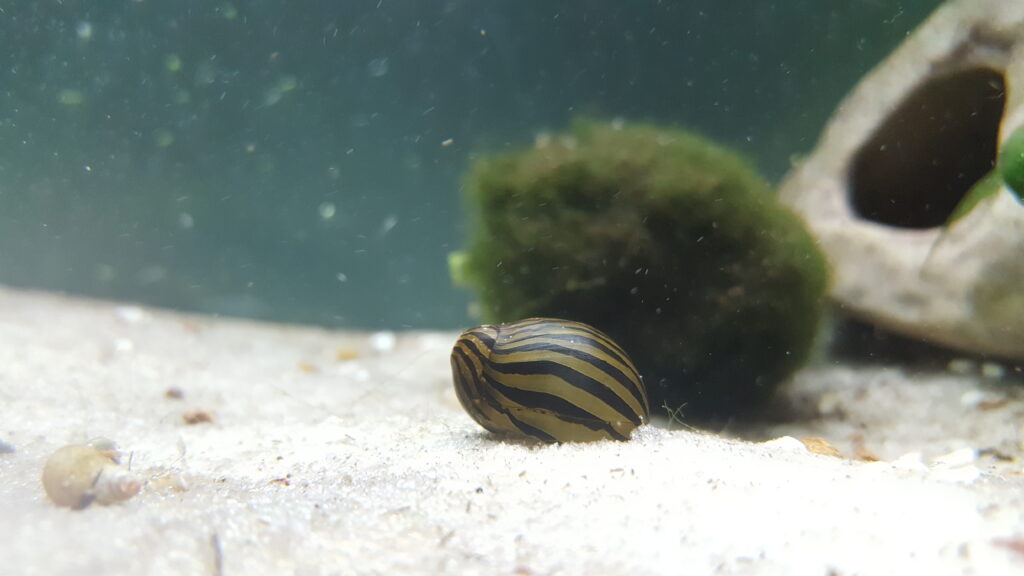
Nerite snails are among the best algae-eating invertebrates in the hobby. They clean glass, rocks and decor, they do not overbreed in fresh water, and they come in striking patterns like zebra, tiger and horned. But they have specific needs, and many are lost in the first weeks because they starve, escape, or are dropped into the wrong water.
This guide covers nerite snail care from setup to eggs, plus the questions people ask most, like “why is my nerite snail not moving?”
Overview and Appearance
Nerite snails (family Neritidae) are small, round-shelled snails from rivers, estuaries and coastal waters in Africa, Asia and beyond. Common aquarium types include:
- Zebra nerite (Neritina natalensis): striped shell, very popular.
- Tiger nerite: a similar pattern with bolder bands.
- Olive nerite: a plain, olive-green shell.
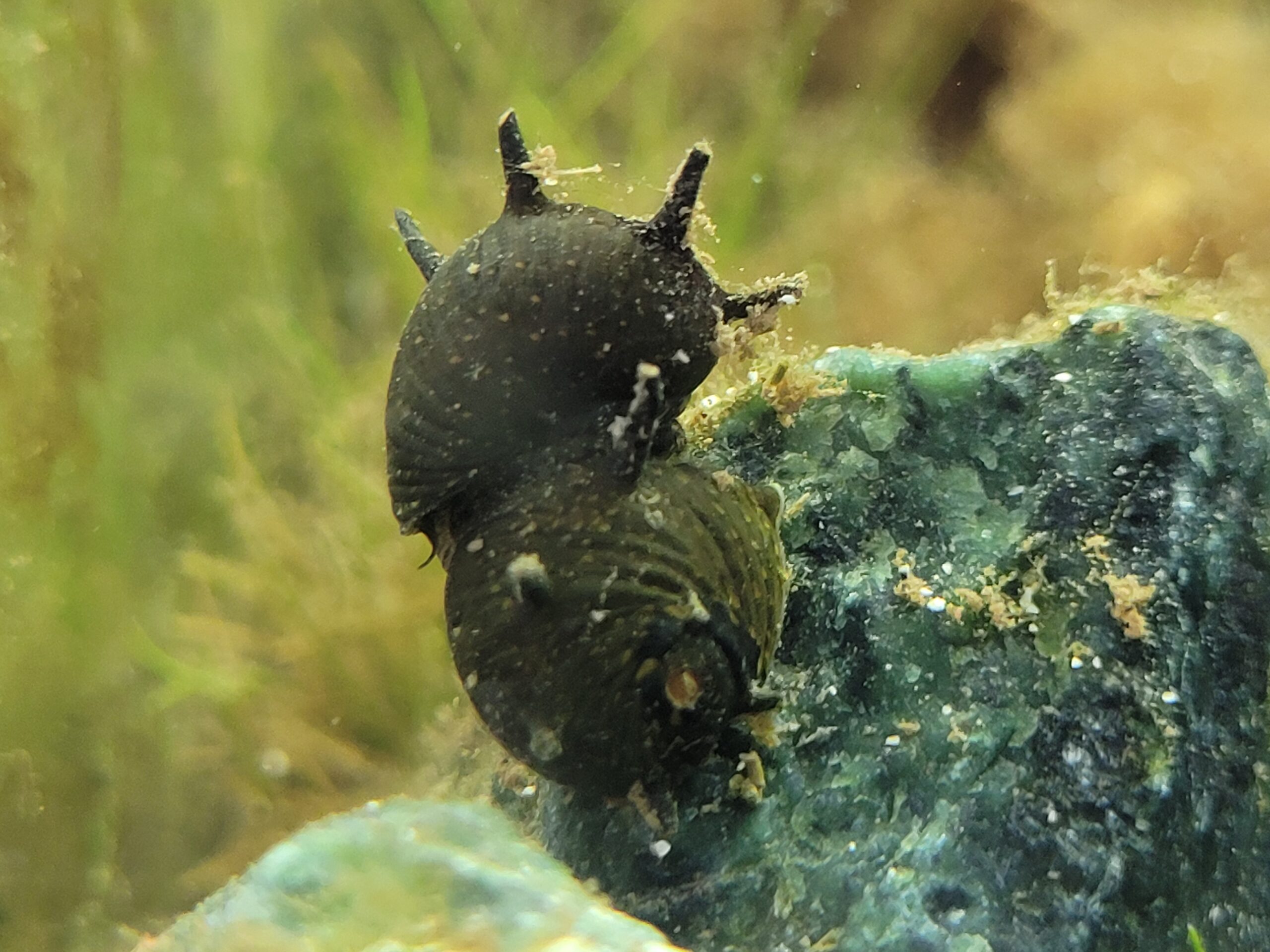
- Horned nerite (Clithon corona): small spikes on the shell.
- Red racer nerite: red-and-black pattern.
Size and Lifespan
Most nerites reach about 1 inch (2.5 cm). Lifespan is commonly around one to two years, though many are already a year old when sold, so expect a shorter time in your tank. Shell erosion, a lack of food or poor water can shorten it further.
Tank Size and Setup
A nerite can live in a tank as small as 5 gallons, with room for a few snails in 10 gallons and up.
- Lid: essential. Nerites climb out of the tank and cannot get back.
- Surfaces: rocks, driftwood and hardscape where biofilm and algae grow.
- Substrate: sand or fine gravel. Nerites do not burrow.
- Mature tank: they eat biofilm and algae, so a brand-new, spotless tank can starve them.
If you are building a new freshwater tank, make sure it is cycled first. Our guide on how to cycle a fish tank explains how.
Water Parameters
- Temperature: 72-78°F (22-26°C).
- pH: 7.0-8.5. Nerites prefer neutral to alkaline water.
- Hardness: moderate to hard. Soft, acidic water erodes their shells.
- Ammonia and nitrite: 0 ppm.
- Copper: zero. Copper-based fish medications kill snails, so read labels carefully. Our roundup of aquarium medications is a good starting point to see what to avoid.
If your water is soft, supply minerals with a calcium source such as cuttlebone or crushed coral in the filter. Test pH, KH and GH with a freshwater test kit.
Just a heads up: some of the links in this post are affiliate links, which means I may earn a small commission if you buy through them. But no worries, it is at no extra cost to you. Also, as an Amazon Associate I earn from qualifying purchases.
Diet
Nerites are grazers. Their staple is algae and biofilm. In a clean or sparse tank they may not find enough, so supplement.
- Sinking algae wafers
- Blanched zucchini, cucumber, spinach or kale
- Calcium-rich foods or a snail food that includes calcium
- Leftover fish food and biofilm on mature decor
Remove uneaten vegetables after a day or so to avoid fouling the water.
Temperament and Tank Mates
Nerites are peaceful and safe with most community fish, shrimp and other snails. Good tank mates include small tetras, rasboras, corydoras, otocinclus, cherry shrimp and amano shrimp. See our cherry shrimp care guide and amano shrimp care guide.
Avoid keeping nerites with snail-eaters, such as puffers, loaches like clown loaches, large cichlids and some crayfish. Our pea puffer care guide is one example of a fish that will target snails.
Breeding and Eggs
Nerite snails need separate sexes, but you cannot easily tell them apart. In fresh water, they lay small, hard white egg capsules on glass, rocks, decor and even other snails. They look like tiny white sesame seeds. These eggs are usually not viable in fresh water, because larvae need brackish or marine water to develop. So you will not get a snail explosion, but you will get an unattractive spotting of eggs.
To remove them, scrape with a razor blade or scrubber, or gently scrub with a toothbrush. They are hard to remove and sometimes take weeks to soften. Do not add salt to the tank just to control eggs, because it can harm shrimp, plants and other tank mates.
Common Health Problems and Why Nerites Die
- Starvation: the most common cause in clean tanks. Supplement food.
- Shell erosion or pitting: soft or acidic water, low minerals. Raise hardness and pH.
- Escape: if the lid has gaps, the snail may crawl out and dry up.
- Copper or medication exposure: can kill quickly.
- Poor acclimation: drip acclimate slowly for about an hour, especially if your water differs from the store’s.
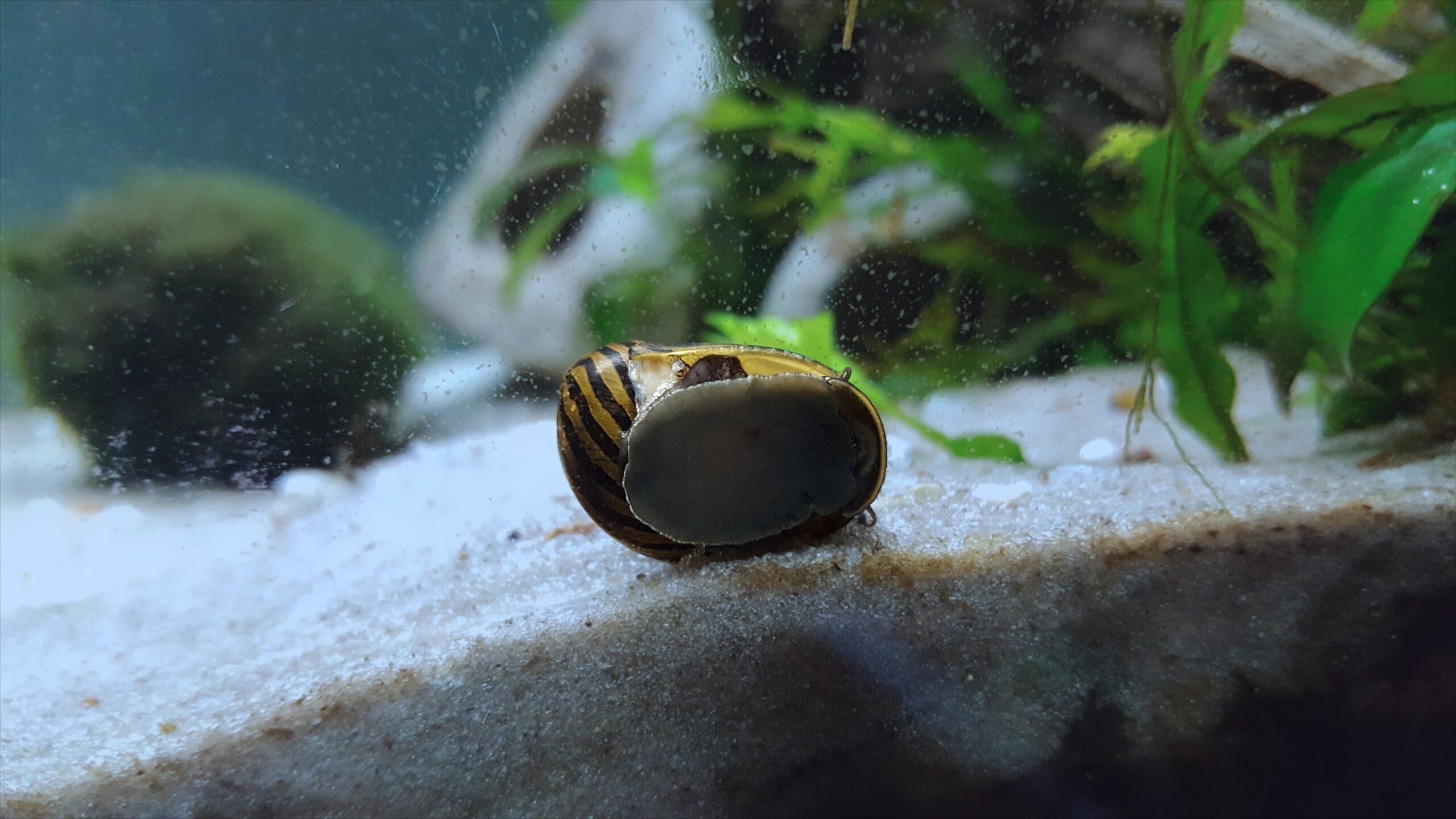
- Upside down: nerites sometimes fall and cannot right themselves. Gently flip them back so they do not die. Our guide to shrimp dying after a water change covers acclimation mistakes that harm snails too.
Why is my nerite snail not moving?
Nerites sometimes stay still for a day or two, especially after a water change or at night. To check if it is alive, gently pick it up. A live snail closes its operculum (the “door”) or pulls in. If it hangs limp, smells strongly rotten, or its body is hanging out and does not react, it has likely died. Remove it quickly to avoid an ammonia spike.
Difficulty Level
Easy to moderate. Nerites are tough once settled, but they are not “set and forget”. They need hard-ish water, a lid, mature surfaces for grazing and a copper-free tank. Get those four right and they are rewarding, low-maintenance cleaners.
Nerite Snail FAQ
What size tank does a nerite snail need?
At least 5 gallons for one snail, and about 5 gallons per additional snail depending on algae levels.
How long do nerite snails live?
Usually 1-2 years.
Do nerite snails eat algae?
Yes. They are among the best snails for green spot algae and diatoms on glass and hardscape.
Do nerite snails reproduce in freshwater?
They lay eggs, but the larvae need brackish or marine water, so you will not get a population explosion.
Why does my nerite snail keep climbing out of the tank?
They explore and can escape at night. Use a tight lid and keep the water level slightly below the rim. If they leave often, check for poor water quality or lack of food.
Can nerite snails live with bettas?
Usually yes. Most bettas ignore them, though a few nip at the tentacles. See our betta care guide.
Why is my nerite snail upside down?
It may have fallen and be stuck. Flip it gently. If it keeps ending up upside down and is weak, check water quality and calcium.
Final Thoughts
Nerite snails are small, colorful and very useful for algae control. Give them mineral-rich water, a lid and enough to eat, and they will quietly clean your tank for a year or two.
Disclaimer: This article is general information, not veterinary advice.
Photo credits: Zebra nerite snail photos by Evan Baldonado, licensed CC BY 4.0 (Wikimedia Commons); horned nerite snail photo by Obsidian Soul, CC0.