
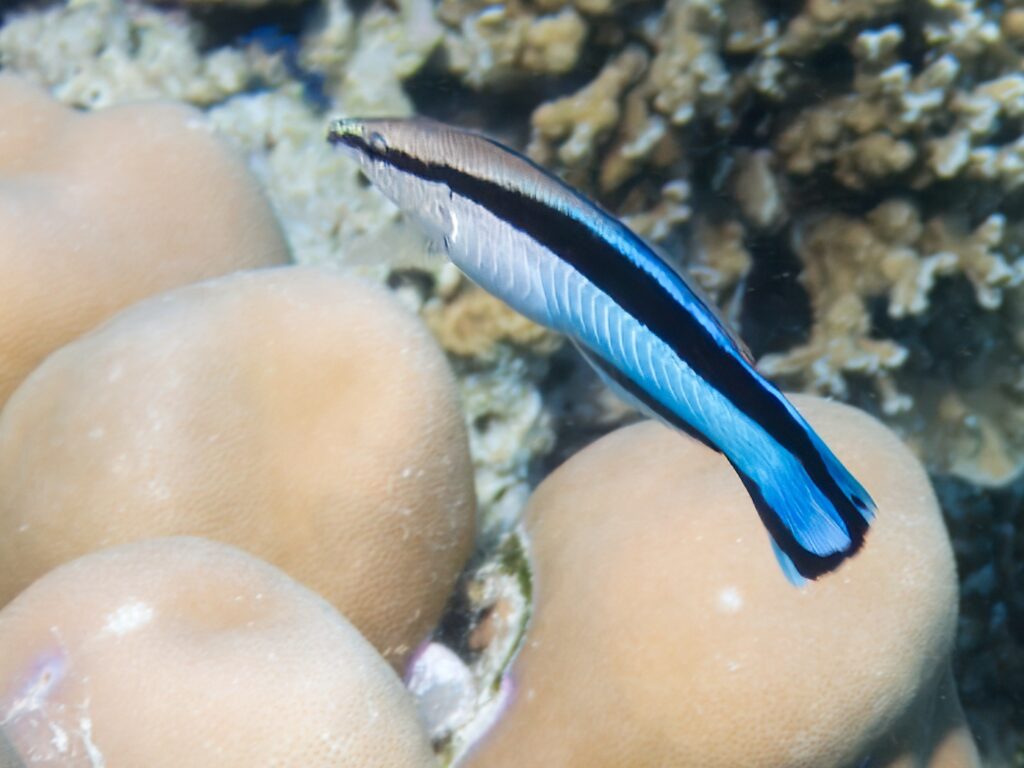
The bluestreak cleaner wrasse (Labroides dimidiatus) is one of the most charming fish on the reef, and one of the hardest to keep alive in an aquarium. In the wild it eats parasites and mucus picked off dozens of client fish a day. Most captive specimens slowly starve, and the hobby’s honest advice is that this fish is not recommended for home aquariums. This guide explains why, and what a rare success looks like.
Overview and Appearance
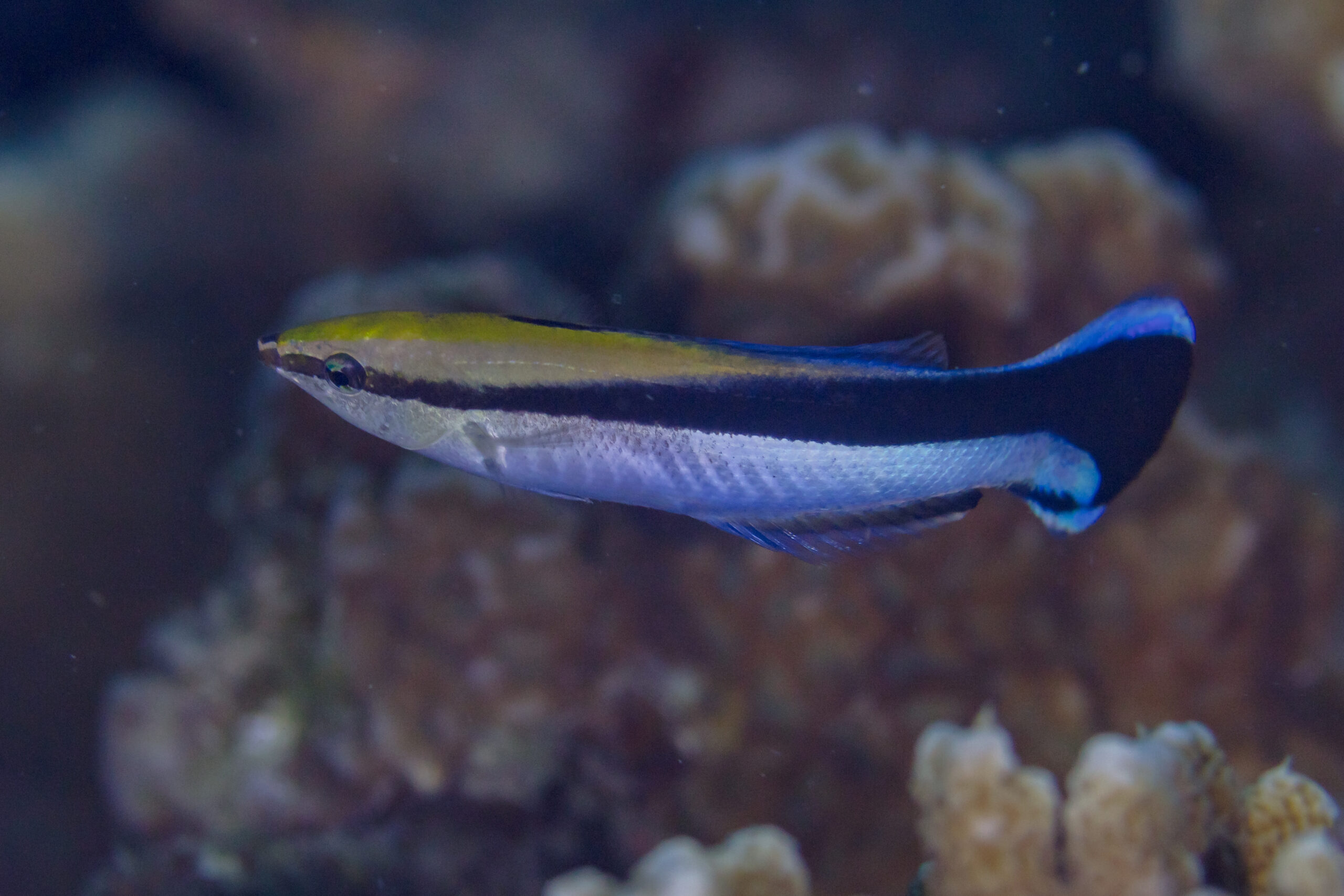
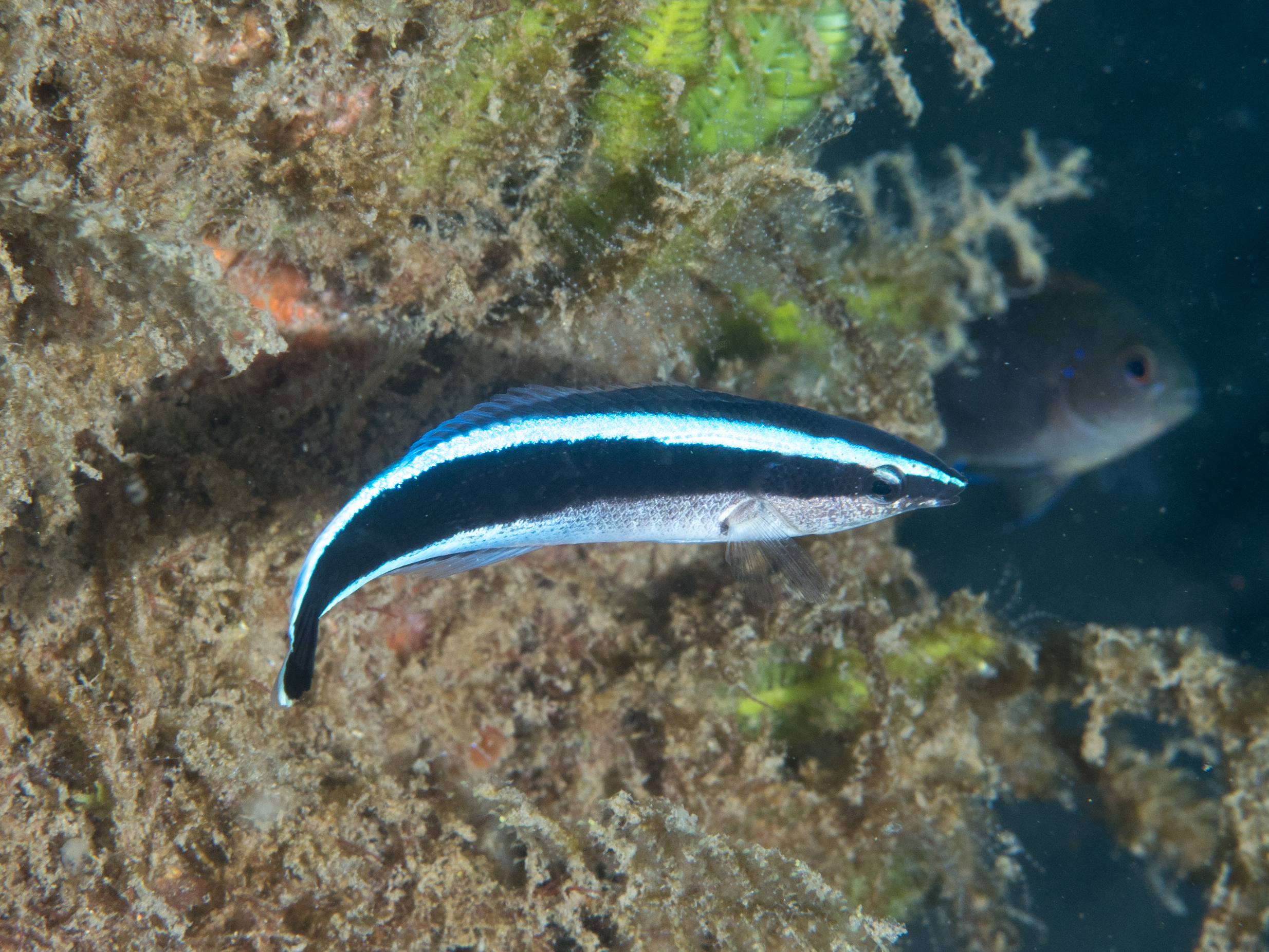
Cleaner wrasses are slender, with a bright blue stripe running along a black band from the snout to the tail, and a pale blue-white belly. Juveniles are almost black with a vivid blue line. They work at “cleaning stations,” where larger fish pose and let the wrasse remove parasites. The behavior is so well known that a lookalike, the fangblenny (Aspidontus taeniatus), mimics its pattern to sneak in and bite chunks of fins from its clients.
Size and Lifespan
Adults reach about 4 to 5 inches (10 to 13 cm). In the wild they can live several years. In home tanks, most wild-caught cleaner wrasses die within weeks or a few months.
Why They Die: The Core Problem
- They are specialist feeders. Their natural diet is parasites, mucus and dead tissue from other fish. A healthy, quarantined tank doesn’t have enough of these to feed one.
- Many refuse prepared foods. Some individuals learn to take frozen mysis, brine, or finely chopped seafood, but many never do.
- Capture and shipping stress. All are wild-caught and often arrive thin and stressed.
- They need clients. Fish in a small tank can be over-cleaned and stressed by the wrasse, and a wrasse without clients is on a countdown.
This is why many reef keepers and marine conservation groups discourage buying them.
Tank Size and Setup
If someone is determined to try, an experienced reefer would provide:
- A mature reef tank of 75 gallons or more, with stable water and lots of live rock
- A varied community of peaceful fish that will act as clients, and plenty of copepods and amphipods from a refugium
- Open swimming room and caves for retreat
- Quarantine and prior feeding of foods they’ll accept (quarantine tank setup)
See how to set up a saltwater aquarium for the basics.
Water Parameters
- Temperature: 75 to 80°F (24 to 27°C)
- Salinity: specific gravity 1.024 to 1.026
- pH: 8.1 to 8.4
- Ammonia and nitrite: 0 ppm; nitrate under 10 to 20 ppm
Use a reliable refractometer and marine test kit because stress from swings can quickly end a fragile fish.
Just a heads up: some of the links in this post are affiliate links, which means I may earn a small commission if you buy through them. But no worries, it is at no extra cost to you. Also, as an Amazon Associate I earn from qualifying purchases.
Diet
Offer small, frequent meals of:
- Frozen mysis shrimp, enriched brine shrimp and finely minced seafood
- Live copepods and baby brine shrimp
- Fine marine flake or pellet food, soaked in garlic or vitamin supplements to boost interest
Feed three or more times daily, and watch for a thin belly or a sunken head, because that means it’s starving. A wrasse that refuses food after a week or two in quarantine is a poor candidate for survival.
Temperament and Tank Mates
Cleaner wrasses are peaceful and don’t harm other fish. Keep them with other calm species and no aggressive fish like triggers or large wrasses that would eat or harass them. Only one per tank unless it’s a very large system, since unfamiliar wrasses fight. They’re reef safe: they don’t bother corals or most invertebrates.
Breeding
Cleaner wrasses aren’t bred commercially. They’re protogynous hermaphrodites (females can become males) living in harems, but spawning in aquariums is essentially unheard of. Every fish for sale was taken from the wild.
Common Health Issues
- Starvation is the main cause of death
- Ich and other parasites from stress and trade shipping
- Bacterial infections following capture damage
A fish this thin has little reserve, so even a minor issue can be fatal.
Honest Difficulty Level
Expert only, and still unlikely to succeed. For most hobbyists the best choice is to leave them on the reef. If you want the cleaning behavior, there are far better options.
Better Alternatives
- Cleaner shrimp (Lysmata species) eat some parasites and food scraps and are hardy. See our cleaner shrimp care guide.
- Other wrasses that adapt to captivity, such as leopard wrasse (also tricky), radiant wrasse or Lubbock’s wrasse are better choices.
- Good quarantine, a healthy diet and stable water are better parasite control than a cleaner fish.
Cleaner Wrasse Care FAQ
Can you keep a cleaner wrasse in a home aquarium?
Technically yes, but most starve. A small number of experienced keepers succeed with large mature tanks and a fish that accepts prepared food.
What do cleaner wrasses eat in captivity?
Frozen mysis, brine, copepods and minced seafood, but many refuse everything. Some learn to eat once they’re settled.
How long do cleaner wrasses live in captivity?
Most last weeks to a few months. Well-fed individuals may last longer.
What size tank does a cleaner wrasse need?
At least 75 gallons, mature and with many other fish.
Are cleaner wrasses reef safe?
Yes, they don’t eat corals or invertebrates.
Will a cleaner wrasse clean my fish of ich?
It may pick at parasites, but it won’t cure an outbreak. Treat disease properly in a separate tank.
Is a cleaner wrasse the same as a cleaner shrimp?
No. They are different animals with different needs, and shrimp are much easier to keep.
Final Thoughts
The cleaner wrasse is a remarkable animal, but it asks for a diet and lifestyle that a home aquarium can rarely give. Choosing not to buy one is an excellent way to be a responsible hobbyist, and there are plenty of hardy, rewarding reef fish to pick instead.
Photos via Wikimedia Commons: Labroides dimidiatus 473347984 by Darren Obbard (CC BY 4.0); Lábrido limpiador común, Anilao by Diego Delso (CC BY-SA 4.0); Bluestreak cleaner wrasse by Rickard Zerpe (CC BY 2.0).
Disclaimer: This article is general information, not veterinary advice. For serious or persistent problems, consult an aquatic veterinarian.