
If your test kit shows any ammonia in your fish tank, treat it as urgent. Do a 50% water change with dechlorinated, temperature-matched water right away, stop feeding for a day, and retest. Repeat water changes until ammonia reads 0 ppm, then find out why it spiked, because ammonia is almost always caused by too little beneficial bacteria, too much waste, or both.
This guide covers every common version of the question: why is my ammonia high, how do I get rid of ammonia in my fish tank, what is a dangerous level, and why do I still have ammonia after a water change.
What Is Ammonia and Why Is It Dangerous?
Fish release ammonia through their gills and waste. Uneaten food and rotting plants add more. In a healthy, cycled tank, bacteria in your filter convert ammonia into nitrite and then into much less harmful nitrate. When those bacteria can’t keep up, ammonia builds up and burns gills, skin and eyes.
The safe target is 0 ppm. A reading of 0.25 ppm is a warning, 0.5 ppm and higher needs action today, and 1 ppm or more is an emergency, especially for sensitive fish. Toxicity rises with higher pH and temperature, so the same reading is more dangerous in a warm, alkaline tank.
Signs of Ammonia Poisoning in Fish
- Gasping at the surface or breathing fast (see our guide to fish gasping at the surface)
- Red, purple or inflamed gills
- Lethargy, or sitting on the bottom (fish lying on the bottom)
- Clamped fins, loss of appetite, or red streaks on the body
- Cloudy eyes and, in advanced cases, sudden deaths
Most Common Causes of High Ammonia (Most to Least Likely)
- The tank isn’t cycled yet. New tanks have no bacteria colony. This is “new tank syndrome.” Read how to cycle a fish tank.
- Overfeeding. Uneaten food rots and produces ammonia within hours.
- Too many fish or fish that are too big for the tank. Goldfish, cichlids and other heavy waste producers overwhelm small filters.
- A filter problem. Rinsing media under tap water, replacing all media at once, or a filter that stopped running kills bacteria.
- Medication or chemicals. Some antibiotics and cleaners damage the bacteria colony. See our bacterial infections guide.
- A dead fish, snail or shrimp. Hidden carcasses release a lot of ammonia.
- Tap water with chloramine. Some utilities add chloramine, which contains ammonia. A conditioner that only removes chlorine can release ammonia into your tank.
- Decaying plants and dirty substrate. A buildup of mulm and dead leaves adds to the load.
How to Diagnose Which Cause You Have
- Test tap water for ammonia (conditioned and unconditioned). Ammonia in the tap points to chloramine.
- Check nitrite and nitrate. Ammonia with no nitrite or nitrate means the tank is not cycled or the bacteria were wiped out. Ammonia with high nitrite means the cycle is incomplete or stalled. A liquid master test kit is more reliable than test strips.
- Look for a dead animal. Check behind decor, inside caves and under plants.
- Think about what changed. New fish, a new filter, a medication, a bigger feeding, or a power outage often explain a sudden spike.
- Check the filter is running and water is flowing through the media.
Just a heads up: some of the links in this post are affiliate links, which means I may earn a small commission if you buy through them. But no worries, it is at no extra cost to you. Also, as an Amazon Associate I earn from qualifying purchases.
How to Lower Ammonia Fast: Step by Step
Step 1: Do a large water change
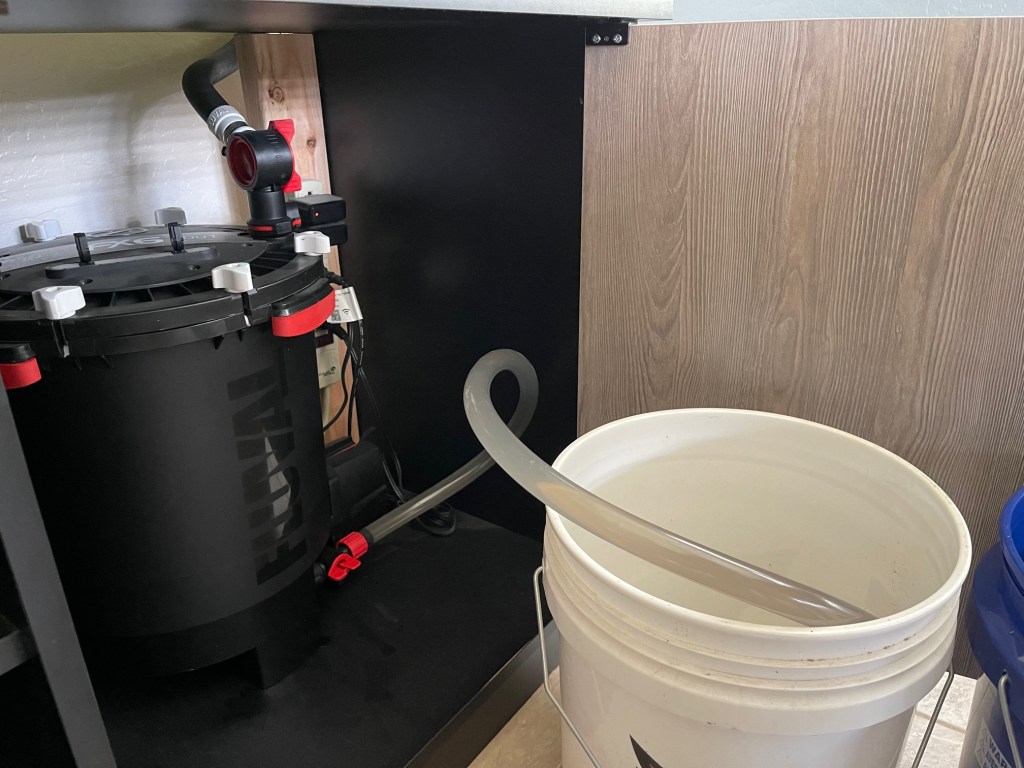
Change 50% of the water right away, using water with a water conditioner that matches the tank temperature. If ammonia is still above 0.5 ppm, repeat in a few hours, and do daily changes until you reach 0.
Step 2: Use a conditioner that binds ammonia
Some conditioners temporarily convert ammonia into a less toxic form for about 24 to 48 hours. This buys time but doesn’t remove it, and most test kits will still show it. Keep doing water changes.
Step 3: Stop feeding briefly
Healthy adult fish can go a day or two without food. Remove any visible uneaten food and feed lightly afterward.
Step 4: Remove the source
Take out dead animals and decaying plant matter, and gently vacuum the substrate with a gravel vacuum.
Step 5: Add oxygen
Raise surface agitation with an airstone or by lowering the water level slightly. Bacteria and fish both need oxygen.
Step 6: Support the bacteria
Keep your filter media and rinse it only in old tank water you saved from a water change. Add live nitrifying bacteria if the tank is new, and don’t over-clean.
Step 7: Consider an ammonia remover (freshwater only)
Ammonia-absorbing media such as zeolite can help in freshwater emergencies, but it stops working and can release ammonia if exposed to salt, and should not be used in saltwater or brackish tanks.
When It’s Serious
Move to emergency mode if fish are gasping at the surface, ammonia is 1 ppm or higher, or fish are showing red gills or burns. Do the water changes above, keep aeration high and test twice a day. Fish with ammonia burns can recover, but damaged gills and skin are easily infected. If problems continue after the water is clean, see our guides on fin rot and bacterial infections, or ask an aquatic vet.
How to Prevent Ammonia Spikes
- Cycle the tank fully before adding fish, and add fish gradually
- Feed only what your fish finish in about 1 to 2 minutes
- Do regular weekly water changes
- Don’t overstock, and choose a filter rated above your tank size
- Never replace all filter media at once
- Test weekly, and always when you add fish or medication
- Quarantine new fish in a separate tank (quarantine tank setup)
Ammonia in Fish Tank FAQ
What level of ammonia is dangerous for fish?
Anything above 0 is a concern. Around 0.25 ppm can stress fish over time, 0.5 ppm needs same-day action, and 1 ppm or more is dangerous.
Why is my ammonia high in a cycled tank?
Common reasons are overfeeding, a dead animal, a filter that was cleaned too aggressively, a medication that harmed the bacteria, or chloramine in tap water.
How long does it take ammonia to go down?
Water changes lower it immediately. If the tank is new, ammonia may keep returning for 4 to 8 weeks until the cycle finishes.
Why do I still have ammonia after a water change?
The source is still producing it (food, waste or a dead fish), the bacteria are too few, or your tap water contains ammonia or chloramine.
Can fish recover from ammonia poisoning?
Often yes if the ammonia is fixed quickly. Gill and skin damage can take weeks to heal.
How do I get rid of ammonia in a fish tank naturally?
Water changes, a mature filter, live plants and lighter feeding are the natural tools. Fast-growing plants absorb some ammonia but won’t fix a serious spike alone.
Can I add fish while ammonia is high?
No. Wait until ammonia and nitrite are both 0.
Final Thoughts
High ammonia is one of the most common and most fixable problems in the hobby. Act quickly with water changes, find the cause, and protect your bacteria colony, and most tanks recover.
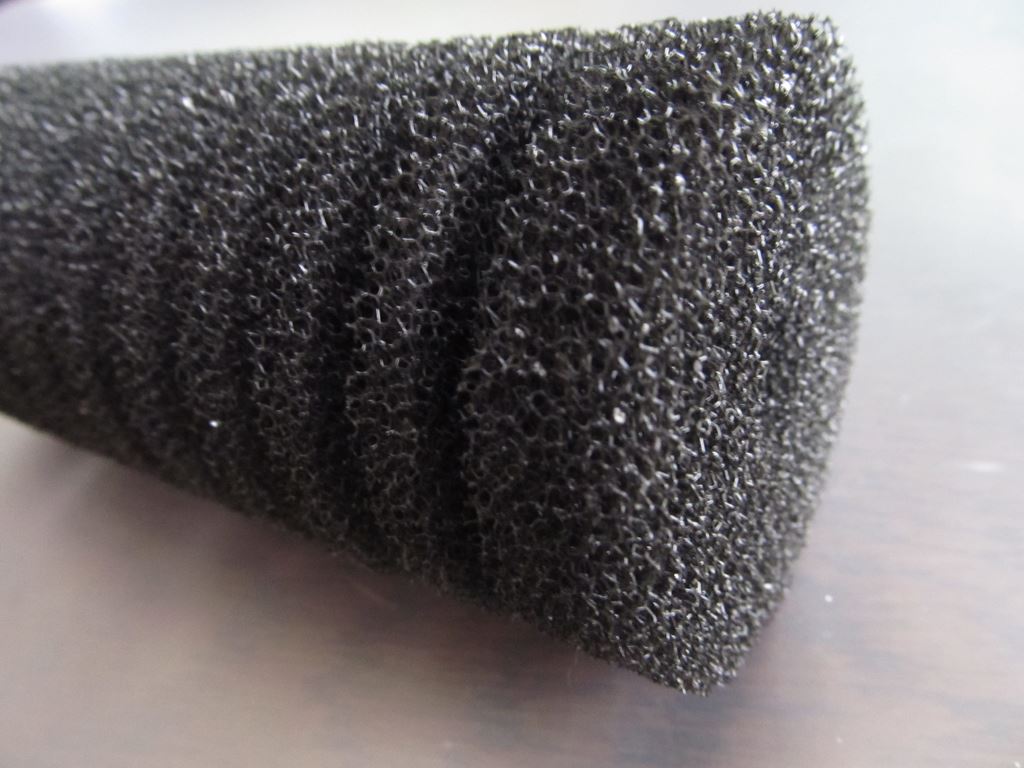
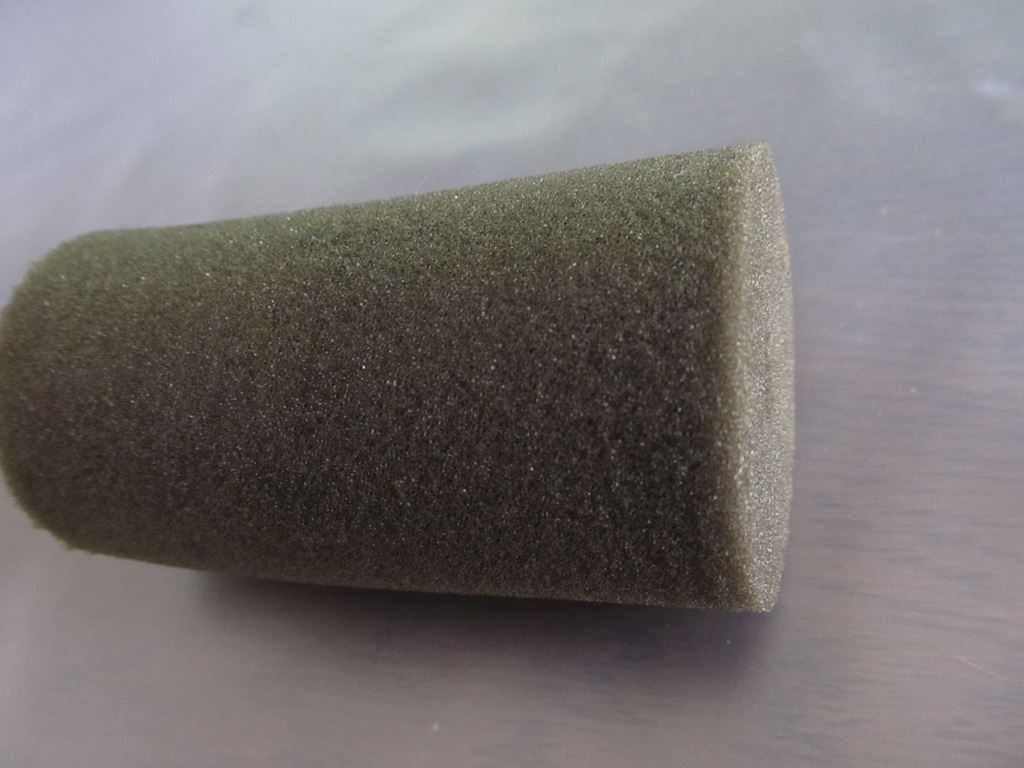
Photos: Aquarium Sponge Filter foam 1 and 2 by Ofkun (CC BY-SA 4.0); Fluval FX6 Canister Filter by Fish Tank Society (CC BY-SA 4.0), via Wikimedia Commons.
Disclaimer: This article is general information, not veterinary advice. For serious or persistent problems, consult an aquatic veterinarian.