
If your fish has white stringy poop, the most likely explanation is that it hasn’t been eating much, so the waste is mostly mucus from its gut lining. If the fish is otherwise active, eating and looks normal, it is often a minor issue that clears up with better feeding and clean water. If the stringy white waste lasts more than a few days, or comes with weight loss, hiding or refusing food, an internal parasite or infection becomes much more likely and needs treatment.
This guide covers every common phrasing of this problem: “my fish has white stringy poop”, “long white stringy poop in goldfish”, “betta white stringy poop”, and the same issue in saltwater and marine fish.
Most Common Causes of White Stringy Poop (Ranked by Likelihood)
- Recent fasting or stress. A fish that skips meals after shipping, a move, or a water change often passes clear or white mucus strings. This is the most common and least worrying cause.
- Constipation or the wrong diet. Dry flakes, pellets that swell, or too little fiber can cause stringy waste, especially in goldfish and bettas.
- Overfeeding or low quality food. Food that is hard to digest ends up as pale, stringy waste.
- Poor water quality. Ammonia, nitrite or very high nitrate stress the gut and reduce appetite. See our guide to high ammonia in a fish tank.
- Internal parasites. Flagellates such as Hexamita (often linked to “hole in the head” in cichlids and discus), intestinal worms and similar parasites cause long, white, stringy, sometimes slimy waste along with weight loss.
- Bacterial gut infection. Usually shows up with bloating, lethargy or a swollen belly. See dropsy in fish.
How to Diagnose Which Cause Applies
Look at the whole fish, not just the poop. These clues narrow it down quickly:
- Eating normally, active, normal body shape: likely fasting, diet, or a one-off event. Watch for 2-3 days.
- Poop is clear or white, then returns to normal color after feeding: it was just mucus from not eating.
- White stringy poop for more than 3-5 days: treat it as a possible parasite problem.
- Thin body, sunken belly, “pinched” look while still eating: classic sign of internal parasites.
- Bloated belly, pinecone scales or raised scales: possible bacterial infection, which is more serious.
- Fish hiding, loss of color, clamped fins or refusing food: stress or illness is advanced. Our guide to betta clamped fins and fish lying on the bottom of the tank can help.
- Several fish affected at once: think water quality or a parasite spreading through the tank.
Step-by-Step Fixes
Step 1: Test your water
Use a liquid freshwater master test kit. Ammonia and nitrite should be 0 ppm, nitrate under 20-40 ppm. Fix any bad numbers with a 30-50% water change using a water conditioner.
Just a heads up: some of the links in this post are affiliate links, which means I may earn a small commission if you buy through them. But no worries, it is at no extra cost to you. Also, as an Amazon Associate I earn from qualifying purchases.
Step 2: Check your feeding
Feed only what the fish eats in 1-2 minutes, once or twice a day. Soak dry food before feeding, and fast the fish for 24-48 hours if it is constipated. Goldfish especially do better on soaked pellets.
Step 3: Try a shelled pea
For freshwater fish that are constipated, a small piece of cooked, shelled, skinned pea acts as fiber and often gets things moving. Many fish also take high-quality sinking pellets or frozen foods more readily than flakes.
Step 4: Remove stress
Check temperature, tank mates and hiding places. Stress is a common reason fish stop eating in the first place. If you recently added fish, review our quarantine tank guide.
Step 5: Move to a hospital tank if it continues
If stringy white poop continues past 3-5 days with weight loss, set up a bare hospital tank, keep the water spotless and watch the fish.
Step 6: Consider an anti-parasitic treatment
Hobbyists commonly use medicated foods with a medication such as metronidazole (for flagellates like Hexamita) or praziquantel-based products for worms and flukes. Products vary, and the right choice depends on the species and symptoms, so read labels carefully and ask an experienced fishkeeper or aquatic vet. Remove carbon from the filter while medicating, and be careful with invertebrates and scaleless fish.
When to Worry
Take it seriously if you see any of these:
- Stringy white poop for a week or longer
- Steady weight loss while the fish still eats
- Not eating at all for several days
- A swollen belly or raised scales
- Multiple fish sick at once
- Bloody or stringy waste with red thread-like worms hanging from the vent (a sign of Camallanus worms)
In those cases, isolate the affected fish, treat promptly, and consult an aquatic vet if possible.
White Stringy Poop in Specific Fish
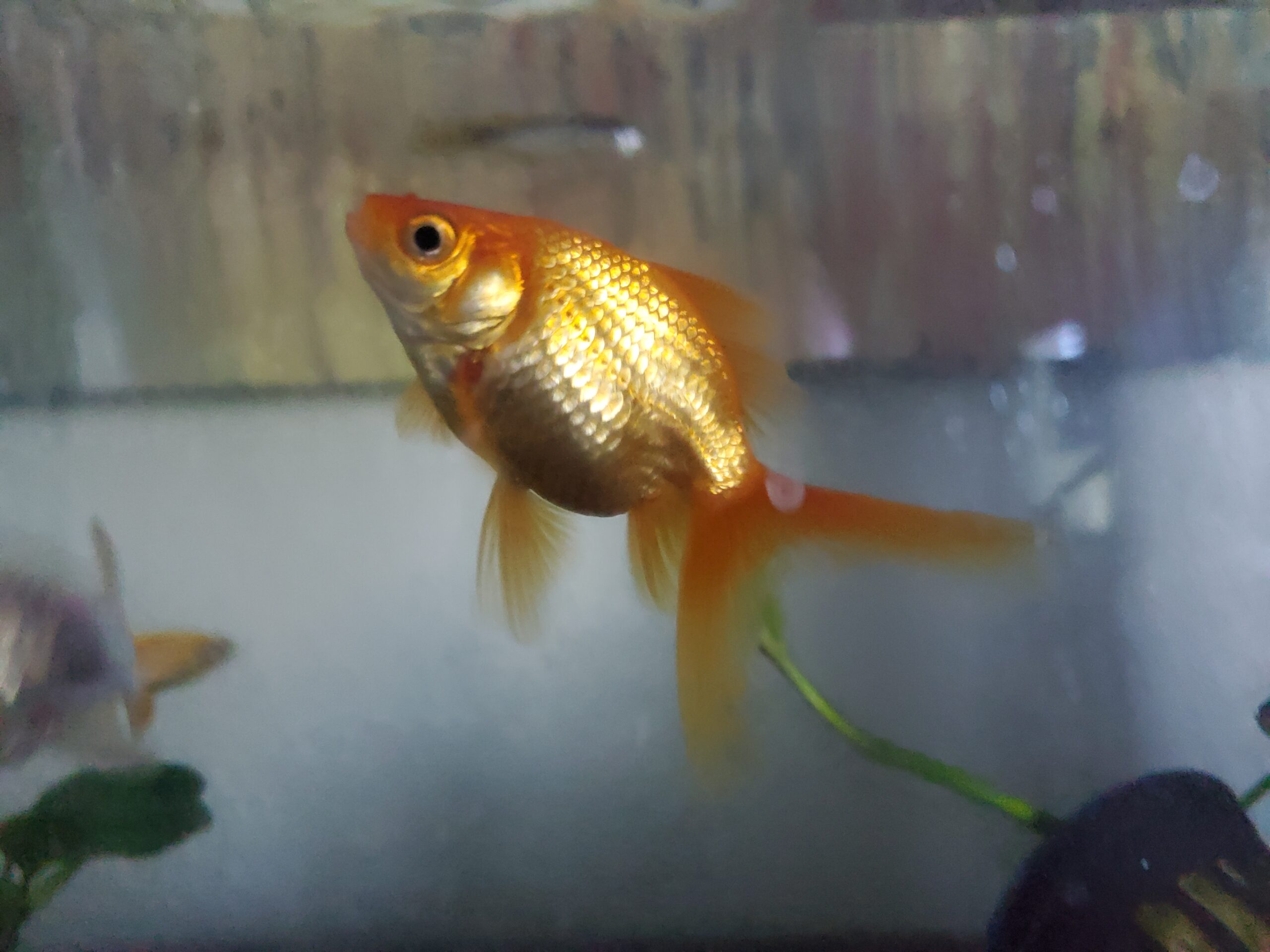
- Goldfish: Often constipation or diet. Goldfish waste is normally thick and stringy, so white strings with floating or tilting also point to swim bladder issues. See our goldfish care guide.
- Bettas: Overfeeding and low-fiber pellets are common. Fast for a day, feed soaked food and keep the water warm and clean. See our betta fish care guide.
- Cichlids and discus: White stringy waste plus weight loss and dark color can mean Hexamita. Treat early.
- Saltwater and marine fish: Can come from stress after capture, poor diet, or internal parasites. Quarantine every new marine fish and offer varied foods.
How to Prevent It
- Quarantine new fish for 4 weeks
- Do regular weekly water changes
- Feed varied, high-quality foods and include some fiber
- Don’t overfeed
- Keep stress low with the right tank size, tank mates and hiding spots
White Stringy Poop FAQ
Why does my fish have white stringy poop?
Most often because it has not been eating well, so the waste is mucus. Longer-lasting white strings can signal internal parasites.
Is white stringy poop in fish normal?
Occasionally, yes, especially after fasting or stress. If it persists, it is not normal.
What does white stringy poop mean in goldfish?
Usually constipation, overfeeding or a diet issue. Soaked food, a pea and clean water often help.
My betta has white stringy poop. Should I worry?
Not right away. Fast for 24 hours, test water and feed soaked pellets. Worry if it lasts several days or the betta is thin or lethargic.
Is white stringy poop in fish contagious?
Parasites can spread between fish in the same tank, but the cause is often simply diet or stress.
How long does white stringy poop last?
Diet or fasting issues typically clear in 2-4 days. Parasite problems continue until treated.
What is the best treatment for white stringy poop in fish?
Fix water and diet first. If it continues with weight loss, anti-parasitic medicated food is the usual next step.
Final Thoughts
White stringy poop is a clue, not a diagnosis. Look at appetite, behavior and body shape, fix the basics first, and escalate to treatment only if the problem persists.
Photo credits: Fantail Goldfish Carrot by Ry362, CC BY-SA 3.0; Aquarium Sponge Filter foam 1 by Ofkun, CC BY-SA 4.0, via Wikimedia Commons.
Disclaimer: This article is general information, not veterinary advice. For serious or persistent problems, consult an aquatic veterinarian.