
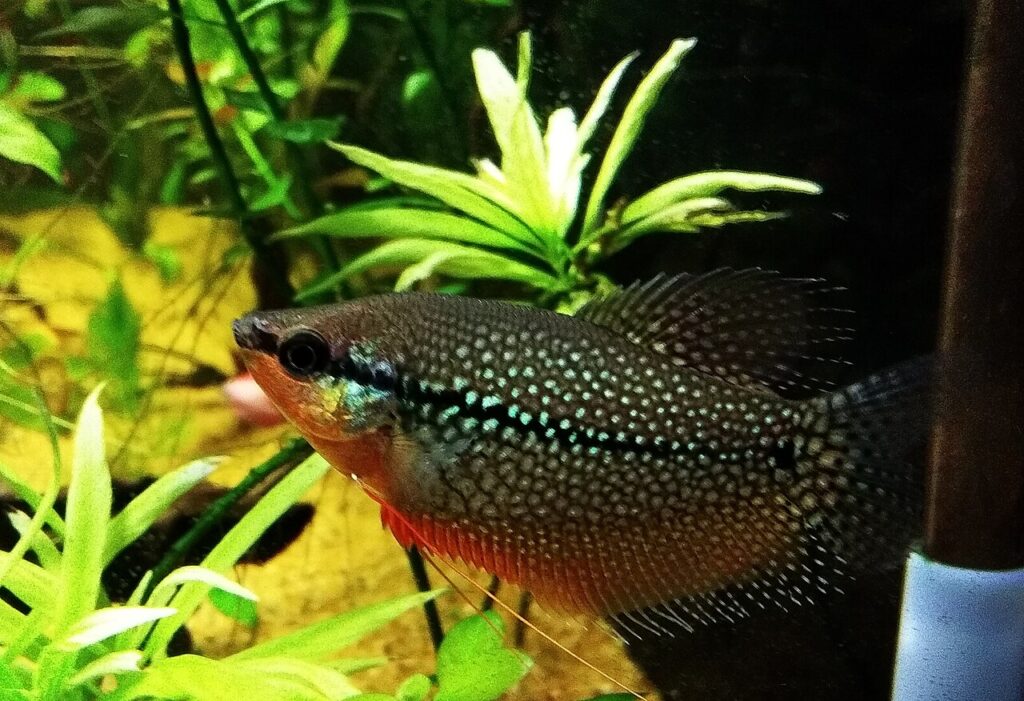
The pearl gourami (Trichopodus leerii) is one of the most elegant freshwater fish you can keep. Its body is covered in tiny pearl-like dots, a dark lateral stripe runs along its side, and males develop a glowing orange to red throat and chest in breeding condition. Add long thread-like pelvic fins and a calm personality, and it is easy to see why this species is a favorite for planted community tanks.
This guide covers everything you need for good pearl gourami care.
Overview and Appearance
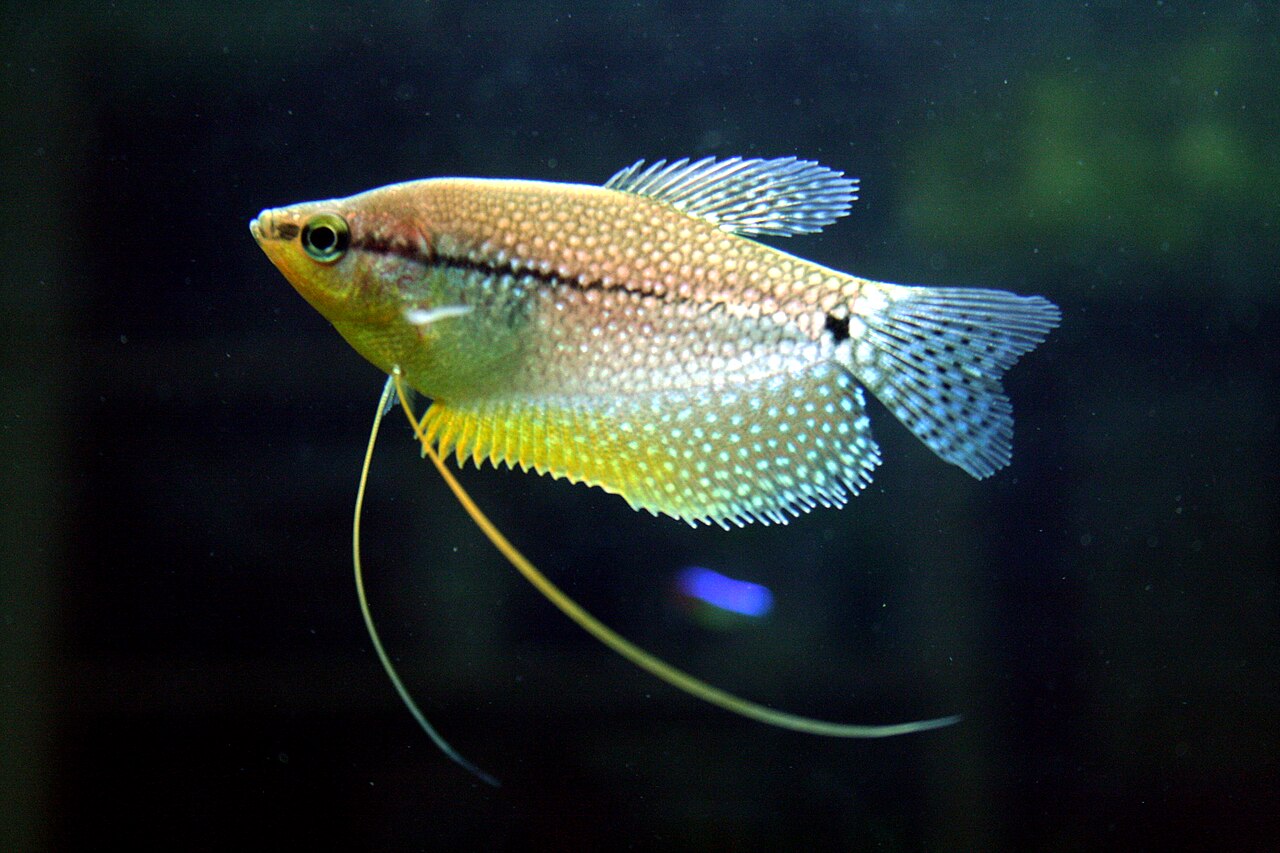
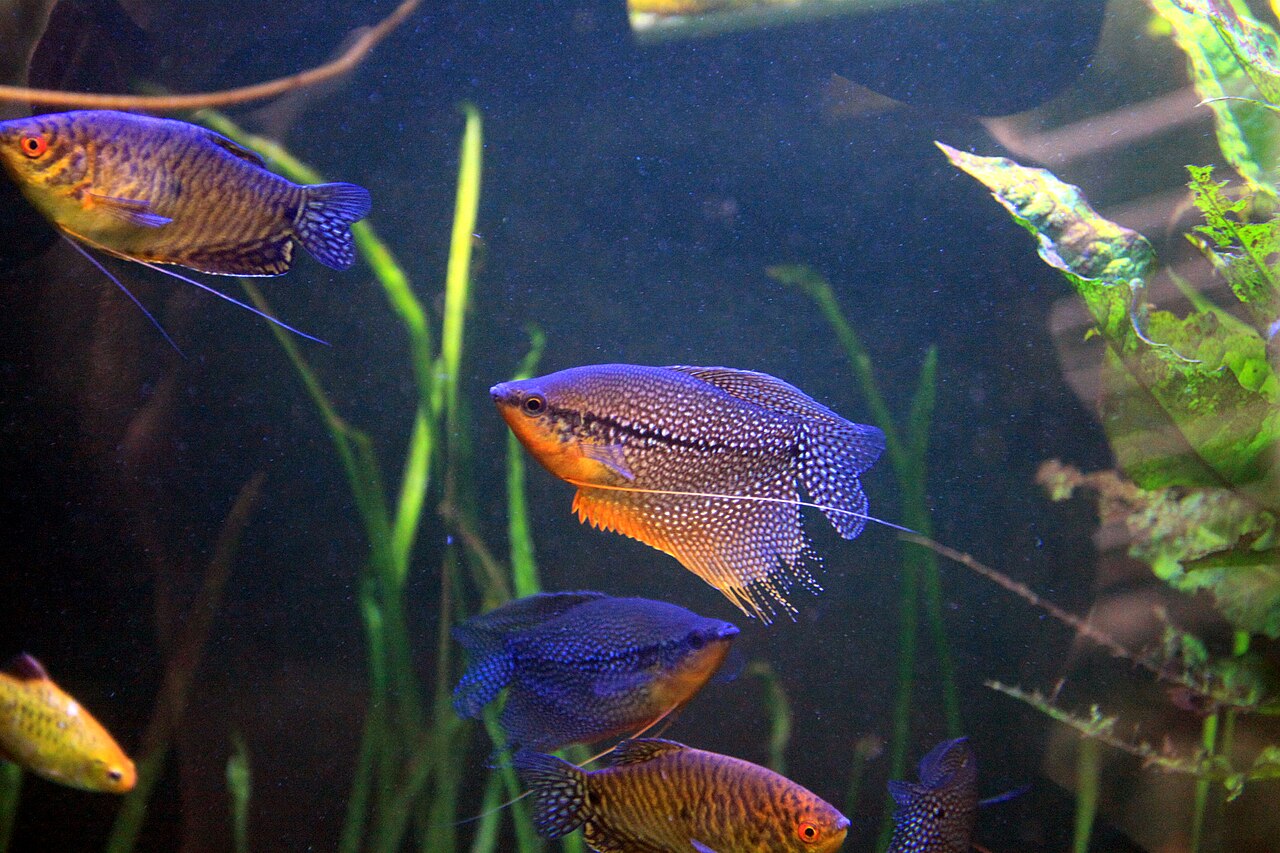
Pearl gouramis are labyrinth fish from Southeast Asia, native to slow, heavily planted waters in Thailand, Malaysia, Sumatra and Borneo. They have a silver-brown body with a lace-like pattern, and a zigzag dark stripe from nose to tail. Males have a longer, pointed dorsal fin and bright orange-red chest. Females are duller with a rounded dorsal fin.
Size and Lifespan
Pearl gouramis reach about 4-5 inches (10-12 cm) and live 4-8 years with good care. Their thread-like pelvic fins are sensitive feelers used to explore the world around them, so avoid sharp decor and never trim them.
Buying a Healthy Pearl Gourami
Choose fish that are active, fully colored and have intact fins. Avoid fish that sit at the bottom or surface with clamped fins, have white spots, or look thin. Because stress is the main trigger for disease in gouramis, drip acclimate new fish over 30-60 minutes and dim the lights for the first day. Keep a group of 3-5 young fish rather than a single large one if the tank allows, but choose females if you’re unsure about male aggression.
Tank Size and Setup
A single pair or small group needs at least 30 gallons. A 20 gallon works for one fish but is tight. These are peaceful fish that like cover.
- Plants: Dense planting plus floating plants such as water sprite or frogbit. Floating plants make pearls feel secure and give males bubble nest anchor points.
- Lid: Essential, because gouramis breathe air from the surface. Keep air above the water close to the water temperature.
- Flow: Gentle. Use a sponge filter or a low-flow filter.
- Substrate and decor: Dark sand or fine gravel, driftwood and caves.
Just a heads up: some of the links in this post are affiliate links, which means I may earn a small commission if you buy through them. But no worries, it is at no extra cost to you. Also, as an Amazon Associate I earn from qualifying purchases.
Water Parameters
- Temperature: 77-82°F (25-28°C). Use a reliable aquarium heater.
- pH: 6.0-8.0, ideally 6.5-7.5
- Hardness: Soft to moderate
- Ammonia and nitrite: 0 ppm
Pearl gouramis tolerate a range of conditions but dislike swings. Test with a liquid test kit and treat tap water with a dechlorinator. Cycle the tank first with our cycling guide.
Diet
Pearl gouramis are omnivores. Feed a quality tropical flake or micro pellet as a staple, plus frozen or live brine shrimp, bloodworms, daphnia and blanched vegetables a few times a week. They have small mouths, so keep portions small. Feed once or twice daily.
Temperament and Tank Mates
Pearls are among the calmest gouramis, but males can squabble with each other, so keep one male with several females or a single pair in smaller tanks.
Good tank mates:
- Harlequin rasboras and other peaceful rasboras
- Corydoras
- Cardinal and rummy nose tetras
- Kuhli loaches (see our kuhli loach guide)
- Otocinclus
Avoid: Fin nippers like tiger barbs, aggressive cichlids and bettas, which may fight with gouramis. Fast, boisterous fish stress pearls and make them hide.
Breeding
Pearl gouramis are bubble nest builders and breed readily in a quiet, planted tank.
- Condition the pair with live and frozen foods.
- Provide floating plants and keep the surface calm.
- The male builds a bubble nest, often woven with plant bits, and courts the female beneath it.
- The female lays hundreds of eggs. The male collects them into the nest and guards them.
- Remove the female after spawning, and then the male once fry are free swimming (about 3-4 days).
- Feed fry infusoria and liquid fry food, then baby brine shrimp.
Common Health Issues
- Ich and fungal infections: Often triggered by stress. See white spots on fish.
- Fin rot: Usually from poor water. See fin rot.
- Gourami iridovirus (often called dwarf gourami disease): Mostly reported in dwarf gouramis, but other gouramis can be affected. It causes lethargy, color loss and sores, and there is no cure. Buy from reputable sources.
- Bloating and constipation: Avoid overfeeding.
Quarantine new fish, as described in our quarantine tank guide.
How Difficult Are Pearl Gouramis?
Pearl gouramis are beginner friendly to intermediate. They’re hardy once settled, but they need a mature, planted tank and calm tank mates. Fish from commercial farms can arrive stressed, so buy healthy, active fish and acclimate slowly. Compare them with the dwarf gourami, which is smaller but more prone to disease.
Pearl Gourami Quick Facts
- Scientific name: Trichopodus leerii
- Origin: Thailand, Malaysia, Sumatra, Borneo
- Adult size: 4-5 inches
- Minimum tank: 30 gallons (20 for a single fish)
- Temperature: 77-82°F
- Diet: Omnivore
- Temperament: Peaceful, shy
- Care level: Beginner to intermediate
Pearl Gourami FAQ
How big do pearl gouramis get?
About 4-5 inches.
How long do pearl gouramis live?
Typically 4-8 years.
What size tank do pearl gouramis need?
At least 30 gallons for a group, or 20 gallons for a single fish.
Can pearl gouramis live together?
Yes, but keep one male with several females to limit male aggression.
Are pearl gouramis good for beginners?
Yes, if the tank is cycled and planted, and tank mates are peaceful.
Can pearl gouramis live with bettas?
Not recommended. They can clash with bettas.
Do pearl gouramis need floating plants?
They are not required, but strongly recommended because they reduce stress and let males build nests.
Final Thoughts
Pearl gouramis offer an elegant look and a gentle nature. Give them a roomy planted tank, warm clean water and calm tank mates, and they will reward you with years of beauty.
Photo credits: Pearl gourami (cropped) by “פעיל למען זכויות אדם,” CC BY-SA 4.0; Trichopodus leerii in Botanic garden in Teplice by Chmee2, CC BY 3.0; Trichopodus leerii h080 by h080, CC BY-SA 2.0, via Wikimedia Commons.
Disclaimer: This article is general information, not veterinary advice. For serious or persistent problems, consult an aquatic veterinarian.