
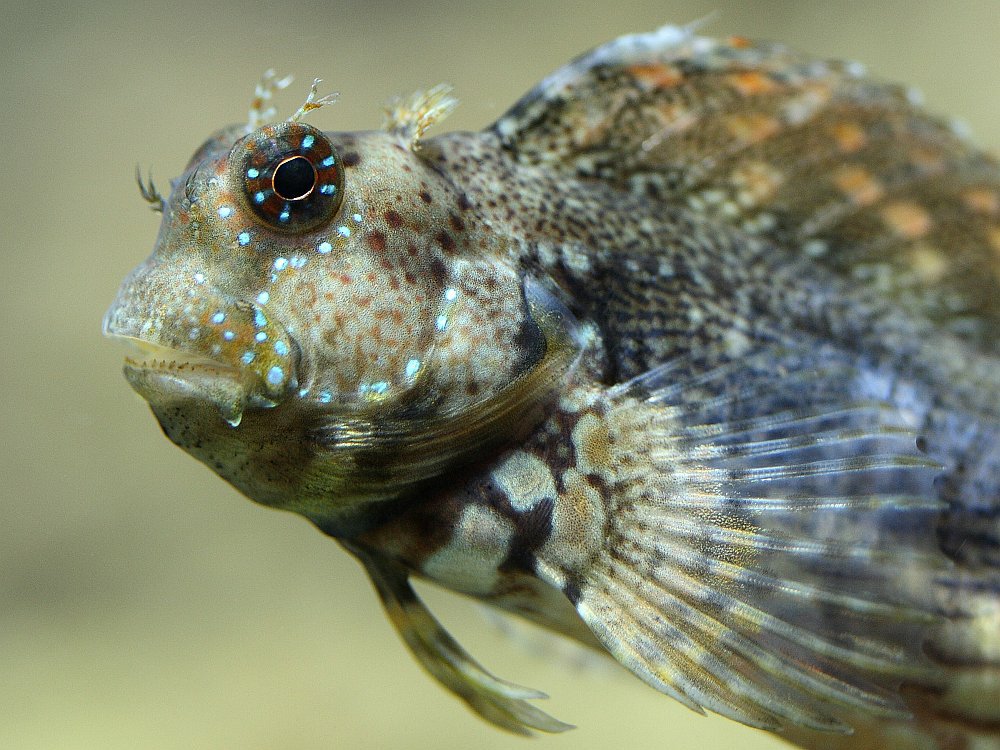
The lawnmower blenny (Salarias fasciatus), also called the algae blenny, is a lovable, comical grazer with expressive eyes and feathery “eyebrows.” It perches on rocks and spends the day scraping algae off every surface. It is one of the most useful algae eaters in the marine hobby, but it has a catch: it needs a steady supply of algae, and many starve in clean, new tanks. Here is how to get lawnmower blenny care right.
Overview and Appearance
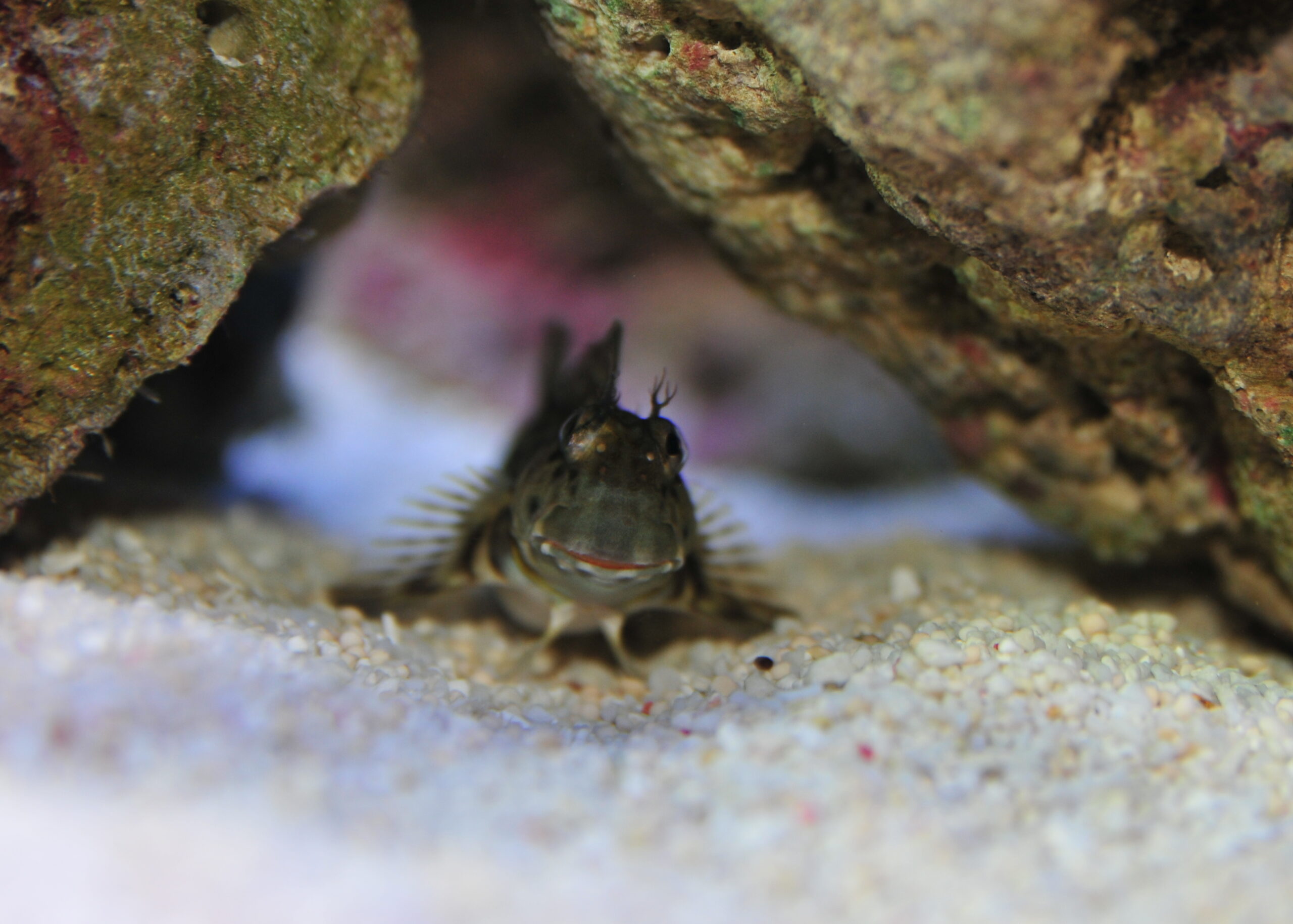
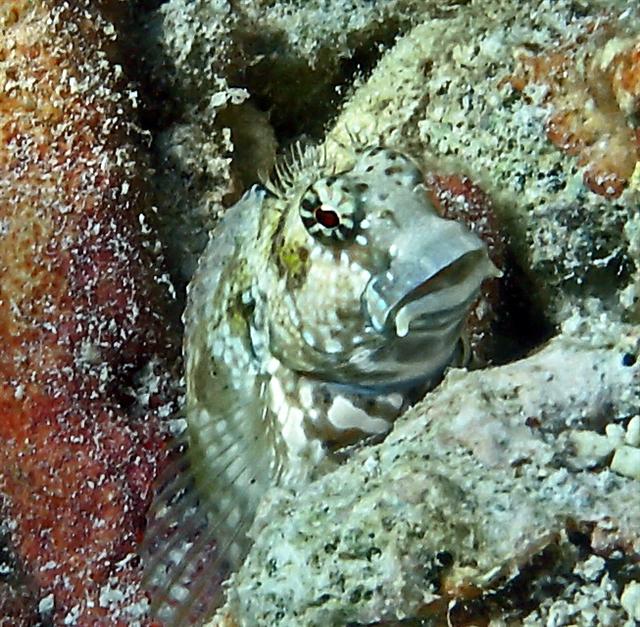
Lawnmower blennies live on reef flats and rocky shallows across the Indo-Pacific, where they graze on algae growing on rock. They are mottled brown, gray and green, with a blunt head, comb-like teeth, short fringed cirri above the eyes and a habit of cocking their head at you. Their coloring shifts to blend into their surroundings.
Size and Lifespan
Adults reach about 5-6 inches (13-15 cm). With good care, a lawnmower blenny can live around 2-4 years or more, though many die early from starvation.
Tank Size and Setup
Keep one lawnmower blenny in a tank of 30 gallons or more. Bigger is better because larger tanks grow more algae.
- Mature tank: Add it only to a tank that has been running for at least 3-6 months and has visible film algae and diatoms. See our saltwater aquarium setup guide.
- Live rock: Plenty of rock surface for grazing and caves to retreat into.
- Lid: Blennies jump. Cover every gap.
- Flow: Moderate, with calm spots to rest.
- Lighting: Normal lighting that supports algae growth on the rocks.
Water Parameters
- Temperature: 72-78°F (22-26°C)
- Salinity: 1.023-1.025 specific gravity
- pH: 8.1-8.4
- Ammonia and nitrite: 0 ppm
- Nitrate: Under 20 ppm
Test often with a saltwater test kit and keep salinity steady with a refractometer.
Just a heads up: some of the links in this post are affiliate links, which means I may earn a small commission if you buy through them. But no worries, it is at no extra cost to you. Also, as an Amazon Associate I earn from qualifying purchases.
Diet
The lawnmower blenny is a herbivore that lives on film algae, diatoms and short hair algae. It does not eat thick, long hair algae or cyanobacteria in any useful way, so do not buy it as a cure for an algae outbreak. See hair algae in an aquarium for what actually works.
- In the tank: Let algae grow on a portion of the rock. A very clean tank cannot sustain them.
- Supplemental foods: Dried seaweed (nori) on a clip, spirulina-based pellets, and frozen herbivore foods with algae.
- Occasional meaty foods: Some accept Mysis shrimp, though they should not be the main diet.
- Feeding frequency: Offer nori or herbivore food every day, particularly in a new tank.
A thin, hollow-bellied blenny that spends all day grazing the glass is not getting enough. Feed it before it is in trouble.
Temperament and Tank Mates
Lawnmower blennies are peaceful toward most fish but territorial with other blennies, especially similar-looking ones, and with other algae eaters that compete for rock. Keep one per tank unless you have a very large system.
- Good tank mates: Ocellaris clownfish, royal grammas, green chromis, firefish gobies and gentle reef fish.
- Be careful with: Other blennies, gobies that perch on the same rock, and large aggressive fish that will eat it.
- Reef safe? Mostly. They graze on rock, but may occasionally pick at clam mantles, soft coral or sessile invertebrates. Watch for trouble.
Compare similar species like the bicolor blenny and scooter blenny.
Breeding
Blennies are egg-laying cave spawners. Spawning in a home tank is rare but possible with a pair. The female lays sticky eggs in a hole or tube, and the male guards them. The larvae drift in open water and need tiny live foods and specialized rearing. Captive breeding is not a realistic goal for most hobbyists.
Buying and Acclimating a Lawnmower Blenny
Choose carefully, because a poor specimen is hard to rescue.
- Look for a plump belly and clear eyes. A concave, sunken belly means the fish is already starving.
- Watch it graze. A healthy blenny actively scrapes rock and glass.
- Avoid fish with frayed fins, white spots or labored breathing.
- Prefer a fish that has been in the store for at least a week and is eating.
- Drip acclimate, then dim the lights for the first evening.
Add other peaceful fish first and the blenny last, so it does not claim the whole tank as its territory before they arrive.
Common Health Issues
- Starvation: The leading cause of death. Always ensure a steady source of algae.
- Marine ich: Spots on the body and fins. Treat in a hospital tank. See our quarantine tank guide.
- Jumping: Blennies are escape artists. A missing fish is often on the floor.
- Stress and hiding: New fish may hide for days. See fish hiding all the time.
- Intestinal issues from the wrong diet: A diet of only meaty foods can cause problems.
Quarantine all newcomers for at least four weeks. For persistent problems, consult an aquatic veterinarian.
Difficulty Level
Easy to moderate. Lawnmower blennies are hardy, but they need an established tank with algae, and they must be fed. In a new, clean tank they are a poor choice. In a mature tank with plenty of rock and a little supplemental feeding, they are very rewarding.
Lawnmower Blenny FAQ
What do lawnmower blennies eat?
Film algae, diatoms and short hair algae, plus nori and herbivore foods.
How big do lawnmower blennies get?
Up to 5-6 inches (13-15 cm).
What size tank does a lawnmower blenny need?
At least 30 gallons, in a mature tank with algae growing on the rock.
Are lawnmower blennies reef safe?
Mostly. They may nip at clam mantles and some soft corals. Monitor them.
Why is my lawnmower blenny not eating?
Usually a new fish is stressed, or the tank has too little algae. Offer nori and herbivore pellets.
Can I keep two lawnmower blennies together?
Usually not. They are territorial with their own kind and other blennies.
Does a lawnmower blenny eat hair algae?
Only short hair algae. It will not clear a heavy outbreak.
How long do lawnmower blennies live?
Around 2-4 years or more.
Final Thoughts
The lawnmower blenny is a personality fish that earns its place in a reef tank, as long as you treat it as a pet and not an algae-removal machine. Give it a mature tank, supplement its diet and keep a tight lid, and it will be an engaging resident.
Photo credits: Salarias fasciatus Aquarium DG by Dirk Godlinski, CC BY-SA 3.0; Lawnmower Blenny Smile by Denis Cheong (Zylantha), CC BY-SA 4.0; Salarias fasciatus 2 by Rainer Kretzberg, CC BY 3.0, via Wikimedia Commons.
Disclaimer: This article is general information, not veterinary advice. For serious or persistent problems, consult an aquatic veterinarian.