
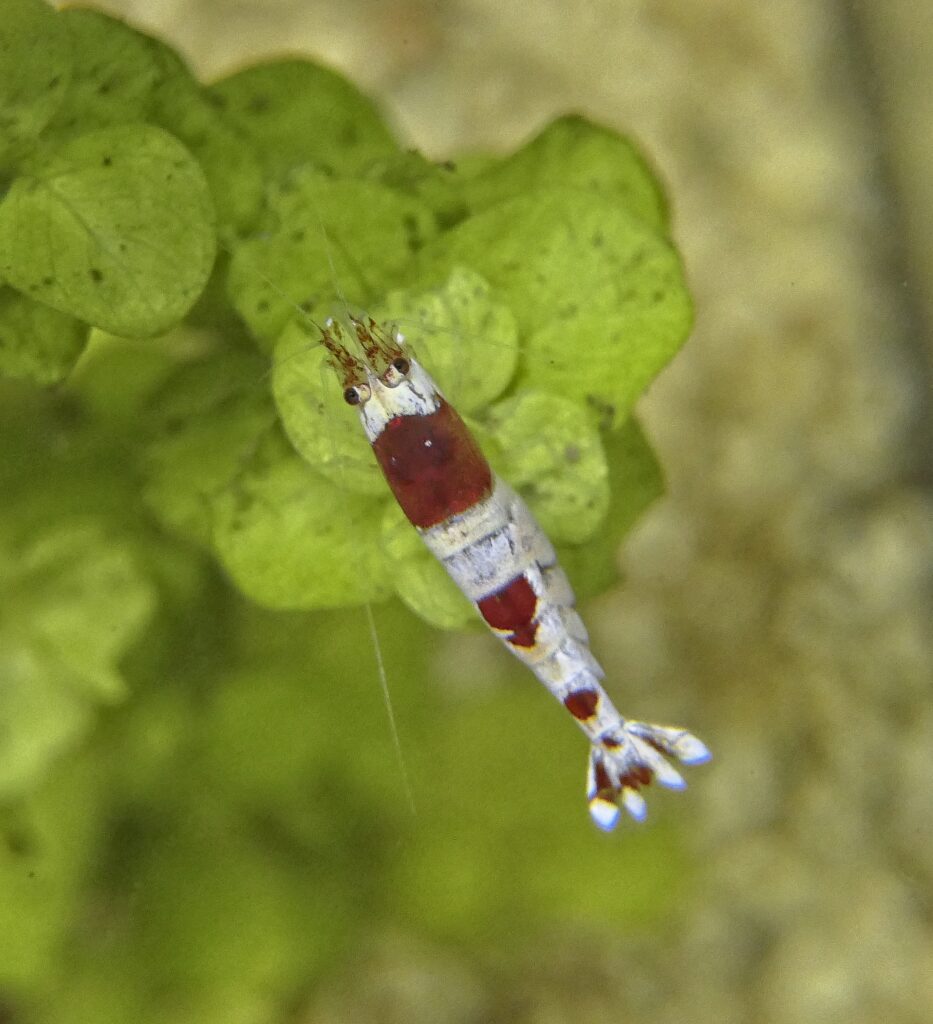
Crystal red shrimp (CRS) are the aristocrats of the shrimp hobby. Their bold red and white stripes make them look like candy, but they are a different animal from beginner cherry shrimp. CRS need soft, slightly acidic, very stable water, and a mature tank. Get the water right and they are active, breed steadily and are a joy; get it wrong and they die with no obvious warning.
This guide explains exactly what they need and the common reasons they fail.
Crystal Red Shrimp Overview and Appearance
Crystal red shrimp are a color form of Caridina cantonensis, a species from Asian streams. They were selectively bred from Japanese and Taiwanese lines into the red and white banded shrimp known today. Fine quality shrimp have clean red bands and clear, glassy white, and are graded by how much white and how clean the pattern is, with grades such as SS, S, A and lower. Better grades cost more, but all CRS have the same basic needs.
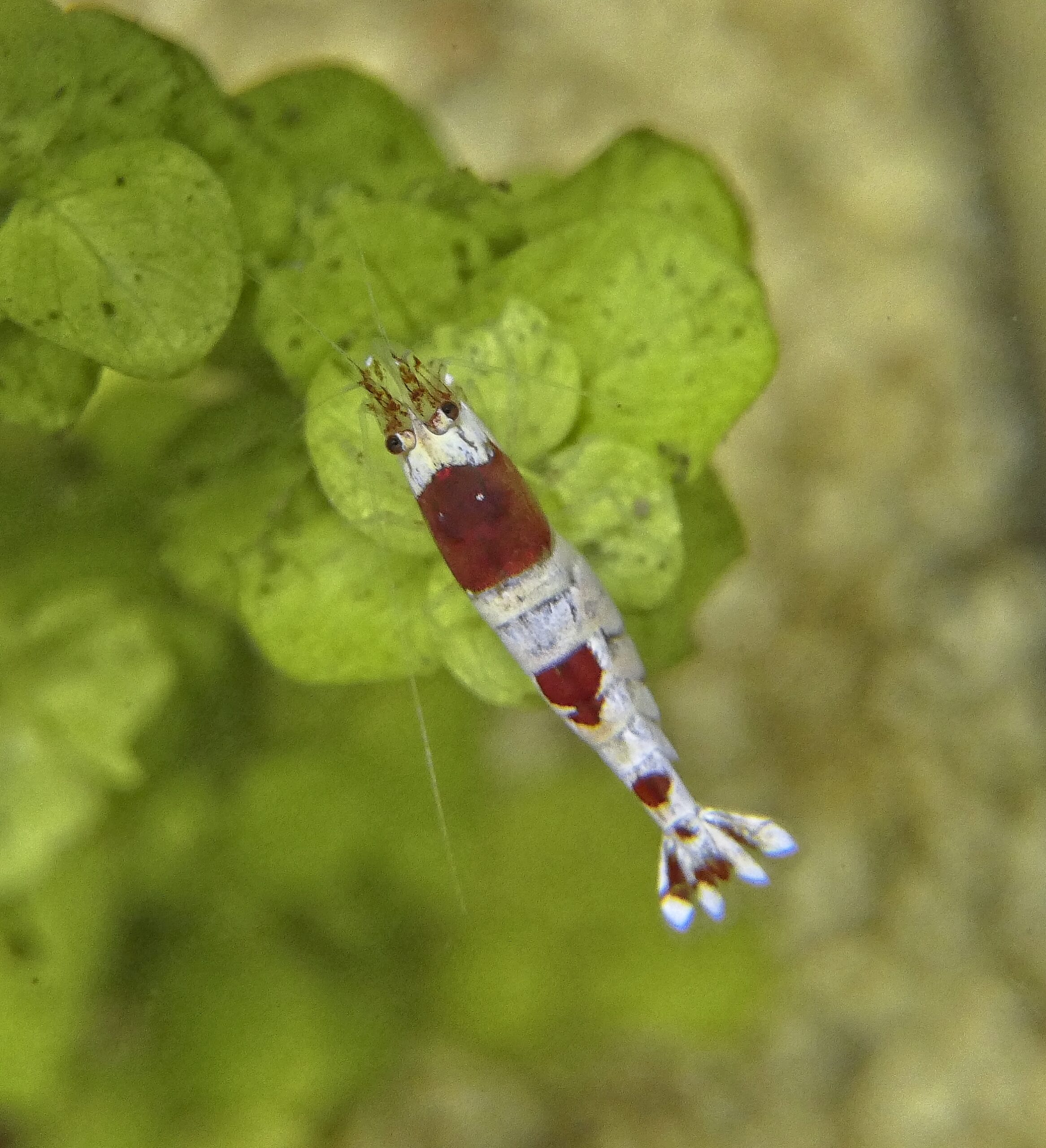
Related shrimp include red bee shrimp (thinner red bands), black bee, shadow bee and Taiwan bee. They all share the same water needs.
Size and Lifespan
- Size: about 1 to 1.25 inches (2.5-3 cm); females are slightly larger
- Lifespan: around 1.5-2 years in good conditions
Tank Size and Setup
You can keep CRS in a tank as small as 5 gallons, but 10 gallons or more is much more forgiving because water parameters change more slowly. A small group of 8-10 shrimp is a good start, and a colony grows quickly.
- Cycle the tank thoroughly. CRS are very sensitive to ammonia and nitrite. Wait at least 4-6 weeks, and ideally longer, with visible biofilm. See our guide to cycling a fish tank.
- Substrate: an active buffering shrimp soil such as ADA Amazonia or Fluval Stratum-type aquasoil keeps pH and KH low. Inert gravel will not do that.
- Filtration: a gentle sponge filter is ideal, since shrimplets cannot be sucked in and biofilm grows on the sponge.
- Plants and hardscape: moss, Java fern, Anubias, driftwood and leaf litter provide grazing surfaces and hiding spots.
- Heater: optional in most homes. CRS prefer cooler water and dislike swings.
- Lid: helpful to prevent escapes and reduce evaporation, which changes TDS.
Just a heads up: some of the links in this post are affiliate links, which means I may earn a small commission if you buy through them. But no worries, it is at no extra cost to you. Also, as an Amazon Associate I earn from qualifying purchases.
Water Parameters (This Is the Hard Part)
CRS come from soft, acidic water. Tap water in most places is too hard. The usual approach is RO or distilled water remineralized with a shrimp mineral product such as GH+ or Caridina remineralizer, plus buffering soil.
- Temperature: 68-76°F (20-24°C). Stay below 78°F.
- pH: about 5.8-6.8 (6.0-6.6 is a common sweet spot)
- GH: about 4-6 dGH
- KH: about 0-2 dKH (very low)
- TDS: about 100-150 ppm (many keepers aim around 120-130)
- Ammonia and nitrite: 0 ppm
- Nitrate: under 10-15 ppm
A TDS meter and a good GH/KH test kit are worth buying. Stability matters more than perfect numbers, so make changes slowly and avoid big swings.
Do small water changes (10-15% weekly), pour or drip slowly, and match TDS and temperature. For common causes of sudden deaths, see our guide to shrimp dying after a water change.
Diet and Feeding
CRS graze on biofilm, algae, and powdered or small-pellet food. They do not need much.
- Staple: a good shrimp food or pellets, fed 2-4 times a week
- Supplements: blanched spinach, nettle leaves, Indian almond leaves, mineral-rich foods
- Biofilm: leaf litter and aged driftwood provide continual grazing
- Rule: feed so that everything is gone in 1-2 hours. Uneaten food rots and creates ammonia, which they hate.
Temperament and Tank Mates
CRS are peaceful but delicate and tiny, so most fish will eat them or stress them.
Good tank mates: other Caridina shrimp with the same needs, nerite snails (see nerite snail care), and sometimes tiny fish such as Chili rasboras or Celestial Pearl Danios in a large, planted tank. Many keepers keep them in a species-only tank.
Avoid: most fish, crayfish, large snails that eat plants, and neocaridina shrimp, which like harder water. Do not keep cherry shrimp with CRS if you want clean colors; see cherry shrimp care. Different Caridina lines can interbreed and produce muddy "wild type" shrimp.
Breeding
Crystal red shrimp breed readily when conditions are right. Females carry about 20-30 eggs under the tail for roughly 4 weeks. The babies are fully formed tiny shrimp, with no larval stage. Keep parameters steady, offer biofilm and powdered food, and give them time. Culling poor patterns improves colony color, but it is optional.
Common Health Issues
- Sudden die-offs from unstable parameters, ammonia or TDS swings
- Failed molts (the "white ring of death") from poor minerals, stress or sudden changes
- Copper and medication poisoning. Avoid fish meds and copper products.
- Bacterial and fungal growth from overfeeding
- Vorticella and other parasites
- Old tank water and low oxygen
If shrimp are dying, test ammonia, nitrite, pH, GH, KH, TDS and temperature, and stop feeding for a few days. See our high ammonia guide. Quarantine new shrimp where possible; our quarantine tank guide covers the setup, and an experienced shrimp keeper or aquatic vet can help with persistent problems.
Honest Difficulty Level
Advanced. CRS are not for first-time aquarists or for fresh tanks. They are a reasonable second or third step once you have a mature, stable shrimp tank and a way to control water parameters. If you want an easier shrimp first, start with the cherry shrimp.
Crystal Red Shrimp FAQ
How hard are crystal red shrimp to keep?
Difficult. The shrimp are hardy once settled, but the soft, stable water they need is hard to hold for beginners.
What water parameters do crystal red shrimp need?
pH about 5.8-6.8, GH 4-6, KH 0-2, TDS about 100-150 ppm, and a temperature around 68-76°F.
Why are my crystal red shrimp dying?
Usually unstable water, ammonia or nitrite in a young tank, wrong GH/KH, or sudden changes at water change or acclimation.
Can I keep crystal red shrimp in tap water?
Only if your tap water is already very soft and acidic. Most keepers use remineralized RO water.
Do crystal red shrimp need a heater?
Often no. They prefer cooler water, and a heater can push temperatures too high in summer.
Can crystal red shrimp live with fish?
Usually not recommended. A species-only tank is safest.
Can crystal red shrimp live with cherry shrimp?
It is not a good idea. Their water needs differ, and different lines can mix colors if bred.
How long do crystal red shrimp live?
About 1.5-2 years.
What do crystal red shrimp eat?
Biofilm, algae and a little shrimp food, plus leaves and blanched veggies.
How many crystal red shrimp should I buy?
A group of 8-10 gives you a chance of a colony.
Final Thoughts
Crystal red shrimp reward patience. Build a mature tank, measure and stabilize your water, and go slowly. Do that and they will breed, color up and become one of the most striking sights in your home.
Photo credits: Caridina logemanni Red Bee by 5snake5, CC0; Crystal red shrimp closeup by Kyreb, CC0, via Wikimedia Commons.
Disclaimer: This article is general information, not veterinary advice. For serious or persistent problems, consult an aquatic veterinarian or an experienced shrimp keeper.