
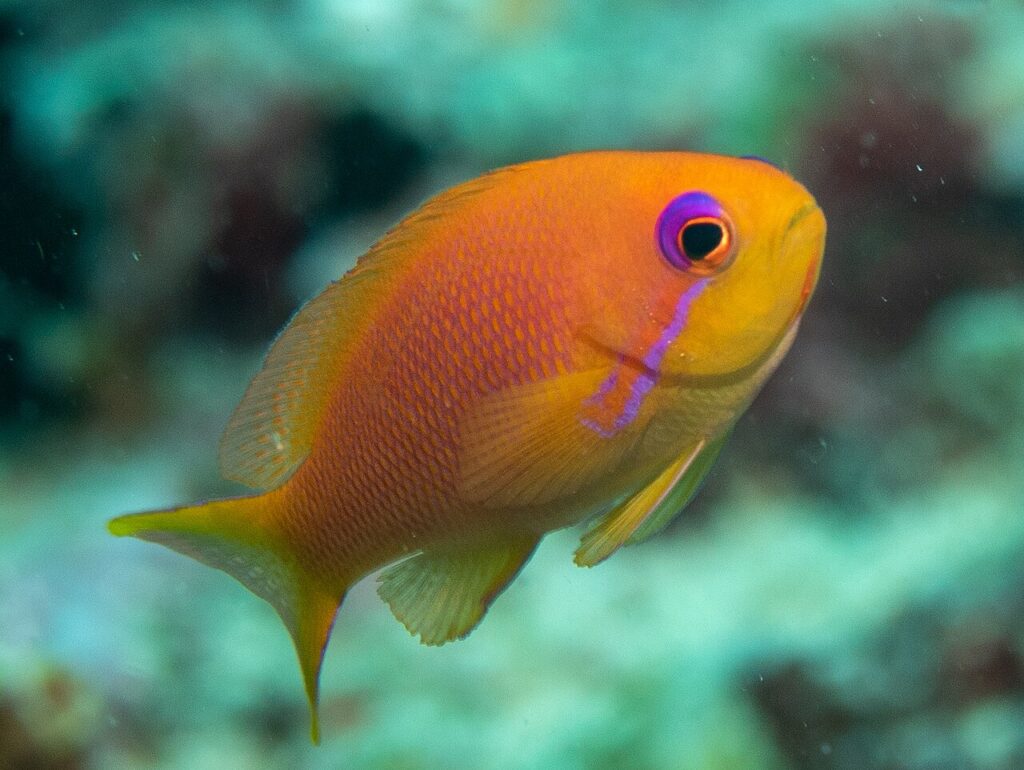
The lyretail anthias (Pseudanthias squamipinnis), also called the sea goldie, is one of the most colorful schooling reef fish, but it is demanding. These fish are plankton feeders that need frequent meals, a large tank and a group of their own kind. A single fish in a small tank, fed once a day, is the classic recipe for losing one within weeks. Done right, a harem is a showpiece.
Overview and Appearance
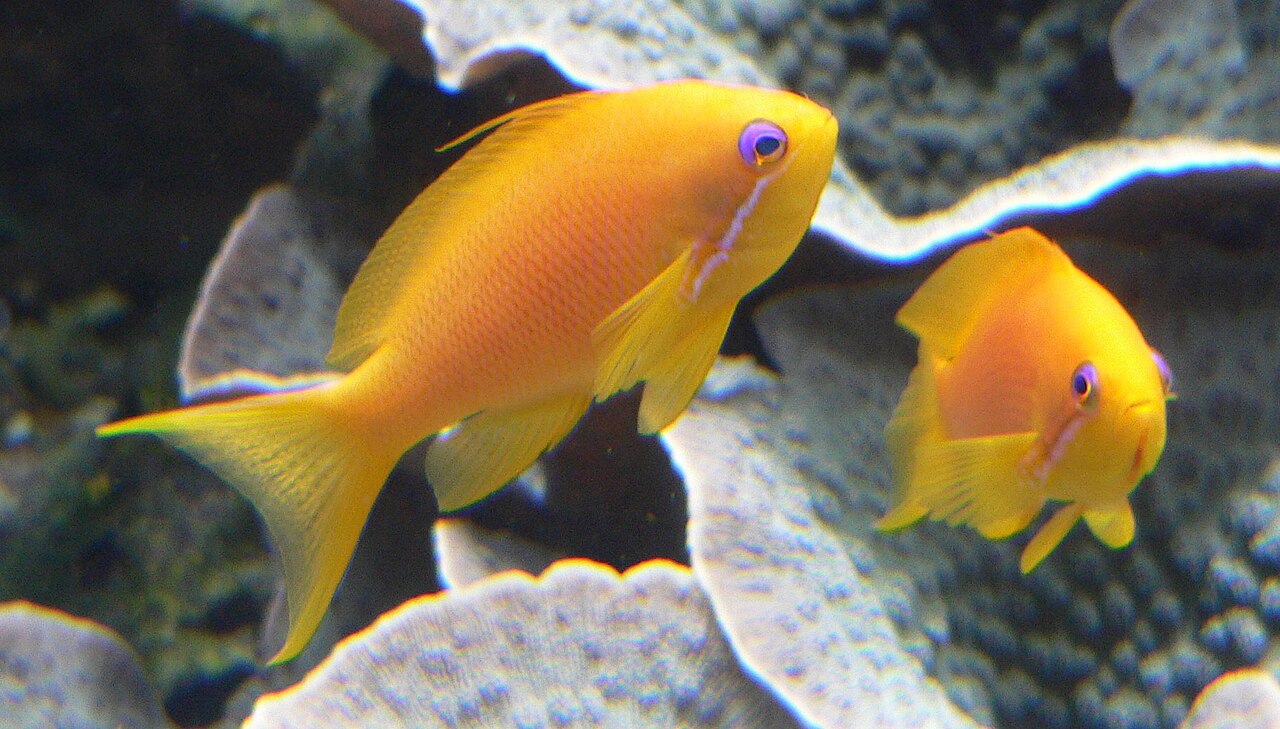
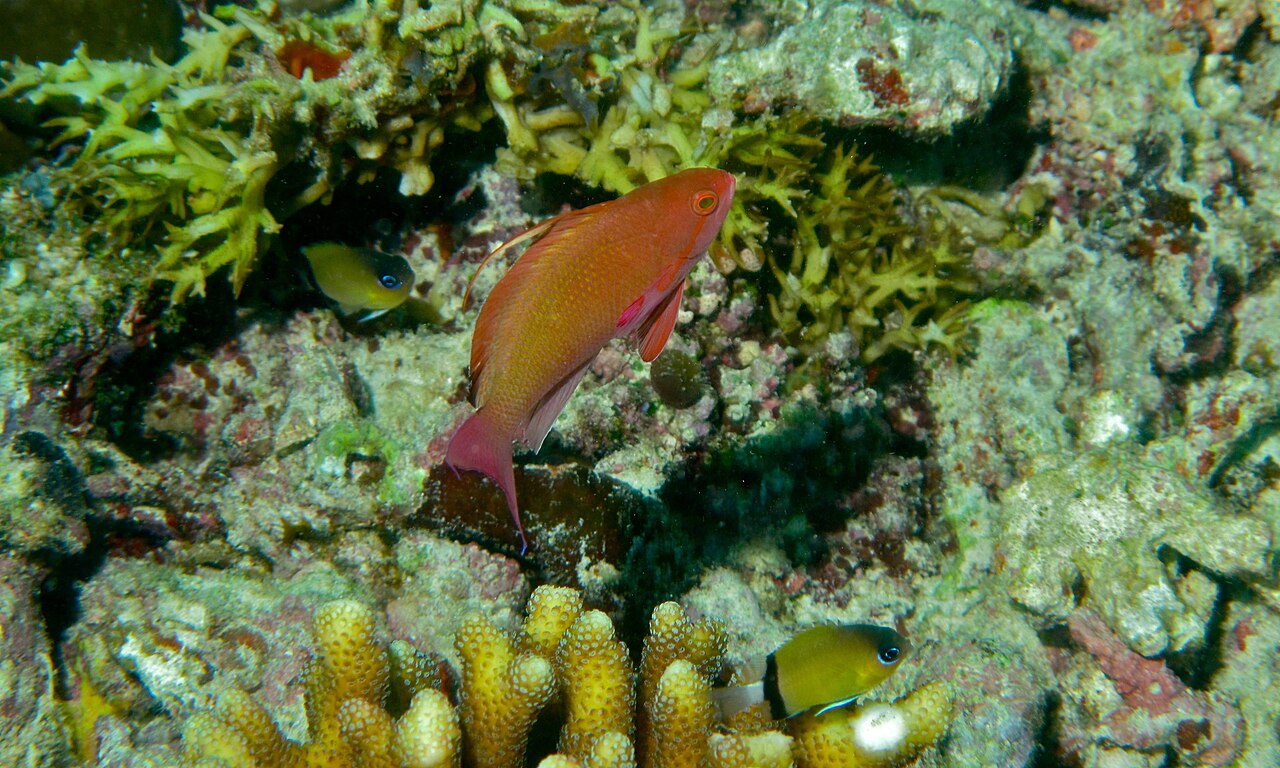
The sea goldie is also sold as lyretail anthias or orange basslet. Females are orange to gold with a violet streak below the eye, while males are fuchsia or purple with an elongated third dorsal ray and a red patch on the pectoral fin (Wikipedia). Wild fish form large, swirling aggregations over reefs in the Indo-Pacific.
Size and Lifespan
According to FishBase, males reach about 15 cm (6 inches) and females about 7 cm (2.8 inches) (FishBase). There is no reliable captive lifespan figure, so plan on a long-term commitment and a fish that can be hard to keep healthy past the first months.
Tank Size and Setup
Hobby guidelines suggest a minimum of about 75 gallons for a small group, and more if you want a school. Anthias are active mid-water swimmers that need open swimming space with rockwork and caves to retreat to at night or when startled.
- Use a tight-fitting lid. Anthias can jump when frightened.
- Provide moderate to strong flow, which brings food in and suits a plankton feeder.
- Use a mature tank with stable water. See how to set up a saltwater aquarium.
- Quarantine new fish. Wild-caught anthias are often stressed and thin from shipping, so see our quarantine tank guide.
Water Parameters
These are standard reef targets (hobby guidelines): temperature 75-79°F, salinity 1.024-1.026, pH 8.1-8.4, ammonia and nitrite 0, and low nitrate. FishBase lists a wild range of 22-28°C (72-82°F). Test regularly with a reef test kit and keep it stable.
Just a heads up: some of the links in this post are affiliate links, which means I may earn a small commission if you buy through them. But no worries, it is at no extra cost to you. Also, as an Amazon Associate I earn from qualifying purchases.
Diet and Feeding
Anthias feed mostly on zooplankton in the wild. In a tank, this means small meals, often. Hobby guidance is 2-4 feedings a day, with a mix of:
- Frozen mysis shrimp, enriched brine shrimp and finely chopped seafood
- Quality marine pellets or flake sized to the fish's small mouths
- Occasionally cyclops or other frozen plankton foods
Starvation is the most common cause of death, along with stress. Many keepers use an automatic fish feeder for midday meals. Watch that the fish actually eat, because newly imported fish may refuse food at first. If this happens, read fish not eating.
Buying and Acclimating Anthias
Choose fish that look plump through the belly, breathe calmly and swim in the open instead of clamping against the glass. Ask the store to show you the fish eating, and avoid any with a hollow, pinched belly, because those are often too far gone. Anthias are commonly sold in groups, so buying several females at once is easier than adding them one at a time.
Drip-acclimate, dim the lights, and add food soon after introduction. Expect a few days of nervous hiding in the rockwork. A calm tank and frequent small meals help them settle, and it is worth watching each fish at feeding time for the first couple of weeks.
Temperament and Tank Mates
Anthias are peaceful toward most other fish but may be bullied by aggressive species such as larger angelfish or tangs. Good companions include green chromis, royal gramma, cardinalfish like the Banggai and calm wrasses. Avoid pairing with fast, greedy feeders that take all the food, since anthias eat small meals in the water column.
Keep one male only. Males are territorial and fight each other, and a group consists of a male with a harem of females. The ratio of 1 male to 3-6 females is a common hobby rule. They are generally considered reef-safe, though they may nip at some small invertebrates.
Breeding and Sex Change
The sea goldie is a protogynous hermaphrodite, meaning females can become males. Males are territorial and keep harems, and if the male is removed, the largest female may change sex within 2-4 weeks, according to FishBase. They are pelagic spawners, releasing eggs into open water, so home breeding is rare because the larvae need very small foods. Most fish in the trade are wild-caught.
From Aquagram
Explore AquagramTest Account
Hello aquarists!
Dan GL
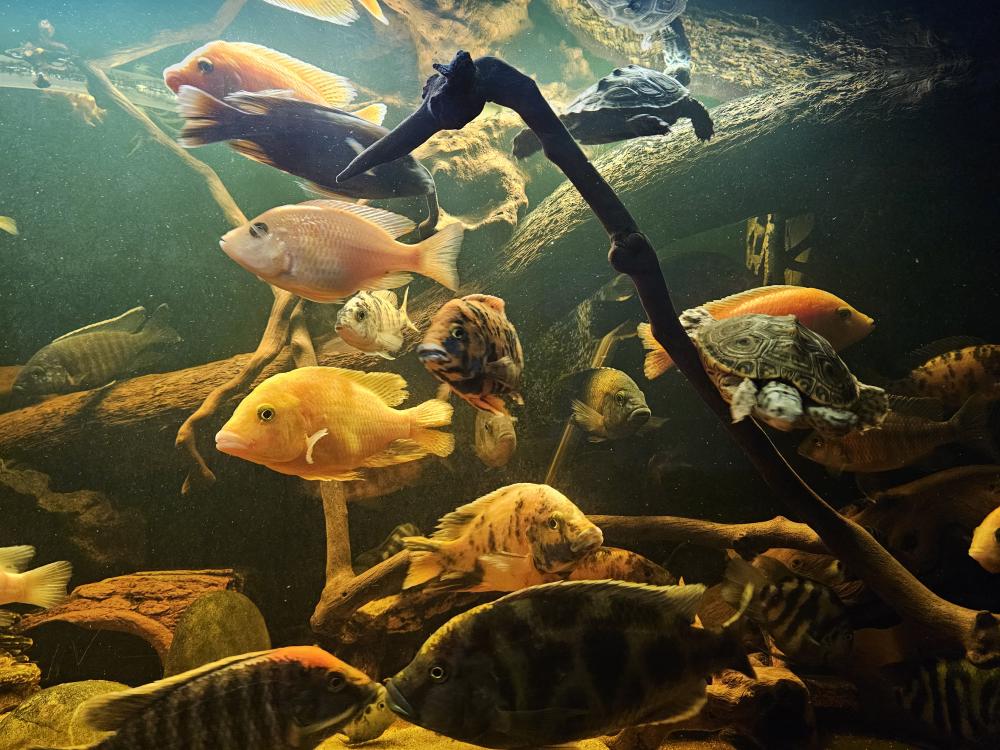
A view of my 125 gallon aquarium. Lots of fish and a few Northern Diamondback Terrapins too! 😁
SwitchTank
Incredible!
Common Health Issues
- Starvation and weight loss: Feed more often and offer enriched foods.
- Shipping stress and disease: Quarantine and observe, and use a hospital tank when needed. See white spots on fish.
- Aggression and fin damage: Check the male count and tank mates.
- Jumping: Cover every gap.
- Flashing or breathing fast: Check water quality, then look for parasites. See fish flashing and scratching.
For persistent illness, consult an aquatic veterinarian.
Rock, Lighting and Night Behavior
At night anthias wedge into crevices and may look like they have vanished. Make sure the rockwork has several holes large enough for the whole group. Lighting is not critical for the fish itself, but a gentle sunrise and sunset ramp reduces startle reactions when lights switch on. Keeping lights on a timer also gives the fish predictable feeding times.
How Difficult Is the Lyretail Anthias?
Moderately difficult to advanced. They are not suited to small tanks, busy schedules or first-time reef keepers, but they are rewarding in a large, stable tank with someone able to feed several times a day.
Lyretail Anthias FAQ
How big do lyretail anthias get?
Males reach about 15 cm and females about 7 cm.
What is the lyretail anthias care level?
Moderate to advanced, mainly because of feeding frequency and stress.
What size tank does a lyretail anthias need?
Plan on 75 gallons or more for a small group.
Can I keep just one?
It is not recommended. They are social, and a lone fish often does poorly.
How can I tell male and female apart?
Females are orange with a violet eye streak. Males are purple-pink with long dorsal rays.
How often should I feed them?
Small meals, two to four times a day.
Are they reef safe?
Generally yes.
Sources and Fact Check
Reviewed 2026-11-19. Access to veterinary and reef-specific sources was limited, so tank size, group ratios, feeding schedules and compatibility are hobby guidelines and labeled as such.
- FishBase, Pseudanthias squamipinnis: size, temperature range, plankton diet, protogynous sex change, harem structure and pelagic spawning.
- Wikipedia, Sea goldie: common names, male and female coloration and harem size.
Image credits: Storm Martin (CC BY 4.0), Wikimedia user BS Thurner Hof (public domain) and Bernard Dupont (CC BY-SA 2.0), via Wikimedia Commons.
Disclaimer: This article is general information, not veterinary advice. For sick fish, consult an aquatic veterinarian.