
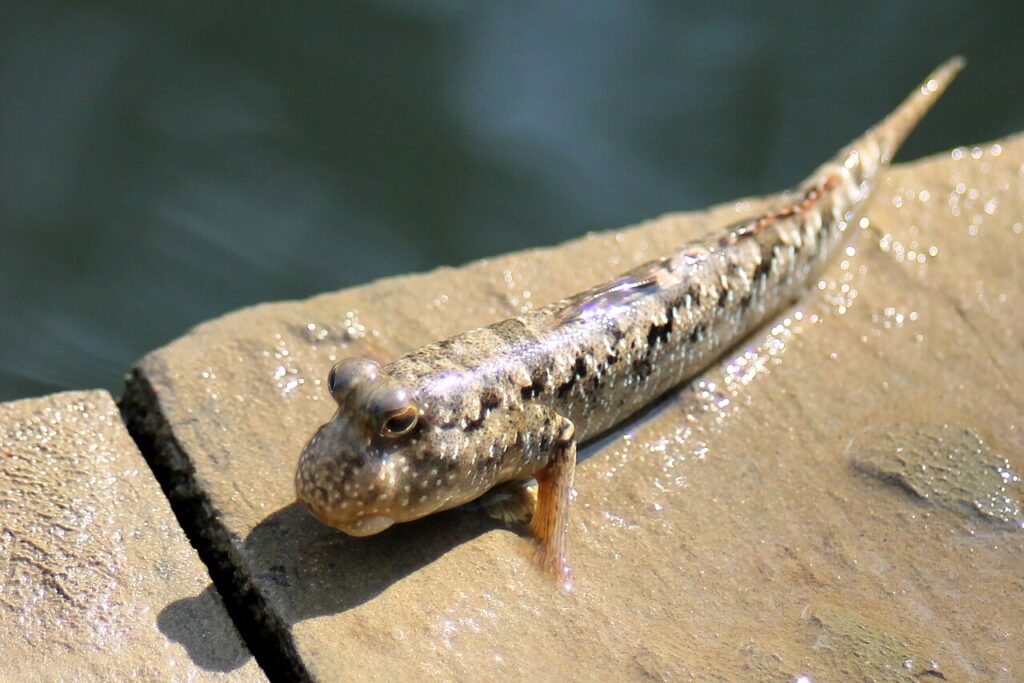
Mudskipper care is really paludarium care: these amphibious fish need brackish water, a large area of damp land, a tight lid, warm humid air and live or frozen foods. They are not a normal aquarium fish, and keeping one in a standard full-water tank will slowly kill it. Set up properly, a mudskipper is one of the most entertaining and unusual fish you can keep.
Search interest in "mudskipper care," "mudskipper tank setup," "mudskipper salinity," and "can mudskippers live in freshwater" is strong, and the honest answers are below.
Mudskipper Overview and Appearance
Mudskippers are amphibious gobies, with about 25 species in the subfamily Oxudercinae. Their bulging eyes sit on top of a flat head, and their forward-set, jointed pectoral fins let them "skip" and crawl across mud. They spend much of their time out of water, and breathe using water held in their gill chambers and by absorbing oxygen through their skin and mouth lining.
In the trade you'll mostly see Periophthalmus species such as the silver-lined or barred mudskipper (P. argentilineatus), often sold as "dwarf" or "Indian" mudskippers, plus occasional larger types.
Size and Lifespan
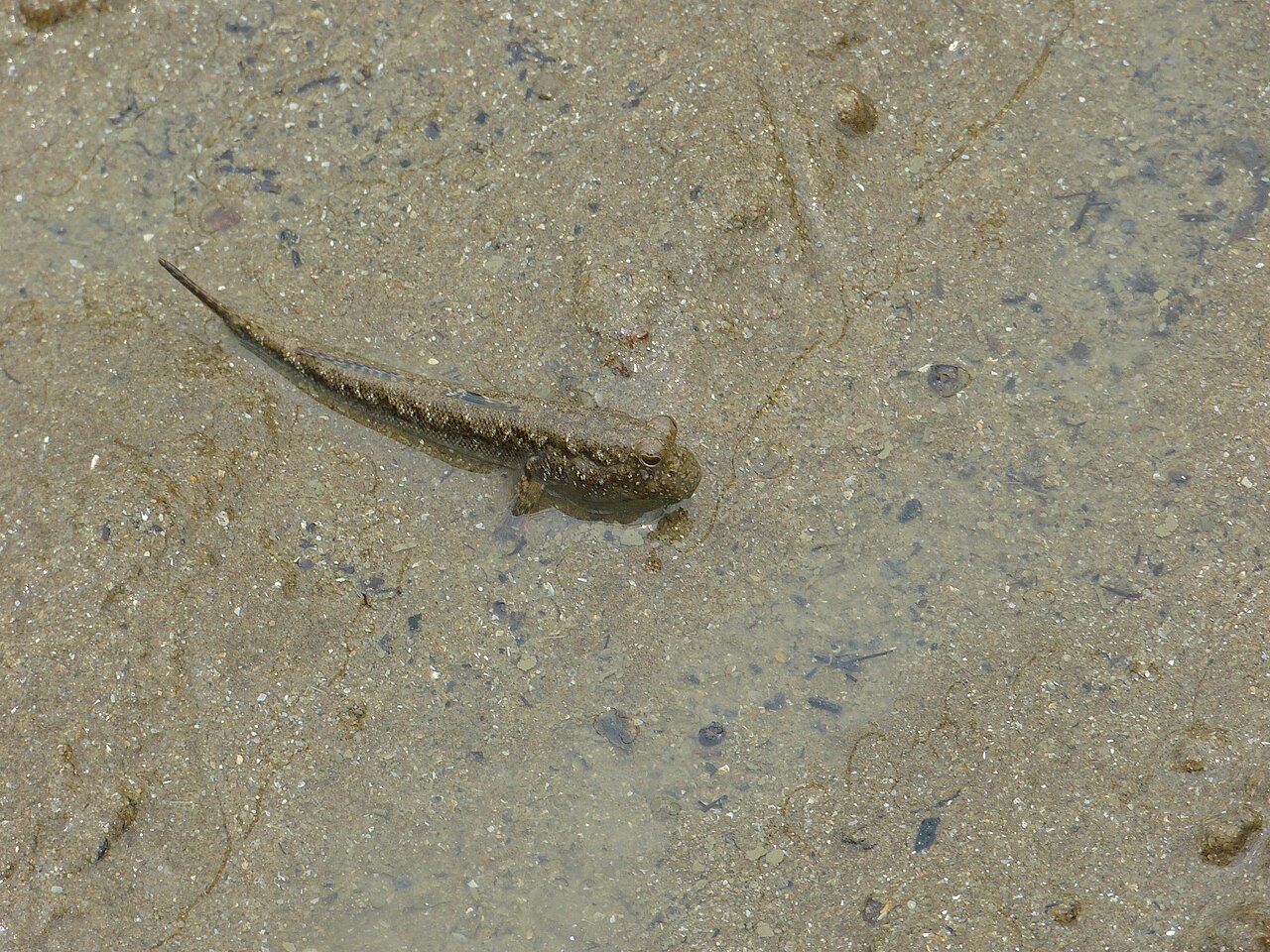
Most pet species reach about 4 to 7 inches. The barred mudskipper is reported to reach about 7.5 inches (19 cm), and the largest mudskippers can reach about 12 inches (30 cm), which makes them unsuitable for most home setups. With good care, a typical hobbyist lifespan is around 3 to 5 years, though many don't last a year because their needs are misunderstood.
Tank Size and Setup (the Paludarium)
- Footprint matters more than height. A 20 gallon long is a practical minimum for a single small mudskipper, and a 40 gallon breeder or larger is better for two or a small group.
- Half land, half water. Provide a large gently sloping bank of sand or fine mud with rocks and driftwood. Water only needs to be a few inches deep, but it should be deep enough to submerge the fish fully.
- Substrate. Use a mix of sand and soft mud in the land area so they can dig burrows.
- A very secure lid. Mudskippers jump and climb. Use a tight glass or mesh lid, leaving small gaps only for cords and air.
- Warm and humid. Aim for a warm, humid enclosure with air around the mid 80s F and water in the high 70s to low 80s F. A submersible aquarium heater and a small heat lamp or basking light help.
- Filtration. A small filter on the water section keeps it clean. Mudskippers are messy eaters, so water quality needs close attention.
Just a heads up: some of the links in this post are affiliate links, which means I may earn a small commission if you buy through them. But no worries, it is at no extra cost to you. Also, as an Amazon Associate I earn from qualifying purchases.
Water Parameters and Salinity
Mudskippers come from tidal mangrove and mudflat areas where salinity changes constantly. In captivity they generally do best in brackish water, often cited around specific gravity 1.005 to 1.015, with 1.010 a common middle point. Fresh water long term is a common cause of decline, and many keepers report that they stop feeding and develop skin problems. Use a hydrometer or refractometer and marine salt mix, never table salt, and top off evaporation with fresh water to prevent salt creep.
Keep ammonia and nitrite at zero and nitrate low. See how to cycle a fish tank before adding a fish.
Diet and Feeding
Mudskippers are carnivores that eat insects, small crustaceans and worms in the wild. Offer a varied diet:
- Frozen or live bloodworms, brine shrimp and mysis
- Small crickets, mealworms, earthworms and black soldier fly larvae
- Small pieces of shrimp or white fish
Feed on the land area or in the shallows, where they hunt. Offer small meals once a day or every other day, and remove leftovers because they foul the water. Many refuse flakes and pellets, but some accept sinking carnivore pellets with time.
Temperament and Tank Mates
Mudskippers are territorial and bold, especially toward other mudskippers. In a group they bicker over burrows and land, and males flare and display. Allow plenty of space, visual breaks and several burrow spots, or keep one fish alone.
Tank mates are limited. Fish that live fully in the water use the water section, but the mudskipper will chase or eat anything small enough. Aggressive or fin-nipping fish are a problem too. Many keepers choose brackish-tolerant species that mind their own business and match the water and salinity. Compare with other brackish species in our guides to the figure-8 puffer and archer fish, which also need brackish conditions, and keep in mind many puffers will nip a mudskipper.
Breeding
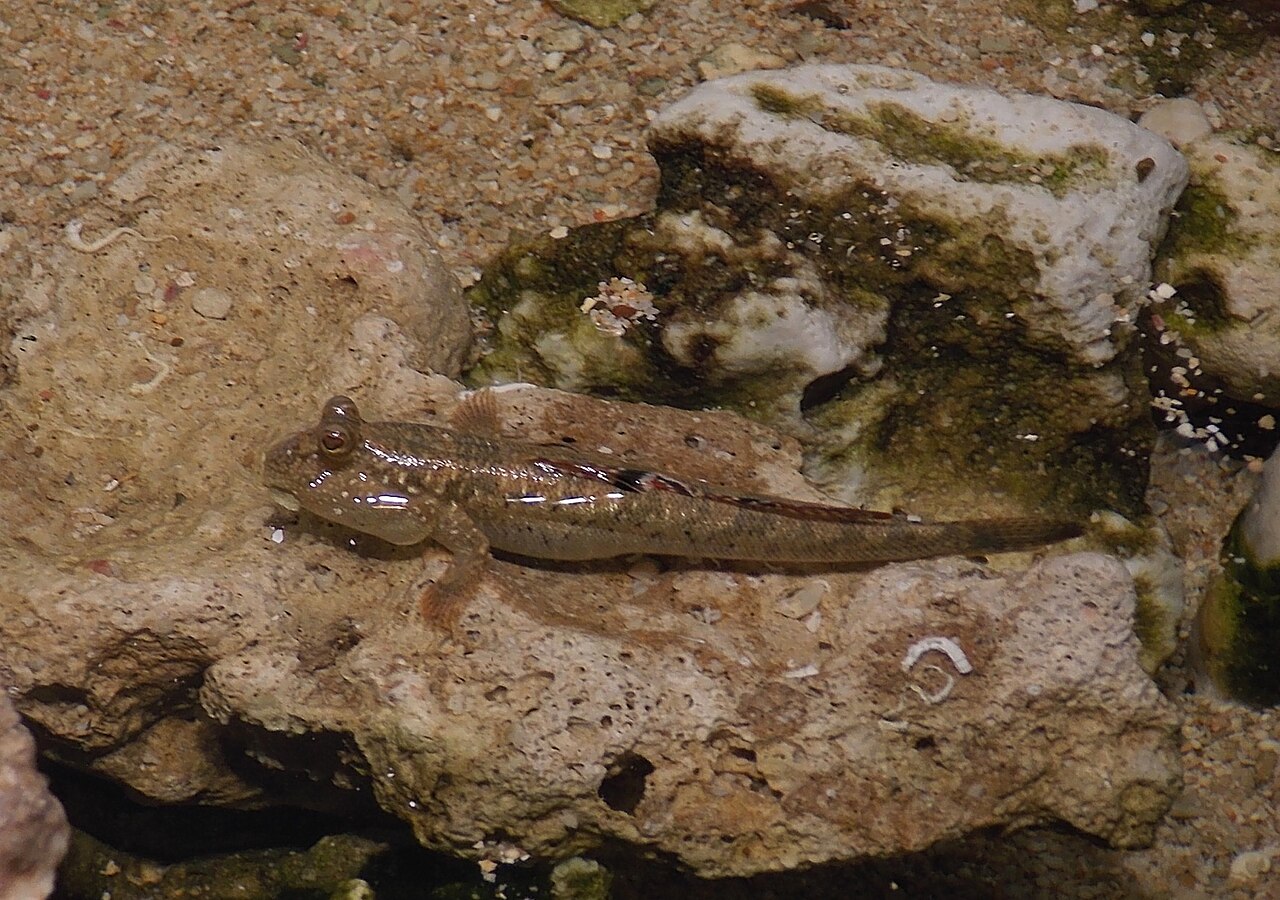
In the wild, males dig burrows, display to attract females, and guard the eggs inside the burrow. Breeding in home aquariums is rare and difficult because the larvae need very specific conditions. Most mudskippers in the trade are wild-caught.
Common Health Issues
- Skin dryness or infection. Too dry a setup, or dirty water, can lead to skin problems. Keep part of the land damp and the water clean.
- Fungal or bacterial infections. Poor water quality, rough substrate or injuries are common triggers. See bacterial infections for general treatment concepts, but treat only with guidance, because medications behave differently in brackish water.
- Starvation from refusing food. Wild-caught fish may only take live prey at first.
- Escape and injury. Jumping out of a poorly covered tank is a leading cause of loss.
- Poor salinity. Pure fresh water is a common long-term killer.
Quarantine new fish. See our quarantine tank guide. An exotic or aquatic vet is the best help for a serious problem.
Difficulty: Honest Rating
Intermediate to advanced. The fish are hardy once they are adapted, but the habitat is complex: brackish water, land, heat, humidity and a secure lid. They are not suited to beginners or a "put it in any aquarium" plan. Sourcing is also tricky, because wild-caught fish are often stressed and underfed.
Mudskipper Care FAQ
Can mudskippers live in freshwater?
Not long term. They are brackish fish, and most keepers report decline in pure fresh water.
How long can a mudskipper stay out of water?
They can spend much of the day on land as long as their skin and gill chambers stay moist. Wild mudskippers spend large amounts of time out of water, but a captive fish needs access to damp ground and water at all times.
What salinity do mudskippers need?
A common recommendation is roughly 1.005 to 1.015 specific gravity. Start low and adjust to the species you buy.
What do mudskippers eat?
Insects, worms and small crustaceans. Frozen bloodworms and brine shrimp, small crickets and earthworms are common choices.
How big a tank do mudskippers need?
A 20 gallon long for one small fish, and a 40 gallon breeder or bigger for a group, with at least half the area as land.
Are mudskippers good pets?
They are fascinating, but best for experienced keepers who want a specialized paludarium.
Can mudskippers live together?
Only with enough space. They are territorial, and males especially fight.
How long do mudskippers live?
Often around 3 to 5 years in good care.
Final Thoughts
If you like building unusual habitats, a mudskipper paludarium is deeply rewarding. Take the land, salinity and lid seriously, buy a healthy fish, and feed live and frozen foods. You'll have a pet that behaves like nothing else in the hobby.
Credit: Photos by Heinonlein (CC BY-SA 4.0), Bernard Dupont (CC BY-SA 2.0) and George Berninger Jr. (CC BY-SA 3.0) via Wikimedia Commons.
From Aquagram
Explore AquagramTest Account
Hello aquarists!
Dan GL
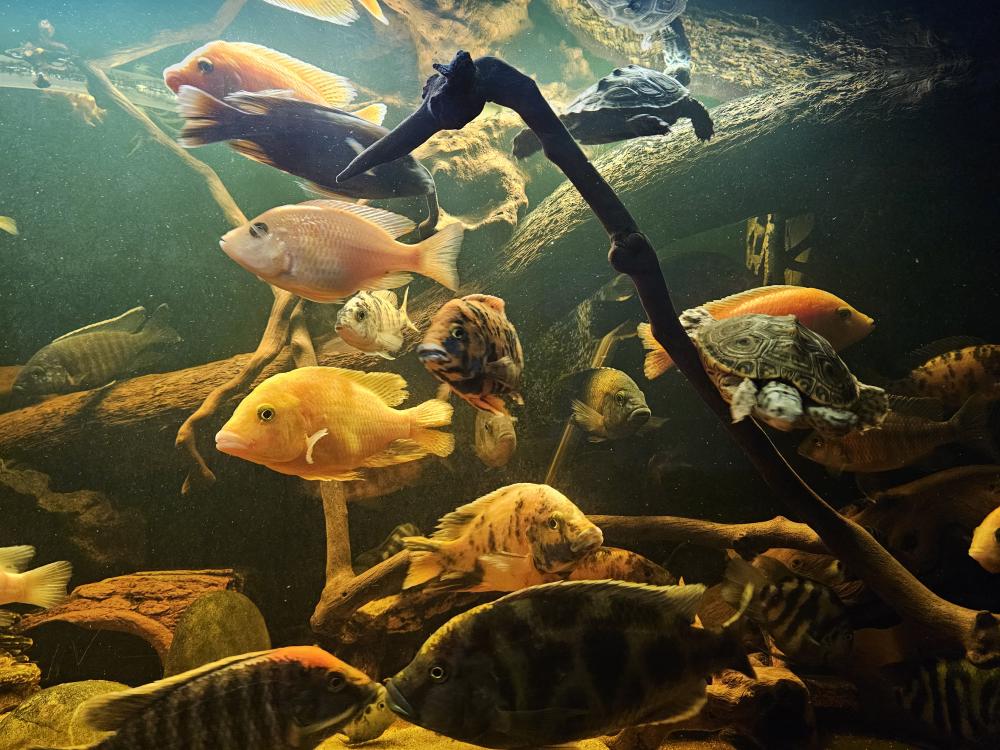
A view of my 125 gallon aquarium. Lots of fish and a few Northern Diamondback Terrapins too! 😁
SwitchTank
Incredible!
Sources and Fact Check
Reviewed November 23, 2026. Sources actually read:
- Wikipedia: Mudskipper (about 25 species, size up to about 30 cm, amphibious breathing, burrow behavior and breeding).
- Wikipedia: Periophthalmus argentilineatus (barred mudskipper size up to about 19 cm, brackish habitat, aquarium trade).
Limitation: salinity, tank size, temperature, diet and lifespan figures are common hobbyist ranges and were not independently verified from aquarist or veterinary sources during research, so adjust them to the species you buy.
Disclaimer: This article is general information, not veterinary advice. For serious or persistent problems, consult an aquatic veterinarian.