
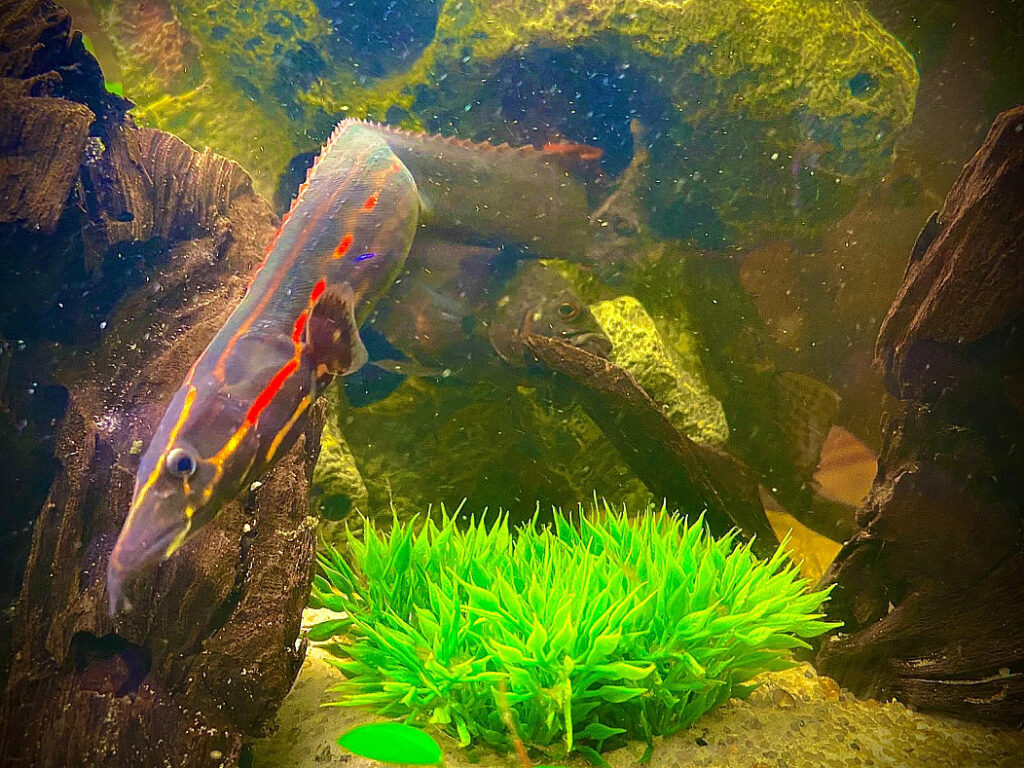
The fire eel (Mastacembelus erythrotaenia) is one of the most striking freshwater oddballs in the hobby: a long, dark body traced with glowing red and orange stripes. It's also a fish that buries itself, escapes through tiny gaps, eats anything that fits in its mouth and can grow close to a metre in the wild. Here's what a fire eel really needs, and who should skip it.
Fire Eel Overview and Appearance
Despite the name, the fire eel is not a true eel. It's a spiny eel (family Mastacembelidae), named for the small spines along its back. It has a pointed, fleshy snout, an underslung mouth and a laterally flattened tail. The base colour is dark brown to grey with bright red lateral stripes and spots. Juveniles often show yellow or amber markings that deepen to red as they grow.
In nature they live in slow lowland rivers and floodplains across Southeast Asia, often with a muddy bottom, and spend a lot of time buried with only the snout showing.
Size and Lifespan
Reference sources give a maximum length of about 39 inches (100 cm) in the wild. Aquarium fish usually finish smaller, and many keepers report adults in the 20-30 inch range, but plan for a big fish. Lifespans of 10 years or more are commonly reported by hobbyists, though no firm captive figure is given in the references we checked, so treat that as a rough expectation. That's a long commitment for a large, hungry predator.
Tank Size and Setup
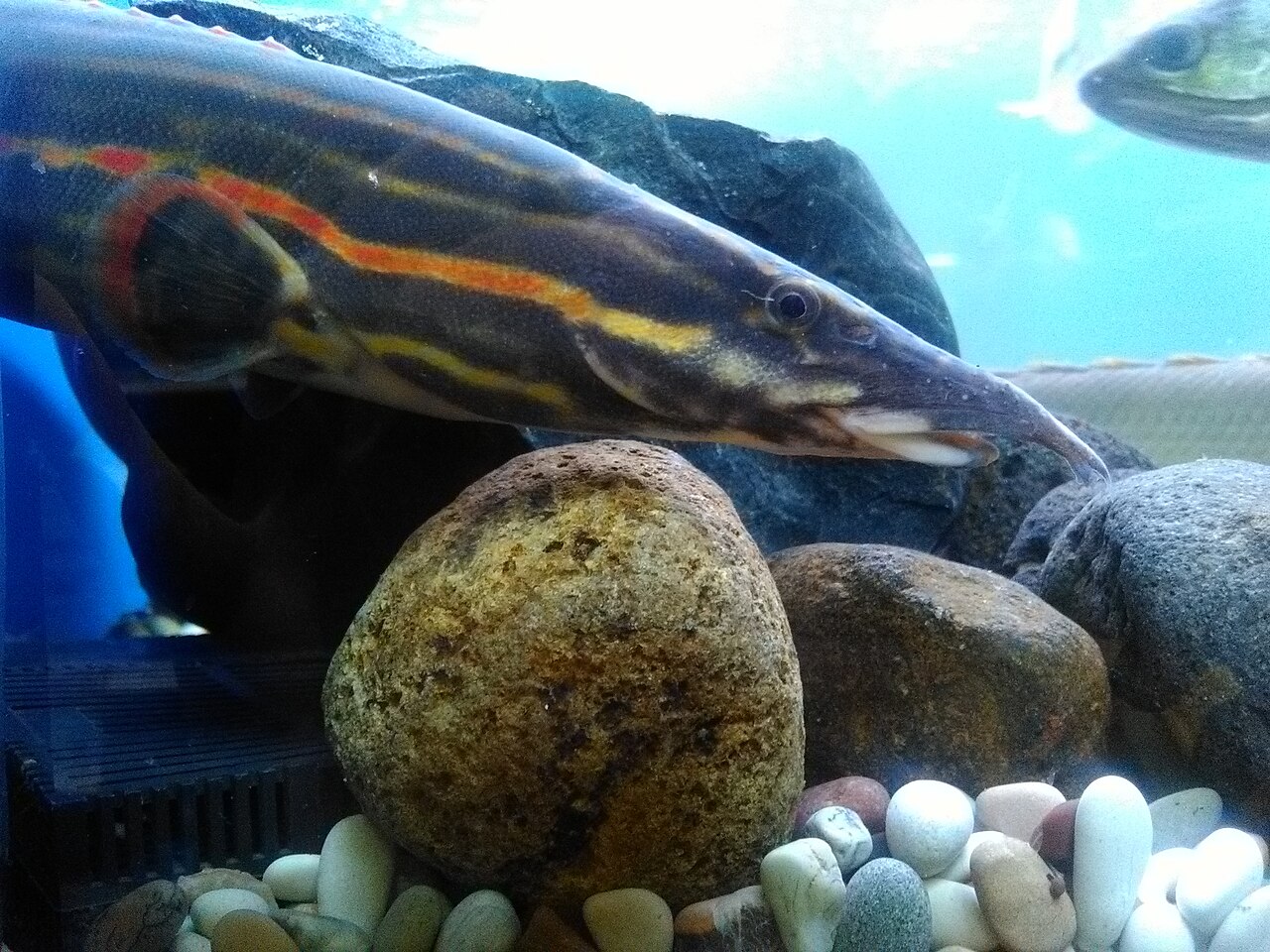
SeriouslyFish lists a base of 120 x 60 cm (48 x 24 in), about 114 US gallons, and notes that juveniles can live in something smaller. In practice, think of a 125-gallon-class tank as the realistic home for an adult, with more room better.
Key setup points:
- Soft sand substrate. They love to burrow. Avoid sharp gravel that can scrape the skin.
- Plenty of hiding places: driftwood, smooth rock caves and large-diameter PVC pipe sections.
- A secure, tight-fitting lid. This species can squeeze through the tiniest gaps, including around filter and heater cables. Seal every opening.
- Gentle flow and dim lighting. Floating plants help them feel secure and encourage them out during the day.
- Strong, quiet filtration. A big predator makes a lot of waste, so use a large canister filter and keep up with water changes. Cycle the tank first with our fish tank cycling guide.
Just a heads up: some of the links in this post are affiliate links, which means I may earn a small commission if you buy through them. But no worries, it is at no extra cost to you. Also, as an Amazon Associate I earn from qualifying purchases.
Water Parameters
- Temperature: 75-82 °F (24-28 °C)
- pH: 6.0-7.0 recommended by SeriouslyFish; FishBase lists a tolerated range of 6.0-8.0
- Hardness: about 5-12 dGH (FishBase gives 5-19)
- Ammonia and nitrite: 0 ppm, with nitrate kept low
Stability matters more than chasing exact numbers. Use a reliable heater and a liquid test kit, and see high ammonia in a fish tank for what to do if something spikes.
Diet and Feeding
In the wild, fire eels eat insect larvae, worms, crustaceans, small fish, some plant matter and detritus. In captivity, they only rarely accept plant matter. Offer a meaty diet:
- Frozen foods such as krill, shrimp and fish
- Earthworms and other live or frozen invertebrates
- Sinking carnivore pellets once the fish is trained to them
SeriouslyFish cautions that live and frozen foods alone are unlikely to sustain larger fish, so vary the diet and aim for balanced nutrition. Many keepers feed juveniles several small meals weekly and adults less often. Because they are shy and nocturnal, target-feed near the hide after lights dim, and remove leftovers. If your eel is refusing food, see fish not eating.
Temperament and Tank Mates
Fire eels are generally peaceful toward fish too large to swallow, but they will eat any live fish that fits in their mouth, including small tetras, rasboras and shrimp. They also may become aggressive toward other fire eels: SeriouslyFish recommends one per tank, and notes that keeping groups of five or more sometimes reduces the conflict, which is only realistic in very large systems.
Better tank mates are robust, mid-to-upper-water fish that cannot be swallowed and won't harass a shy bottom dweller:
- Large peaceful barbs and giant danios
- Larger gouramis and other big, calm species
- Many robust catfish that are sizable
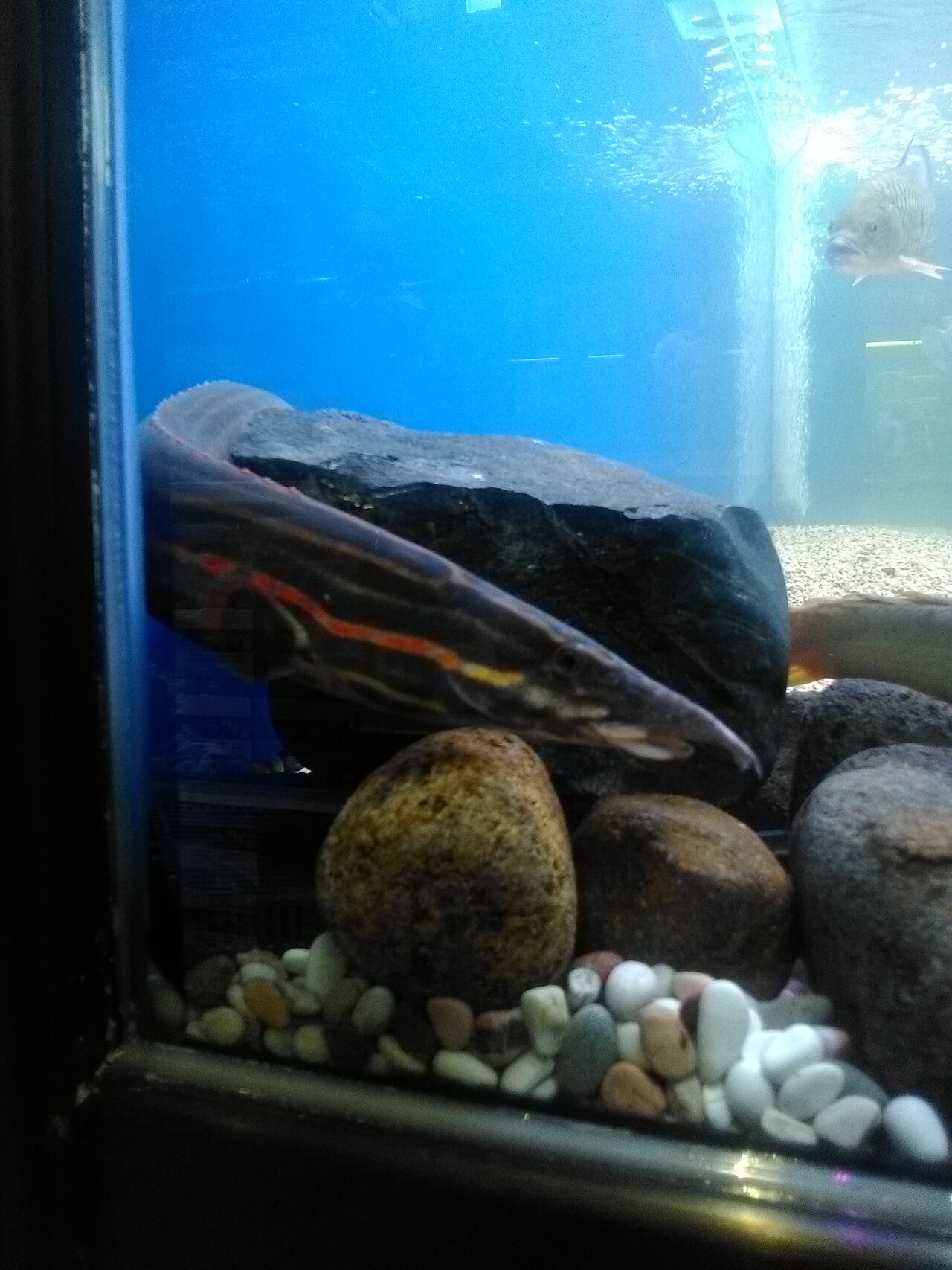
Avoid aggressive cichlids that may attack it, tiny schooling fish and slow-moving fish the eel might nip. A snowflake eel is a different animal with its own needs; compare it in our snowflake eel care guide, and see bichir care for another long, nocturnal predator.
Breeding
Fire eels are not bred reliably in home aquariums. SeriouslyFish notes occasional accidental spawning, and females are fuller-bodied when in breeding condition. Plan on buying fish that were wild-caught or farm-raised rather than expecting to breed them yourself.
From Aquagram
Explore AquagramTest Account
Hello aquarists!
Dan GL
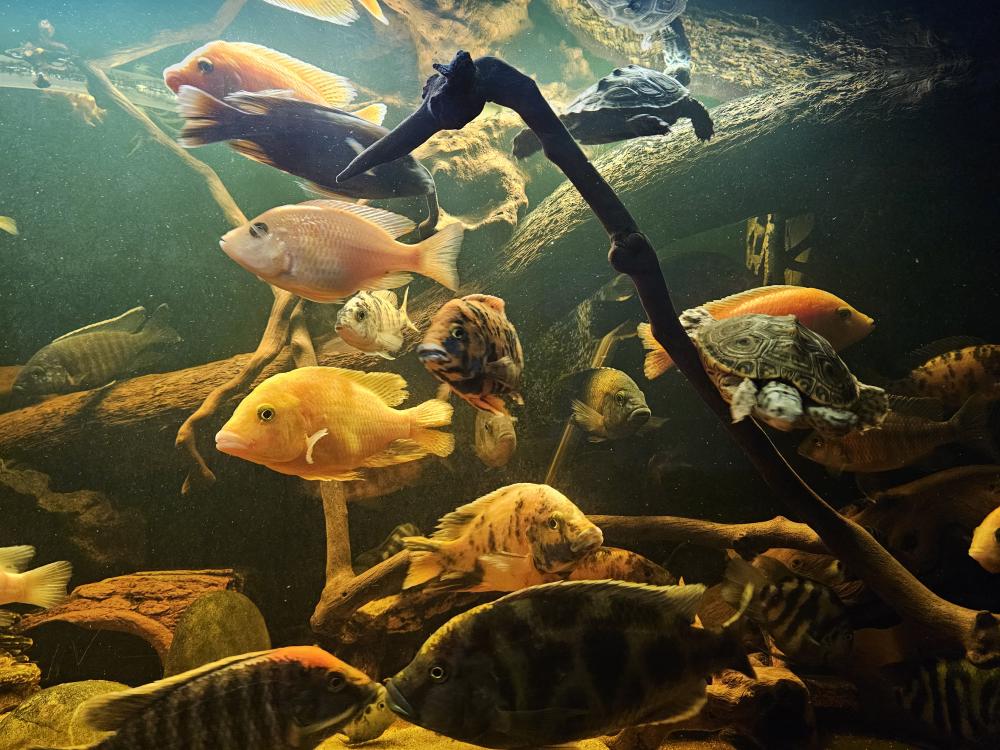
A view of my 125 gallon aquarium. Lots of fish and a few Northern Diamondback Terrapins too! 😁
SwitchTank
Incredible!
Common Health Issues
Fire eels are reasonably hardy when well kept, but the typical problems are:
- Skin scrapes and infections from sharp substrate or decor, which can lead to bacterial or fungal trouble
- Stress from poor water or lack of hiding places, which shows up as constant hiding, pacing or refusing food
- Parasites on new arrivals. Quarantine every new eel; see our quarantine tank setup guide.
- Medication sensitivity. Many hobbyists treat spiny eels cautiously with salt and some medications because of their fine scales. Read labels, start with lower doses where allowed, and seek advice from an aquatic vet before experimenting. If your eel hides all the time, review fish hiding all the time.
Difficulty: Honest Rating
SeriouslyFish rates the fire eel as moderate difficulty. We'd say it is manageable for an intermediate keeper but not a good beginner choice because of:
- The very large adult tank requirement
- Escape risk and the need for a sealed lid
- Predation on small tank mates
- A shy, nocturnal personality that means you may see it mainly in the evenings
If you want a similar-looking but smaller animal, research other spiny eels carefully, because many also reach large sizes.
Fire Eel Care FAQ
How big does a fire eel get?
Up to about 39 inches in the wild, though aquarium fish often stay shorter.
What size tank does a fire eel need?
Around 114 US gallons as an absolute minimum footprint (48 x 24 in), with a 125-gallon-class tank or bigger preferred for an adult.
Can fire eels live with other fish?
Yes, with fish too large to eat and not aggressive. Avoid anything small enough to swallow.
What do fire eels eat?
Meaty foods such as krill, shrimp, fish, worms and sinking carnivore pellets.
Do fire eels need sand?
Strongly recommended. They burrow, and sand protects the skin.
Can I keep more than one fire eel?
They can be aggressive with their own kind, so most keepers house one.
Why is my fire eel hiding all day?
That's normal for a shy, nocturnal fish. Provide caves and dim lighting. Constant refusal to eat or visible damage is a reason to investigate.
Final Thoughts
The fire eel rewards patient keepers with one of the most beautiful, personable oddballs in freshwater. Give it a huge, escape-proof, sand-bottomed tank and a meaty diet, and keep it away from anything small.
Do you keep a fire eel? Tell us about your setup in the comments.
Sources and Fact Check
Reviewed November 22, 2026. Sources actually read:
- SeriouslyFish: Mastacembelus erythrotaenia (aquarium base 120 x 60 cm, 24-28 °C, pH 6.0-7.0, hardness 5-12 dGH, diet, aggression, sand, tight hood, accidental breeding, moderate difficulty).
- FishBase: Mastacembelus erythrotaenia (max length 100 cm, pH 6.0-8.0, dH 5-19, 24-28 °C).
- Wikipedia: Fire eel (not a true eel, habitat and wild diet, burrowing behaviour, juvenile colour change).
Limitation: no source gave a firm captive lifespan, a typical aquarium adult size or medication sensitivity data. Those statements are hobby guidance, labelled as such in the text.
Disclaimer: This article is general information, not veterinary advice. For serious or persistent problems, consult an aquatic veterinarian.