
White fuzz on fish is usually either a fungal infection or a bacterial infection such as columnaris that only looks like fungus. Both are typically triggered by stress, injury or poor water, so the first moves are the same: test your water, do a clean water change, and check where the growth is. A soft, fluffy tuft on a wound is often fungus; a grayish-white film around the mouth or a patch behind the head that spreads fast points toward columnaris, which needs an antibiotic and quick action.
This guide covers every common way people describe the problem: "white fluffy stuff on my fish," "cotton-like growth," "white cotton on fish," "my betta has white fuzz," and "fish mouth fungus." You'll find the likely causes in order, how to diagnose which one you have, step-by-step treatment, and when to stop experimenting and call an aquatic vet.
Most Common Causes of White Fuzz on Fish
Roughly in order of how often hobbyists run into them:
- Secondary fungal infection. Fungal spores such as Saprolegnia are present in almost every tank. They take hold on damaged skin, torn fins, ulcers or stressed fish.
- Columnaris (often called "cotton mouth" or "mouth fungus"). A bacterial infection, Flavobacterium columnare, that forms whitish-gray patches, often at the mouth, on the back or on the gills. It is commonly mistaken for fungus.
- Poor water quality. Ammonia, nitrite or heavy waste build-up damages the skin and slime coat and makes both of the above more likely.
- Injury. Fin nipping, aggression, sharp decor, netting or jumping can open the door for infection.
- Protozoan or other look-alikes. Epistylis-type colonies, mucus from parasites, healing scar tissue and, in goldfish, breeding tubercles can all look like "fuzz."
- Lymphocystis. A viral condition that creates white, cauliflower-like nodules rather than true fuzz.
- Mold on something else. Uneaten food or fuzzy growth on decor and wood is not on the fish at all.
How to Diagnose What You're Looking At
Watch the fish and look closely, ideally with a flashlight, before you dose anything.
- Fluffy tufts that stand out from a wound or damaged fin: most likely true fungus.
- Grayish-white film, "lips" that look frayed or cottony, or a saddle-shaped patch behind the head: think columnaris, especially if it spreads over a day or two.
- Fast gill movement, pale gills, hanging near the surface: gills may be involved, which is more urgent.
- Tiny, salt-like white dots (not fuzz): that's probably ich. See our guide to what the white spots on your fish are.
- White nodules with a lumpy, cauliflower look: possibly lymphocystis, which does not respond to antibiotics.
- Small white dots only on the gill covers or front fins of an adult male goldfish: breeding tubercles, which are normal.
Then test. A liquid freshwater test kit takes five minutes, and ammonia or nitrite above 0 ppm is the most likely underlying trigger. If you see numbers like that, read high ammonia in a fish tank and fix the water first.
Just a heads up: some of the links in this post are affiliate links, which means I may earn a small commission if you buy through them. But no worries, it is at no extra cost to you. Also, as an Amazon Associate I earn from qualifying purchases.
Step-by-Step: What to Do Today
Step 1: Fix the water
Do a 25-50% water change using a dechlorinating water conditioner, matched to tank temperature. Vacuum waste and rinse filter media in old tank water. Re-test afterward.
Step 2: Remove stressors
Separate aggressive tank mates, remove sharp decor, and make sure the fish isn't being chased. Keep the tank calm and dim for a few days.
Step 3: Set up a hospital tank if you can
A bare, heated, filtered hospital tank lets you treat without harming plants, snails or shrimp and protects healthy fish. Our quarantine tank setup guide shows how to build one cheaply.
Step 4: Pick the treatment that matches the likely cause
- Looks like mouth or body columnaris: a broad-spectrum aquarium antibacterial such as Maracyn is a commonly used first option. Remove activated carbon first and finish the full course on the label even if the fuzz disappears. Columnaris is generally more aggressive in warm water, so some fishkeepers lower the temperature slightly, but only within what your species tolerates.
- Looks like true fungus on a wound: clean water often does most of the work. Many hobbyists add aquarium salt in a hospital tank for tolerant species. One commonly cited starting dose is about 1 tablespoon per 3 gallons, then increasing only if needed. Never use salt on salt-sensitive animals such as many scaleless fish, some catfish and most live plants. Our aquarium salt guide explains the limits.
- Not sure which it is: treating as a possible bacterial infection in a hospital tank is a reasonable, cautious approach. Compare options in our top 5 aquarium medications and read bacterial infections in aquarium fish.
Herbal "tonic" products are not a reliable cure for an established infection. Always follow the label for dose and duration, and never mix medications without checking compatibility.
Step 5: Watch the response
Fungus on a minor wound often shrinks within several days of clean water and treatment. Columnaris can progress in a day or two. If the patches spread, the fish stops eating or the gills look affected, switch to professional advice.
When White Fuzz Is Serious
Treat it as urgent if you see any of the following:
- Patches that spread noticeably in 24-48 hours
- Gill involvement, rapid breathing or gasping
- Open ulcers or red, eroded skin under the fuzz
- Several fish affected at once
- A fish that is lethargic and refusing food (see fish not eating)
At that point, ask an aquatic veterinarian or experienced local fish store for help. A skin or gill sample under the microscope is the only way to tell fungus, bacteria and parasites apart for certain.
How to Prevent White Fuzz
- Keep ammonia and nitrite at 0 ppm and change 25% or more of the water weekly
- Feed a varied, fresh diet and store food dry
- Avoid overcrowding and fin nippers with long-finned fish (see betta clamped fins and fin rot for related warning signs)
- Quarantine new fish for several weeks
- Use smooth decor and a gentle touch with nets
From Aquagram
Explore AquagramTest Account
Hello aquarists!
Dan GL
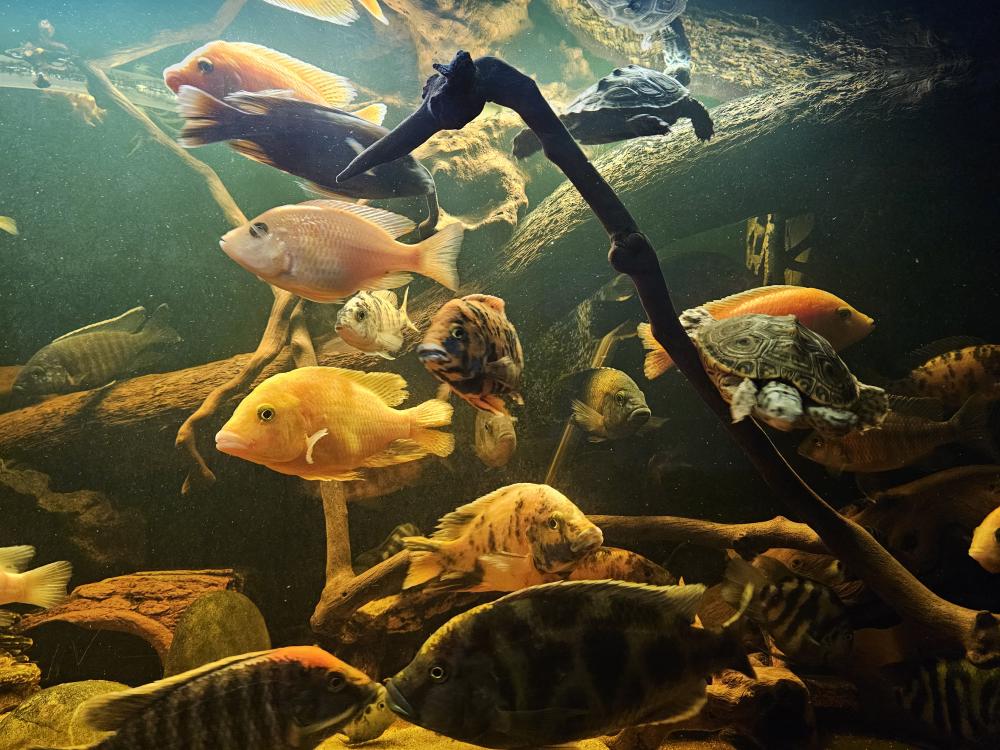
A view of my 125 gallon aquarium. Lots of fish and a few Northern Diamondback Terrapins too! 😁
SwitchTank
Incredible!

White Fuzz on Fish FAQ
Why does my fish have white fluffy stuff on it?
Most often it's a fungal or bacterial infection taking advantage of stress, poor water or an injury. Look at where it is and how fast it spreads to guess which.
Is white cotton on fish always fungus?
No. Columnaris can look nearly identical, especially around the mouth. That's why it's worth considering an antibacterial rather than assuming fungus.
My betta has white fuzz on its mouth. Is that mouth fungus?
It may be, but "mouth fungus" is frequently columnaris. Clean the water, move the betta to a small heated, filtered hospital tank, and consider an antibacterial. Warm tanks can make columnaris worse, so act quickly.
Can fish fungus cure itself?
Minor cases tied to a small wound sometimes clear once water quality and stress are fixed. Do not wait if it is spreading.
Is fungus on fish contagious to other fish?
The spores are already in most tanks, so healthy fish rarely catch it. Columnaris, however, can spread between weakened fish.
Can I treat white fuzz on fish with salt alone?
For mild fungus in salt-tolerant species, salt in a hospital tank can help. It will not cure a bacterial infection like columnaris.
Can humans catch fish fungus?
Wash your hands and equipment after tank work as a normal precaution. If you have an open cut, wear gloves. Columnaris itself is not zoonotic.
Final Thoughts
White fuzz looks alarming, but it's almost always a sign of something wrong with the water, an injury or stress. Fix the cause, treat for the most likely culprit, and act fast if the patches spread.
Have you cured a stubborn fuzzy fish? Tell us what worked in the comments.
Sources and Fact Check
Reviewed November 22, 2026. Sources actually read:
- Aquarium Co-Op: How to Cure Fungus on Aquarium Fish (a retailer; supports causes, salt starting dose and the point that some mouth "fungus" is bacterial and needs an antibiotic). Product dosing is the retailer's experience, so follow current labels.
- Wikipedia: Columnaris (symptoms, look-alike to fungus, higher virulence in warm water, treatment categories; not zoonotic). A general reference, not a veterinary source.
Limitation: the Merck Veterinary Manual and several veterinary pages could not be opened during research, so diagnosis tips for look-alikes (epistylis, lymphocystis, tubercles) are standard hobby knowledge and not independently sourced here.
Disclaimer: This article is general information, not veterinary advice. For serious or persistent problems, consult an aquatic veterinarian.