
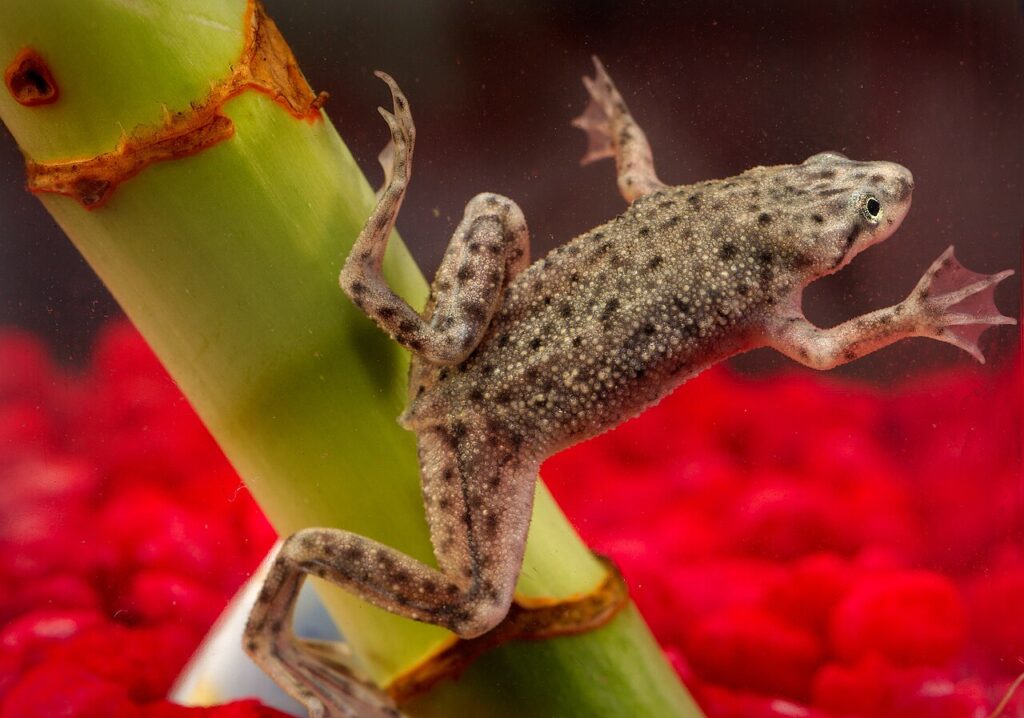
African dwarf frogs are tiny, fully aquatic frogs that live their whole lives underwater and come up to the surface only to breathe air. They are peaceful and fun to watch, but they are slow, poor-sighted eaters that are easily outcompeted by fish, and they are often sold in tanks that are far too small. Give them a proper tank, a tight lid, sinking food and gentle tank mates, and they can live for years.
This guide covers appearance, size, lifespan, tank setup, water, feeding, tank mates, breeding, health problems and an honest difficulty rating.
Overview and Appearance
African dwarf frogs belong to the genus Hymenochirus in the family Pipidae. Wikipedia lists four species, and the one most often sold is Hymenochirus boettgeri, the Zaire (or Congo) dwarf clawed frog. They are native to equatorial Africa, including Nigeria, Cameroon, Gabon and the Congo Basin.
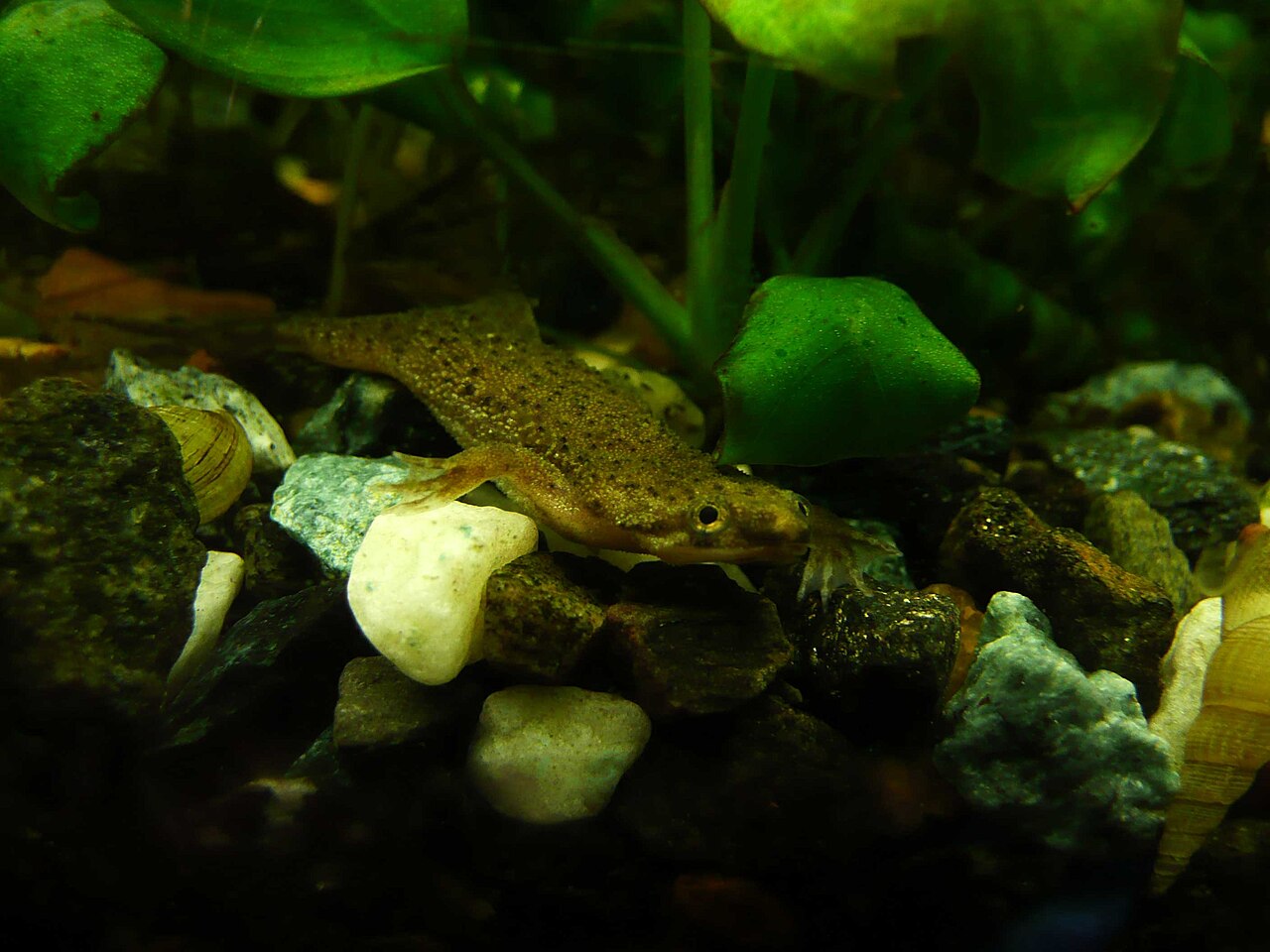
They are usually olive-green to brown with dark spots, with a narrow, pointed head, webbed feet and no eyelids or tongue. Wikipedia notes they lack a tongue, so they use their webbed feet to push food into their mouths.
Important: Dwarf frogs are often confused with African clawed frogs (Xenopus), which grow much larger and can be aggressive. Wikipedia notes that African dwarf frogs are often sold as young clawed frogs by mistake. Dwarf frogs have webbed front feet and eyes on the sides of the head; clawed frogs have unwebbed front feet and eyes on the top of the head.
Size and Lifespan
Adult African dwarf frogs are small: Wikipedia lists about 1 to 1.5 inches (2.5 to 3.8 cm), with females up to about 35 mm and larger than males.
Lifespan is often given as around five years on average. Wikipedia states that the average is five years and that some have lived much longer, but treat long records as exceptional. Poor conditions shorten life dramatically.
Tank Size and Setup
They are small, but they need clean water and room. As a hobby guideline, keep 2-3 frogs in at least a 10-gallon tank, and give more space if you add fish. Small bowls and mini-tanks sold at kiosks are poor homes because waste builds up quickly. Aquarium Co-Op also warns that the smaller the aquarium, the less space there is for waste to disperse.
- Lid: This is essential. They need to breathe air, and Wikipedia notes they can escape from tanks. Use a tight-fitting lid with a gap for air, and do not fill the tank to the very top. A tall, narrow tank makes the trip to the surface harder for them.
- Substrate: Smooth sand or fine, rounded gravel. Wikipedia notes they lose the claws on sharp pebbles, so avoid sharp substrate. Avoid gravel pieces small enough to swallow.
- Hiding places: Caves, driftwood, leaf litter and live plants. Add a few floating plants or tall plants they can rest in.
- Filter: Use a gentle filter such as a sponge filter, and cover any intake. Frogs can be sucked into strong filter intakes.
- Heater: A small adjustable aquarium heater keeps temperature stable.
Just a heads up: some of the links in this post are affiliate links, which means I may earn a small commission if you buy through them. But no worries, it is at no extra cost to you. Also, as an Amazon Associate I earn from qualifying purchases.
Cycle the tank before adding frogs. See how to cycle a fish tank.
Water Parameters
Typical hobby targets:
- Temperature: about 72-78°F (22-26°C)
- pH: around 6.5-7.5
- Ammonia and nitrite: 0
- Nitrate: low, under about 20-40 ppm
Use a liquid test kit and a water conditioner at every water change. Amphibians have thin, permeable skin, so keep the water clean and avoid medications unless you know they are frog-safe.
Diet and Feeding
This is where most people go wrong. Aquarium Co-Op describes African dwarf frogs as slow eaters that are hard to feed, because food that disintegrates quickly does not give them time to eat. They cannot compete with fish.
- Best foods: Frozen bloodworms, live or frozen blackworms, brine shrimp and similar meaty foods. Wikipedia lists live, frozen and freeze-dried bloodworms, tubifex and brine shrimp.
- Pellets: Sinking frog or carnivore pellets may be accepted, but Aquarium Co-Op notes standard pellets dissolve quickly.
- How often: Feed small portions about once a day or every other day. Wikipedia warns that overfeeding quickly leads to obesity.
- Target feeding: Use a turkey baster or tweezers to put food near the frog. Take out leftovers after an hour or two.
If a frog is thin with a sunken belly, it is likely not getting enough food, usually because fish are eating first. A frozen bloodworm feeding in a separate dish can help.
Temperament and Tank Mates
Dwarf frogs are peaceful. Wikipedia notes that their tank mates should be neither large enough to prey on them nor small enough to be eaten by them.
Good tank mates: small, calm fish that stay mid or top level, such as some tetras and rasboras, and peaceful bottom dwellers that do not hog food.
Avoid:
- Aggressive or fin-nipping fish such as bettas that can be rough with frogs. Bettas, large cichlids and goldfish are common problem mates.
- Very small fish and shrimp, which can be eaten. Compare our betta fish care guide before mixing.
- Fast, greedy feeders that take all the food.
- African clawed frogs. They are different, larger and can eat dwarf frogs.
If a frog keeps losing out on food, the safest option is a frog-only tank.
Breeding
Breeding can happen in a home tank. Wikipedia reports that males hum or “sing” and have a small white gland behind each front leg, while females are larger and pear-shaped. They mate in amplexus, usually at night. Eggs and tadpoles are very small and are often eaten by adults and fish, so raising them requires separate containers and tiny foods. For most keepers, breeding is not a goal.
Common Health Issues
- Starvation: The most common problem, caused by competition and food that does not suit them.
- Bloating: Can be caused by overfeeding or illness. A swollen, floating frog needs prompt attention from an aquatic vet.
- Skin problems or fungus: White or cotton-like patches suggest poor water quality or infection.
- Escape: Frogs that leave the tank dry out quickly.
- Poor water quality: Ammonia and nitrite are dangerous to amphibians.
For any serious or persistent illness, see a vet who treats amphibians. Our guide to fish not eating has helpful basics on diagnosing appetite problems.
Difficulty: Honest Rating
Beginner-friendly in theory, but easy to do wrong. They do not need a big tank or special gear, but their feeding needs and fragility are underrated. Plan for target feeding, a lid, gentle filtration and good water quality. If you can do those, they are rewarding little pets.
From Aquagram
Explore AquagramDan GL
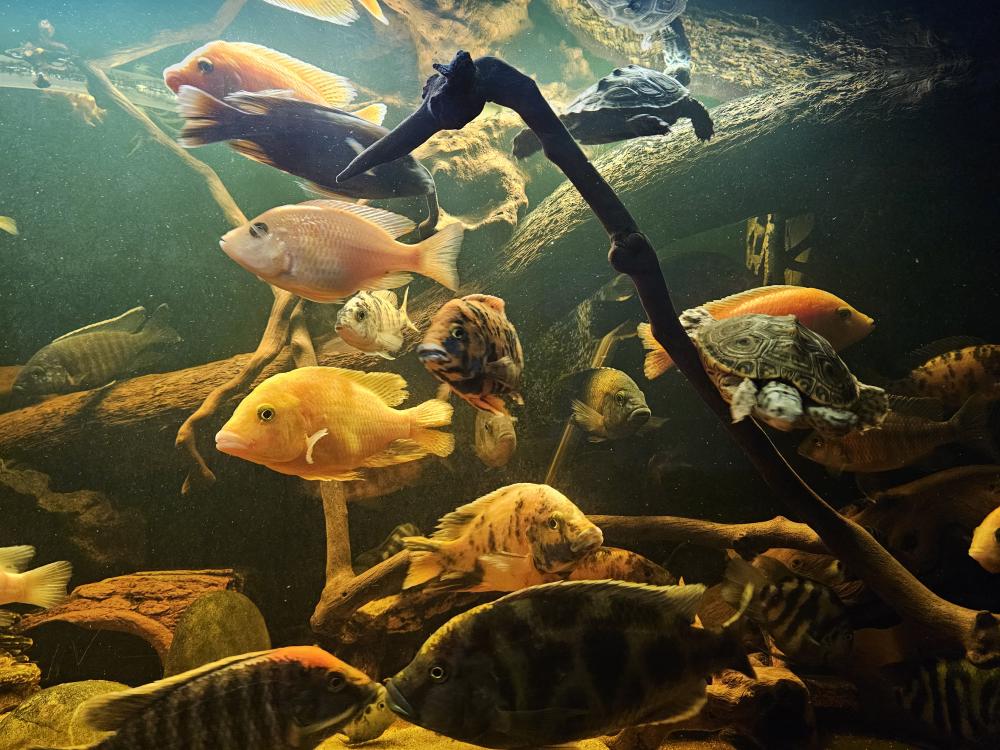
A view of my 125 gallon aquarium. Lots of fish and a few Northern Diamondback Terrapins too! 😁
SwitchTank
Incredible!
Jeremy N
Great app
African Dwarf Frog Care FAQ
How big of a tank does an African dwarf frog need?
As a guideline, at least 10 gallons for 2-3 frogs. A larger tank is easier to keep clean.
Do African dwarf frogs need air?
Yes. They have lungs and must reach the surface to breathe, so keep a lid with an air gap and avoid very deep tanks.
What do African dwarf frogs eat?
Mostly meaty foods like frozen bloodworms, blackworms and brine shrimp. Target feed so they can eat slowly.
Can African dwarf frogs live with fish?
Yes, with peaceful, similarly sized fish that do not out-compete them. Avoid bettas and aggressive fish.
Are African dwarf frogs the same as African clawed frogs?
No. Clawed frogs get much larger and can be aggressive. Dwarf frogs have webbed front feet and side-facing eyes.
How long do African dwarf frogs live?
Around five years on average, and sometimes longer with good care.
Why is my African dwarf frog floating?
Floating is normal when resting or after eating. If it is bloated, tilted or cannot dive, it could be ill and needs attention.
Final Thoughts
African dwarf frogs are charming little amphibians, but they are not “set and forget” pets. Give them a proper tank, a lid, gentle tank mates and frozen foods fed by hand, and they will reward you for years.
Disclaimer: This article is general information, not veterinary advice. For serious or persistent problems, consult an aquatic or exotic-animal veterinarian.
Sources and Fact Check
Reviewed 2026-11-15. Sources read: Wikipedia, “African dwarf frog” (four species, native range, fully aquatic but air-breathing, 1-1.5 in, average lifespan five years, confusion with clawed frogs, tongueless, males hum, females larger, mating in amplexus); Wikipedia, “Hymenochirus boettgeri” (females up to 35 mm, can live with fish, need covered tanks, diet of bloodworms, tubifex and brine shrimp, overfeeding leads to obesity); Aquarium Co-Op, “Caring for African Dwarf Frogs” (slow, finicky eaters, frozen bloodworms or blackworms preferred, pellets dissolve, small tanks build up waste). The 10-gallon guideline, water parameters and tank mate lists are hobby guidelines rather than tested thresholds. Limitation: FishBase and specialist species databases could not be read in full, and no amphibian veterinary source was reviewed.