
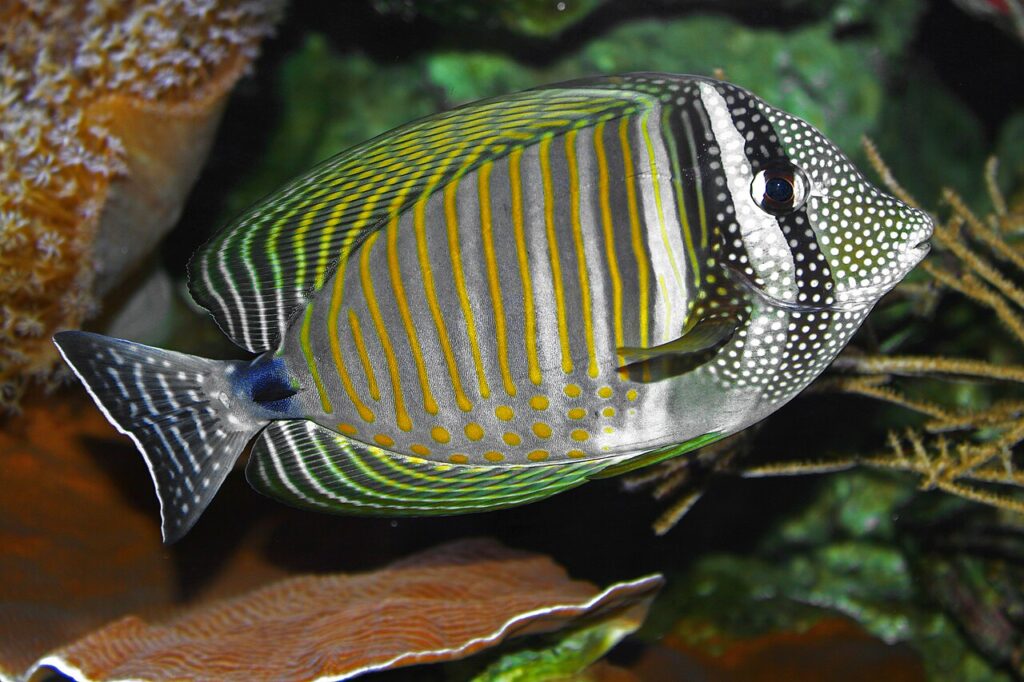
A sailfin tang is a stunning, active and hungry algae grazer, but it is a big fish that needs a big, mature tank. Adults can reach about 16 inches (40 cm) and want a long swimming space, lots of algae to graze and tank mates that can handle a bold, sometimes bossy neighbor. In a large reef or fish-only system with good filtration, they can be hardy and long-lived. In a small tank they get stressed, aggressive and sick.
This guide covers the two sailfin tangs sold in the hobby, tank size, water parameters, feeding, reef safety, tank mates, health problems and an honest difficulty rating.
Overview and Appearance
“Sailfin tang” usually refers to two closely related fish in the genus Zebrasoma:
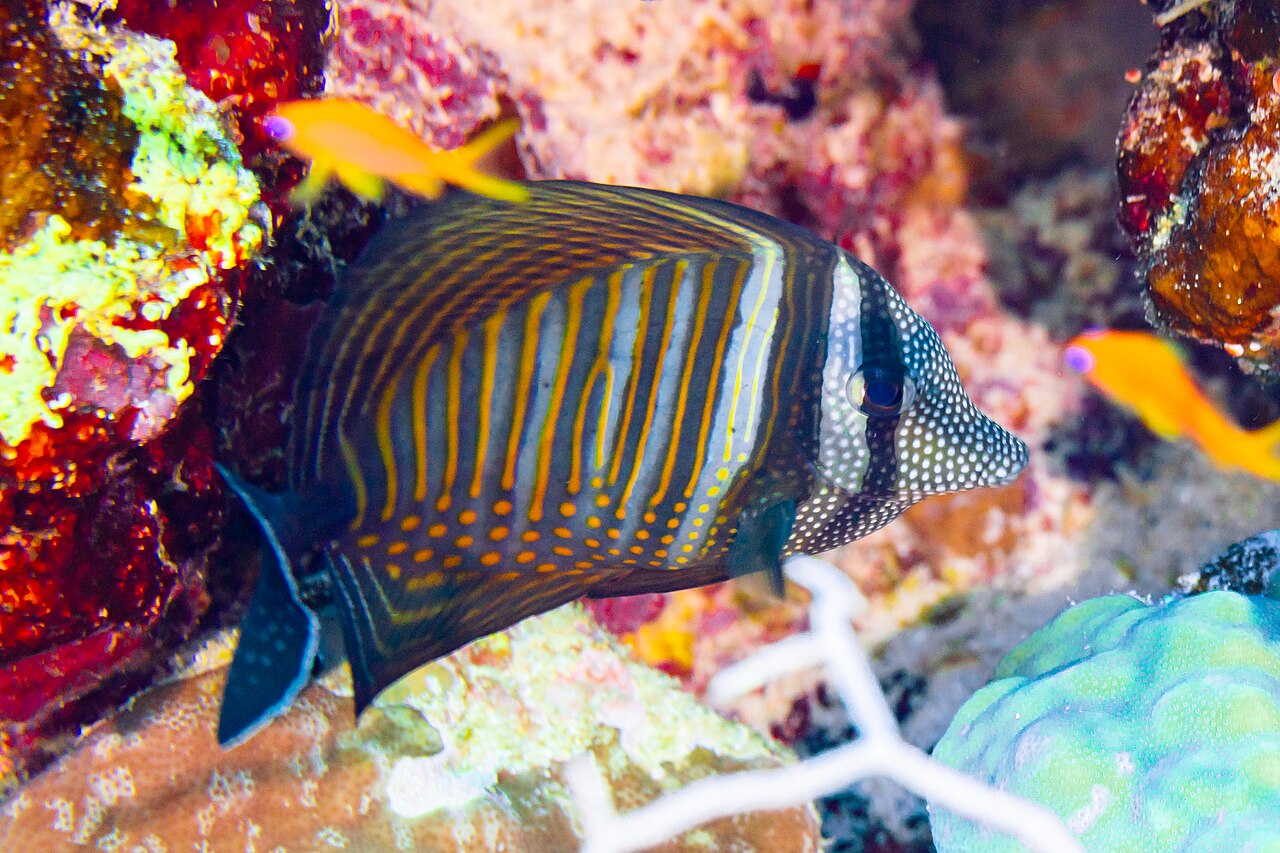
- Desjardin’s sailfin tang (Zebrasoma desjardinii), also called the Red Sea or Indian sailfin tang. It is gray with vertical dark bars containing orange or yellow lines, with a densely spotted head. It comes from the Indian Ocean and Red Sea.
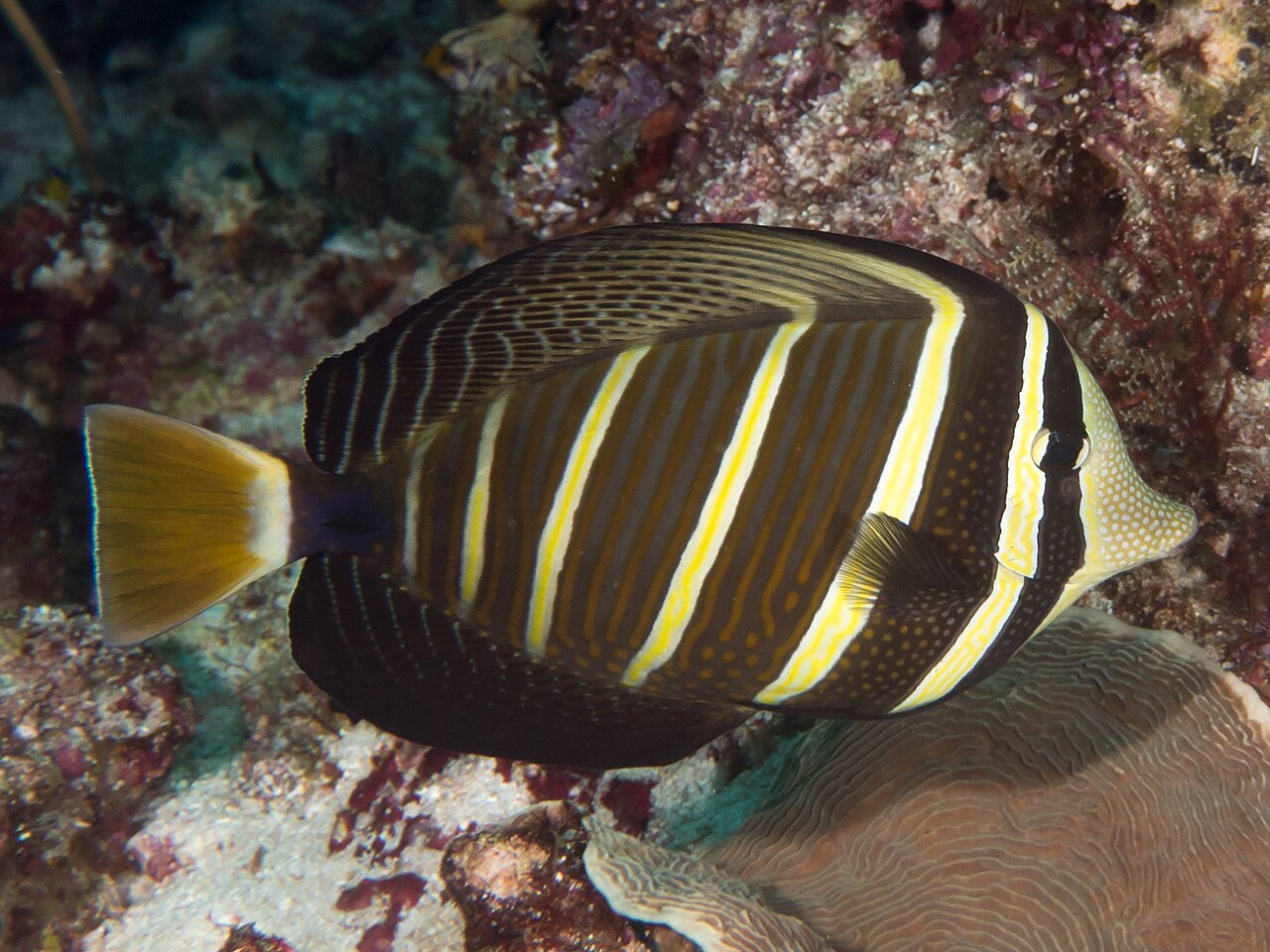
- Pacific sailfin tang (Zebrasoma velifer), which is darker with broad yellow-white bars and comes from the Pacific. Wikipedia notes the two were once treated as one species, and some sources still treat them as very similar.
Both have a tall, sail-like dorsal fin, a deep compressed body and a pointed snout. Like other tangs, they have a sharp spine at the base of the tail, so handle them carefully in a net or container.
Size and Lifespan
FishBase lists a maximum length of 40 cm (about 16 in) for Z. desjardinii, with 32 cm common. Pacific sailfins have a similar maximum. Juveniles are small and slender when sold, which is one reason they get bought for tanks that are far too small.
Lifespan in captivity is not well documented. Many hobbyists report that they can live for a decade or longer in good conditions, but treat that as anecdotal, not a guarantee.
Tank Size and Setup
This is the most important point. As a hobby guideline, an adult sailfin tang needs a long tank of at least 125 to 180 gallons, with a length of 6 feet or more, and bigger is better. This is a guideline from experienced keepers, not a hard rule from research, but it reflects how much swimming room a 16-inch tang needs. A smaller tank commonly leads to stress and aggression.
- Aquascape: Open swimming space in front, with stacked rock that leaves caves and passages.
- Algae: A mature tank with natural algae growth gives a place to graze all day.
- Flow and oxygen: Strong, varied water flow and good surface agitation. Tangs come from reef areas with lots of movement.
- Lid: A tight lid or screen. Tangs can jump when startled.
- Equipment: A strong protein skimmer, a reliable saltwater aquarium heater and a refractometer for checking salinity.
Just a heads up: some of the links in this post are affiliate links, which means I may earn a small commission if you buy through them. But no worries, it is at no extra cost to you. Also, as an Amazon Associate I earn from qualifying purchases.
If you are new to saltwater, read how to set up a saltwater aquarium first and make sure the tank is fully cycled and several months old before adding a tang.
Water Parameters
Typical reef and marine fish targets used by most keepers:
- Temperature: about 75-80°F (24-27°C)
- Salinity: 1.023-1.026 specific gravity (about 33-36 ppt)
- pH: 8.1-8.4
- Ammonia and nitrite: 0
- Nitrate: as low as practical, commonly under 20 ppm in fish-heavy tanks
Test regularly with a saltwater test kit, and keep parameters stable. Tangs are a good indicator fish: they get stressed quickly when water quality slips.
Diet and Feeding
Sailfin tangs are mostly herbivores and grazers. According to Wikipedia, Z. desjardinii in the wild feeds primarily on filamentous algae, macroalgae and plankton, and Red Sea fish have been seen eating jellyfish.
In the aquarium:
- Offer dried seaweed (nori) on a clip, several times a day if possible, or at least daily.
- Add a quality marine herbivore pellet or frozen preparation with spirulina and algae.
- Supplement with mysis or other meaty frozen foods in small amounts.
- Let natural algae grow on live rock.
Try a sheet of dried seaweed fastened to the glass with a clip, and watch your tang’s belly shape: a pinched or hollow belly means it is not eating enough.
Temperament and Tank Mates
Sailfin tangs are active and can be aggressive toward other tangs, especially similar-shaped ones. Adults are also often found in pairs in the wild, but keeping two in a home tank is risky unless the tank is very large and they are added carefully.
Usually works: peaceful or robust fish that are not tang-like, such as many clownfish, wrasses, gobies and larger angelfish (see our clownfish care guide).
Be careful with: other tangs. If you want to add another tang, add the more peaceful species first and the sailfin last, or avoid it. Compare purple tang care, powder blue tang care and kole tang care before building a tang community.
Avoid: small, shy fish that can be bullied, and very aggressive large fish that will harass the tang.
Reef Safety
Sailfin tangs are often called mostly reef-safe because they do not eat stony corals. But they are big, active fish that can knock things over, graze on some macroalgae and nip at certain soft corals or clams in a hungry tank. Treat them as reef-compatible with caution, and keep them well fed with algae to reduce the chance of nipping.
Breeding
Wikipedia reports that Z. desjardinii is a pair spawner. Breeding in home aquariums is not reliable, and captive-bred sailfin tangs are not common in the hobby. Plan on buying a fish that has been collected from the wild.
Common Health Issues
- Marine ich (white spot disease): Tangs are known for being prone to it when stressed or newly imported. Wikipedia describes Cryptocaryon irritans as one of the most common causes of disease in marine aquaria, causing white spots, scratching, rapid breathing and lethargy.
- Head and lateral line erosion: Pitting around the head and lateral line. Wikipedia notes the causes are not well established.
- Poor diet and stress: Tangs that cannot graze all day may lose condition quickly.
A quarantine tank is strongly recommended for any tang. Observe a new fish for several weeks, and talk to an aquatic vet or an experienced marine keeper before treating. Our guide to what the white spots on your fish are explains the basics.
Difficulty: Honest Rating
Intermediate to advanced. Sailfin tangs are not especially delicate once settled, but they need a large, mature tank, strong filtration, lots of algae and careful quarantine. They are a poor choice for a small or new tank. If you do not have at least 125 gallons and a plan for aggression, consider a smaller fish instead.
From Aquagram
Explore AquagramDan GL
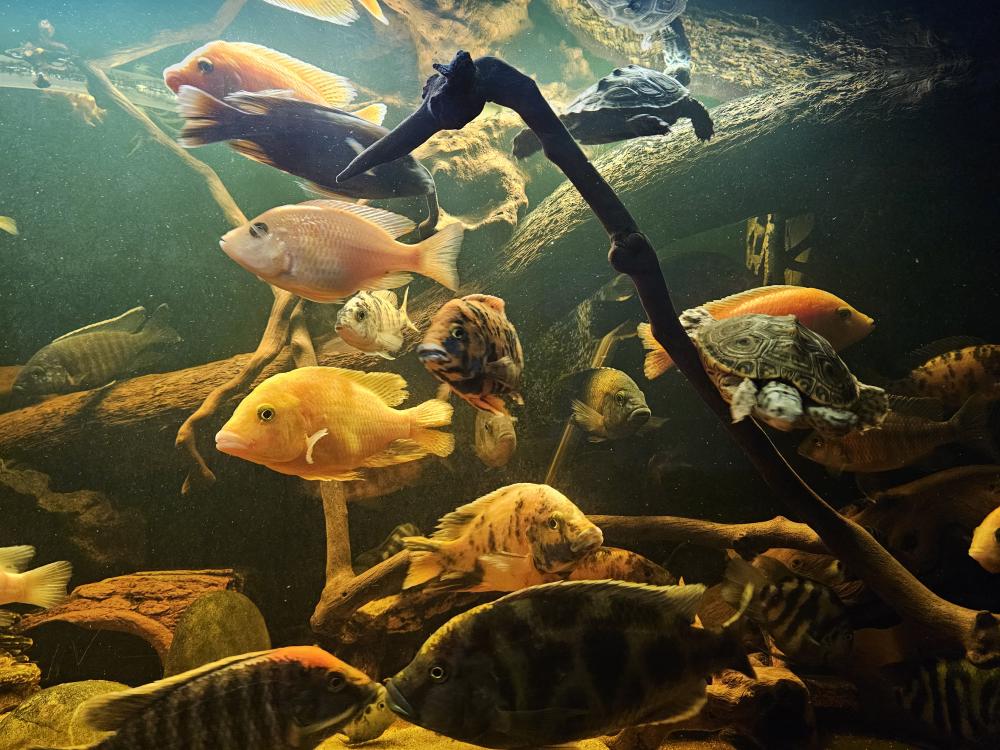
A view of my 125 gallon aquarium. Lots of fish and a few Northern Diamondback Terrapins too! 😁
SwitchTank
Incredible!
Jeremy N
Great app

Sailfin Tang Care FAQ
How big do sailfin tangs get?
Up to about 16 inches (40 cm) in length, according to FishBase and Wikipedia. Many are smaller in captivity.
What size tank does a sailfin tang need?
As a hobby guideline, at least 125-180 gallons with a length of 6 feet or more. Bigger is better.
Are sailfin tangs reef safe?
Mostly, with caution. They do not usually eat stony corals but can nip at some soft corals and are large and active.
What do sailfin tangs eat?
Mostly algae: nori, herbivore pellets and natural algae, with some meaty foods.
Are sailfin tangs aggressive?
They can be, especially to other tangs. Choose tank mates carefully and give them lots of space.
What is the difference between Desjardin’s and Pacific sailfin tangs?
They are closely related. Desjardin’s comes from the Indian Ocean and Red Sea and has orange-yellow lines; Pacific sailfins come from the Pacific and have broader yellow-white bars.
How long do sailfin tangs live?
Reliable captive data are limited; many keepers report 10 years or more in good conditions.
Final Thoughts
A sailfin tang is one of the most impressive algae grazers you can keep, but it rewards only large, mature, well-run systems. Give it space, algae and careful tank mates, and it can be a centerpiece fish for years.
Disclaimer: This article is general information, not veterinary advice. For serious or persistent problems, consult an aquatic veterinarian.
Sources and Fact Check
Reviewed 2026-11-15. Sources read: Wikipedia, “Zebrasoma desjardinii” (range, 40 cm maximum length, appearance, diet of filamentous algae, macroalgae and plankton, pair spawner, once treated as a subspecies of Z. velifer); Wikipedia, “Zebrasoma” (genus, 16 in maximum published length for Z. desjardinii, copper tolerance); FishBase summary for Zebrasoma desjardinii (40 cm max, 32 cm common, reef-associated, adults usually in pairs); Wikipedia, “Cryptocaryon irritans” and “Head and lateral line erosion”. Tank size (125-180 gallons), water parameters, lifespan reports and reef-safety notes are hobby guidelines rather than tested thresholds. Limitation: several specialist care sites and search engines could not be read while researching.